
The Microcosmic Orbit is a Taoist meditation that guides your breath and attention in a slow loop up your spine and down the front of your body, circulating qi through two key channels to settle your mind and balance your energy. It's a gentle practice, not a forceful one. Beginners do best starting with short sessions and simple preparation before working toward a full orbit.
TL;DR:
- Practitioners should build a foundation with abdominal breathing and spinal mobility exercises before attempting a full orbit to prevent dizziness or agitation.
- Short, consistent daily sessions of 15 to 20 minutes are more effective for beginners than infrequent, longer practices, with steady progress often taking weeks to months.
- Normal sensations include warmth, tingling, or pulsing along the spine, while resistance or overstimulation indicate the need to slow down or return focus to the lower dan Tian.
- Those with a history of psychosis, trauma, or unstable heart conditions should consult a healthcare professional and approach gradually with appropriate safety measures.
- Guided instruction from certified teachers provides essential feedback, helping avoid rushing and ensuring safe, steady progress in mastering the orbit practice.
Table of Contents
- How Do You Practice Microcosmic Orbit Meditation?
- What Precautions Should You Take Before Starting?
- How Long Should a Session Last?
- What Sensations Are Normal, and What Should You Troubleshoot?
- Who's Guiding This Practice, and Why It Matters
- A Teacher's Honest Take on Traditional Detail Versus Safety
- Ready to Learn the Orbit With Guided Support?
- Sources
- FAQ
How Do You Practice Microcosmic Orbit Meditation?
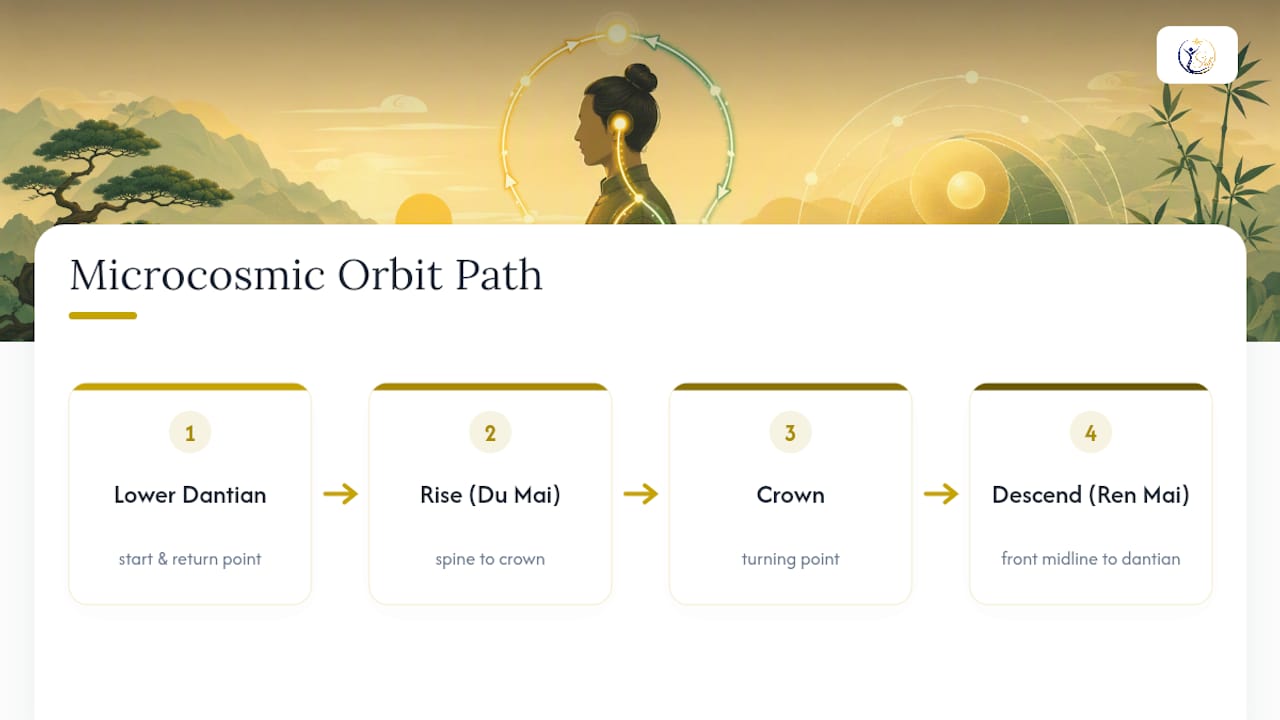
You don't need years of training to try your first orbit. You do need a quiet ten minutes, a comfortable seat, and a willingness to move slowly. This sequence follows the traditional route described in classical Taoist internal alchemy texts: attention rises along the Governing Vessel, or Du Mai, up the spine, then descends along the Conception Vessel, or Ren Mai, down the front midline.
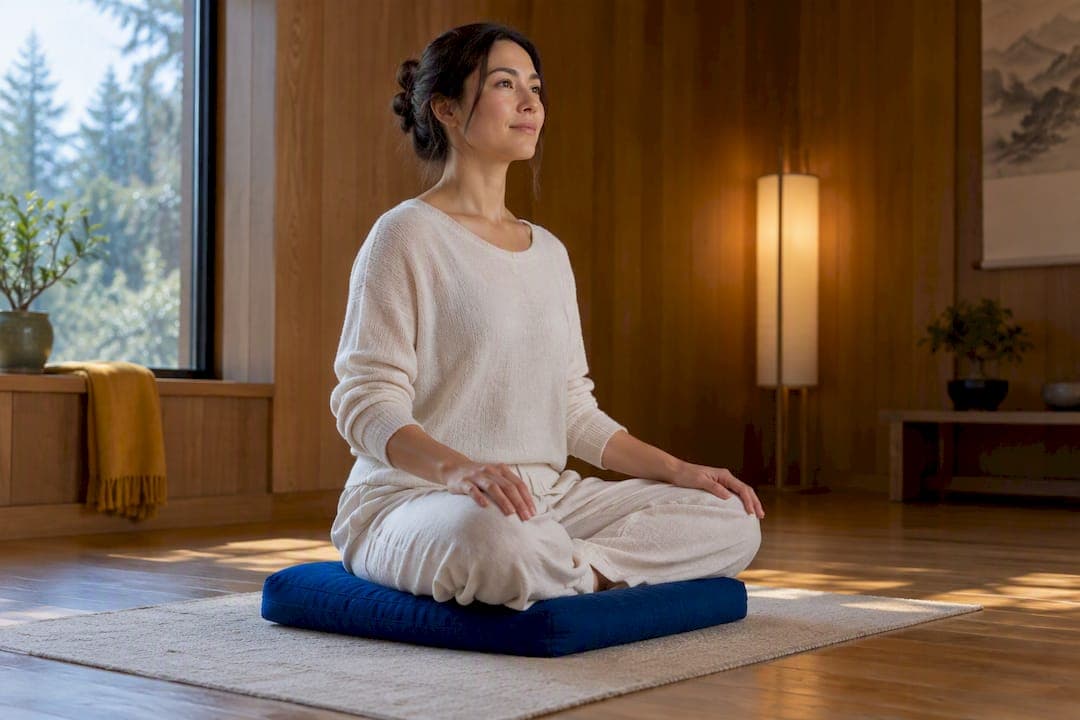
1. Settle into your posture. Sit on a cushion with your hips slightly higher than your knees, or use a chair with your feet flat on the floor. Either way, let your spine lengthen naturally, shoulders soft, chin gently tucked. You're not bracing. You're simply stacking your body so breath can move through it without obstruction.
2. Rest your attention in the lower dantian. This point sits a few finger widths below your navel, deep in your belly. Breathe here for several minutes before doing anything else. Let your abdomen expand on the inhale and soften on the exhale. This single habit, abdominal breathing, is the foundation everything else builds on.
3. Bridge the tongue. Rest the tip of your tongue lightly against the roof of your mouth, just behind your upper front teeth. In practice tradition, this is called Que Qiao, the "magpie bridge," and it's believed to close the circuit between the two main channels so qi can flow continuously rather than leaking out at the mouth.
4. Trace the rising path. On an inhale, let your attention travel from the lower dantian back toward the perineum, then up along the spine, vertebra by vertebra, toward the crown of your head. Move slowly. You're not forcing sensation. You're simply placing gentle attention along the path and letting breath follow.
5. Trace the descending path. On the exhale, let attention flow from the crown down the front midline, past your forehead, throat, chest, and belly, back to the lower dantian. That's one complete orbit.
6. Repeat gently. Beginners typically manage one to three slow orbits before attention starts to wander or fatigue sets in. That's normal. Stop there.
7. Close with stillness. Before you finish, rest your attention back in the lower dantian for a few quiet breaths. This step matters as much as the orbit itself. It gathers your energy back to center instead of leaving it scattered.
Pro Tip: If you lose the thread of the path partway through, don't strain to find it. Return your attention to the lower dantian, breathe there for a moment, and start the loop again from a calm place rather than chasing the sensation.
What Precautions Should You Take Before Starting?
The Microcosmic Orbit rewards patience far more than intensity. Rushing the process, or skipping preparation, is the most common reason beginners feel dizzy, agitated, or discouraged.
Before attempting a full orbit, spend time on these foundations:
- Abdominal breathing. Comfortable, unforced belly breathing for several minutes should feel natural before you add movement of attention along the spine.
- Spinal mobility. Gentle stretching or a short qigong warmup, such as the flowing sequences in White Tiger Qigong, loosens the physical structure the energy is meant to travel through.
- Basic seated stillness. If sitting quietly for five minutes already feels difficult, build that skill first.
Certain people should approach this practice with extra care. Anyone with a history of psychosis, significant trauma, or unstable cardiovascular conditions should talk with a doctor or an experienced teacher before beginning, since inward-focused practices can intensify emotions and physical sensations for some practitioners.
Direct clinical trials on the Microcosmic Orbit itself don't exist yet. Most of what's known comes from related breathing and tai chi research, plus generations of practice tradition, so treat benefit claims as plausible rather than proven.
Before learning from any teacher, ask about their certification lineage, how they structure a beginner class, and what safety measures they use for students who report strong reactions.
How Long Should a Session Last?
Consistency beats duration here, especially in the first few months. A beginner session might run 15 to 20 minutes total:
- 5 to 10 minutes settling into the lower dantian with abdominal breathing.
- 1 to 3 short orbits, moving slowly and stopping if attention scatters.
- 3 to 5 minutes closing back in the lower dantian before you stand up.
Most practice guides recommend short, daily sessions over occasional long ones. A brief practice you actually repeat every day builds reliable sensation faster than an hour-long session you only manage once a week.
Realistic timelines vary by person, but many teachers suggest weeks to months of steady practice before the full loop feels stable rather than imagined. There's no shortcut worth taking. Rushing toward the crown before your lower dantian awareness feels solid tends to produce forced, unreliable sensation instead of the steady internal feedback this practice is built on.
What Sensations Are Normal, and What Should You Troubleshoot?
Warmth, tingling, gentle pressure, or a subtle pulsing sensation along the spine are all common and generally nothing to worry about. Many practitioners first notice sensation at the tongue bridge itself, a light buzzing or warmth where tongue meets palate, before feeling anything along the spine.
- Warmth or tingling at the lower dantian usually signals settled, steady breathing.
- A "stuck" feeling at a particular point, often the mid back or crown, is common. These resistant spots are sometimes called gates.
- Overstimulation (racing thoughts, restlessness, mild dizziness) means it's time to shorten the session and return attention to grounding at the lower dantian.
If a gate feels stuck, don't push through it. Back up to the last point where sensation felt clear, breathe there a little longer, and try again another day.
Pro Tip: Keep a short log after each session, noting what you felt and where. Patterns become obvious after a week or two, and a teacher can help you interpret them if something feels persistently off.
Who's Guiding This Practice, and Why It Matters
Learning the Microcosmic Orbit from someone who understands both the traditional route and modern safety considerations makes the difference between guesswork and grounded progress. This guide draws on the training of Stella, a certified White Tiger Qigong Level 3 instructor also recognized by Yoga Alliance, whose background blends traditional lineage instruction with practical, modern teaching methods.
Course offerings include online classes that guide beginners through preparatory breathing and posture before introducing orbit work, on-demand courses for practicing at your own pace, and private sessions for personalized feedback. Individual experiences with these programs vary.
A Teacher's Honest Take on Traditional Detail Versus Safety
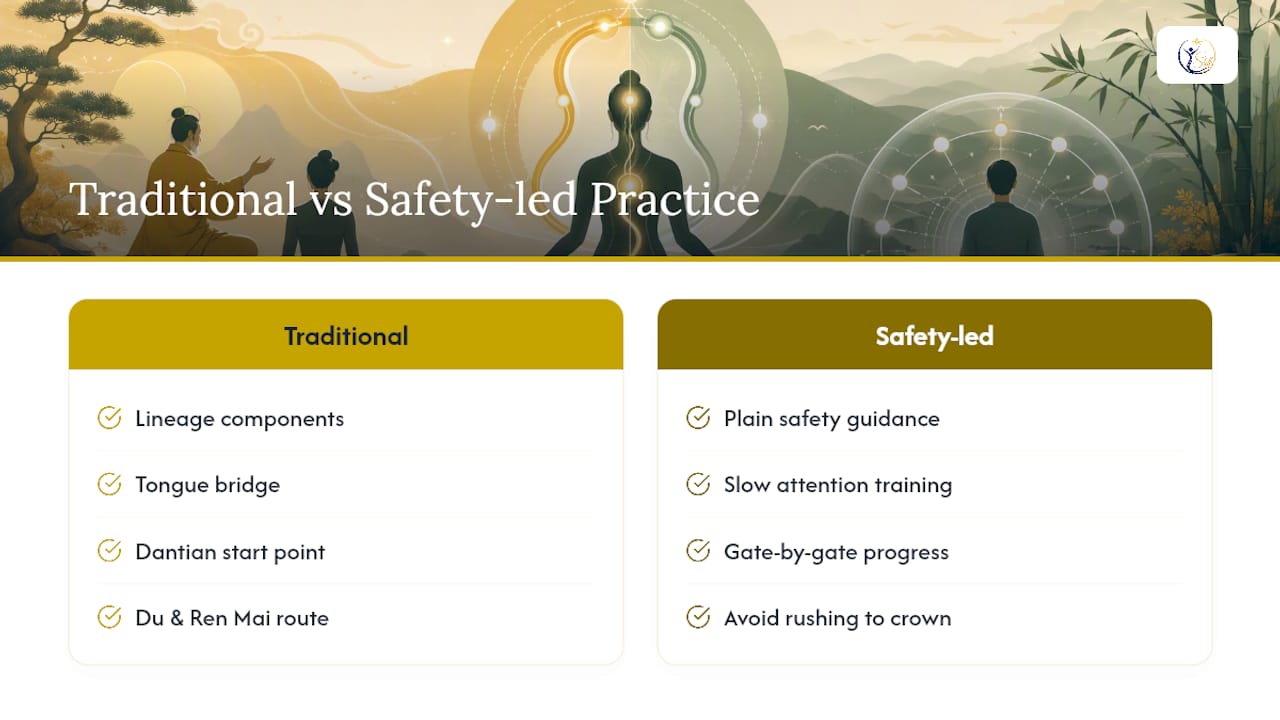
Plenty of guides romanticize the Microcosmic Orbit, promising instant energetic breakthroughs. That's backwards. The practice works better as slow attention training on a fixed internal route than as some dramatic unlocking of hidden power. Progress happens gate by gate, week by week, and the students who rush toward the crown before their lower dantian awareness feels stable usually end up chasing imagined sensations instead of building something real.
I keep the traditional pieces, the tongue bridge, the dantian starting point, the Du Mai and Ren Mai route, because they're what the lineage actually teaches. But I pair every one of them with plain safety guidance, because the honest truth is that direct clinical evidence for this practice is still thin. What we have is practice-informed wisdom passed down through careful teaching, not a stack of clinical trials. That's enough to proceed thoughtfully. It's not enough to proceed carelessly.
— Stella
Ready to Learn the Orbit With Guided Support?
Reading the steps is one thing. Feeling your way through your first real gate, with someone who can tell you whether you're rushing or ready, is another. Qigongstar's online Qigong classes are built specifically around that gap, giving you credentialed, White Tiger Qigong Level 3 instruction instead of a generic recording.
If you want a focused introduction, the 30-Min Clarity Session (£85, one-off) gives you direct feedback on posture, breathing, and where your attention tends to drift. For a deeper foundation covering preparatory practices through orbit basics, the 60-Minute Deep Dive Online Session (£145, one-off) offers more time to work through sticking points at your own pace. Prefer face to face? The 60-Minute Face-to-Face Qigong session (£165, one-off) puts a certified instructor in the room with you. Book the session that matches where you are right now, and start building the orbit with someone watching for the gates you can't see on your own.
Sources
- Microcosmic orbit — Wikipedia
- Microcosmic Orbit | Insight Timer
- Microcosmic Orbit (小周天) — Qigong practice guide (Satyori)
This article is general information, not a substitute for advice from a qualified doctor. Consult a qualified healthcare professional about your own circumstances before acting on anything here.
FAQ
What Is the Microcosmic Orbit Meditation?
It's a Taoist practice that guides breath and attention in a loop up the spine along the Governing Vessel and down the front midline along the Conception Vessel, circulating qi through the lower dantian. The goal is settled attention and a sense of energetic balance, not a dramatic experience.
How Long Does It Take to Learn the Full Orbit?
Most practitioners need weeks to months of consistent, short daily practice before the full loop feels stable rather than imagined. Progress depends more on how often you practice than how long each session runs.
Is the Microcosmic Orbit Safe for Beginners?
Yes, when practiced gently and gradually, though people with a history of psychosis, significant trauma, or unstable cardiovascular conditions should check with a clinician or experienced teacher first. Starting with short sessions and solid abdominal breathing habits lowers the risk of overstimulation.
What Does Qigongstar Charge for a Session?
The 30-Min Clarity Session costs £85, the 60-Minute Deep Dive Online Session costs £145, and the 60-Minute Face-to-Face Qigong session costs £165, all one-off payments. Group Qigong Classes are also available, with pricing listed on the online classes page.
Why Does the Tongue Placement Matter in This Practice?
Resting the tongue lightly against the upper palate, known as Que Qiao, is believed to close the circuit between the Governing and Conception vessels so qi can flow continuously. Many practitioners notice the first clear sensation right at this bridge before feeling anything along the spine.