
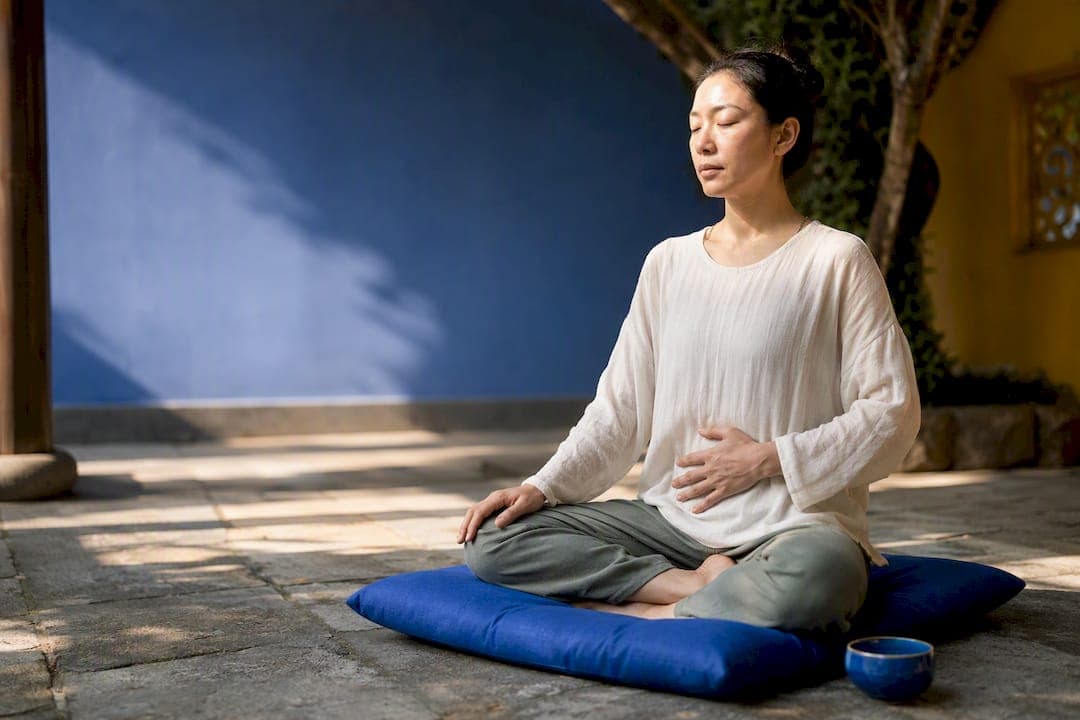
Qigong breathing is slow, nasal, diaphragmatic breathing centered on the dantian, your body's energy center just below the navel. Start with normal abdominal breathing: sit comfortably, breathe in through your nose so your lower belly gently rises, then exhale slowly and let it fall. Practice for a short duration today. If you feel dizzy or short of breath, stop and return to your normal breathing pattern.
TL;DR:
- Focus on mastering normal abdominal breathing before progressing to more advanced techniques like the microcosmic orbit or gate breathing.
- Consistent daily practice of 10 minutes, emphasizing slow nasal inhales and long exhales, enhances calming effects and builds a solid foundation.
- Avoid strain, breath-holding, or aggressive techniques if you are pregnant, have medical conditions, or experience dizziness or anxiety.
- Guided instruction provides real-time correction crucial for subtle techniques such as gate breathing and orbit circulation.
- Research shows modest improvements in mood and stress relief, but the practice is ineffective as a standalone cure and requires patience to see benefits.
Table of Contents
- What Are Qigong Breathing Exercises?
- How Do You Practice Qigong Breathing Exercises Step by Step?
- How Often Should You Practice Qigong Breathing?
- Who Should Modify or Avoid Qigong Breathing Exercises?
- What Makes Instructor-Backed Qigong Breathing Different?
- Why Most Beginners Rush the Wrong Part of This Practice
- Ready to Practice With Guided Instruction?
- Sources
What Are Qigong Breathing Exercises?
Qigong breathing exercises are a set of regulated breath patterns, almost always slow, deep, and drawn through the nose, that qigong practitioners pair with gentle movement and focused attention. The National Center for Complementary and Integrative Health describes this combination as central to most qigong styles, and it's why the practice feels so different from a quick, shallow breath you'd take between errands.
The goal isn't just relaxation for its own sake. Traditional qigong theory holds that breath regulation supports circulation and settles the nervous system, drawing attention inward to the dantian rather than letting it scatter. Whether or not you subscribe to the energetic framework, the physiological logic holds up: slow diaphragmatic breathing has a calming, grounding effect that chest breathing simply doesn't produce.
Here's the distinction that trips up most beginners. Chest breathing, the kind most adults default to under stress, lifts the shoulders and expands the upper ribs while barely touching the diaphragm. Abdominal breathing works the opposite direction: your diaphragm drops down, your lower belly expands outward, and your chest stays quiet. This is the foundation everything else in qigong breathing builds on.
A few cues make the difference between a rushed attempt and a practice that actually settles you:
- Breathe in and out through your nose, not your mouth.
- Rest your tongue lightly on the roof of your mouth, just behind your front teeth.
- Keep your chest and shoulders relaxed and still.
- Let your belly, not your ribcage, do the moving.
What does the research actually show? Systematic reviews and meta-analyses on PubMed point to modest but real improvements in quality of life, mood, and select chronic-condition markers. The evidence isn't dramatic, and study quality varies widely, but it's consistent enough to take seriously without overselling it. Qigong breathing won't cure anything on its own. It can, however, be a genuinely useful tool for calming an overactive nervous system.
How Do You Practice Qigong Breathing Exercises Step by Step?
Every technique below builds on the one before it. Master abdominal breathing first. The rest will come more naturally once your body understands the basic pattern.
1. Normal Abdominal Breathing (Dantian Breathing)
This is the technique everything else depends on, and it's worth spending real time here before moving forward.
Purpose: Trains diaphragmatic movement, calms the nervous system, and builds awareness of the dantian.
When to use it: Daily, as your primary practice, and anytime you need to settle down quickly.
Protocol: Sit upright with your feet flat on the floor, or stand with knees slightly soft. Place one hand on your belly, just below the navel. Inhale through your nose slowly, feeling your hand rise as your lower belly expands. Pause briefly. Exhale gently through your nose, feeling your belly draw back gently toward your spine. Repeat for 5 to 10 minutes.
As you get more comfortable, Shaolin Temple's teaching on this technique describes a subtle, coordinated movement at the Huiyin point, the perineum, that lifts slightly on the inhale and releases on the exhale. Don't force this. Let it emerge on its own after weeks of steady abdominal practice.
2. Cleansing Breath
Purpose: Clears stagnant tension and resets your system, often used to open a session.
When to use it: At the very start of practice, or whenever you feel mentally cluttered.
Protocol: Inhale deeply through your nose, filling your lower belly. Open your mouth slightly and exhale with a soft, audible sigh, like you're releasing a held breath after a long day. Repeat a few times, then transition into nasal-only breathing.
3. Filling Breath
Purpose: Builds a sense of fullness and vitality, often used mid-session once you're warmed up.
When to use it: After cleansing breath, or as a standalone energizing exercise.
Protocol: Inhale through your nose in three stages: lower belly first, then the sides of your ribs, then the upper chest, without straining. Hold for one or two comfortable counts. Exhale slowly through your nose, releasing in the reverse order: chest, ribs, then belly. Repeat multiple rounds.
4. Gate Breathing
Purpose: Introduces awareness of specific energetic "gates," typically the perineum and the crown, and refines control over subtle muscular engagement.
When to use it: Once abdominal breathing feels automatic, usually after a few weeks of consistent practice.
Protocol: Breathe abdominally as usual, but on the inhale, bring light attention to the base of your torso. On the exhale, imagine breath rising gently upward through the center of your body. Keep the physical effort minimal. This is a practice of attention more than muscle.
5. Microcosmic Orbit (Xiao Zhoutian)
Purpose: Circulates awareness (and, in traditional theory, qi) along a loop running up the spine and down the front of the torso.
When to use it: Only after normal abdominal breathing is stable and effortless, typically several weeks to months into practice.
Protocol: Sit quietly and breathe abdominally. On the inhale, trace your attention up the back of your spine from the tailbone to the crown of your head. On the exhale, trace it back down the front of your torso to your lower belly. Move slowly through several full loops per session, increasing as it feels natural.
This is an advanced internal practice, not a beginner drill. Rushing into the microcosmic orbit before your abdominal breathing is steady can create tension, lightheadedness, or frustration instead of calm. Teacher resources consistently recommend establishing stable diaphragmatic breathing first and adding orbit work only when that foundation feels effortless.
6. Six Healing Sounds (Optional)
Purpose: Pairs specific exhaled sounds with organ systems, used in some traditions to release tension tied to particular emotions.
When to use it: As an optional closing practice, once you're comfortable with the core breathing patterns above.
Protocol: Inhale normally through your nose. On the exhale, softly vocalize a designated sound (each tradition assigns slightly different sounds to the liver, heart, spleen, lungs, kidneys, and a general triple-warmer sound) while visualizing the corresponding organ releasing tension. This works best learned directly from an instructor, since sound and visualization pairing varies by lineage.
Pro Tip: The most common beginner mistake isn't poor form, it's rushing the exhale. Slow your exhale down until it's noticeably longer than your inhale. That single adjustment does more for calming the nervous system than any other cue in this list.
How Often Should You Practice Qigong Breathing?
Consistency beats intensity here. A daily 10-minute session builds skill faster than one long weekend practice, and it's far easier to sustain.
Your 10-Minute Daily Routine:
- Sit or stand comfortably; rest your tongue on your palate and relax your shoulders (1 minute).
- Practice three rounds of cleansing breath to clear tension (1 minute).
- Settle into normal abdominal breathing, counting four in, six out (5 minutes).
- If comfortable, add gate breathing awareness on your final two minutes (2 minutes).
- Close with three slow breaths, noticing how your body feels compared to when you started (1 minute).
Your 4-Week Progression Plan:
- Week 1: Five minutes daily, abdominal breathing only. Focus purely on nasal breathing and belly expansion.
- Week 2: Seven minutes daily. Add cleansing breath at the start of each session.
- Week 3: Ten minutes daily. Introduce filling breath and gate breathing awareness.
- Week 4: Ten to fifteen minutes daily. Begin light microcosmic orbit work only if abdominal breathing feels fully automatic.
Morning practice tends to set a calmer tone for the day, while an evening session can help unwind before sleep. Some practitioners pair breathing with a short walk, breathing abdominally while moving, which works well if sitting still feels restless at first.
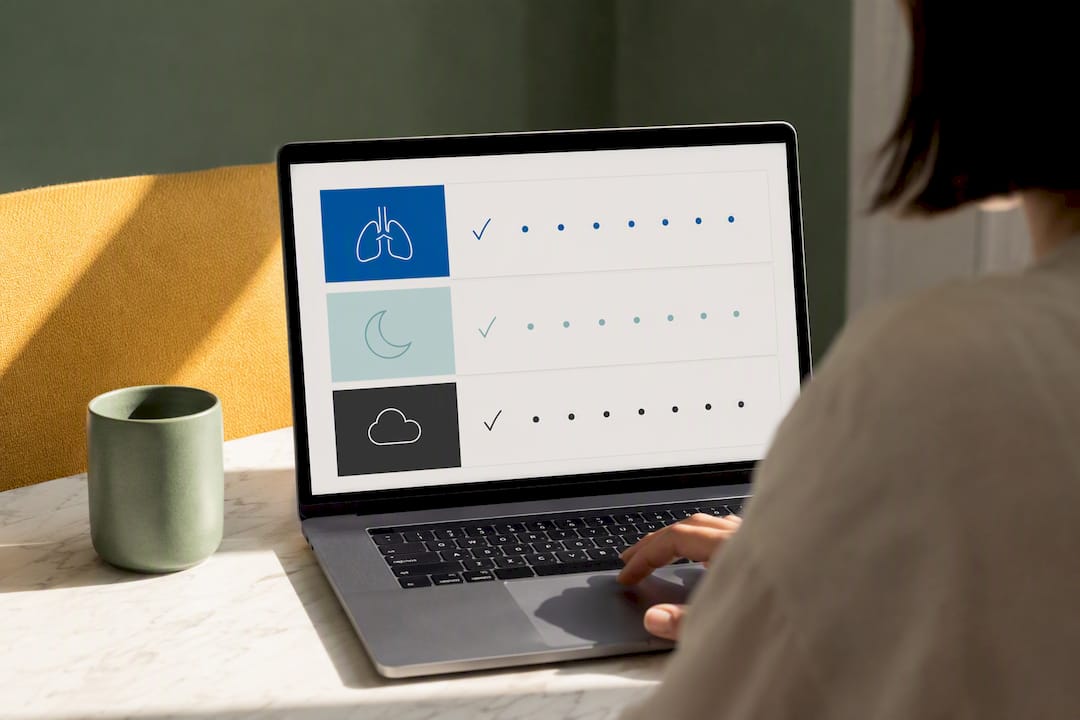
Track progress with a simple three-line journal: how comfortable the breath felt, how you slept, and your general stress level that day. The Taichi for Health Institute's short-session, progressive-practice model reflects exactly this pattern: brief daily sessions that build steadily tend to produce noticeable subjective benefits, like better sleep and lower stress, faster than infrequent, longer sessions. For a ready-made routine that follows this same structure, a 10-minute daily sequence can take the guesswork out of your first weeks.
Who Should Modify or Avoid Qigong Breathing Exercises?
Qigong breathing is gentle by design, but gentle doesn't mean risk-free for everyone. A few situations call for real caution.
- If you're pregnant, avoid strong abdominal contractions and any breath-holding; shift to shorter, softer counts.
- If you have a diagnosed respiratory or cardiovascular condition, check with your doctor before starting, especially before attempting filling breath or breath holds.
- If you're prone to panic or anxiety, skip breath holds entirely and focus on lengthening the exhale rather than deepening the inhale.
- If you feel dizzy, lightheaded, or short of breath during any exercise, stop immediately and return to normal breathing.
- If you have a history of stroke, uncontrolled hypertension, or a recent surgery, get clearance from a healthcare provider first.
Simple modifications solve most of these concerns without abandoning the practice. Sit rather than stand if balance is a concern. Shorten your counts, three in, four out, rather than pushing for longer holds. Skip the microcosmic orbit and gate breathing entirely if you're anxiety-sensitive or new to internal practices, and stick with normal abdominal breathing until it feels effortless. For a full breakdown of who should adapt or skip specific techniques, this guide on qigong contraindications covers the details condition by condition.
Pro Tip: If breathing exercises tend to make you feel more anxious rather than less, the fix usually isn't the inhale, it's the exhale. Shorten your inhale slightly and stretch your exhale longer than feels natural at first. A longer exhale signals safety to your nervous system faster than a deep inhale ever will.
What Makes Instructor-Backed Qigong Breathing Different?
Books and videos can teach you the mechanics of a breath count. What they can't do is watch your shoulders creep up when they shouldn't, or notice you're holding tension in your jaw while you focus on your belly. That kind of real-time correction is where guided instruction earns its value, particularly for subtler internal work like gate breathing and the microcosmic orbit.
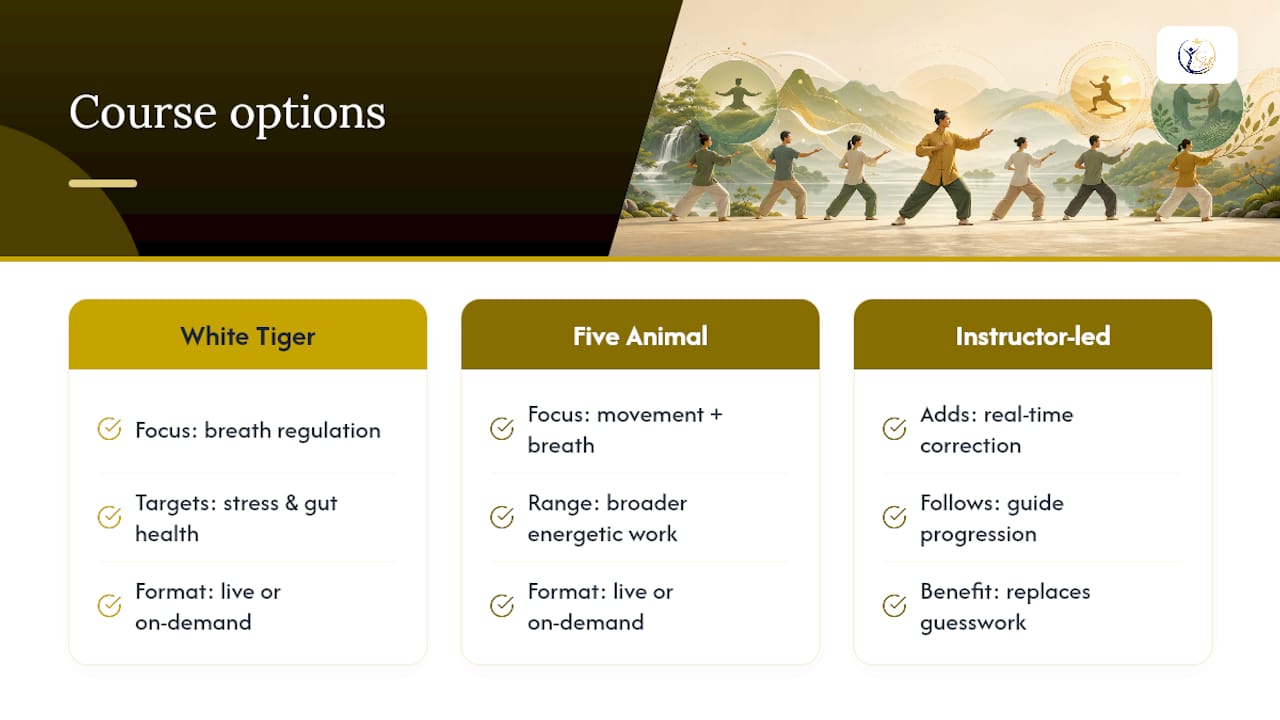
Stella, the instructor behind Qigongstar, holds certification through the White Tiger Qigong School and Yoga Alliance, credentials that reflect structured, standards-based training rather than a weekend workshop. Her courses include:
- White Tiger Qigong, focused on stress relief and digestive wellness.
- Five Animal Qigong, built around movement, breath, and energetic balance.
- On-demand courses, self-paced for learning on your own schedule.
- Live virtual classes, with real-time feedback on posture and breath.
Guided online qigong classes give you a structured path through exactly the progression outlined above, without the guesswork of figuring out when you're ready for the next technique.
Why Most Beginners Rush the Wrong Part of This Practice
The advice you'll find most often online treats qigong breathing as a menu, pick a technique, try it, move to the next one. That's backward, and it's probably why so many people try qigong breathing once, feel nothing special, and quit. Normal abdominal breathing isn't a warmup act before the "real" techniques like the microcosmic orbit. It is the entire practice, for weeks or months, and skipping past it is the single biggest reason beginners feel like nothing's happening.
What the research and the teaching tradition both point to is patience with the boring part. A stable diaphragmatic breath, one you don't have to think about anymore, is what makes gate breathing, filling breath, and internal circulation work actually land instead of feeling like performance. If you take one thing from this guide, let it be this: spend real time on the belly breath before chasing anything more advanced. Everything else gets easier once that foundation is solid, and a good instructor will tell you exactly when you're ready to move on rather than leaving you guessing.
— Stella
Ready to Practice With Guided Instruction?
Reading through six techniques is one thing. Knowing whether your Huiyin coordination is actually correct, or whether you're ready for the microcosmic orbit, is another, and that's exactly where a certified instructor changes the trajectory of your practice. Qigongstar's courses build on the same progression outlined in this guide, but with real-time correction instead of guesswork.
If digestive stress or a scattered, wired-but-tired nervous system is part of why you're here, White Tiger Qigong was built specifically around breath regulation for stress relief and gut health. If you're drawn to movement paired with breath work across a broader energetic range, Five Animal Qigong offers that structure instead. Both are available as live virtual classes or on-demand courses, so you can start wherever your schedule allows. Check the current course schedule and pick the format that fits how you learn best.
This article is general information, not a substitute for advice from a qualified doctor. Consult a qualified healthcare professional about your own circumstances before acting on anything here.
Sources
- Qigong: What You Need To Know | NCCIH
- PubMed search results for qigong systematic reviews and meta-analyses
- Normal Abdominal Breathing - Shaolin Temple
- Four Qigong Exercises - Tai Chi for Health Institute