

Many people assume that watching a series of videos is the same as taking a course. It feels like learning, it looks like learning, but the outcomes often tell a different story. Understanding how structured courses differ from videos is one of the most clarifying distinctions you can make when choosing how to deepen your practice, whether you want to master qigong, manage stress, or support your digestive health. The format you choose shapes how well you absorb, retain, and actually apply what you learn.
Table of Contents
- Key takeaways
- How structured courses differ from videos at their core
- Interactivity and engagement in structured courses
- Learning outcomes and retention: what the research shows
- How curriculum structure guides your learning path
- How to choose between structured courses and videos
- My honest take on structure and real transformation
- Experience structured qigong learning for yourself
- FAQ
Key takeaways
| Point | Details |
|---|---|
| Structure shapes outcomes | Structured courses guide you through a logical sequence, while standalone videos leave you to piece together a path alone. |
| Interactivity deepens retention | Embedded quizzes and feedback loops in structured courses help catch gaps that passive video watching misses entirely. |
| Fragmented videos impair memory | Research shows that short, unconnected videos reduce memory integration compared to continuous or sequenced learning. |
| Completion rates reveal the gap | Online courses without structure and support show noticeably lower completion, making design a real factor in your success. |
| Format should match your goal | Use structured courses for skill-building and transformation; use standalone videos for quick reference or exploration. |
How structured courses differ from videos at their core
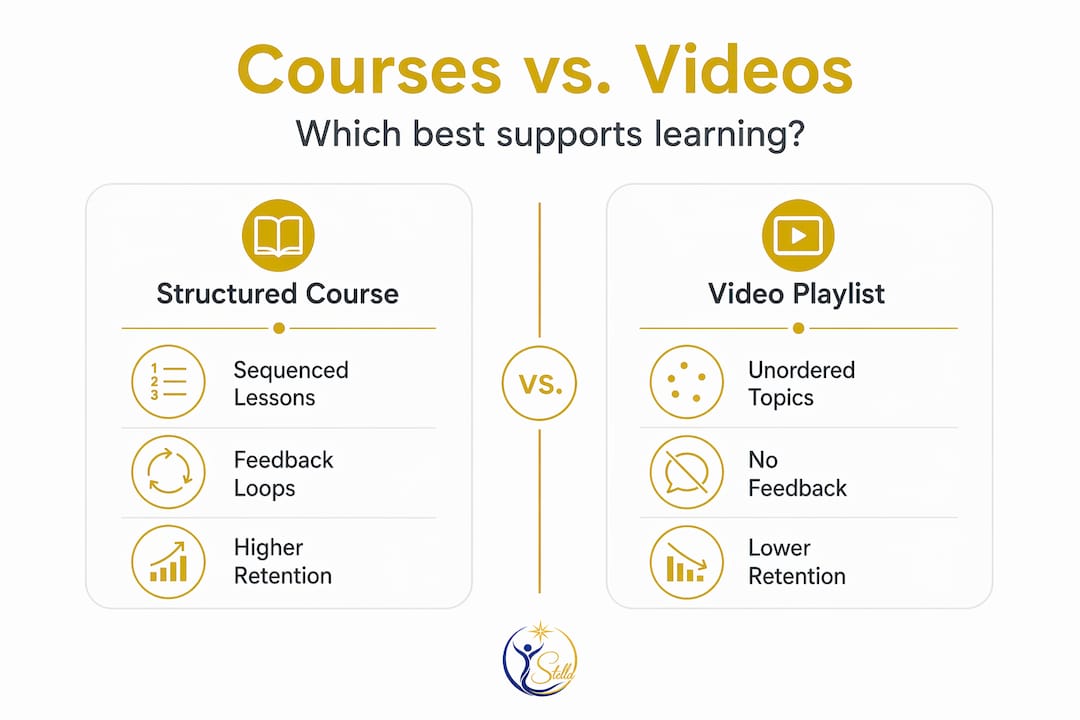
The clearest way to understand the difference is to think about design intent. A structured course is built as a coherent curriculum: lessons follow a deliberate sequence, each one builds on the last, and the learner is guided toward specific outcomes. A video library, by contrast, is a collection of content that may cover the same topic but was never designed to be experienced as a unified path.
Structured courses provide a coherent curriculum with learning activities in sequence, while video libraries often lack a structured feedback loop. That difference is not cosmetic. It changes how your brain processes and stores information.
Here is what that design difference looks like in practice:
- Ordered lessons mean you are never dropped into advanced content without the foundation to understand it.
- Learning activities like reflections, practices, or short assessments keep you active rather than passive.
- Clear progression markers show you where you are and what comes next, reducing the mental energy spent figuring out what to watch.
- Defined goals give each lesson a purpose, so you are not just consuming content but moving toward a tangible outcome.
When you browse a video platform or playlist, you navigate by curiosity or algorithm. That can feel freeing, but it tends to create gaps in understanding. You might watch a ten-minute tutorial on a qigong breathing technique without any context about why the breath connects to the digestive system, or what you should practice first to make that technique effective.
Pro Tip: Before starting any online learning format, write down the specific outcome you want. If your answer is "I want to feel calmer and support my gut health over the next eight weeks," a structured course will serve you far better than browsing videos on the topic.
Interactivity and engagement in structured courses
One of the most meaningful advantages of a structured course is what happens between lessons, not just during them. Interactive features embedded throughout a course ask your brain to do something with the information rather than simply receive it.
Interactive course video features such as clickable quizzes, branching scenarios, and immediate feedback significantly enhance learner engagement. These are not gimmicks. They create what learning researchers call a feedback loop: a moment where the course responds to your understanding and either confirms or gently corrects it.
Consider the difference between these two experiences:
- Watching a video on the Five Animals Qigong bear posture and moving on.
- Completing a structured module where you watch, attempt the movement, answer a short reflection question, and receive guidance on common alignment patterns before continuing.
The second path takes slightly longer, but transforming passive videos into interactive experiences with embedded elements drives better engagement and retention. Your nervous system has been asked to participate, not just observe.
Static courses lack feedback loops that adapt to learner misconceptions. This matters especially in body-based practices like qigong, where a misunderstood instruction can become a habit that takes longer to unlearn than it would have taken to learn correctly.
Pro Tip: When evaluating any online wellness course, look for embedded check-ins, movement prompts, or short quizzes within the lessons. These signal that the course was designed with your learning, not just your viewing, in mind.
Learning outcomes and retention: what the research shows
The gap between watching and truly learning becomes most visible when you look at what your brain actually holds onto days later.
Interactive, structured learning systems can maintain learning retention consistently across several days, outperforming static text or video alone. One study found immediate recall at 77% and long-term recall at 78% after three to seven days for interactive learners, while textbook or passive-media learners stayed below 70%.
Meanwhile, fragmented short videos reduce memory retrieval accuracy and impair neural connectivity related to memory integration. Put plainly: watching disconnected clips weakens the mental wiring that links new information to what you already know.
| Format | Avg. retention after 7 days | Feedback during learning | Completion support |
|---|---|---|---|
| Structured course | High (77–78%) | Active, embedded | Pacing, assessments, community |
| Video library | Below 70% | None | None |
| Single tutorial video | Variable | None | None |
"Structured learning succeeds by planning for spaced review and chunking content, as opposed to relying on long unstructured video lectures." — Faculty Focus on spaced learning
Online course completion rates sit at about 31% globally, and video-only content tends to show even lower engagement than structured courses with active support. That number reflects something real: when a learning format does not support you through the process, most people quietly stop.
The good news is that spaced and chunked learning, which breaks content into small segments revisited over time, deepens knowledge far more than marathon video sessions. A well-designed course builds this rhythm in for you.
How curriculum structure guides your learning path
Think of a structured course as a path through a forest and a video library as a field with no marked trails. Both contain the same trees. Only one reliably gets you where you want to go.

Sequencing videos into curricular threads with prerequisites creates a navigable curriculum that reduces cognitive load. When each lesson assumes only what has already been taught, your brain spends its energy understanding new material rather than trying to fill in missing context.
Here is a direct comparison of how the two formats handle your learning experience:
| Curriculum feature | Structured course | Video library |
|---|---|---|
| Lesson sequencing | Deliberate, prerequisite-based | Random or algorithm-driven |
| Skill scaffolding | Progressive, layered | Isolated, topic-by-topic |
| Cognitive load | Managed by design | Managed by the learner |
| Instructor guidance | Woven throughout | Present only within each video |
| Community and support | Often included | Rarely available |
In wellness education, this scaffolding matters deeply. If you are learning qigong to soothe digestive tension, you need to understand how breath regulation connects to the nervous system before you layer in specific animal movements. A course that places breathing foundations before movement sequences gives you a richer, more embodied experience. A playlist that organizes by view count does not.
You can explore how online wellness courses work in greater depth, including how interactive elements and real-time feedback in structured health courses deepen understanding in ways that passive watching cannot replicate.
How to choose between structured courses and videos
The honest answer is that neither format is wrong. The right choice depends on what you actually need from your learning experience right now.
Use a structured course when:
- You are building a new skill from the ground up and need foundational knowledge first.
- You want lasting results, not just a general sense of the topic.
- The subject involves physical technique, breath, or subtle body awareness where feedback matters.
- You have a specific health or wellness goal you want to reach within a defined timeframe.
- You tend to lose motivation without a clear path and completion markers.
Standalone videos work well when you want a quick refresher on something you already understand, when you are exploring a topic before committing to deeper study, or when you need a single technique for an immediate need. Watching a five-minute video on a calming breathing exercise before bed can be genuinely useful. That is video learning at its best.
Microlearning video lessons are most effective when kept under three minutes with no more than three key points per video. If the video you are watching feels rushed or overstuffed, the format may be working against your retention.
Pro Tip: If you find yourself watching video after video without feeling like you are progressing, that is a sign the format is not serving your goal. A structured course with clear modules and milestones will give your learning the shape it needs.
My honest take on structure and real transformation
I have watched many people come to qigong through video playlists. They are motivated, curious, genuinely committed to feeling better. And yet after months of watching, they often describe a frustrating plateau: they know about qigong but do not feel the shifts in their body they were hoping for.
In my experience, the missing piece is almost never the content. It is the container. Without a structured path, learners often skip the foundational movements that build body awareness, because those videos feel less exciting than the advanced sequences. Without feedback, small misalignments accumulate quietly. Without pacing, people do too much too fast, then burn out and stop.
What I have found actually works is learning that mirrors how the body itself changes: gradually, in layers, with time built in to absorb and integrate. A holistic wellness framework does exactly that. It is not about information delivery. It is about creating the conditions for genuine transformation to take hold.
I will also say this: videos absolutely have a place. A short movement video on a stressful morning can anchor your entire day. But if your goal is to genuinely release deep-held tension, awaken your energy, and build a practice that sustains your health, a well-designed course gives you something a playlist simply cannot. It gives you a guide.
— Stella
Experience structured qigong learning for yourself
If this article has clarified why the format of your learning matters as much as the content, the next step is to experience it directly.
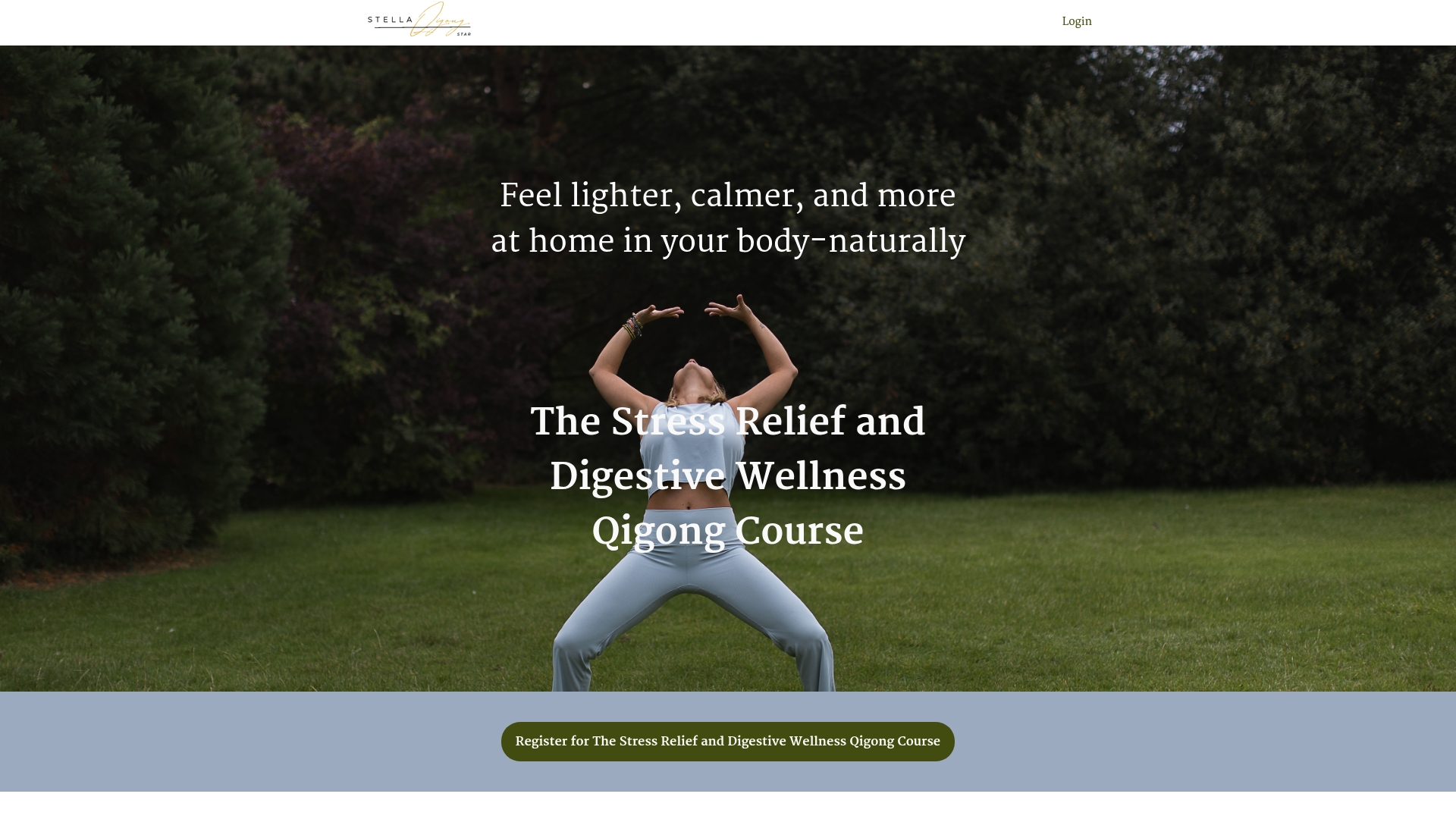
At Qigongstar, the courses are built exactly the way this article describes: sequenced curricula, gentle pacing, and lessons designed so each one prepares you for the next. The Five Animal Qigong course guides you through five distinct movement systems rooted in Chinese Medicine, each one targeting specific organs, emotions, and energy pathways. Structured modules mean you build genuine skill rather than just watching movements. For those drawn to deeper practice, the White Tiger Qigong course offers a focused, progressive curriculum with instructor guidance woven throughout. Both courses are beginner-friendly, on-demand, and designed to support real, lasting wellness.
FAQ
What makes a structured course different from a playlist?
A structured course is built around a deliberate learning sequence with prerequisites, feedback mechanisms, and clear outcomes. A playlist is simply a collection of videos without a designed progression or active learning support.
Do structured courses actually improve retention?
Yes. Interactive structured learning shows retention rates of 77 to 78% after several days, compared to below 70% for passive video or textbook formats, making the course format measurably more effective for lasting knowledge.
When are standalone videos the better choice?
Standalone videos work well for quick refreshers, topic exploration before committing to a course, or single-technique needs you already have enough background to apply correctly.
Why are online course completion rates so low?
Course completion globally averages around 31%, largely because many online formats lack the structure, pacing support, and community accountability that help learners stay motivated and finish what they start.
How do I know if a course is truly structured?
Look for clearly numbered modules, stated learning goals for each lesson, embedded activities or quizzes, and a logical progression from foundational to advanced content. These signals indicate the course was designed to guide your learning, not just deliver content.