
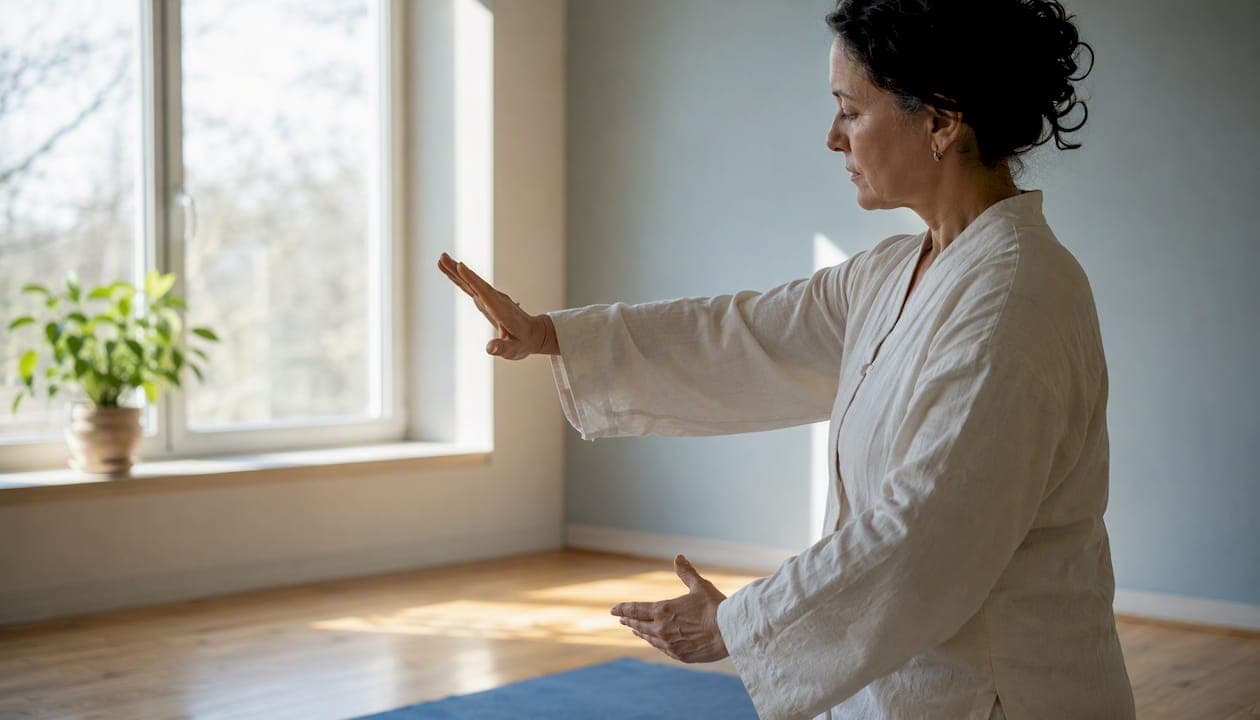
Qigong calms the nervous system by shifting your body from sympathetic dominance ("fight-or-flight") to parasympathetic activation ("rest-and-digest") through three interlocking tools: controlled breath, slow rhythmic movement, and focused attention. This isn't a vague wellness claim. Peer-reviewed systematic reviews identify four active ingredients — physical training, active relaxation, focused attention, and conscious breathing — as the mechanisms most likely responsible for Qigong's calming effects. The National Center for Complementary and Integrative Health (NCCIH) describes Qigong as a mind-body practice combining slow movements, breath control, and mental focus, with cognitive and stress benefits documented across multiple studies.
You can feel the shift in under a minute. Try this now: stand or sit comfortably, inhale slowly through your nose for four counts, hold gently for two, then exhale through your nose for six counts. Repeat three times. That single breath pattern begins to lower your heart rate and nudge your autonomic nervous system toward calm.
The core calming mechanisms at a glance:
- Slow nasal breathing reduces respiratory rate and increases heart rate variability (HRV)
- Gentle rhythmic movement anchors interoceptive attention and quiets reactive thinking
- Focused mental attention shifts activity toward prefrontal control circuits
- Active relaxation releases muscular tension and lowers HPA-axis stress hormones
- Together, these reduce cortisol, lower blood pressure, and increase parasympathetic tone
Pro Tip: Use the four-count breath reset above the moment you notice your shoulders tightening or your thoughts racing — acute stress is exactly when this micro-practice delivers the fastest relief.
Key Takeaways
Qigong calms the nervous system through four evidence-supported mechanisms — breath regulation, slow rhythmic movement, focused attention, and active relaxation — with measurable effects on HRV, cortisol, and blood pressure documented across multiple RCTs and systematic reviews.
| Point | Details |
|---|---|
| Core mechanism | Qigong shifts autonomic balance from sympathetic to parasympathetic through breath, movement, and attention. |
| Evidence base | RCTs and systematic reviews consistently show stress and anxiety reduction; cortisol and HRV changes reported in multiple trials. |
| Practice dose | Daily micro-resets plus 3–5 sessions per week of 20–45 minutes produces measurable outcomes; cognitive benefits appear after 12+ weeks. |
| Safety profile | Generally low-risk for healthy adults; mild muscle soreness is the most common side effect. Consult a physician for cardiovascular or psychiatric conditions. |
| Qigongstar | Offers beginner-friendly online courses in Five Animal Qigong and White Tiger Qigong for structured, instructor-led stress relief practice. |
Table of Contents
- What Qigong actually is, and why it works for your nervous system
- How Qigong calms the nervous system: the physiological pathways
- What the research actually says about Qigong and stress
- The four core elements that produce the calming effect
- Beginner-friendly Qigong routines you can start today
- How often and how long to practice for real results
- Safety, side effects, and when to seek professional help
- How Qigong compares with yoga, mindfulness, and Tai Chi
- Practical tips to get the most calming benefit from your practice
- A practitioner's perspective on Qigong and stress management
- Ready to learn Qigong for stress relief with expert guidance?
- Sources
What Qigong actually is, and why it works for your nervous system
Qigong (pronounced "chee-gong") is a Chinese medicine-rooted mind-body discipline that combines meditative movement, breath regulation, and focused intention. Unlike a purely physical workout, every element of Qigong practice is designed to cultivate the flow of qi (vital energy) while simultaneously producing measurable physiological effects. The three components that matter most for nervous-system regulation are: controlled breathing (slow, nasal, diaphragmatic), gentle posture and movement (soft, rhythmic, never forced), and mental focus or visualization (attention anchored to breath, body sensation, or a calming image).
Common Qigong forms relevant to stress relief include:
- Standing Qigong (Zhan Zhuang): Still postures that train interoceptive awareness and deep relaxation
- Five Animal Qigong (Wu Qin Xi): Flowing movement sequences inspired by five animals, each targeting different organ systems and emotional states
- Baduanjin (Eight Brocades): A structured eight-movement sequence widely studied in clinical trials for stress and blood pressure
- White Tiger Qigong: A dynamic, breath-led practice that integrates spinal movement with breathwork for stress resilience
Each of these forms engages the same core pathways — breath, movement, and attention — which is why the calming effect appears across styles, not just one.
How Qigong calms the nervous system: the physiological pathways
Autonomic balance: from fight-or-flight to rest-and-digest
Your autonomic nervous system has two branches. The sympathetic branch accelerates your heart, tightens your muscles, and floods your blood with cortisol when you perceive threat. The parasympathetic branch does the opposite: it slows the heart, relaxes smooth muscle, and signals safety. Chronic stress keeps the sympathetic branch overactive. Qigong's slow, deliberate movements and breath patterns send repeated "safety" signals to the brain, gradually restoring balance toward parasympathetic dominance. Clinical studies and meta-analyses confirm that meditative movement practices like Qigong and Tai Chi may shift this autonomic balance, with neuroimaging studies implicating the anterior cingulate cortex (ACC), insula, prefrontal cortex (PFC), and amygdala in these changes.
Breath mechanics and HRV
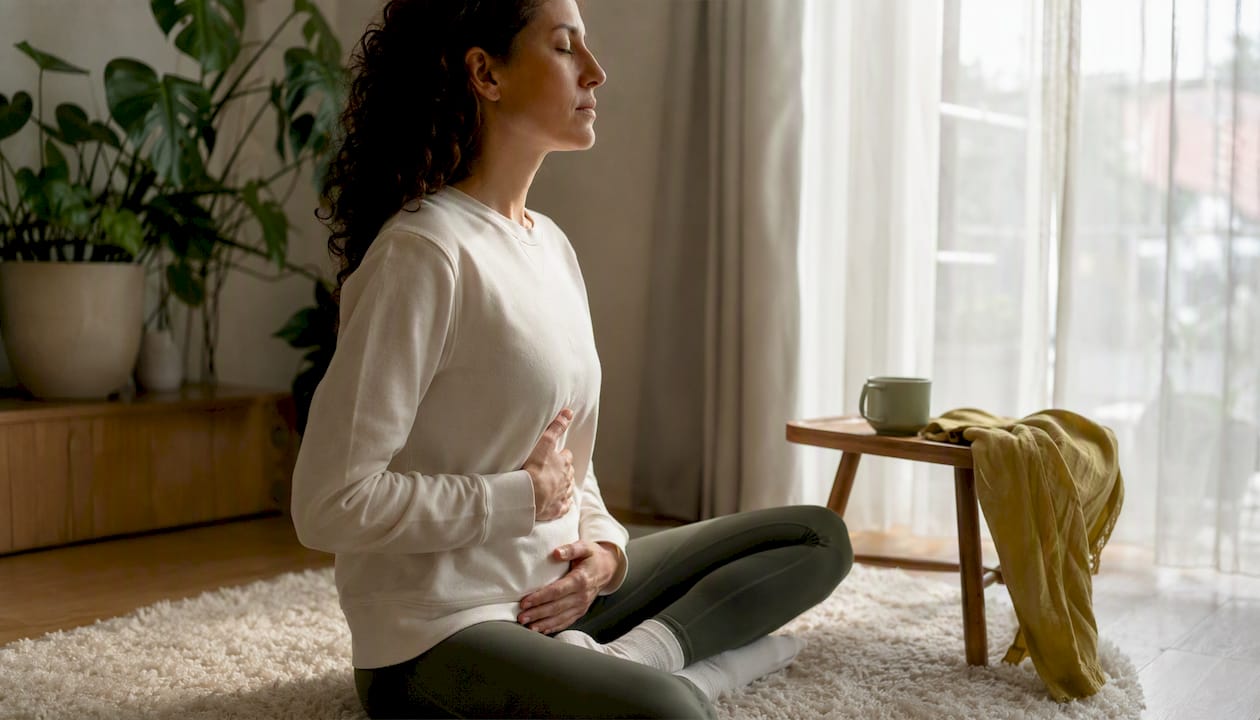
The most direct lever Qigong pulls is respiratory rate. Most stressed adults breathe at 14–18 breaths per minute, keeping the sympathetic system primed. Qigong breathing typically slows this to 6–10 breaths per minute. Research cited in the PMC mood-regulation review found that slowing from 14 to 10 breaths per minute correlated with lower blood pressure, longer pulse transit time, and increased cardiorespiratory coherence — a marker of heart-brain synchrony. HRV, the beat-to-beat variation in your heart rate, rises with parasympathetic tone. Slow nasal breathing is one of the fastest ways to increase HRV, and Qigong builds this into every session.
Key measurable markers Qigong influences:
- Heart rate variability (HRV): increases with slow breathing and parasympathetic activation
- Cortisol: reduced in several RCTs, though effect sizes vary
- Blood pressure: lower systolic and diastolic readings reported across multiple trials
- Theta and delta brainwave activity: associated with relaxed, meditative states and observed in Qigong practitioners
- Amygdala reactivity: reduced in neuroimaging studies of meditative movement
HPA-axis and cortisol modulation
The hypothalamic-pituitary-adrenal (HPA) axis is your body's central stress-hormone system. When it fires repeatedly without recovery, cortisol stays elevated, disrupting sleep, digestion, and immune function. Qigong's combination of slow movement and focused attention appears to dampen HPA-axis reactivity. The MDPI systematic review of RCTs found Qigong significantly reduces stress compared with no-intervention controls and reported biomarker changes including cortisol reductions in some trials, while noting that heterogeneity across studies tempers strong conclusions.
Brain changes: insula, ACC, PFC, and amygdala
Neuroimaging research links meditative movement to activity changes in four brain regions. The insula processes interoceptive signals — what your body feels from the inside — and becomes better calibrated with regular practice. The ACC supports attention regulation and conflict monitoring, helping you stay present rather than reactive. The PFC governs executive function and emotional regulation, and its strengthened connection to the amygdala means stress responses are modulated before they escalate. The amygdala itself shows reduced reactivity in practitioners of meditative movement, suggesting a genuine shift in how threat signals are processed, not just suppressed.
What the research actually says about Qigong and stress
The evidence base for Qigong's calming effects is genuinely encouraging, though it comes with important caveats worth understanding.
- RCTs consistently report reductions in perceived stress, anxiety, and depressive symptoms compared with no-intervention controls
- Blood pressure improvements appear across multiple trials, particularly in adults with hypertension or elevated baseline stress
- HRV and some immune markers improve in studies with sufficient duration and frequency
- A Frontiers meta-analysis found cognitive and emotional benefits in older adults when programs ran at least 12 weeks with 3–5 sessions per week
- The NCCIH summary notes cognitive benefits in studies where programs were longer than 12 weeks or sufficiently frequent
Limitations you should know:
- Many individual trials have small sample sizes, limiting statistical power
- Intervention protocols vary widely (style, duration, frequency), making direct comparisons difficult
- Few studies include long-term follow-up beyond the intervention period
- Active control conditions (e.g., comparing Qigong to another exercise) are less common than passive controls
- Blinding participants in movement studies is inherently difficult, introducing potential bias
The honest interpretation: Qigong is a well-supported complementary tool for stress and anxiety relief, with a consistent direction of effect across studies. It is not a pharmaceutical-grade intervention with tightly controlled dosing, but the signal is real and the risk is low.
The four core elements that produce the calming effect
Research syntheses repeatedly identify the same four active ingredients as the mechanisms most responsible for Qigong's benefits:
- Controlled breathing: Slow, nasal, diaphragmatic breath directly activates the vagus nerve and increases parasympathetic tone. Even two minutes of slow breathing measurably shifts HRV. Explore the breathwork styles used in Qigong practice for a deeper look at how each pattern affects your physiology.
- Slow rhythmic movement: Gentle, repetitive movement anchors your attention in the body and interrupts the mental loops that sustain stress. The proprioceptive feedback from slow movement also signals the nervous system that the body is safe.
- Focused attention and interoception: Directing awareness to breath or body sensation trains the insula and PFC to process internal signals more accurately, reducing emotional reactivity over time.
- Active relaxation and soft tension release: Consciously softening muscles — especially the jaw, shoulders, and belly — sends direct feedback to the nervous system that threat has passed.
These four elements work synergistically. You don't need to master all of them at once, but combining even two produces a faster effect than either alone.
Pro Tip: Pair slow nasal breathing with a gentle swaying movement — even just shifting your weight softly from foot to foot — and you engage both the breath and proprioceptive pathways simultaneously. This combination tends to produce a noticeably faster sense of calm than breath alone.
Beginner-friendly Qigong routines you can start today
You don't need equipment, a studio, or years of training to feel the calming effects of Qigong. The routines below map directly to the mechanisms above. Start with the two-minute reset and build from there.
The 2-minute breath reset (standing or seated)
- Stand with feet shoulder-width apart, knees soft, or sit upright with feet flat on the floor.
- Place one hand on your belly, one on your chest.
- Inhale slowly through your nose for 4 counts, letting your belly expand first.
- Pause gently for 2 counts.
- Exhale through your nose for 6 counts, letting your belly fall.
- After 3 breaths, let your arms float gently up to shoulder height on the inhale, then lower them on the exhale.
- Continue for 2 minutes, keeping your gaze soft and your jaw unclenched.
The 7-minute vagal reset sequence
- Grounding stance (1 minute): Stand with feet shoulder-width apart. Breathe slowly and feel the weight of your feet on the floor. Soften your knees, your shoulders, your face.
- Arm circles with breath (2 minutes): Inhale as you slowly raise both arms forward and up overhead. Exhale as you lower them in a wide arc to your sides. Move at half the speed you think is slow enough.
- Spinal wave (2 minutes): With hands resting on your thighs, inhale and gently arch your lower back. Exhale and round it softly. Let the movement ripple up through your spine like a gentle wave.
- Closing stillness (2 minutes): Return to the grounding stance. Place both hands over your lower belly. Breathe slowly and simply notice the warmth of your hands and the rise and fall of your breath.
Safety notes and modifications
- Dizziness: Slow your breath slightly and open your eyes. Sit down if needed. Lightheadedness from slow breathing usually passes within 30 seconds.
- Joint issues: All standing movements can be done seated. Arm circles can be reduced to small shoulder rolls.
- Recent surgery or cardiovascular instability: Consult your physician before beginning any new movement practice. The breath reset alone (no movement) is generally safe for most people.
For a fully structured daily Qigong routine with modifications and progressions, Qigongstar's step-by-step guide walks you through each movement with clear cues.
Pro Tip: Morning practice — even just the 2-minute breath reset before you check your phone — sets your autonomic baseline for the day. Evening practice helps clear accumulated stress before sleep. Both windows work; consistency matters more than timing.
How often and how long to practice for real results
Frequency and duration matter more than most people expect. Here's what the research and clinical experience suggest:
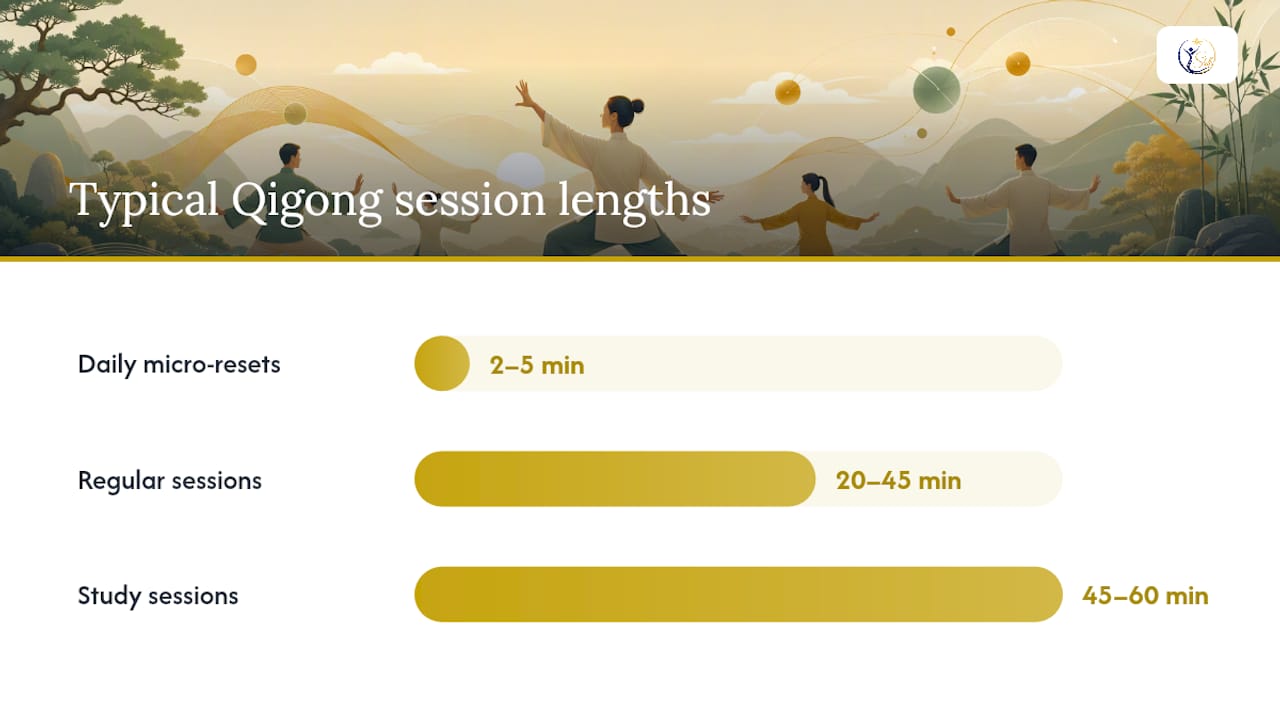
- Daily micro-resets (2–5 minutes): Use the breath reset or grounding stance at any point during the day. These short practices maintain parasympathetic tone between longer sessions and build the habit.
- 3–5 sessions per week, 20–45 minutes each: This is the dose range most associated with measurable outcomes in trials. The NCCIH notes that studies showing cognitive benefits typically ran programs at 3–7 sessions per week, with session durations of 45–60 minutes.
- Immediate effects (minutes to hours): Most people notice reduced heart rate, softer breathing, and a quieter mind within a single session. This is the parasympathetic shift in real time.
- Short-term changes (2–8 weeks): Mood improvements, reduced perceived stress, and early HRV changes tend to appear within this window with consistent practice.
- Medium-term changes (8–12+ weeks): Cognitive benefits, more stable blood pressure, and sustained cortisol modulation are more commonly reported after programs of at least 12 weeks. The Frontiers meta-analysis found this threshold particularly relevant for emotional and cognitive outcomes.
- Maintenance: Once you've built a baseline of calm, shorter or less frequent sessions can sustain the benefit. Think of it less like a course and more like a daily hygiene practice.
Individual variation is real. Your starting stress level, sleep quality, and consistency all influence how quickly you notice change. For practical guidance on building stress resilience through sustained practice, Qigongstar's guide covers the long-term picture in detail.
Safety, side effects, and when to seek professional help
Qigong is widely regarded as a low-risk practice, and the Cleveland Clinic describes it as an accessible complementary therapy suitable for most adults. That said, a few things are worth knowing before you begin.
Common mild side effects:
- Temporary muscle soreness, particularly in the legs and lower back during the first week or two
- Mild lightheadedness from slow breathing, which typically resolves within seconds
- Emotional release (unexpected tears or a sense of heaviness) as the nervous system begins to unwind stored tension
The MDPI systematic review noted mild muscle soreness in a portion of participants in some trials. Beginners should progress gradually and expect some transient discomfort in the first few sessions.
Contraindications and precautions:
- Unstable cardiovascular disease: get medical clearance before beginning
- Recent surgery or acute injury: modify or delay movement-based practice; breath-only work may still be appropriate
- Severe psychiatric conditions (active psychosis, acute dissociation): consult a mental health professional before using meditative practices unsupervised
- Pregnancy: many Qigong movements are safe, but check with your midwife or OB for specific modifications
When to stop and seek help: If you experience chest pain, severe dizziness, or a significant worsening of anxiety or dissociation during practice, stop immediately and consult a healthcare provider. Qigong is a supportive tool, not a substitute for clinical care.
One reassurance worth stating plainly: for the vast majority of healthy adults, Qigong is gentle, accessible, and safe to begin without special equipment or supervision.
How Qigong compares with yoga, mindfulness, and Tai Chi
All four practices reduce stress, but they reach that outcome through different mechanisms. Understanding the distinctions helps you choose what fits your situation or combine them wisely.
Mechanism and emphasis:
- Qigong: Meditative movement plus breath regulation, with explicit focus on qi cultivation and interoceptive awareness. Lower physical load than most yoga styles. Designed to be practiced daily as a lifestyle habit.
- Tai Chi: Shares Qigong's roots in Chinese medicine and uses slow, flowing movement, but with a more martial-arts-derived structure. The two practices overlap significantly in mechanism and outcome; Tai Chi sequences tend to be longer and more choreographically complex.
- Yoga: Combines physical postures (asanas), breath (pranayama), and meditation. Physical load varies enormously by style — from restorative yoga (very gentle) to Ashtanga (highly demanding). Pranayama techniques overlap closely with Qigong breathwork in their autonomic effects.
- Mindfulness meditation: Attention training without movement. Highly effective for emotion regulation and stress reduction, with a strong evidence base. Lacks the proprioceptive and cardiovascular benefits of movement-based practices.
Outcomes overlap and distinctions:
- Stress and anxiety reduction: all four show consistent evidence
- Blood pressure and cardiovascular markers: Qigong, Tai Chi, and yoga show the clearest effects; mindfulness shows some but less consistently
- Balance and fall prevention: Tai Chi has the strongest evidence base here
- Cognitive function: Qigong and mindfulness both show benefits, particularly with longer programs
- Physical fitness: yoga (active styles) and Tai Chi tend to produce greater strength and flexibility gains than Qigong
For a detailed comparison of mind-body practices and how to choose between them, Qigongstar's 2026 guide covers the evidence across modalities.
Practical combining guidance: If your primary goal is anxiety relief and nervous-system regulation, Qigong or mindfulness meditation are strong starting points. If you also want balance training, add Tai Chi. If flexibility and physical conditioning matter alongside stress relief, a gentle yoga practice complements Qigong well.
Practical tips to get the most calming benefit from your practice
Small adjustments make a meaningful difference in how much calm you actually feel:
- Set a tiny daily cue: Attach your 2-minute breath reset to something you already do — brewing coffee, sitting down at your desk, or washing your hands. Habit stacking removes the friction of remembering.
- Prioritize nasal breathing throughout: Not just during formal practice. Nasal breathing filters, warms, and slows air, and it naturally engages the diaphragm. Switching from mouth to nasal breathing during daily activities extends the parasympathetic benefit beyond your practice window.
- Practice before stressful tasks, not just after: Qigong before a difficult meeting or a hard conversation primes your nervous system for calm rather than trying to recover from stress after the fact.
- Track perceived stress, not just mood: A simple 1–10 stress rating before and after each session gives you concrete feedback. Many people are surprised how much even a 7-minute session shifts their number.
- If practice feels restless: Shorten it. Five minutes of genuinely slow, attentive movement beats 20 minutes of distracted going-through-the-motions. Restlessness often signals that your nervous system needs even more gentleness, not more effort.
- Use short resets during the day: Three slow breaths at your desk, a 60-second grounding stance before a phone call — these micro-practices accumulate. They keep your baseline calmer so you're not starting each formal session from a place of high activation.
A practitioner's perspective on Qigong and stress management
What strikes me most about the research on Qigong is not the individual study results — it's the consistency of the direction. Across different styles, different populations, and different outcome measures, the signal points the same way: slower breath, gentler movement, and anchored attention tend to produce calmer bodies and quieter minds. That consistency matters more than any single trial's effect size.
What I think gets underestimated is the role of interoception — the body's ability to sense itself from the inside. Most stress-management approaches focus on changing thoughts or behaviors. Qigong works differently. It trains your nervous system to receive and interpret internal signals more accurately, which means your stress response becomes less reactive over time, not because you've suppressed it, but because your body has learned to distinguish real threat from habitual alarm. That's a deeper kind of calm than relaxation techniques that simply distract you from tension.
The realistic expectation is this: Qigong is a supportive, evidence-informed practice that complements medical and psychological care. It is not a replacement for therapy, medication, or clinical treatment when those are needed. What it offers is something sustainable — a daily practice you can carry anywhere, that costs nothing once you've learned it, and that tends to get more effective the longer you do it. That's a rare combination in stress management.
Ready to learn Qigong for stress relief with expert guidance?
Knowing the science is one thing. Having a structured, instructor-led path to practice it is another. Qigongstar offers online Qigong classes and courses rooted in Chinese medicine, designed specifically for stress relief, anxiety, and overall nervous-system wellness. Whether you're drawn to the flowing sequences of Five Animal Qigong or the breath-led spinal work of White Tiger Qigong, every program is beginner-friendly, self-paced, and taught by a certified instructor who understands both the science and the lived experience of stress.
No prior experience is needed. Sessions are available on demand, so you can start with a short practice today and build at your own pace. If you're ready to move from understanding to doing, browse the full course catalog and find the program that fits where you are right now.
Sources
The following sources informed this article and offer reliable starting points for deeper study:
- Individual Stress Prevention through Qigong
- Qigong: What You Need To Know | NCCIH
- What Are the Health Benefits of Qigong? | Cleveland Clinic
- Qigong Therapy for Stress Management: A Systematic Review of Randomized Controlled Trials