

Mind-body practice heals the gut by directly calming the gut-brain axis, reducing inflammation, and restoring the microbial balance your digestive system needs to function well. Your gut is home to 38 trillion microbial cells, and that ecosystem responds powerfully to stress, breath, and movement. When you practice techniques like Qigong, yoga, or mindfulness meditation, you are not just relaxing your mind. You are sending measurable biological signals that soothe gut inflammation, shift your nervous system toward healing, and nurture the bacteria that keep digestion running smoothly. This guide explains how mind body practice heals gut function, what the science says, and how you can start applying these techniques today.
How does the gut-brain connection work?
The gut and brain communicate constantly through a two-way highway called the gut-brain axis. The vagus nerve is the main cable in this system, and 90% of its signals travel from the gut up to the brain, not the other way around. That means your digestive symptoms are often the first signal that something is wrong systemically, not just locally.
Your gut also produces over 95% of the body's serotonin, the chemical most people associate with mood and mental wellbeing. When gut inflammation disrupts serotonin production, anxiety and low mood often follow. This is why digestive distress and emotional stress so frequently appear together.
"The gut-brain connection creates a vicious cycle: gut inflammation worsens stress, and stress worsens gut inflammation. Breaking that cycle requires working on both ends simultaneously."
Chronic stress keeps your body locked in a fight-or-flight state. That state suppresses digestion, reduces blood flow to the intestines, and shifts the gut microbiome toward inflammatory species. The result is a loop where stress causes gut problems, and gut problems generate more stress. Mind-body practices interrupt this loop by activating the parasympathetic nervous system, the "rest and digest" mode your gut genuinely needs.
The practical takeaway is clear. Calming your nervous system is not a luxury. It is a direct intervention for gut health, backed by the physiology of the vagus nerve and the gut-brain axis.
What does the science say about yoga, meditation, and gut health?
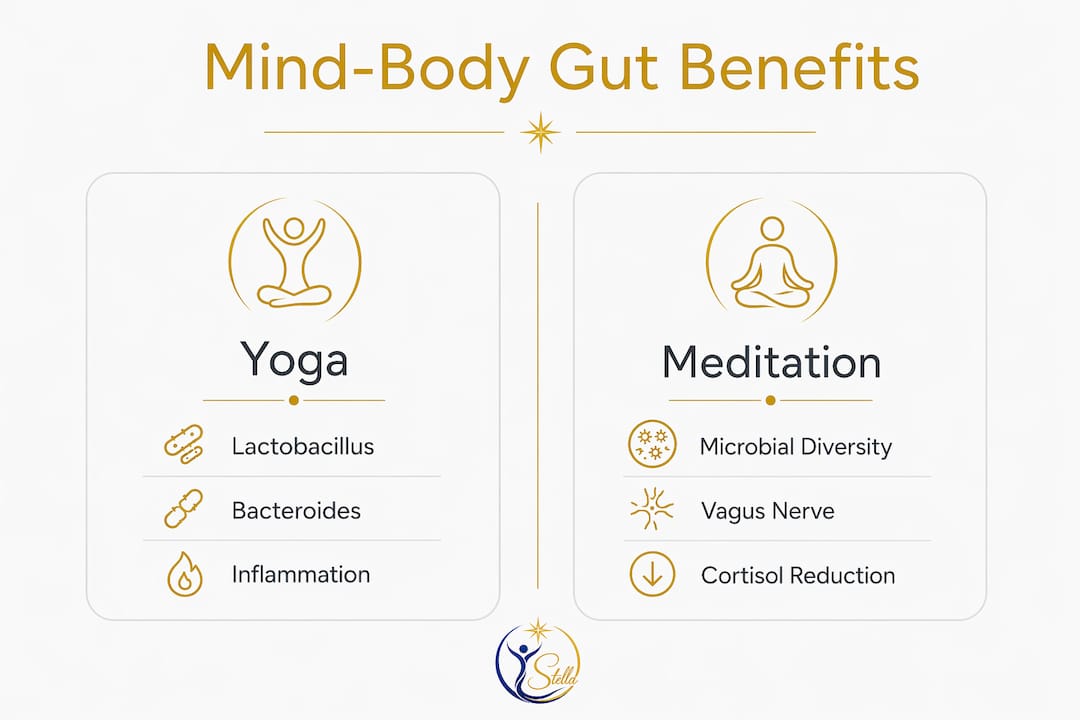
Research now confirms that specific mind-body practices produce measurable changes in gut microbial composition. Yoga and meditation increase beneficial bacteria including Bacteroides, Faecalibacterium, Roseburia, and Lactobacillus. These species are associated with reduced gut inflammation, stronger intestinal lining integrity, and better immune regulation.

One of the most striking findings is that meditative depth correlates positively with microbial diversity at a statistically significant level (p=0.035). That means the more present and focused you are during practice, the greater the benefit to your gut microbiome. Effort and intensity matter less than conscious attention.
| Practice | Primary gut benefit | Key mechanism |
|---|---|---|
| Yoga | Increases Lactobacillus and Bacteroides | Reduces cortisol, activates vagus nerve |
| Meditation | Improves microbial diversity | Lowers systemic inflammation markers |
| Qigong / Tai Chi | Elevates vagal tone | Breath-movement synchronization |
| Mindfulness | Reduces gut inflammation | Calms stress response, supports motility |
Yoga therapy is also gaining recognition as a low-risk adjunct to conventional gastroenterology care. Clinicians note its cost-effectiveness and safety profile. The current limitation is a lack of standardized protocols, which means results vary depending on the instructor and the specific GI condition being addressed.
Pro Tip: When choosing a yoga or Qigong class for gut health, look for instructors certified by recognized bodies like the Yoga Alliance or the White Tiger Qigong School. Certification signals that the teacher can adapt practices to your specific needs, including digestive conditions.
The evidence points toward one clear conclusion. Mind-body practices are not a soft complement to gut care. They produce real, measurable shifts in the biology of your digestive system.
What techniques stimulate the parasympathetic nervous system for gut healing?
Activating your parasympathetic nervous system is the core mechanism behind healing gut through mindfulness and movement. These techniques do that most effectively.
-
Diaphragmatic breathing. Deep belly breathing directly stimulates the vagus nerve and shifts your body out of stress mode. Inhale slowly for four counts, letting your belly expand. Exhale for six counts. Even five minutes of this practice before meals can improve digestive motility and reduce bloating.
-
Breath-synchronized movement. In practices like Qigong and Tai Chi, the slow synchronization of breath and movement triggers a vagal tone response that is more powerful for gut healing than aerobic exercise intensity. The key is conscious presence, not physical exertion. Moving slowly with full attention to breath activates the exact neural pathways your gut needs.
-
Body scan meditation. Lying still and moving your awareness through each part of your body calms the stress response and reduces the cortisol that drives gut inflammation. Ten minutes before sleep is particularly effective for people with IBS or chronic bloating.
-
Mindful eating. Eating slowly, chewing thoroughly, and removing distractions during meals activates the cephalic phase of digestion, the brain's signal to prepare stomach acid and digestive enzymes. This simple practice reduces indigestion and improves nutrient absorption.
-
Timed meal anchors. Combining mindfulness with regular, timed meals stabilizes the autonomic nervous system. Your gut has its own internal clock, and eating at consistent times each day supports the rhythmic contractions that move food through your intestines.
Pro Tip: Start with just one technique and practice it daily for two weeks before adding another. Consistency matters far more than variety when you are retraining your nervous system.
You can learn how to practice mind-body medicine at home with simple routines that fit into your existing schedule. The barrier to entry is genuinely low.
How do you integrate mind-body practices with diet, sleep, and medical care?
Mind-body practices work best as part of a broader approach to gut health, not as a standalone solution. The most effective gut healing combines stress reduction with dietary, sleep, and medical support.
-
Anti-inflammatory diet. Foods rich in fiber, polyphenols, and fermented ingredients feed the beneficial bacteria that mind-body practices help cultivate. Think leafy greens, legumes, berries, and plain yogurt. Processed foods and refined sugar undo the microbial gains from meditation and movement.
-
Adequate sleep. Poor sleep raises systemic inflammation and disrupts the gut microbiome within days. Seven to nine hours of quality sleep each night reduces inflammatory markers and gives your gut lining time to repair. Sleep and mind-body practice reinforce each other: Qigong and meditation improve sleep quality, and better sleep amplifies the gut benefits of your practice.
-
Medical consultation. If you have a diagnosed GI condition such as Crohn's disease, ulcerative colitis, or IBS, work with a gastroenterologist alongside your mind-body practice. Yoga therapy and Qigong are recognized as adjuncts to GI care, not replacements for medical treatment. A qualified practitioner can help you tailor your practice to your specific condition.
-
Consistent routine. The gut-brain connection responds to regularity. Practicing at the same time each day, eating at consistent times, and maintaining a stable sleep schedule all reinforce the autonomic stability your gut needs to heal.
For a practical list of approaches that combine these elements, the integrative health practices guide at Qigongstar offers a clear starting framework. The goal is to build a daily rhythm that supports your gut from multiple directions at once.
Key Takeaways
Mind-body practices heal the gut by calming the gut-brain axis, shifting microbial balance toward beneficial species, and reducing the chronic inflammation that drives most digestive disorders.
| Point | Details |
|---|---|
| Gut-brain axis is bidirectional | 90% of vagus nerve signals run gut to brain, so gut health directly shapes mood and stress. |
| Meditative depth drives results | Microbial diversity improves with focused presence, not just physical movement intensity. |
| Breath is the fastest tool | Diaphragmatic breathing activates the vagus nerve and calms gut inflammation within minutes. |
| Integration amplifies healing | Combining practice with anti-inflammatory diet, consistent sleep, and medical care produces the strongest outcomes. |
| Consistency beats variety | Daily practice of one technique for two weeks outperforms sporadic use of many techniques. |
Why I believe the gut is where healing actually begins
I have worked with people dealing with chronic bloating, IBS, and stress-driven digestive issues for years. The pattern I see most often is this: people try to fix their gut with diet alone and wonder why the results plateau. What they are missing is the nervous system piece.
The gut does not heal in a state of alarm. No amount of fiber or probiotics fully compensates for a body that is chronically stressed. When I guide someone through their first Qigong breathing sequence and they feel their belly soften and their shoulders drop, something real is happening physiologically. That is vagal tone activating. That is the parasympathetic nervous system coming online.
The misconception I push back on most is the idea that mind-body practice is gentle and therefore slow. It is gentle, yes. But the biological changes it produces, shifts in microbial composition, reductions in inflammatory cytokines, improvements in gut motility, are not slow at all. Research shows measurable microbial shifts within weeks of consistent practice.
My honest advice: do not wait until your gut symptoms are severe to start. Begin with five minutes of diaphragmatic breathing before your largest meal each day. Notice what changes. Then add a short Qigong sequence. Build from there. The relief that Qigong offers for IBS is not anecdotal. It is grounded in the same gut-brain physiology this article describes.
Your gut is listening to every signal your nervous system sends. Give it calm, consistent signals, and it will respond.
— Stella
Qigongstar's online classes for gut and stress relief
If you are ready to put these principles into practice, Qigongstar offers structured online Qigong courses designed specifically for stress relief and digestive wellness.
Stella's online Qigong classes are built around the breath-movement synchronization and vagal tone activation that the research supports. Classes are beginner-friendly, on-demand, and accessible from anywhere. The Five Animal Qigong and White Tiger Qigong programs both incorporate the gentle, conscious movement patterns that calm the gut-brain axis and nurture microbial health over time. Whether you are managing IBS, chronic bloating, or simply want to release deep-held tension and restore your digestive vitality, these courses give you a clear, guided path forward. Explore the full course catalog and find the program that fits where you are right now.
FAQ
How does mind-body practice reduce gut inflammation?
Mind-body practices calm the stress response, stimulate the vagus nerve, and lower cortisol levels. These changes directly reduce the inflammatory signals that disrupt gut lining integrity and microbial balance.
Can meditation really change gut bacteria?
Yes. Research shows that yoga and meditation increase beneficial bacteria including Lactobacillus and Bacteroides, with meditative depth correlating significantly with improved microbial diversity.
Is Qigong good for IBS?
Qigong is recognized as a low-risk, supportive practice for IBS because its breath-movement synchronization activates the parasympathetic nervous system and reduces the stress-driven gut contractions that cause IBS symptoms.
How long before mind-body practice improves digestion?
Measurable microbial shifts and reductions in gut inflammation can appear within weeks of consistent daily practice. Diaphragmatic breathing can ease bloating and improve motility within a single session.
Should I replace my GI medication with mind-body practice?
No. Yoga therapy and Qigong are adjuncts to medical care, not replacements. Always consult your gastroenterologist before changing any prescribed treatment plan.