
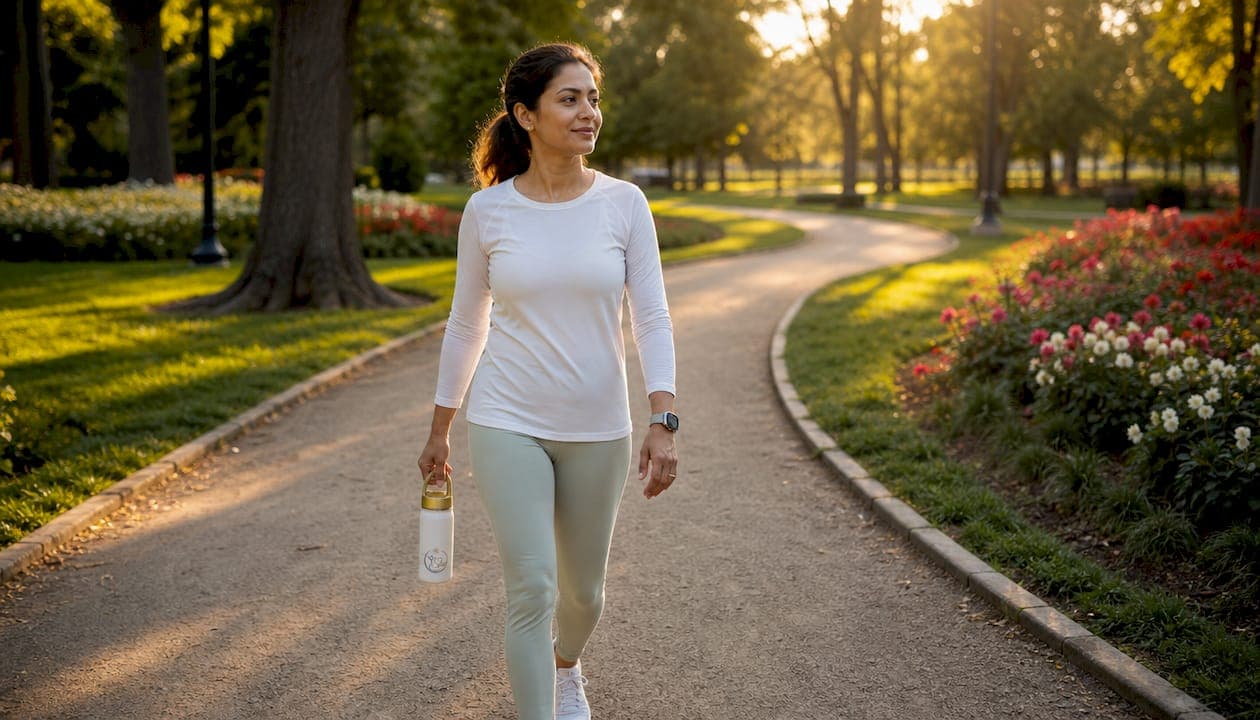
Gut health improvement through movement is defined as the deliberate use of physical activity to stimulate digestive motility, increase microbial diversity, and regulate the brain-gut-immune axis. Research published in 2026 confirms that bowel motility rises within 1–2 minutes of beginning light activity like walking. That means your gut responds to movement almost immediately. Gentle, consistent practices, including Qigong, brisk walking, and Pilates, produce measurable improvements in digestion, gut barrier function, and stress-related symptoms without requiring intense effort.
How does movement stimulate gut motility and digestion?
Movement activates your gut faster than most people expect. Bowel sound amplitude increases significantly within 1–2 minutes of starting light physical activity. Those effects fade within 2–3 minutes after stopping, which is exactly why short, frequent sessions matter more than one long workout.
The mechanism behind this involves your autonomic nervous system. When you move at a gentle pace, your body shifts toward parasympathetic activation, the "rest and digest" state. This calms stress signals and allows your digestive organs to work freely. Movement as medicine research confirms that this parasympathetic response directly supports gut function by improving blood flow to the intestines and encouraging rhythmic muscular contractions along the digestive tract.
A 10-minute walk after meals speeds digestion, reduces bloating, and eases constipation by stimulating gut motility. That single habit, repeated consistently, creates a compounding effect on your digestive health over time.
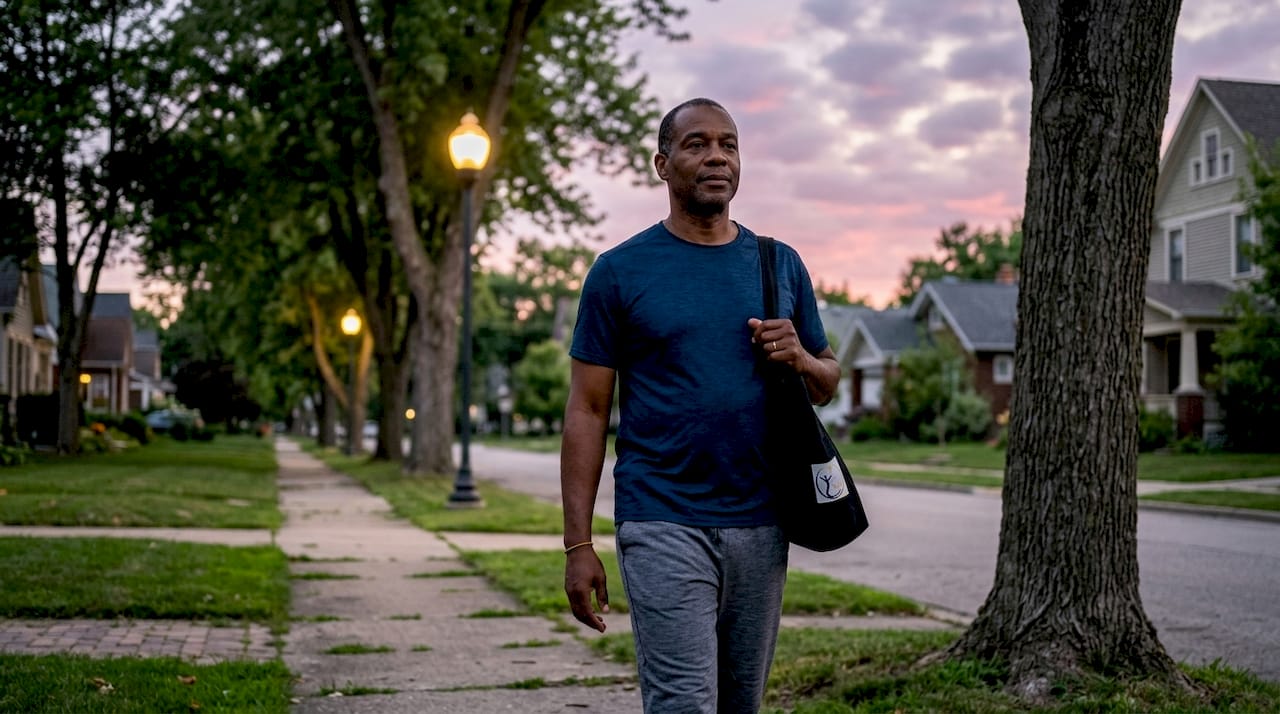
Pro Tip: Set a gentle reminder to take a 10-minute walk within 30 minutes of finishing each meal. You do not need to walk fast. A calm, steady pace is enough to awaken your digestive system.
Key physiological effects of gentle movement on digestion include:
- Increased intestinal muscle contractions that move food through the gut
- Improved blood circulation to digestive organs
- Reduced transit time, which lowers bloating and discomfort
- Parasympathetic nervous system activation that soothes gut tension
- Stimulation of the vagus nerve, which connects your brain and gut directly
What types of movement best support gut health and why?
Not all movement affects your gut the same way. The type, intensity, and regularity of activity each play a distinct role in digestive wellness.
Moderate-intensity aerobic exercise, such as brisk walking, cycling, or swimming, enhances gut microbiota diversity and increases beneficial butyrate-producing bacteria. Butyrate is a short-chain fatty acid that feeds the cells lining your colon and reduces intestinal inflammation. More of it means a stronger, calmer gut. A 2026 systematic review confirmed that moderate aerobic exercise significantly improves IBS symptoms, quality of life, and anxiety scores.
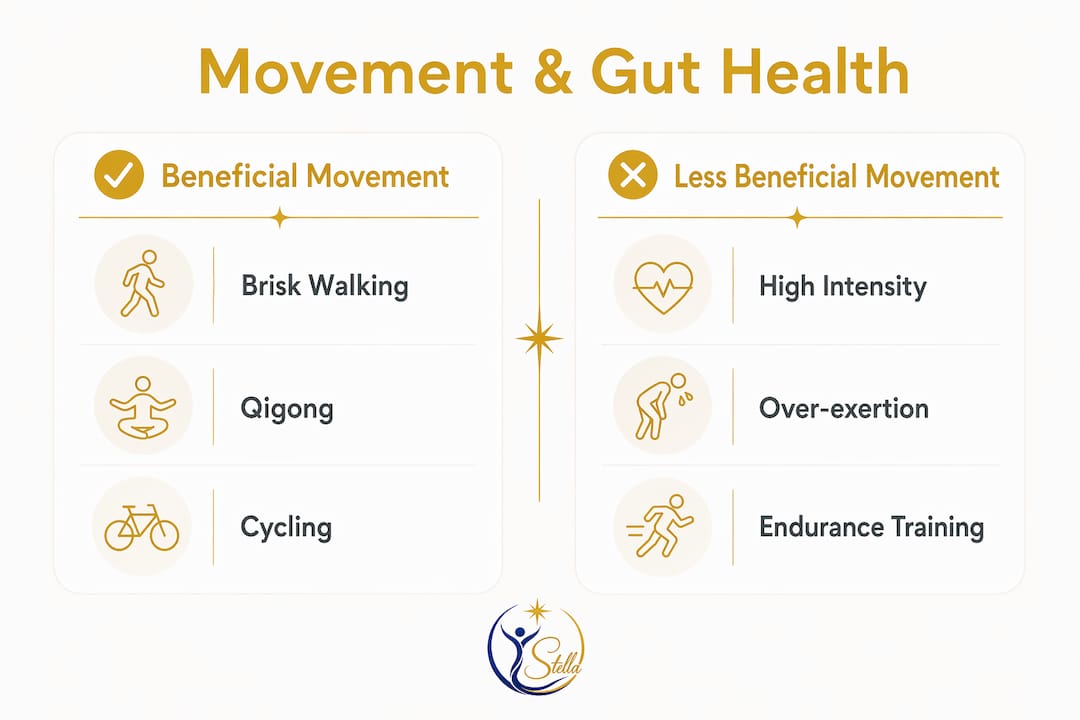
Mind-body practices work through a different pathway. Qigong and Pilates modulate the brain-gut-immune axis by calming the nervous system, reducing cortisol, and improving gut barrier function. These practices do not primarily target microbiota diversity. Instead, they release deep-held tension in the body and quiet the stress signals that disrupt digestion. For people with IBS or stress-driven gut issues, this pathway is often the most direct route to relief. Qigongstar's Qigong for IBS approach draws on exactly these mechanisms.
| Movement type | Primary gut benefit | Best for |
|---|---|---|
| Brisk walking | Increases motility and microbial diversity | Daily digestive support |
| Swimming or cycling | Boosts butyrate-producing bacteria | Aerobic gut microbiome health |
| Qigong | Calms brain-gut axis, reduces stress symptoms | IBS, anxiety-related gut issues |
| Pilates | Improves gut barrier function and core circulation | Bloating, constipation, core tension |
| Gentle yoga | Supports parasympathetic activation | Stress-related digestive discomfort |
High-intensity endurance training sits at the other end of the spectrum. Over-exertion can reduce stomach motility and increase gut permeability in susceptible people. This is sometimes called "leaky gut," and it means the intestinal lining becomes less effective at filtering what enters your bloodstream. Gentle and moderate movement avoids this risk entirely.
Pro Tip: If you are new to movement for digestive wellness, start with a 15-minute Qigong session three times per week. The mind-body gut connection activates quickly, and you will likely notice calmer digestion within two weeks.
How to safely build a gentle movement routine for your gut
Building a movement routine for digestive wellness does not require a gym membership or athletic background. You need comfortable clothing, a timer, and a consistent schedule.
"Consistency in moderate movement is more beneficial for gut microbiome diversity than sporadic, intense efforts. Diet remains a key confounding factor, but movement frequency is the variable most within your daily control." — Adapted from 2026 gut microbiota research
Start with this simple weekly framework:
- Morning: A 10-minute gentle walk before or after breakfast to wake up your digestive system.
- Midday: Two minutes of slow, deep breathing or light stretching after lunch to support parasympathetic activation.
- Evening: A 15–20 minute Qigong or Pilates session three times per week to calm the nervous system before sleep.
- Post-meal habit: A short walk within 30 minutes of your largest meal, every day.
- Weekly aerobic session: One 30-minute moderate-intensity activity, such as swimming or cycling, to support microbial diversity.
| Day | Activity | Duration |
|---|---|---|
| Monday | Morning walk + evening Qigong | 10 min + 20 min |
| Tuesday | Post-meal walks only | 10 min x 2 |
| Wednesday | Pilates or gentle yoga | 20 min |
| Thursday | Post-meal walks only | 10 min x 2 |
| Friday | Morning walk + evening Qigong | 10 min + 20 min |
| Saturday | Moderate aerobic activity | 30 min |
| Sunday | Rest or gentle stretching | 10 min |
If you experience discomfort during or after movement, wait 20–30 minutes after eating before beginning any session. Reduce intensity before stopping altogether. Your body will adapt gradually, and the goal is to build a rhythm your gut can rely on.
For a broader view of how movement fits into a full wellness plan, the holistic approaches to IBS relief framework offers practical guidance on combining movement with diet and stress management.
What are common mistakes when using movement for gut health?
The most common mistake is doing too much too soon. Intense exercise can paradoxically worsen gut permeability in people who are already dealing with digestive issues. Starting with high-intensity workouts when your gut is inflamed or irritated often makes symptoms worse, not better.
Watch for these pitfalls:
- Overexertion: Running long distances or doing intense interval training before your gut has adapted can increase intestinal permeability and trigger symptoms.
- Inconsistency: Sporadic bursts of movement do not build the microbiome benefits that consistent moderate activity produces. Frequency matters more than intensity.
- Ignoring diet: Exercise alone cannot optimize gut health without a supportive diet. Fiber-rich foods feed the butyrate-producing bacteria that movement helps to grow.
- Moving immediately after large meals: Vigorous activity right after eating can redirect blood flow away from digestion and cause cramping or nausea. Gentle walking is fine; intense exercise is not.
- Skipping mind-body practices: Many people focus only on aerobic movement and miss the nervous system benefits that Qigong and Pilates provide. Both pathways matter for full digestive wellness.
The most sustainable approach combines gentle aerobic activity with mind-body practices, supported by a diet rich in whole foods and fiber. Movement and nutrition work together. Neither alone is enough.
Key Takeaways
Gentle, consistent movement is the most effective non-dietary tool for improving gut motility, microbial diversity, and stress-related digestive symptoms.
| Point | Details |
|---|---|
| Movement works fast | Gut motility rises within 1–2 minutes of light activity, making short sessions highly effective. |
| Moderate beats intense | Moderate aerobic exercise builds microbial diversity; high-intensity training can worsen gut permeability. |
| Mind-body practices matter | Qigong and Pilates calm the brain-gut axis and reduce stress-driven digestive symptoms. |
| Consistency is the key | Frequent, gentle sessions produce more microbiome benefit than sporadic intense workouts. |
| Diet and movement work together | Exercise alone cannot fully optimize gut health without a fiber-rich, supportive diet. |
What I've learned from years of gentle movement and gut health
I have worked with many people who came to Qigong frustrated. They had tried elimination diets, probiotics, and stress management apps, and their gut still felt unsettled. What shifted things for most of them was not adding more. It was slowing down.
The research on immediate gut motility responses is genuinely exciting to me, because it validates what I have observed firsthand. A short Qigong session or a calm walk after dinner does something noticeable. People feel it within days, not months. That quick feedback loop is what keeps them coming back.
What I caution against is the all-or-nothing mindset. I see people commit to daily hour-long workouts, burn out in two weeks, and then do nothing. The gut microbiome responds to regularity. A 15-minute Qigong practice four times a week will outperform an intense weekend workout every time, at least for digestive health.
My honest advice: listen to your body with genuine curiosity, not judgment. If a session leaves you feeling bloated or drained, that is information. Dial back the intensity, shorten the session, or shift the timing. Your gut will tell you what it needs. The goal is to build a practice that feels nourishing, not punishing. That is the kind of movement that lasts.
— Stella
Gentle Qigong classes designed for your digestive wellness
Qigongstar offers online classes built specifically for people who want to soothe their gut, calm their nervous system, and build a movement practice they can sustain.
The online Qigong classes at Qigongstar combine breath regulation, gentle flowing movement, and Chinese Medicine principles to support digestion and reduce stress. Sessions are beginner-friendly, available on demand, and designed to fit around your schedule. Whether you are managing IBS, chronic bloating, or simply want to feel calmer and more energized, the full course library gives you a structured, guided path forward. You can start with as little as 15 minutes a day and build from there.
FAQ
How quickly does movement improve gut health?
Gut motility increases within 1–2 minutes of starting light physical activity. Longer-term benefits to microbial diversity and IBS symptoms develop over weeks of consistent practice.
Is walking enough to improve digestion?
Yes. A 10-minute walk after meals measurably speeds digestion, reduces bloating, and supports gut motility. Walking is one of the most accessible and effective tools for daily digestive support.
Can Qigong help with IBS symptoms?
Qigong and similar mind-body practices modulate the brain-gut-immune axis, reducing stress-related gut symptoms and improving gut barrier function. A 2026 systematic review confirmed significant improvements in IBS quality of life scores from these practices.
Is intense exercise bad for gut health?
High-intensity endurance training can increase gut permeability and reduce stomach motility in susceptible people. Moderate-intensity movement is safer and more effective for digestive wellness.
How often should I move to support my gut microbiome?
Consistency matters more than intensity for gut microbiome diversity. Aim for daily gentle movement, such as short walks and Qigong sessions, rather than infrequent intense workouts.