
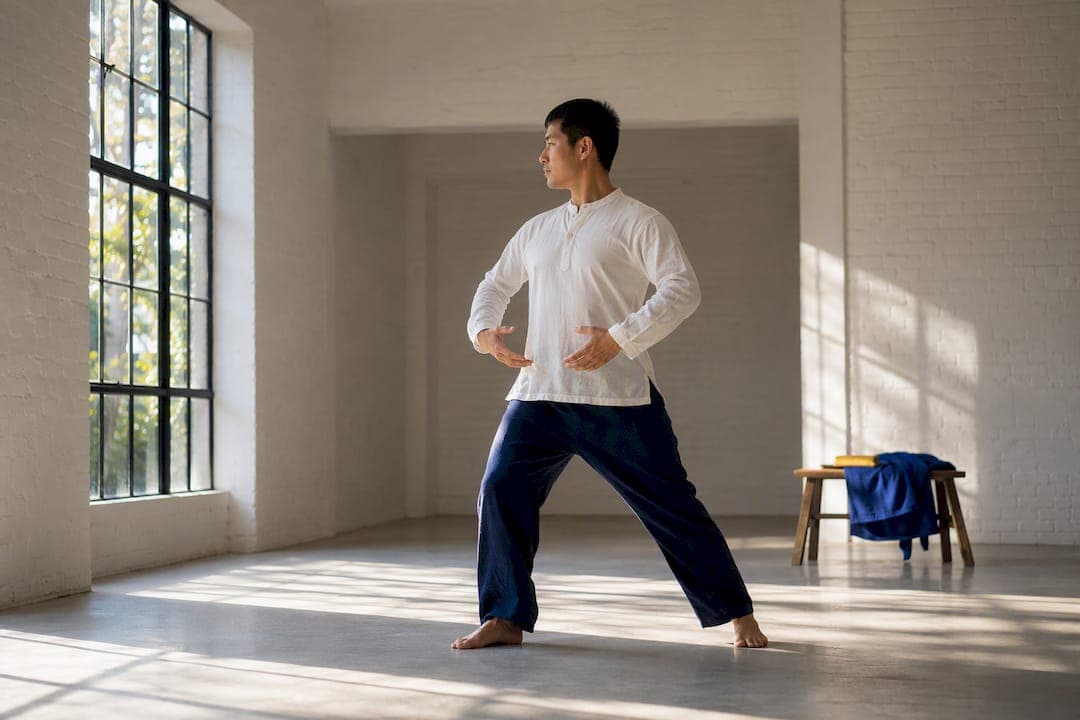
Yes, qigong practice can genuinely support gut-brain axis regulation. It works by calming an overactive nervous system, easing vagal tone, and softening the stress signals that disrupt digestion. The evidence is promising but still early: small randomized controlled trials and a handful of systematic reviews point in this direction, not a mountain of proof. A gentle five to ten-minute routine combining slow breathing and abdominal movement is a sensible place to begin.
TL;DR:
- Smaller studies suggest practicing qigong at least twice weekly can lead to improvements in gut motility, stress hormones, and microbiota diversity over eight weeks.
- A brief five to ten-minute routine focusing on slow breathing and abdominal movement is sufficient to support vagal activation and parasympathetic dominance.
- Structured, repetitive practice shows measurable physiological changes such as lower cortisol levels, improved heart rate variability, and alterations in brain connectivity related to interoception.
- Caution is advised for those with severe or worsening gastrointestinal symptoms, recent surgery, or pregnancy, and medical consultation should be prioritized before beginning.
- Guided classes focusing on stress and digestive health align with current evidence, making consistent practice essential for noticeable benefits.
Table of Contents
- How Qigong May Influence the Gut-Brain Connection
- What the Research Actually Shows
- A Simple Qigong Routine for Gut-Brain Support
- Safety, Precautions, and When to See a Doctor
- Why Trust This Guidance
- A Teacher's View on Progress and Patience
- Ready to Practice With Guided Support
- Sources
- FAQ
How Qigong May Influence the Gut-Brain Connection
Traditional Chinese Medicine has always treated the spleen and stomach as the seat of vitality, the place where "qi" is transformed from food into usable energy for the whole body. Modern research is starting to describe that same relationship in the language of nerves, hormones, and gut bacteria, and the overlap is striking.
The pathway runs in two directions. From the top down, your brain's emotional state and attention patterns shape the hypothalamic-pituitary-adrenal (HPA) axis, the system that governs cortisol release under stress. Chronic tension keeps that axis firing, which can slow digestion, disrupt gut lining function, and heighten pain sensitivity in the gut. From the bottom up, slow diaphragmatic breathing and gentle abdominal pressure stimulate the vagus nerve, encouraging motility and easing the "fight or flight" grip that stalls digestion in the first place.
Qigong appears to work on both ends at once:
- Breath-focused, slow-paced movement anchors attention on bodily sensations, which researchers describe as a form of moving mindfulness that shifts you toward parasympathetic dominance.
- Abdominal massage and soft-press techniques, drawn from practices like Ba-Duan-Jin, are associated with increased gastric motility and parasympathetic activity in early studies.
- Regular practice correlates with measurable physiological shifts, including lower salivary cortisol, improved heart rate variability, and changes in brain regions tied to interoception.
- Preliminary trials suggest shifts in gut motility and stress hormones may in turn alter the composition of gut microbiota, though this remains an emerging area of study.
Physiological markers to watch: Heart rate variability (HRV), fMRI connectivity in the anterior insula, and salivary cortisol are the three measures researchers lean on most often to track whether a mind-body practice like qigong is genuinely changing autonomic balance rather than just producing a subjective sense of calm.
What the Research Actually Shows
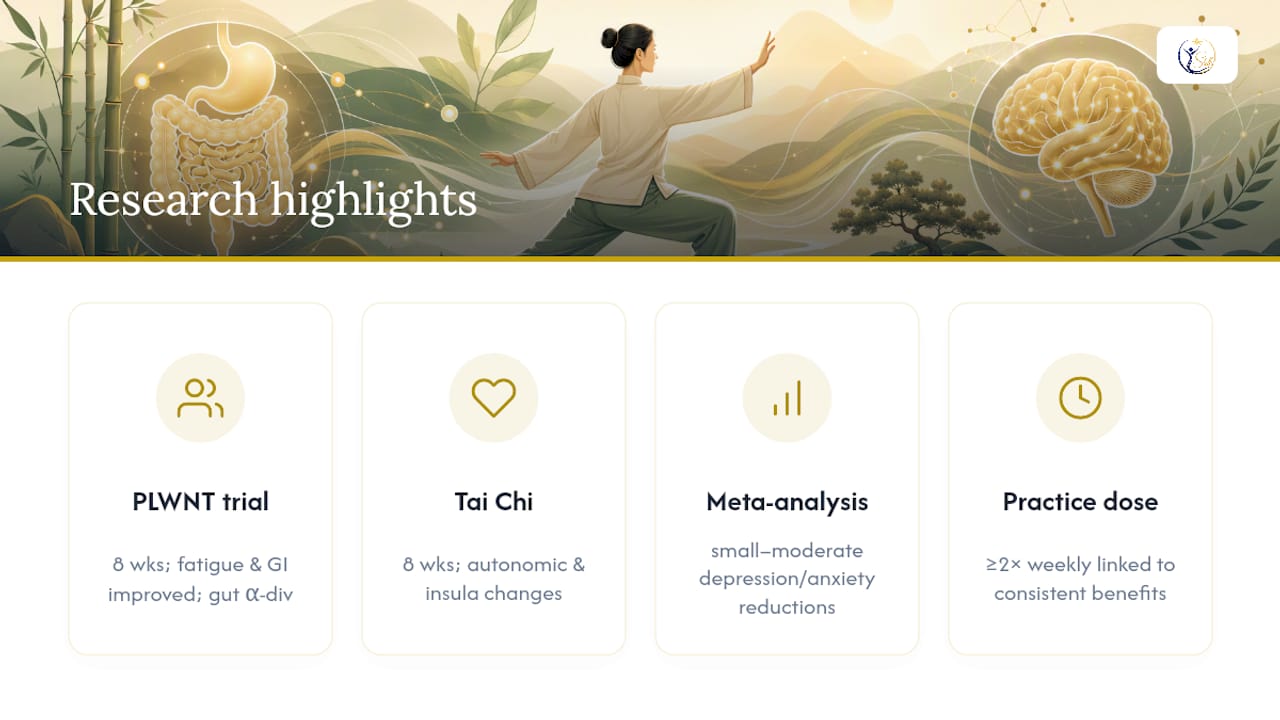
The strongest signal so far comes from an exploratory randomized controlled trial testing the Prolong Life With Nine Turn Method (PLWNT), a qigong form built around abdominal rotation and breath coordination. Over eight weeks, participants with chronic fatigue syndrome saw meaningful within-group improvements in fatigue and gastrointestinal symptom scores, alongside changes in gut microbiota alpha diversity. When researchers compared the PLWNT group directly against cognitive behavioral therapy, the two approaches produced statistically similar results, suggesting qigong may offer a comparable benefit through a very different mechanism.
A separate trial looked at Tai Chi, a close cousin of qigong, in patients with functional constipation. Four sessions a week for eight weeks produced changes in autonomic nervous activity and anterior insula connectivity that correlated with symptom improvement, one of the clearer brain-gut mechanistic findings in this field to date.
A 2019 systematic review and meta-analysis pooling multiple qigong trials found small-to-moderate reductions in depression and anxiety symptoms, with parasympathetic upregulation proposed as the likely driver.
The review's authors note that benefits were more consistent among participants who practiced at least twice weekly, a detail that matters more than any single statistic in this body of research.
The honest caveat: sample sizes are small, protocols vary widely between studies, and heterogeneity limits how confidently anyone can generalize. What the data does support is that structured, repeated practice, not occasional dabbling, produces the measurable effects researchers can actually detect.
A Simple Qigong Routine for Gut-Brain Support
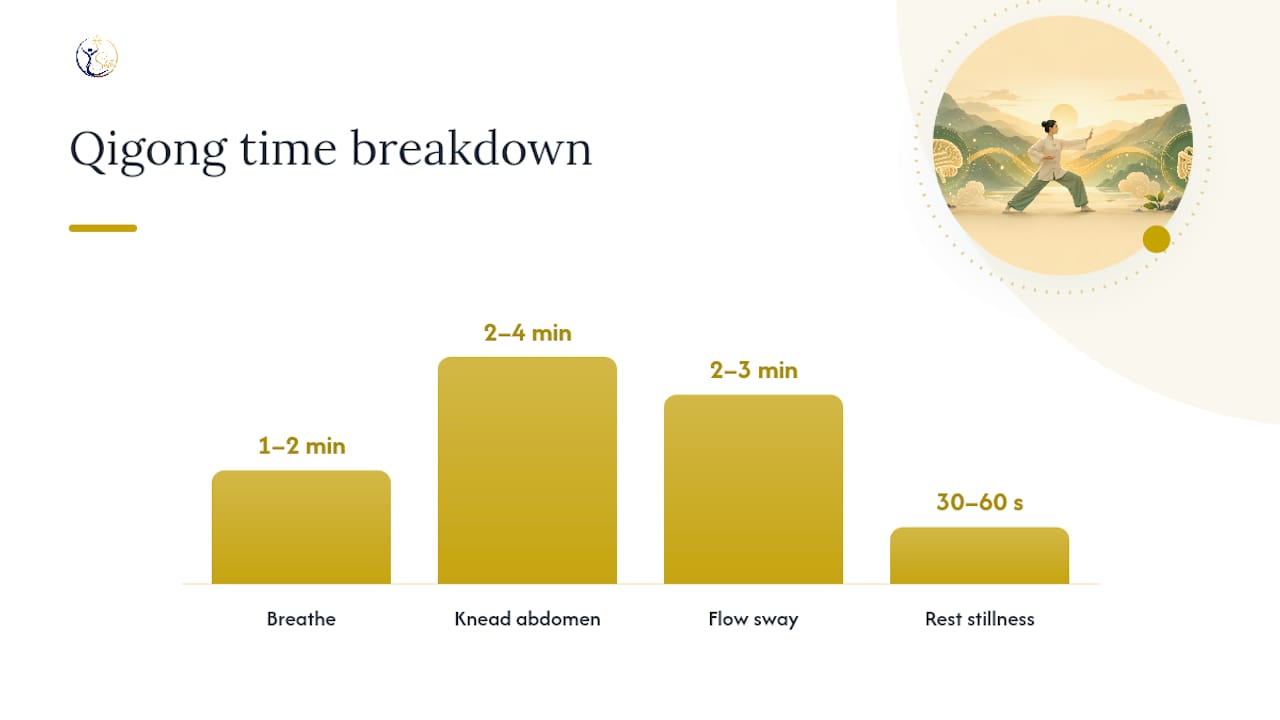
You don't need an hour on a mat to start feeling the difference. This sequence borrows principles from PLWNT and Ba-Duan-Jin and takes about five to ten minutes, making it realistic for a morning ritual or a mid-afternoon reset.
- Breathe (1 to 2 minutes). Sit or stand comfortably. Inhale slowly through your nose, letting your belly expand outward like a balloon filling with air. Exhale gently, drawing the navel back toward the spine. Let each breath cycle last around six seconds.
- Knead (2 to 4 minutes). Place both palms over your lower abdomen and press in soft, circular motions, moving clockwise around the navel. This gentle pressure echoes the abdominal component found in PLWNT-style routines and is thought to encourage motility.
- Flow (2 to 3 minutes). Rise into a soft standing or seated posture and sway gently at the hips, letting the movement ripple up through the torso. Keep your knees soft and your attention on the subtle rotation through the pelvis and abdomen.
- Rest (30 to 60 seconds). Come to complete stillness. Close your eyes if that feels comfortable, and simply notice what's happening inside; warmth, tension, a settled stomach, a quieter mind.
Pro Tip: Keep a one-line journal after each session: note your stress level, sleep quality, or any digestive symptom on a simple 1 to 5 scale. Patterns emerge faster than you'd expect, often within two or three weeks.
Aim for daily practice if you can manage it, or at minimum three sessions a week. As your comfort grows, extend the flow segment by a minute or two rather than rushing through the breathing at the start; that opening phase is doing more of the vagal work than it looks like.
Safety, Precautions, and When to See a Doctor
Qigong works well for functional gut issues and stress-related digestive discomfort, but it isn't a diagnostic tool and it isn't a substitute for medical care.
- Seek medical evaluation first if you notice GI bleeding, unexplained weight loss, or symptoms that are severe or steadily worsening.
- Talk to your doctor before starting if you've had recent abdominal surgery, have an unstable cardiac condition, or are pregnant and need movement adaptations.
- Qigong pairs well alongside medication, CBT, or dietary changes; mention your practice to your clinician so your full care plan stays coordinated.
Why Trust This Guidance
This guide draws on qigong instruction rooted in Traditional Chinese Medicine and grounded in current clinical research.
- The instruction is delivered by teachers holding certifications that emphasize safe, correctly sequenced movement instruction.
- The platform runs live classes and on-demand courses, including programs focused on stress and digestive symptoms.
- Routines featured here reflect techniques used in structured qigong programs designed for gut and nervous system support, adapted for beginners practicing at home.
A Teacher's View on Progress and Patience
Expect small shifts, calmer digestion after meals, easier sleep, within a few weeks of consistent practice. The deeper changes, steadier mood, fewer flare-ups, tend to take a few months to show clearly. Track a simple symptom diary, sleep quality, and resting heart rate if you can. Short daily sessions beat occasional long ones, and practicing alongside others tends to keep people going longer than practicing alone.
— Stella
Ready to Practice With Guided Support
Reading about the vagus nerve is one thing. Feeling your shoulders drop and your stomach settle during an actual session is another, and that's where guided instruction earns its place. A Qigong for Stress Relief and Digestive Wellness program is built specifically around the mechanisms covered above: breath pacing, abdominal work, and slow movement sequenced for nervous system regulation, not generic stretching.
If you want a low-commitment starting point, the 30-Minute Clarity Session (£85) gives you focused, one-on-one guidance to correct your form and answer questions specific to your symptoms. For a deeper introduction, the 60-Minute Deep Dive Online Session (£145) walks through a fuller sequence at a pace that suits total beginners. Every session is led by a White Tiger Qigong Level 3 certified instructor also accredited by Yoga Alliance, so the guidance you get reflects real teaching standards, not a video loop. Book a session or browse the full class schedule to find a time that fits your week.
This article is general information, not a substitute for advice from a qualified doctor. Consult a qualified healthcare professional about your own circumstances before acting on anything here.
Sources
- Effect of Prolong Life With Nine Turn Method on chronic fatigue syndrome clinical symptoms and roles of gut microbiota: a exploratory randomized controlled trial
- Tai Chi's synergistic modulation on autonomic nervous activity and central autonomic networks in functional constipation patients: a randomized controlled trial
FAQ
What Heals the Gut-Brain Axis?
There's no single fix; healing generally involves reducing chronic stress, supporting vagal tone, and, where relevant, addressing diet and gut microbiota. Qigong contributes through breath-based vagal activation and abdominal techniques, and research on PLWNT shows measurable improvements in fatigue, GI symptoms, and microbiota diversity after eight weeks of practice.
Can Qigong Help Activate the Vagus Nerve?
Yes, slow diaphragmatic breathing and gentle abdominal pressure, both core elements of qigong, are believed to stimulate vagal activity and shift the body toward parasympathetic dominance. A Tai Chi trial in functional constipation patients found autonomic changes that correlated directly with symptom relief.
How Do You Calm Down the Gut-Brain Axis?
Slowing your breath, softening abdominal tension, and reducing sympathetic "fight or flight" activation are the main levers. A short daily qigong routine, like the one described above, targets exactly these mechanisms, and structured programs such as Qigongstar's Stress Relief and Digestive Wellness course build a full sequence around them.
What Emotions Are Held in the Gut?
Traditional Chinese Medicine associates the spleen and stomach with worry and overthinking, while modern stress research links chronic anxiety and unresolved tension to disrupted gut motility and heightened visceral sensitivity. Both frameworks point to the same practical conclusion: calming the nervous system tends to calm the gut alongside it.
How Often Should You Practice Qigong for Digestive Benefits?
Most of the clinical evidence points to practicing at least twice weekly for measurable benefit, with daily five to ten minute sessions producing the most consistent results in reviewed trials. Consistency matters more than session length, especially in the first few weeks.