
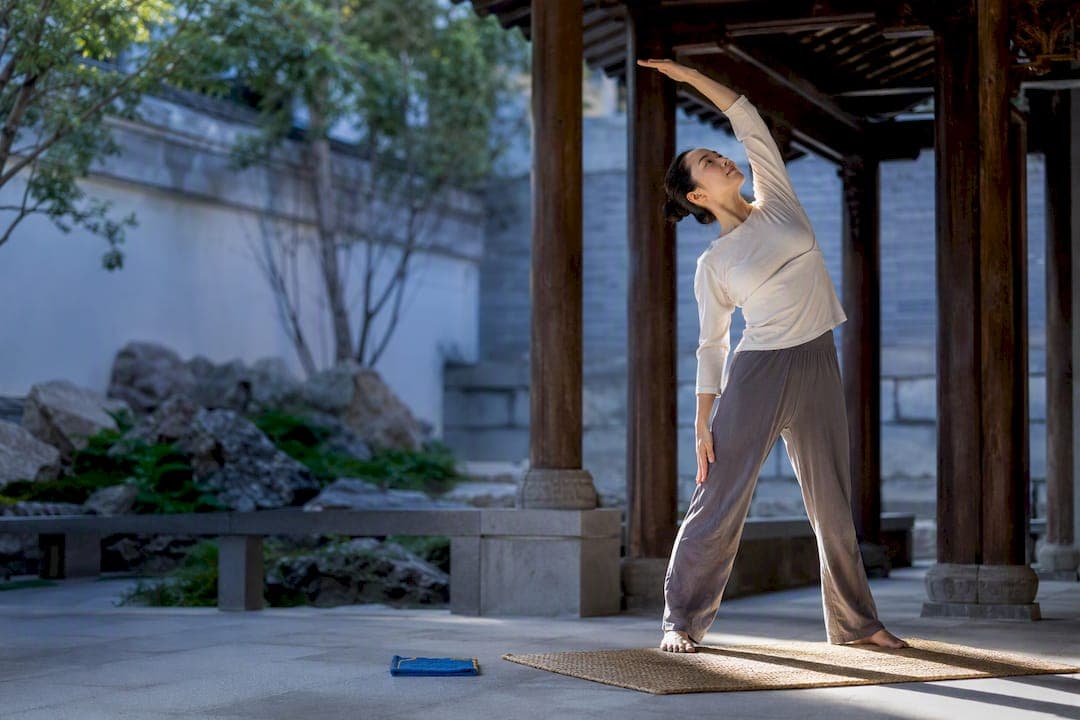
Fascia qigong training is a slow, connective-tissue-focused practice that uses skin-level expansion and coordinated breath to improve fascia elasticity, joint mobility, and whole-body movement quality. Unlike muscle-only stretching, it targets the web of tissue that wraps every muscle and organ in your body. Start with a short daily routine, ten minutes is enough, or join a guided class to learn the movement cues safely.
TL;DR:
- Daily short sessions of fascia qigong, around 10 minutes, can lead to measurable improvements in joint mobility and reduction in stiffness within a few weeks.
- Consistent practice focuses on slow, skin-level expansion and breath coordination to hydrate and improve the elasticity of connective tissue rather than forcing muscle ends.
- Progress markers include easier discovery of the "yawn" sensation in tissues, longer-held fascial releases, and more fluid movement, especially after three months of regular training.
- Modifications are necessary during acute inflammation, after surgery, or with connective-tissue disorders, and professional guidance helps ensure safe, effective practice.
- Using simple tools like a foam roller or soft ball can augment tissue hydration before fascia-focused movements, but proper technique and consistency are more important than equipment.
Table of Contents
- What Is Fascia Qigong Training and How Does It Work?
- What Benefits Does Fascia-Focused Qigong Actually Deliver?
- Core Fascia Qigong Exercises and Two Ready Routines
- How Often Should You Practice for Real Results?
- Is Fascia Qigong Safe? Contraindications and Modifications
- How Do You Choose a Qualified Fascia Qigong Instructor?
- What Props and Tools Actually Help Fascia Training?
- How Do You Build Fascia Qigong Into a Daily Routine?
- Why QigongStar Builds Its Training Around Fascia Work
- Ready to Train Your Fascia With Guided Support?
- Sources
- FAQ
What Is Fascia Qigong Training and How Does It Work?
Fascia is the thin, fibrous web of connective tissue that wraps your muscles, bones, and organs into one continuous network. Think of an orange: peel back the skin and you find a white webbing holding every segment together. Your body has the same structure, and when that webbing gets dry, stuck, or stiff, it drags on everything nearby, even joints that feel perfectly healthy.
Qigong and Tai Chi target this tissue differently than a standard stretch does. Instead of pulling a muscle to its end range, teachers cue you to expand from the skin inward, lifting the crown, sinking the tailbone, and lengthening the whole line from hip to armpit in one continuous arc. The International Qi Gong Association describes this as a deliberate warm-up strategy: slow, low-amplitude movement that hydrates connective tissue rather than forcing it.
This isn't a modern invention. Classical Taoist practice calls fascia Huang, the membrane layer, and treats training it as central to internal power development. Forms like Yi Jin Jing (the "Muscle-Tendon Change Classic") and foundational drills known as Jibengong were built specifically to transform this connective layer, long before Western science coined the term "tensegrity" to describe how tension and compression distribute through a connected structure.
What separates fascia-focused practice from ordinary stretching:
- Movement stays slow and continuous, never bouncing or forcing an end range.
- Attention rests on the skin's surface tension, not just the muscle belly underneath.
- Breath paces the movement instead of being an afterthought.
- Expansion happens in multiple directions at once, echoing how fascia actually wraps the body.
What Benefits Does Fascia-Focused Qigong Actually Deliver?
The clearest benefit isn't flexibility in the gym-class sense. It's elasticity, the tissue's ability to load, spring back, and transmit force efficiently through the whole body rather than isolated joints doing all the work.
A well-hydrated fascial network also changes how you move day to day. Reported outcomes from short, consistent myofascial qigong programs include improved joint mobility, reduced stiffness, and better circulation, benefits that build gradually rather than appearing after one session.
A useful benchmark: programs built around just 10 minutes of daily myofascial qigong report meaningful gains in mobility and reduced stiffness for practitioners who stick with it, without needing long sessions or intense effort.
What consistent practice tends to improve:
- Joint mobility and a felt reduction in morning or end-of-day stiffness.
- Postural integration, where movement flows through the spine instead of stopping at tight segments.
- Circulation and lymphatic flow, since fascia compresses and releases fluid pathways as it moves.
- Stress regulation, since slow diaphragmatic breath paired with movement calms the nervous system.
None of this replaces medical care for a diagnosed condition. It builds the kind of resilient, connected movement that makes everyday activity, and other forms of exercise, feel easier.
Core Fascia Qigong Exercises and Two Ready Routines
Five foundational movements show up across most fascia-focused qigong lessons. Learn these cues first, then build your own rhythm around them.
- Cloud hands with skin stretch. Sweep your arms in slow arcs at chest height, imagining the skin across your ribs stretching, not just your arm muscles working.
- Crown lift, tailbone sink. Stand tall, lift the top of your head gently upward while sinking your tailbone, creating a soft lengthening through the entire spine.
- Hip-to-armpit stretch. Reach one arm overhead while shifting weight to the opposite hip, feeling the whole side of your torso open, not just your shoulder.
- Spiral twist. Rotate the torso slowly from the feet up, letting the twist unwind through the waist and shoulders in sequence rather than all at once.
- Balloon breath expansion. Inhale as if filling a balloon under your skin from the inside, expanding evenly in all directions before a slow, controlled exhale.
10-minute daily routine: two minutes of standing breath awareness, three minutes of cloud hands, three minutes of crown lift and hip-to-armpit stretch alternating sides, two minutes of balloon breath to close.
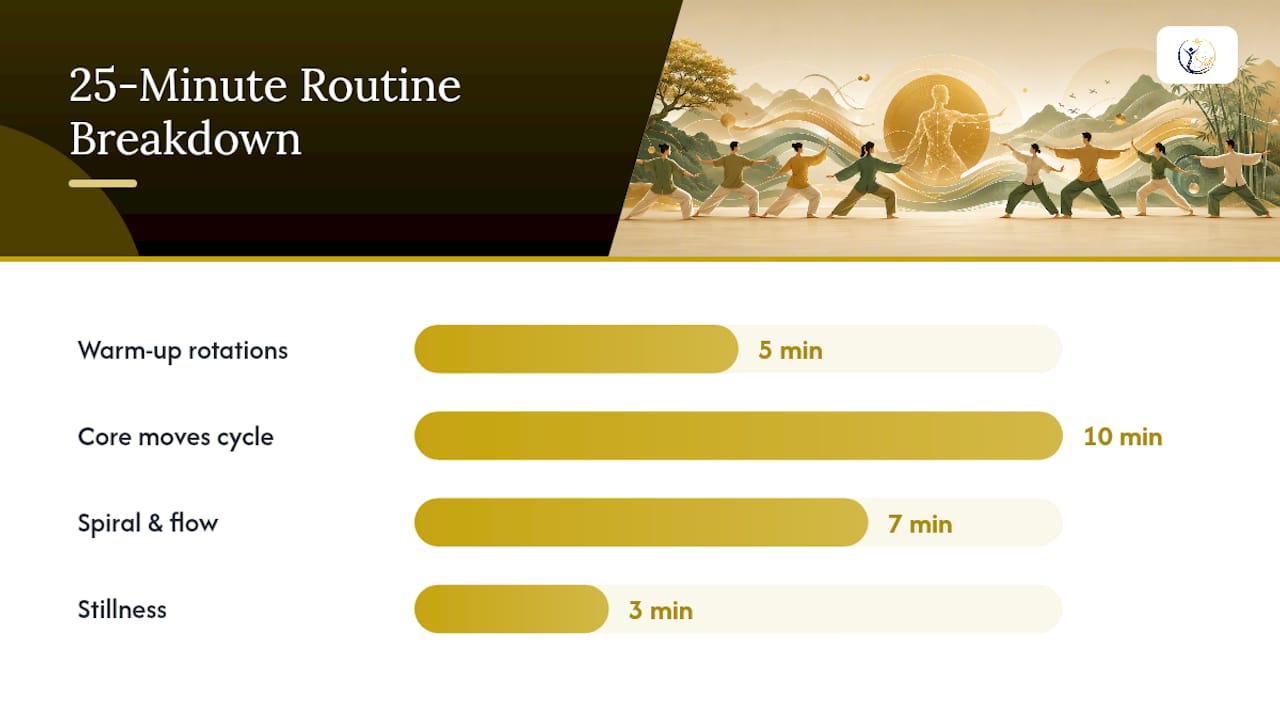
25-minute deeper routine: five minutes of joint rotations and standing breath as a warm-up, ten minutes cycling through all five core moves at a slower tempo, seven minutes of spiral twists and integrated flowing sequences that link the moves together, three minutes of stillness to let the tissue settle.
Move at roughly one breath cycle per movement phase. Most practitioners describe the target sensation as a "yawn" through the tissue, a soft, releasing stretch that spreads wider than a normal muscle pull, rather than a sharp or localized one.
Pro Tip: If you're not sure whether you're working fascia or just muscle, slow down until the movement feels like it's happening under your skin rather than in one specific muscle. That shift in attention changes the whole exercise.
How Often Should You Practice for Real Results?
Consistency beats intensity with fascia work. Tissue responds to frequent, gentle loading far better than occasional long sessions, which is why most structured programs default to short daily practice over weekly marathons.
A sensible starting schedule looks like this:
- Weeks 1 to 4: three to five sessions a week, 10 minutes each, focused purely on body awareness and the core five movements.
- Weeks 5 to 12: extend sessions toward 20 to 25 minutes, two or three times weekly, adding the integration flows that link movements together.
- Three months and beyond: introduce more dynamic, higher-skill sequences, ideally under a teacher's eye, since these begin to load the fascia's power-transmission lines rather than just its elasticity.
Watch for these progress markers rather than the calendar alone: the "yawn" sensation becomes easier to find and holds longer, your range of motion in daily tasks improves without forcing it, and movements that once felt segmented start flowing as one connected motion.
If you hit a plateau, feel pain rather than release, or simply can't tell whether you're doing the cues correctly, that's the signal to book a private session or join a teacher-led course rather than keep guessing alone. A trained eye catches compensations that are nearly impossible to feel from the inside.
Is Fascia Qigong Safe? Contraindications and Modifications
Fascia qigong is gentle by design, but gentle doesn't mean it suits everyone at every moment. Skip or modify practice during acute inflammation, in the early weeks after surgery, or if you have an unmanaged connective-tissue disorder, and check with a healthcare provider first if you're pregnant or managing a chronic condition.
Common red flags to watch for:
- Sharp, localized pain rather than the broad, soft "yawn" sensation.
- Swelling, bruising, or heat around a joint you're working.
- Dizziness or shortness of breath during breath-paced movement.
If any of these show up, don't push through. Shorten your session, reduce your range of movement, slow the tempo further, or practice seated or supported against a wall instead of standing. A folded blanket or chair works as a simple prop when balance or joint load is a concern.
When in doubt, professional guidance beats guesswork. QigongStar's contraindications guide covers specific conditions and modifications in more depth than a general overview can.
How Do You Choose a Qualified Fascia Qigong Instructor?
Not every qigong class touches fascia work directly, and not every teacher has trained specifically in it. A few concrete signals separate a credible program from a vague one.
Look first at certification lineage. Programs like White Tiger Qigong's teacher training build fascia science and 3D anatomy directly into their curriculum, alongside classical forms, which means instructors graduating from that path have studied the connective-tissue mechanics behind the movements, not just the choreography.
Second, check whether the program has visible progression levels. A single introductory class can teach you cues, but real fascia training develops over months, and a program that maps out beginner, intermediate, and teacher-track levels shows it takes that timeline seriously rather than treating every student the same way.
Third, ask how classes are delivered. Some students do well with recorded, on-demand lessons they can repeat at their own pace; others need live feedback to correct subtle posture errors that recordings can't catch. A program offering both, plus private coaching for sticking points, gives you flexibility as your needs change.
Finally, trust matters more here than in most fitness contexts, since fascia work involves working closely with sensation and body awareness. A teacher who explains why a cue works, not just what to do, is usually one who has studied the underlying anatomy rather than memorized a sequence.
What Props and Tools Actually Help Fascia Training?
You need almost nothing to start fascia qigong, which is part of its appeal. That said, a few simple tools genuinely support the practice rather than gimmick it up.
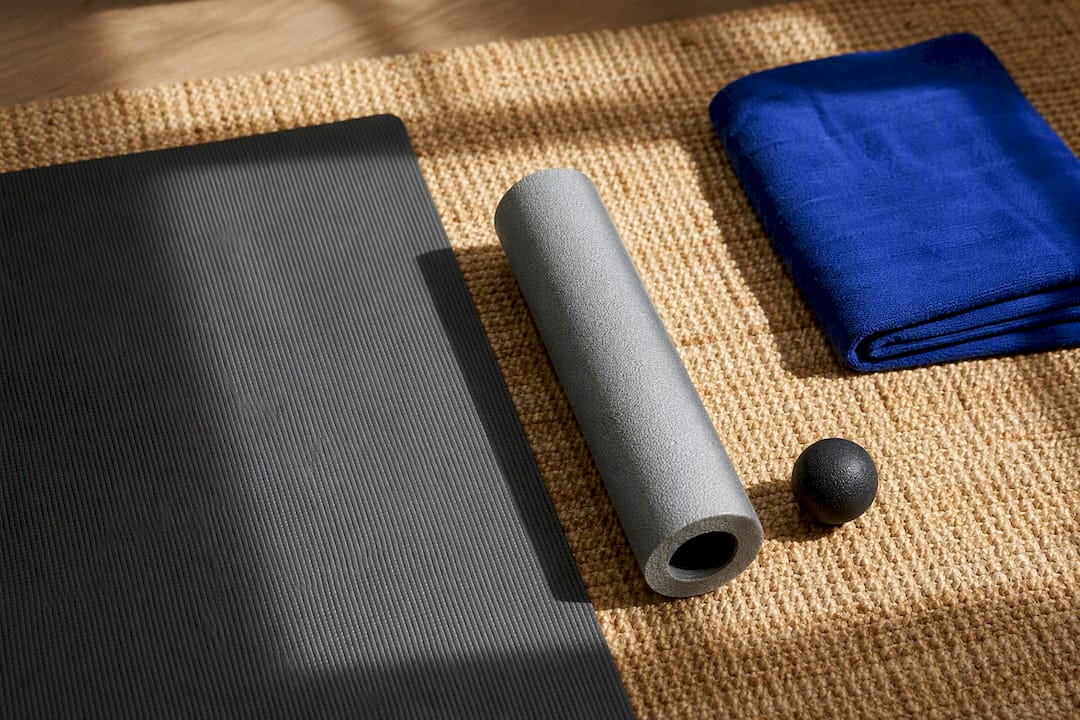
A firm yoga mat or a rug with some grip helps with standing balance during slower, weight-shifting movements like the spiral twist. A lightweight foam roller can prepare tissue before a session, gently rolling major muscle groups for thirty to sixty seconds to increase blood flow before the slower qigong movements begin. Some practitioners use a soft ball, a tennis ball works fine, for targeted release on tight spots like the feet or upper back before standing practice.
Loose, breathable clothing matters more than any gadget. Fascia cues rely on feeling subtle skin-level tension, and tight, restrictive fabric blunts that feedback significantly.
Beyond physical tools, a structured course provides something equally valuable: sequencing. Online programs, including multi-week fasciae-focused curricula, show how progressive lesson planning helps students layer new movements onto ones they've already stabilized, rather than jumping into advanced sequences before the basics settle in.
Resist the temptation to buy specialized fascia tools, vibration devices, or elaborate release equipment before you've spent a few weeks with the basic five movements. The tissue responds to consistent, correct movement far more than to any single piece of equipment.
How Do You Build Fascia Qigong Into a Daily Routine?
The programs that actually stick are the ones anchored to an existing habit, not a new block of free time you have to find. Attach your 10-minute routine to something you already do every day: right after brushing your teeth, before your morning coffee, or as a wind-down between finishing work and starting dinner.
Morning practice tends to suit people who feel stiff on waking, since gentle fascia movement rehydrates tissue that's been still for hours. Evening practice suits people managing stress or a physically demanding job, since the breath-paced movement doubles as a way to downshift the nervous system before sleep.
Track sessions loosely rather than obsessively. A simple checkmark on a calendar or a note on your phone is enough; the goal is noticing patterns, like which days you skip and why, not building another rigid metric to hit. If your schedule genuinely varies week to week, keep a five-minute version of the routine in your back pocket for busy days rather than skipping entirely.
Pairing fascia qigong with other wellness habits compounds the benefit. Practitioners managing stress or digestive symptoms often notice that consistent slow movement supports both goals at once, since the same breath regulation that eases fascial tension also calms the gut-brain connection.
Why QigongStar Builds Its Training Around Fascia Work
Classical qigong never separated the physical body from the internal one, and that's exactly why fascia deserves center stage. As a White Tiger Qigong Level 3 certified instructor also accredited by Yoga Alliance, Stella structures QigongStar's courses around progressive levels precisely because fascia doesn't respond to a single class. It responds to guided repetition, corrected gently over time. Classical principles like Jibengong and modern fascia science aren't competing frameworks here. They're describing the same tissue from two different centuries, and good teaching draws on both.
— Stella
Ready to Train Your Fascia With Guided Support?
Reading about skin-level expansion is one thing. Feeling it correctly, without guessing whether you're stretching muscle or actually reaching fascia, is another, and that gap is exactly where guided instruction earns its keep. QigongStar's Qigong for Stress Relief and Digestive Wellness course runs at £116 as a one-off purchase, giving you a structured, self-paced path that builds fascia-aware movement alongside breath and stress-regulation work.
If you'd rather work through specific sticking points one-on-one, a 30-Minute Clarity Session runs £85 and suits a focused question or posture check. A 60-Minute Deep Dive Online Session at £145 gives more room to work through a full routine with real-time feedback, and if you're local, a 60-Minute Face-to-Face Qigong session at £165 adds hands-on correction that video calls can't fully replicate. Choose the course if you want to build the foundation at your own pace; choose a private session if you already practice and need a trained eye on your form. Either way, the online classes page is the place to start.
Sources
- How Tai Chi Targets Fascia and Connective Tissues – International Qi Gong Association
- Fascia (Huang) in Qi Gong: Meaning e Function in Practice
- Myofascial Qigong - Gentle Full-Body Recovery in Just 10 Min a Day - NEWMINDSTART!
- Fasciae Fitness with Qi Gong
FAQ
Is Qigong Good for Fascia Release?
Yes. Slow, skin-focused movement paired with coordinated breath hydrates and releases restricted fascia more evenly than isolated muscle stretching, according to teaching guidance from Tai Chi and qigong instructors.
Can You Actually Train Your Fascia?
Yes. Fascia adapts to consistent, gentle loading over weeks and months, which is why structured myofascial qigong programs use short daily sessions rather than occasional long ones to build lasting change.
What Are the Signs of a Weak or Restricted Fascia?
Common signs include stiffness that doesn't ease with normal stretching, joints that feel disconnected from each other during movement, and a shallow, muscle-only sensation instead of the broad "yawn" feeling fascia work aims to produce.
What Are the Negative Side Effects of Qigong?
Practiced gently, qigong carries a low risk profile, but pushing through sharp pain, practicing too soon after surgery, or ignoring acute inflammation can aggravate existing issues. Modify range, tempo, and session length as needed, and consult a healthcare provider for any pre-existing condition.
How Long Before I Notice Results From Fascia Qigong Training?
Many practitioners in short daily programs report improved mobility and reduced stiffness within a few weeks of consistent practice, though timelines vary with starting condition and consistency.