
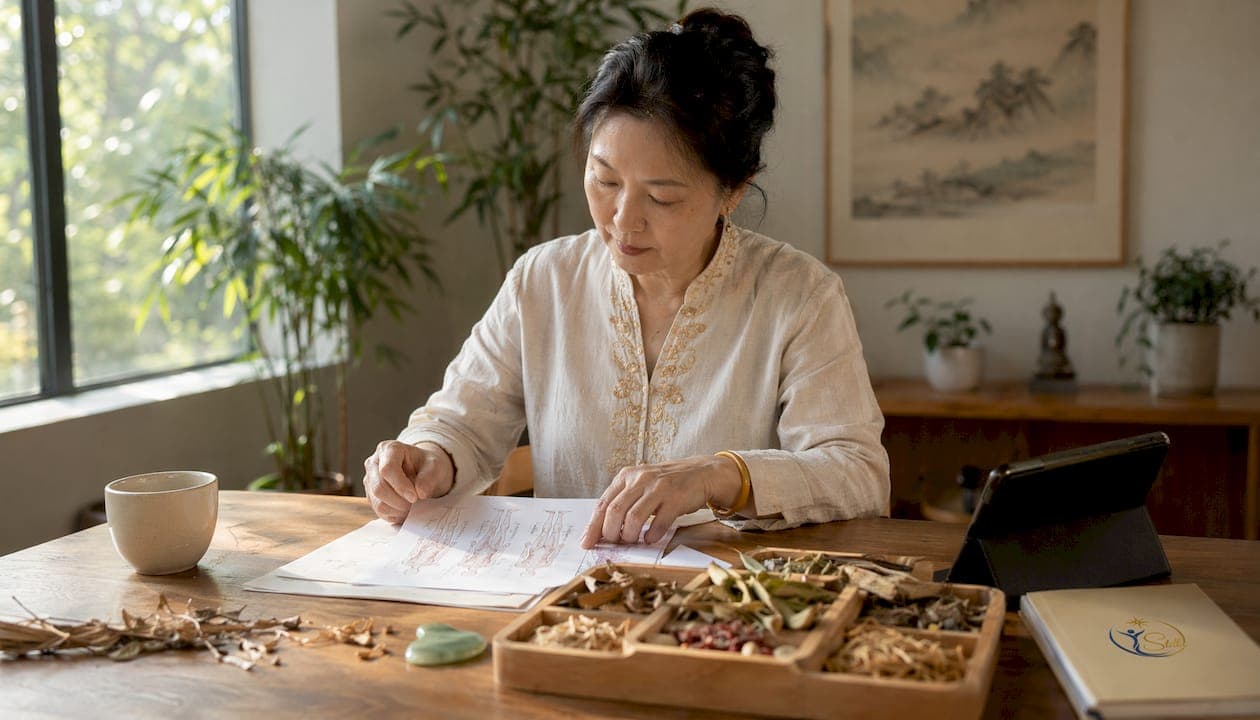
Dampness in Chinese medicine is defined as a pathological accumulation of fluids and metabolic waste that disrupts the body's natural circulation and metabolism. Known formally in Traditional Chinese Medicine (TCM) as Shi Zheng, this concept explains a wide range of symptoms that Western medicine often labels vaguely: chronic fatigue, bloating, brain fog, and unexplained weight gain. Understanding dampness in TCM gives you a practical framework for addressing these complaints at their root, not just masking them. If digestion, energy, or stress feels persistently off, dampness may be the pattern worth examining.
What is dampness in Chinese medicine?
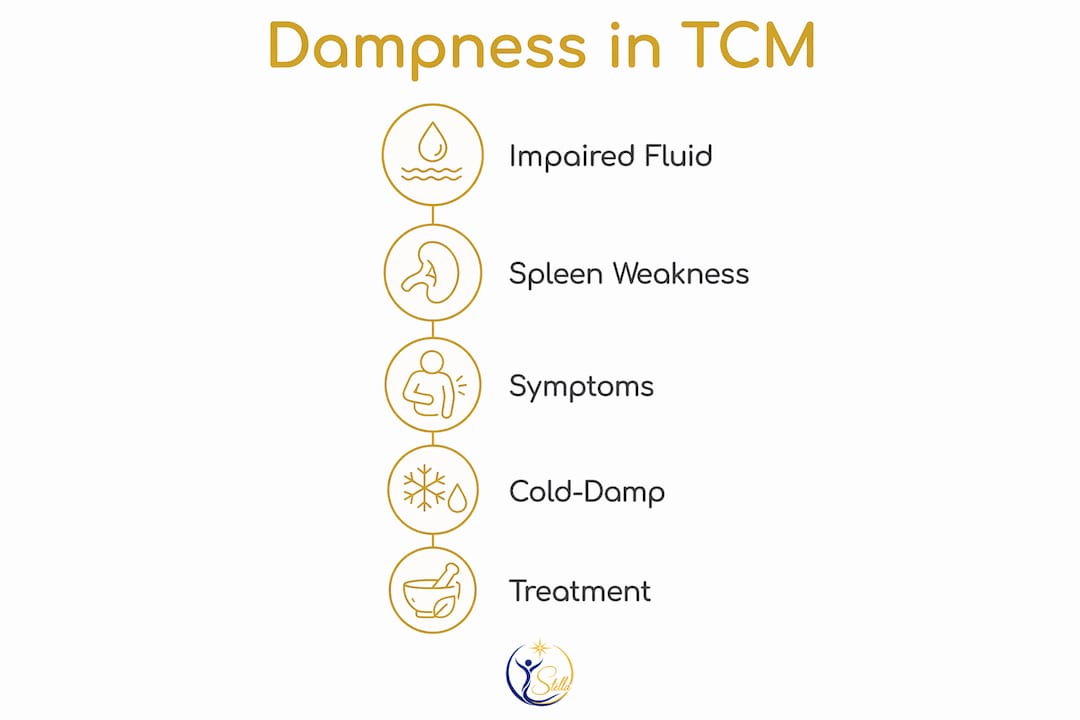
Dampness is not a measurable fluid you can test in a lab. It is a functional state of impaired fluid metabolism where the body fails to transform and circulate fluids properly. The result is a kind of internal "stagnant water" that accumulates in tissues, joints, and digestive organs.
The Spleen is the central organ in this picture. In TCM, the Spleen governs digestion and the transformation of food and fluids into usable energy. When Spleen Qi weakens, fluids pool instead of circulate. That pooling is dampness.
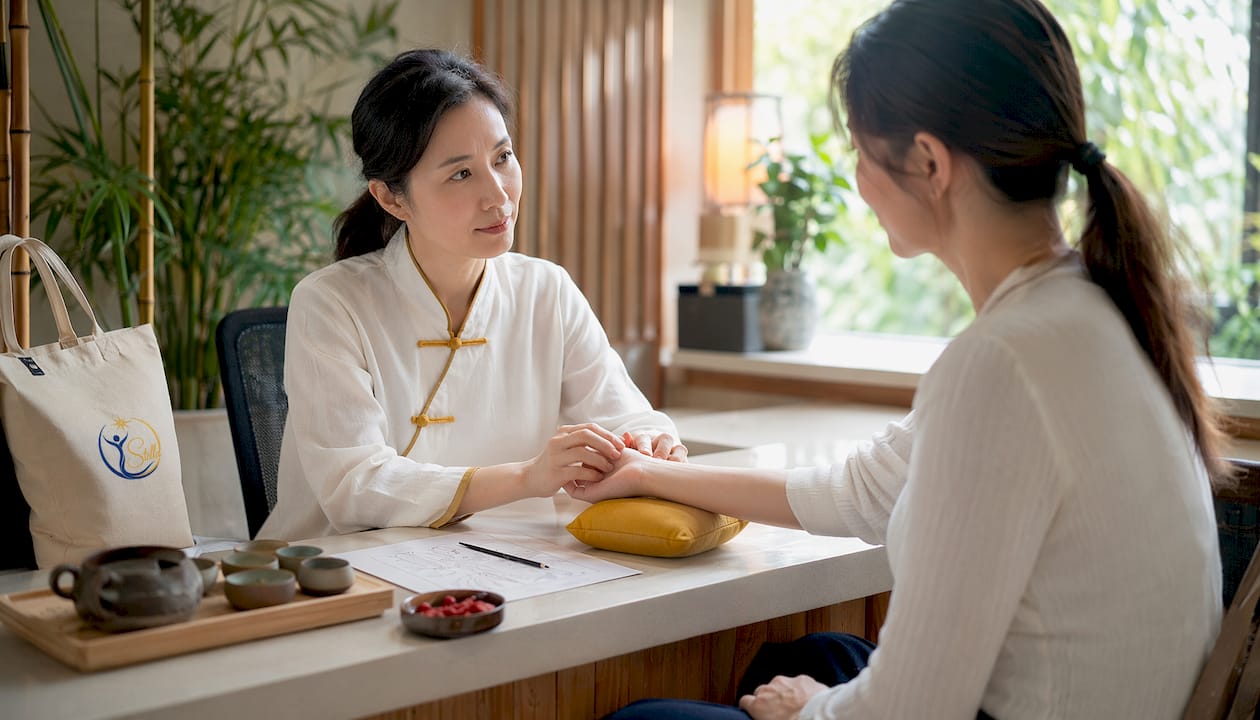
A 2025 multi-omics study identified 7 key metabolites and 6 biological pathways associated with dampness symptoms, including Prostaglandin E2 and disrupted lipid metabolism. This confirms that what TCM practitioners have observed for centuries maps onto real, measurable physiological processes. Dampness is not metaphor. It reflects genuine metabolic dysfunction.
The effects of dampness in Chinese medicine reach far beyond digestion. Dampness slows everything: thought, movement, and mood. It creates a kind of internal heaviness that no amount of sleep seems to fix.
What are the common symptoms of dampness?
Dampness symptoms in TCM share one defining quality: they feel heavy, sticky, and slow to resolve. Recognizing these signs in your own body is the first step toward addressing them.
Physical signs to watch for:
- Heavy, tired limbs that feel hard to lift, especially in the morning
- Bloating, loose stools, or a sense of incomplete evacuation after meals
- Puffiness or water retention, particularly in the face, ankles, or abdomen
- Joint stiffness that worsens in humid or rainy weather
- Skin issues like eczema, cystic acne, or persistent oiliness
- Mental sluggishness, difficulty concentrating, or a foggy feeling that lingers
Common diagnostic indicators include a thick white or greasy tongue coating, a swollen tongue with scalloped edges from teeth marks, and a slippery pulse. These signs point directly to fluid stagnation and Spleen deficiency.
Dampness also shifts character depending on what it combines with. Cold-damp produces pale, watery symptoms and a strong aversion to cold. Damp-heat produces yellow discharge, inflammation, and a burning quality to symptoms. These are not minor variations. They require opposite treatment approaches, which is why accurate pattern identification matters so much.
Pro Tip: Check your tongue first thing in the morning before eating or drinking. A thick, greasy coating that does not clear after brushing is one of the clearest early signals of dampness accumulation.
If dampness goes unaddressed, it can transform into phlegm, a thicker and more entrenched pathological substance. Phlegm can lodge in joints, cloud the mind, and cause nodules or circulation problems. Early attention to dampness prevents this more complex progression.
What causes dampness according to Chinese medicine?
Dampness builds from both internal and external sources. Most people dealing with it are contributing to it from multiple directions at once, which is why it can feel so stubborn.
Internal causes:
- Weak Spleen Qi from chronic stress, overwork, or irregular eating
- Excessive worry and overthinking, which directly drain Spleen energy and limit fluid metabolism
- Poor sleep patterns that prevent the body from restoring digestive function overnight
External and lifestyle causes:
- Cold, raw foods, dairy, sugar, and alcohol are the primary dietary triggers, all of which impair Spleen function
- Living or working in humid environments, exposure to mold, or wearing damp clothing
- Sedentary habits that reduce the body's ability to move fluids through circulation
The mind-body connection here is often underestimated. Overthinking is not just a mental habit. In TCM, it is a direct physiological drain on the Spleen. You can eat perfectly and still accumulate dampness if chronic stress or anxiety goes unaddressed. This is why understanding stress and digestion together is so central to TCM's approach.
The 2025 research linking dampness to disrupted lipid metabolism and inflammatory pathways supports this integrated view. Dampness is not caused by one bad habit. It builds from the cumulative weight of lifestyle, environment, and emotional patterns over time.
How is dampness diagnosed in Traditional Chinese Medicine?
TCM diagnosis does not rely on a single test. It uses a pattern of signs gathered from tongue examination, pulse reading, and a detailed symptom history. This process is called pattern differentiation, and it is what separates TCM from a one-size-fits-all approach.
A practitioner assessing dampness looks for a specific cluster of signs:
- Tongue body: Swollen or puffy, often with scalloped edges where teeth have left impressions
- Tongue coating: Thick, greasy, white (cold-damp) or yellow (damp-heat)
- Pulse quality: Slippery, which feels like a bead rolling under the finger, indicating fluid accumulation
- Symptom pattern: Heaviness, digestive complaints, fatigue, and joint stiffness that worsen in damp weather
The Spleen, Kidney, and Liver all play roles in fluid metabolism. Kidney Yang warms and drives fluid transformation. Liver Qi keeps fluids moving. When any of these systems falter, dampness accumulates faster. A practitioner considers all three when forming a diagnosis.
Correctly identifying accompanying pathogenic factors like heat or cold is vital because it determines opposite treatment principles. Treating cold-damp with cooling herbs, or damp-heat with warming ones, will worsen the condition rather than resolve it. Accurate diagnosis is not optional. It is the foundation of effective treatment.
The Spleen Meridian's pathway through the legs and abdomen explains why dampness so often produces heaviness in the lower limbs and bloating in the gut. Understanding this connection helps predict where symptoms will appear and which acupuncture points will be most effective.
What are effective treatments for dampness in Chinese medicine?
Treatment for dampness in Chinese medicine works on two levels: removing existing dampness and restoring the Spleen's ability to prevent it from returning. Both are necessary for lasting results.
Dietary adjustments:
- Eat warm, cooked foods: soups, stews, roasted vegetables, and whole grains like millet and barley
- Avoid raw salads, iced drinks, excessive fruit, dairy, and processed sugar
- Use warming spices like ginger, cardamom, and black pepper to support digestion
- Eat at regular times to give the Spleen a predictable rhythm
Movement and lifestyle:
- Regular physical activity, especially walking, gentle stretching, or Qigong, stimulates fluid circulation
- Sweating through moderate exercise helps the body release dampness through the skin
- Avoid sitting for long periods, which allows fluids to pool in the lower body
- Sleep before 11 PM to support the Spleen's overnight restoration
Herbal and acupuncture support:
Chinese medicine formulas targeting dampness show high efficacy and fewer adverse effects than conventional drugs in conditions linked to dampness, including arthritis and fatty liver. Herbs like Yi Yi Ren (Job's tears), Fu Ling (Poria), and Cang Zhu (Atractylodes) are commonly used to drain dampness and strengthen the Spleen.
| Approach | Best for | Key benefit |
|---|---|---|
| Dietary change | Preventing new dampness | Removes primary cause at the source |
| Acupuncture | Acute or stubborn dampness | Moves Qi and fluids quickly |
| Herbal formulas | Chronic or complex patterns | Addresses multiple organ systems |
| Qigong and movement | Long-term maintenance | Supports circulation and Spleen Qi daily |
Qigong, in particular, offers a gentle and consistent way to keep fluids moving. Practices like Five Animal Qigong combine breath regulation with flowing movement to awaken circulation and support the digestive system without strain. This makes it well suited for people whose dampness is tied to stress, fatigue, or a sedentary lifestyle.
Pro Tip: Drink warm water or ginger tea throughout the day instead of cold beverages. Cold drinks contract the Spleen's digestive fire and are one of the fastest ways to generate dampness, even in an otherwise healthy diet.
Stress management is not optional in dampness treatment. Because overthinking impairs Spleen Qi, practices that calm the mind directly support the body's fluid metabolism. Mindful breathing, gentle movement, and consistent sleep schedules all contribute to Spleen recovery. You can read more about TCM principles for daily wellness to build these habits into your routine.
Key Takeaways
Dampness in Chinese medicine is a treatable pattern of impaired fluid metabolism rooted in Spleen weakness, lifestyle habits, and stress, and it responds best to consistent, layered care across diet, movement, and mental habits.
| Point | Details |
|---|---|
| Dampness is a functional state | It reflects impaired fluid metabolism, not a single measurable substance. |
| Spleen Qi is the core issue | Strengthening the Spleen through diet, movement, and stress reduction resolves dampness at its root. |
| Symptoms are heavy and slow | Fatigue, bloating, brain fog, and joint stiffness are the most common signs to monitor. |
| Diagnosis requires pattern differentiation | Cold-damp and damp-heat need opposite treatments, making accurate assessment critical. |
| Consistent lifestyle change works | Dietary warmth, regular Qigong, and stress management prevent dampness from returning. |
What I've learned from years of watching dampness patterns
People often come to me convinced their fatigue is purely a sleep problem, or their bloating is just a food sensitivity. They have tried elimination diets, supplements, and sleep trackers. Nothing sticks. When I look at the full picture, dampness is almost always part of the story.
The most common misunderstanding I see is treating dampness like a detox. People do a week of clean eating, feel slightly better, and then return to their old habits. Dampness does not clear in a week. It builds over months and clears over months. Patience is not optional here.
What actually works is the unglamorous stuff: eating warm food consistently, moving your body gently every day, and finding a way to quiet the mental chatter that drains your Spleen without you noticing. Tongue observation is one of my favorite tools to recommend because it gives you immediate, visual feedback. Check it weekly. You will start to see the coating shift as your habits change.
The other thing I want you to know is that dampness is not a life sentence. It is a signal. Your body is telling you that something in your daily rhythm is out of balance. That is not a failure. It is information, and information is something you can work with.
— Stella
Qigongstar courses for digestive wellness and stress relief
If dampness has been showing up in your body as fatigue, bloating, or persistent stress, gentle movement is one of the most effective tools you have.
Qigongstar offers online Qigong classes designed specifically for stress relief and digestive wellness, both of which sit at the heart of dampness management. The courses are beginner-friendly, on-demand, and built around the same TCM principles covered in this article. Practices like White Tiger Qigong and Five Animal Qigong support Spleen function, awaken circulation, and help your body release the stagnation that dampness creates. You can start at your own pace and build a routine that genuinely fits your life.
FAQ
What is dampness in Chinese medicine, simply explained?
Dampness in Chinese medicine is a pathological accumulation of fluids and metabolic waste caused by impaired Spleen function. It produces symptoms like fatigue, bloating, brain fog, and joint heaviness.
How do I know if I have dampness?
A thick, greasy tongue coating, swollen tongue with teeth marks, and a slippery pulse are the primary diagnostic signs. Persistent fatigue, bloating, and heaviness in the limbs are also strong indicators.
What is the difference between dampness and phlegm in TCM?
Dampness is the early, more fluid stage of pathological accumulation. Phlegm is a thicker, more entrenched form that develops when dampness goes untreated and can affect joints, vessels, and mental clarity.
What foods make dampness worse?
Cold and raw foods, dairy, sugar, alcohol, and iced drinks are the primary dietary triggers. These impair Spleen Qi and slow the body's ability to transform and circulate fluids.
Can Qigong help reduce dampness?
Qigong supports dampness reduction by stimulating fluid circulation, strengthening Spleen Qi, and calming the stress response that drains digestive energy. Consistent, gentle practice produces the most lasting results.