
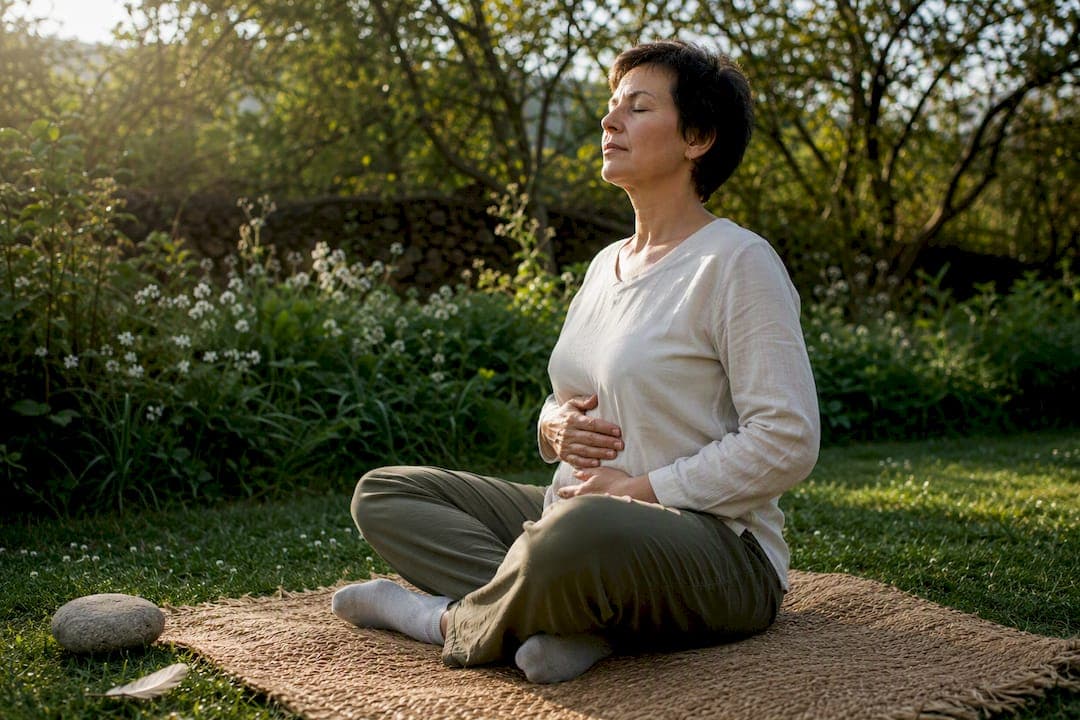
Yes, breathwork helps anxiety. The evidence supports it as a genuinely useful tool for easing anxious symptoms, particularly when you focus on the exhale. Try this right now: breathe in gently through your nose for about four seconds, then let your exhale stretch out to six or eight seconds. Repeat for three to five minutes. That longer exhale is doing real physiological work, not just distracting you. One caveat before you start: breathwork supports your wellbeing, but it doesn't replace clinical treatment for diagnosed anxiety disorders. If you feel dizzy, lightheaded, or notably worse, stop and speak with a clinician.
Pro Tip: Sit tall, unclench your jaw, and let your shoulders drop before your first breath. A relaxed body makes the exhale come easier and the calming effect land faster.
A 2023 meta-analysis of 12 randomized controlled trials involving 785 people found breathwork was linked to a meaningful drop in self-reported anxiety, giving this simple practice real scientific backing.
Key Takeaways
Breathwork reliably eases anxiety symptoms through exhale-focused techniques practiced for just five minutes daily, backed by randomized trial evidence.
| Point | Details |
|---|---|
| Evidence is real but modest | A 12-trial meta-analysis found small-to-medium effects on anxiety (g = -0.32), not a cure-all. |
| Exhale length is the key mechanism | Making your exhale longer than your inhale activates the vagus nerve and calms your nervous system. |
| Five techniques cover most needs | Cyclic sighing, diaphragmatic breathing, box breathing, paced breathing, and the A52 method each take under 10 minutes. |
| Safety matters for some readers | Those with cardiac issues, epilepsy, or severe panic disorder should consult a clinician before starting. |
| Guided practice builds consistency | Qigongstar's White Tiger and 5 Animal Qigong courses combine breath regulation with movement for ongoing anxiety support. |
Table of Contents
- What Does the Research Say About Breathwork and Anxiety?
- How Does Breathwork Calm Your Nervous System?
- Which Breathing Techniques Work Best for Anxiety?
- Is Breathwork Safe, and Who Should Be Careful?
- Should You Use Breathwork Alongside Therapy or Medication?
- Ready to Build a Guided Breathwork Practice?
- Frequently Asked Questions
- Sources
What Does the Research Say About Breathwork and Anxiety?
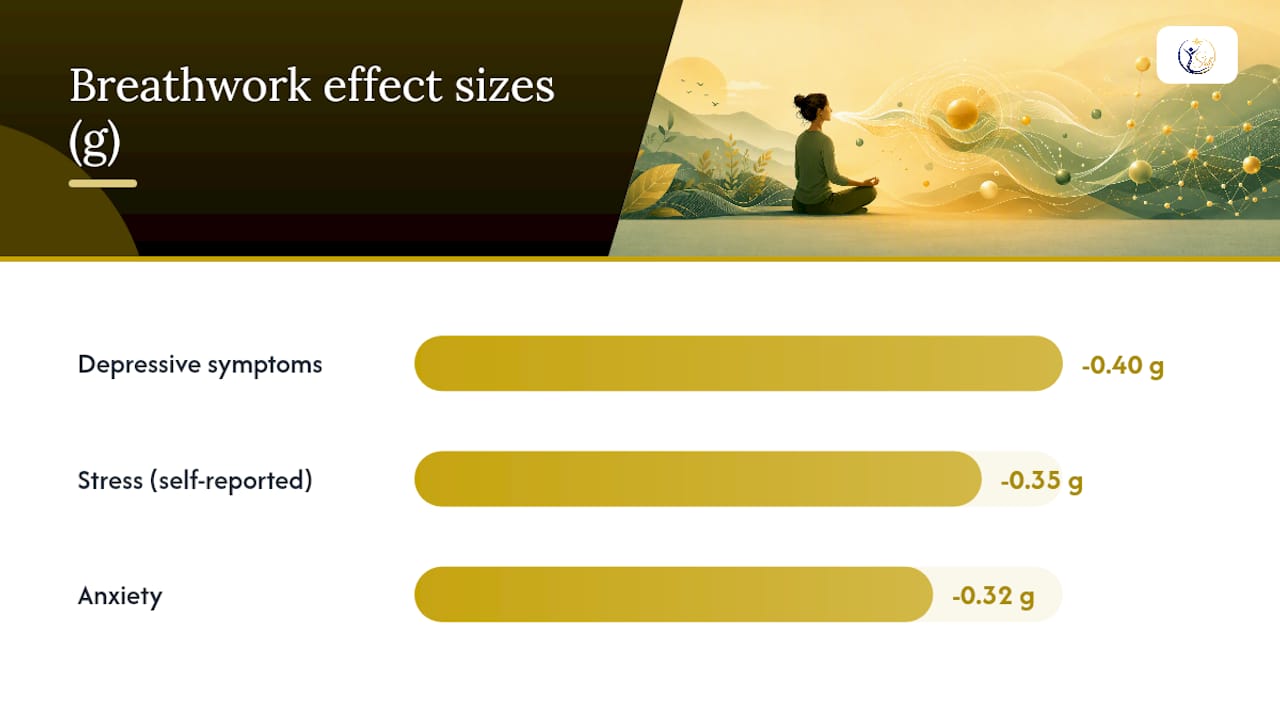
The strongest evidence comes from that same 2023 meta-analysis, which pooled 12 randomized controlled trials and 785 participants. Researchers found breathwork associated with lower self-reported stress (effect size g = -0.35), similar reductions in anxiety (g = -0.32), and even stronger effects on depressive symptoms (g = -0.40). In plain terms, these are small-to-medium effects. That's not a miracle cure, but it's a consistent, measurable shift, on par with what you'd see from many low-intensity behavioral interventions, achieved through nothing more than how you breathe.
A separate randomized trial adds weight to this picture. Participants who practiced just five minutes of daily cyclic sighing, an exhale-focused technique, saw greater increases in positive mood and a lower resting respiratory rate than a group practicing mindfulness meditation over the same month, according to research published in Cell Reports Medicine. Five minutes. One month. Measurable results.
Structured protocols show similar promise. A single-blind randomized controlled trial of the A52 Breath Method tested twice-daily slow diaphragmatic breathing (a five-second inhale, five-second exhale, two-second hold) over 12 weeks among paramedicine students, a famously high-stress group. The result: significantly lower stress, anxiety, and depression scores, alongside improved resilience, compared with controls.
The evidence isn't uniform, though. A 2024 systematic review found that outcomes vary considerably depending on the specific technique used, some active breathing protocols showed large effects, while others showed almost none. A few honest caveats worth holding onto:
- Sample sizes across many trials remain small to moderate, which limits how confidently researchers can generalize findings.
- Techniques vary widely (paced breathing, cyclic sighing, diaphragmatic protocols), and they aren't interchangeable.
- Standardized dosing and duration guidelines are still catching up to the enthusiasm around breathwork.
The takeaway isn't "breathwork fixes anxiety." It's that specific, exhale-focused techniques, practiced consistently, produce real and replicable shifts in mood and physiology.
How Does Breathwork Calm Your Nervous System?
Your autonomic nervous system runs on two settings: sympathetic (fight-or-flight, the state anxiety hijacks) and parasympathetic (rest-and-digest, the state you're chasing). Breathwork works by nudging you from one into the other, and it does it faster than most people expect.
The mechanism centers on your exhale. Slow, extended exhalation stimulates your vagus nerve, the primary communication line between your brain and your internal organs, which in turn lowers your heart rate and respiratory rate. Stanford Medicine researchers describe this exhale emphasis as the most reliable cue for activating that calming vagal response. It's a "bottom-up" approach: you calm the body first, and the mind tends to follow, which nicely complements "top-down" methods like cognitive behavioral therapy that work by reshaping thought patterns directly.
- Sympathetic dominance: shallow, rapid breathing, racing heart, that wired, on-edge feeling anxiety produces.
- Parasympathetic activation: slow, exhale-led breathing, steadier heart rate, a genuine sense of settling.
- The cue that flips the switch: making your exhale longer than your inhale, even by a few seconds.
Pro Tip: If you only remember one rule from this entire article, make it this: breathe out longer than you breathe in. Everything else is refinement.
Which Breathing Techniques Work Best for Anxiety?
Five techniques show up again and again in the research, and each one takes only a few minutes to learn.
- Cyclic sighing. Inhale through your nose, take a second short sip of air to fully fill your lungs, then exhale slowly and completely through your mouth. Repeat for five minutes daily. This is the technique from the Cell Reports Medicine trial that outperformed mindfulness for mood and respiratory rate.
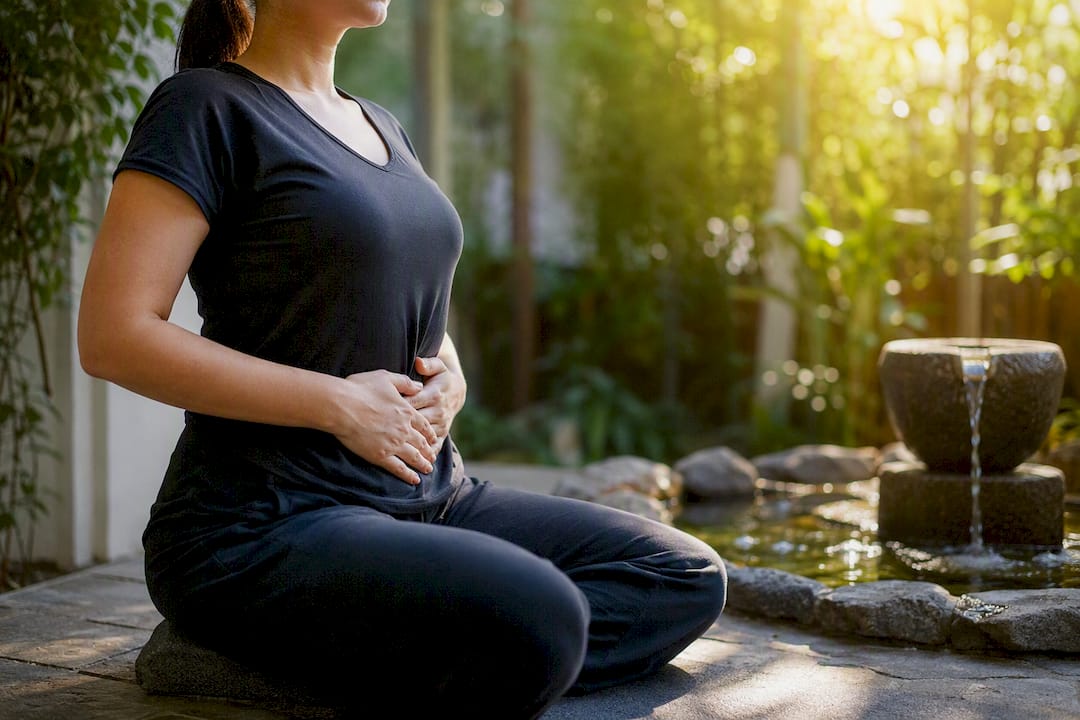
- Diaphragmatic (deep) breathing. Place one hand on your chest, one on your belly. Inhale through your nose so your belly rises while your chest stays still, exhale slowly through pursed lips. Five to ten minutes, once or twice daily.
- Box breathing. Inhale for four counts, hold for four, exhale for four, hold for four. Repeat for four to five rounds. Popular with military and first-responder training for its structure and ease of memorization.
- Paced or HRV breathing. Breathe at a steady pace of around five to six breaths per minute, roughly a five-second inhale and five-second exhale. NHS guidance recommends gentle counts of up to five for at least five minutes as a straightforward starting point.
- The A52 Breath Method. A five-second inhale, five-second exhale, two-second hold, practiced twice daily. This is the protocol behind the 12-week resilience trial mentioned earlier, and it's a good option once you want more structure than basic paced breathing offers.
Pro Tip: Count on your fingers or tap your thigh gently to anchor the rhythm while you're learning. Expect mild lightheadedness in your first few sessions; that usually fades within a week as your body recalibrates.
Not every breathing style is gentle. Rapid, high-arousal techniques (some forms of holotropic or Wim Hof-style hyperventilation breathing) can spike physiological arousal rather than calm it. If you have a history of panic attacks or anxiety disorders, approach any fast-paced or breath-holding practice with real caution, or skip it in favor of the slower techniques above.
Is Breathwork Safe, and Who Should Be Careful?
Before your first session, set yourself up properly. Sit or lie somewhere quiet, keep your breathing pace gentle rather than forced, and if you manage a cardiac condition, epilepsy, or are pregnant, mention your plans to a clinician first.
Certain situations call for extra care:
- Cardiovascular conditions or recent heart surgery, where changes in blood pressure need monitoring.
- Epilepsy, since some breath-holding patterns can affect seizure thresholds.
- Severe, current panic disorder, where breath-focused attention can occasionally heighten distress before it eases.
- Pregnancy, particularly for any technique involving breath holds.
If dizziness, tingling in your fingers, or a spike in anxiety shows up mid-practice, here's what to do:
- Stop the exercise immediately.
- Return to your normal, unforced breathing rhythm.
- Sit quietly until the sensation passes, usually within a minute or two.
- If symptoms persist or worsen, contact your GP or another qualified clinician.
Track your progress loosely rather than obsessively, note your anxiety level before and after each session on a simple one-to-ten scale. A scoping review of breathwork in diagnosed anxiety disorders found slow diaphragmatic breathing produced meaningful symptom improvement across multiple clinical studies, though protocols varied. Expect quicker relief in the moment; lasting change in your baseline anxiety typically takes several weeks of regular practice.
Should You Use Breathwork Alongside Therapy or Medication?
Breathwork works best as a companion to your existing care, not a replacement for it. If you're in therapy or taking medication, mention your breathwork practice to your clinician so it can be coordinated rather than layered on blindly.
- Tell your therapist or GP you're adding breathwork, especially if you manage a diagnosed anxiety disorder.
- Use it for acute, in-the-moment anxiety spikes alongside your regular treatment plan.
- Keep expectations realistic: breathwork can ease state anxiety within minutes, but trait-level change needs consistent practice over weeks.
- Prioritize professional treatment first if your anxiety significantly disrupts daily functioning; breathwork supports that care, it doesn't substitute for it.
A note from someone who teaches this daily
Years of guiding students through breath and movement practice have shown me that consistency beats intensity every time. If you're ready for more structure than solo practice offers, guided classes are one gentle next step.
Ready to Build a Guided Breathwork Practice?
Reading about cyclic sighing and diaphragmatic breathing is one thing. Practicing it consistently, with proper form and real feedback, is another, and that's where a guided routine changes the outcome. Qigongstar's online Qigong classes build breath regulation directly into gentle movement sequences, so you're not just breathing correctly in isolation, you're training your whole nervous system to settle.
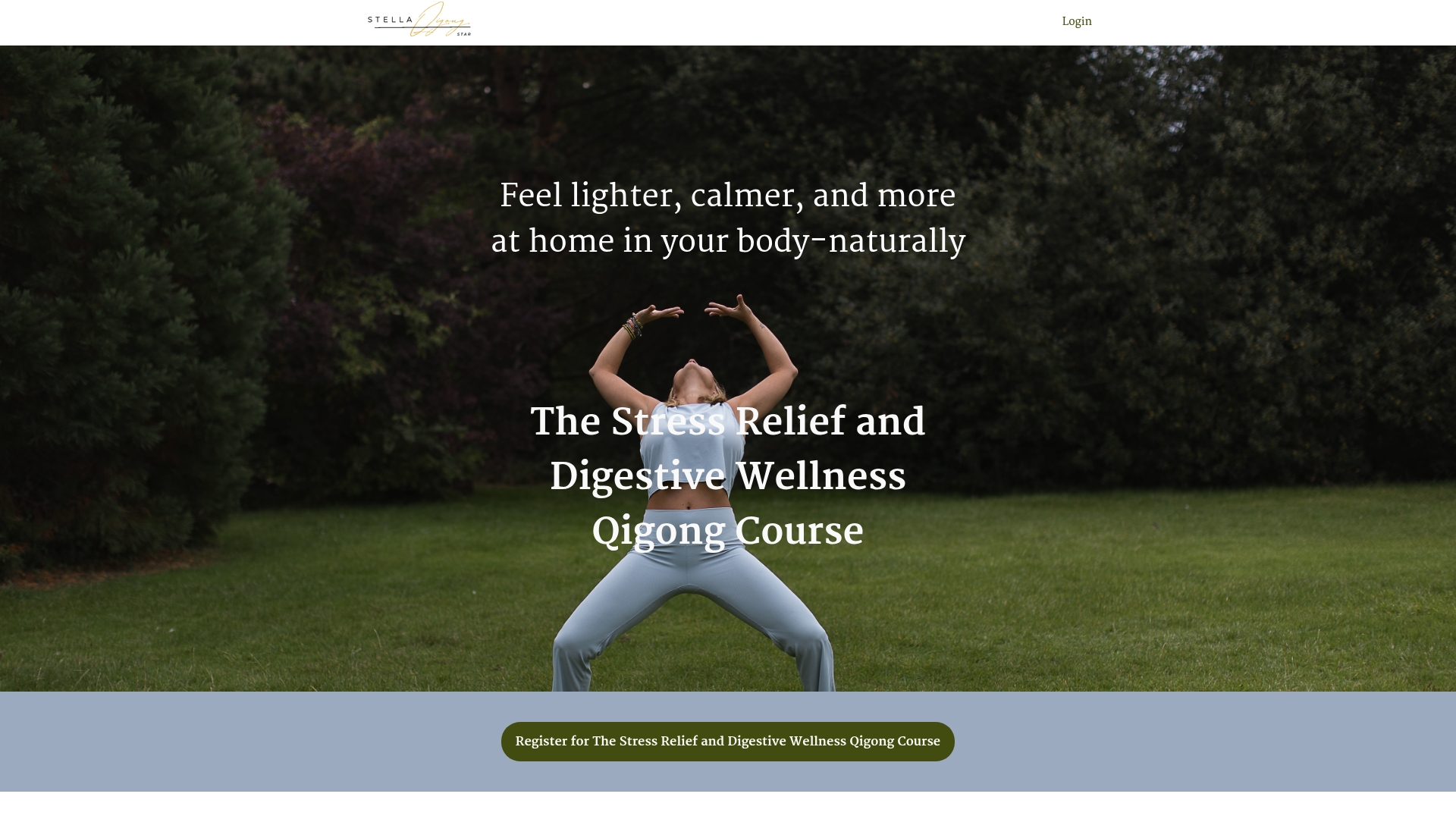
The White Tiger Qigong program, taught live and on-demand, weaves exhale-focused breathing into flowing movement designed specifically around stress and anxiety relief, with instructors certified through the White Tiger Qigong School and Yoga Alliance. If you'd rather explore a full practice at your own pace, the 5 Animal Qigong course offers a structured, beginner-friendly path that pairs breath with movement across five distinct animal forms. If you have a diagnosed anxiety condition, treat these classes as a supportive addition to your care, not a substitute for your clinician's guidance. Check current class times and course access on the online classes page to find a starting point that fits your schedule.
Frequently Asked Questions
Does breathwork actually reduce anxiety, or is it just a placebo? The effects go beyond placebo. Multiple randomized controlled trials, including a 12-study meta-analysis, found measurable reductions in self-reported anxiety tied specifically to breathing interventions, with effects on physiological markers like respiratory rate too.
How quickly will I feel calmer after starting breathwork? Many people notice reduced tension within a single five-minute session, thanks to immediate vagal activation. Lasting shifts in your baseline anxiety level typically take several weeks of daily practice to build.
Can breathwork replace anxiety medication or therapy? No. Breathwork works best as an adjunct alongside professional treatment for diagnosed anxiety disorders, not a replacement for it. Always keep your clinician informed if you're adding it to an existing treatment plan.
Which breathing technique is best for beginners? Diaphragmatic breathing or simple paced breathing (five-second inhale, five-second exhale) are the easiest entry points. Cyclic sighing is a close second once you're comfortable with basic belly breathing.
Is it normal to feel lightheaded when starting breathwork? Mild lightheadedness in your first few sessions is common and usually fades within a week. If it persists, worsens, or comes with a racing heart, stop and consult a clinician.
Sources
- Effect of breathwork on stress and mental health: A meta-analysis of randomised-controlled trials | Scientific Reports
- Brief structured respiration practices enhance mood and reduce physiological arousal - PMC
- 'Cyclic sighing' can help breathe away anxiety - Stanford Medicine
- Examining the Effectiveness of Breathwork to Improve Resilience and Psychological Wellbeing While Reducing Anxiety, Depression, Stress, and Insomnia in Paramedicine Students: A Single‐Blind Randomised Controlled Trial - PMC
- Breathwork interventions for anxiety disorders: scoping review | Brain Sciences
- Breathing exercises for stress - NHS