
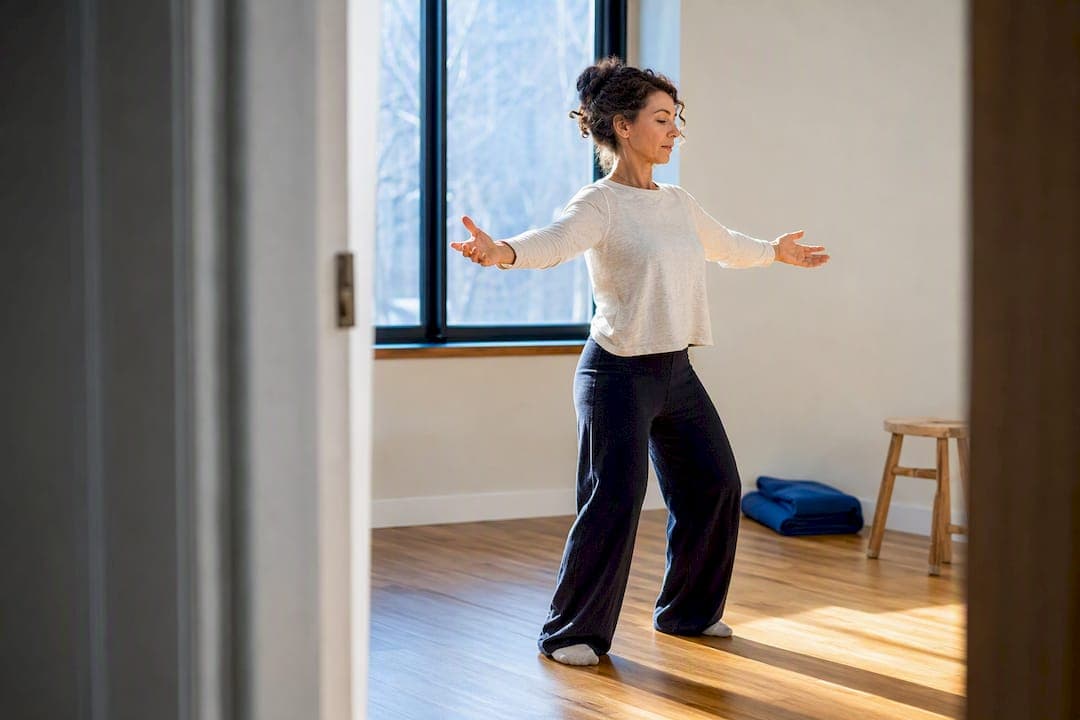
Qigong can gently support trauma recovery by helping the nervous system shift out of chronic fight, flight, or freeze patterns, but the evidence base is still small and mostly limited to pilot studies. Use it as a complementary, adjunctive practice alongside trauma-focused therapy, not a replacement for it. Guided, trauma-informed qigong routines, including White Tiger Qigong and Five Animal Qigong, offer a gentle starting point for learning to feel safe in your body again.
TL;DR:
- Qigong offers a gentle way to help regulate the nervous system, especially by activating the parasympathetic state through slow movements and breathing, but evidence is still limited to pilot studies.
- It specifically targets interoception, gradually rebuilding bodily awareness to improve emotional regulation and reduce hyperarousal or shutdown symptoms.
- Simple, rhythmic movements with automatic breath pacing are preferable, with short, repeatable routines that avoid complex sequences to stay within safety limits.
- Existing research shows qigong can provide short-term calm and stress relief, but large-scale clinical trials for trauma-specific outcomes are still lacking.
- It should complement, not replace, evidence-based trauma therapies, and safety precautions are necessary if emotional flooding or dissociation occurs during practice.
Table of Contents
- How Trauma Healing Qigong Affects the Nervous System and Body Memory
- What the Research Actually Shows About Trauma Healing Qigong
- Trauma-Informed Qigong Routines You Can Try Today
- How to Stay Safe if Emotional Flooding Happens
- Bringing Trauma Healing Qigong Into Therapy
- A 4-Week Starter Plan for Trauma Healing Qigong
- Who's Behind This Guide and What Qigongstar Actually Offers
- Why the "Just Breathe Through It" Advice Misses the Point
- Finding the Right Qigong Practice for Your Healing Goals
- Where This Guide's Claims Come From
- Sources
How Trauma Healing Qigong Affects the Nervous System and Body Memory
Trauma does not just live in your thoughts. It settles into your muscles, your breath pattern, and the way your body constantly scans for danger, even years after the actual threat has passed. This is why talk-based approaches alone sometimes fall short. Trauma healing qigong works differently: it speaks directly to the body's alarm system through movement, breath, and attention, rather than trying to reason with it.
At the center of this process is your autonomic nervous system, the internal switchboard that toggles between sympathetic activation (alert, mobilized, ready to fight or flee) and parasympathetic activation (settled, digesting, able to rest). Trauma tends to leave this switchboard stuck in the "on" position, or paradoxically frozen in shutdown. Slow, rhythmic qigong movement paired with diaphragmatic breathing nudges the switch back toward parasympathetic dominance. Research on qigong's mechanisms points to three ingredients working together: active relaxation, focused attention, and conscious breathing, which combine to calm the nervous system's stress response while gently rebuilding your capacity to sense what is happening inside your own body.
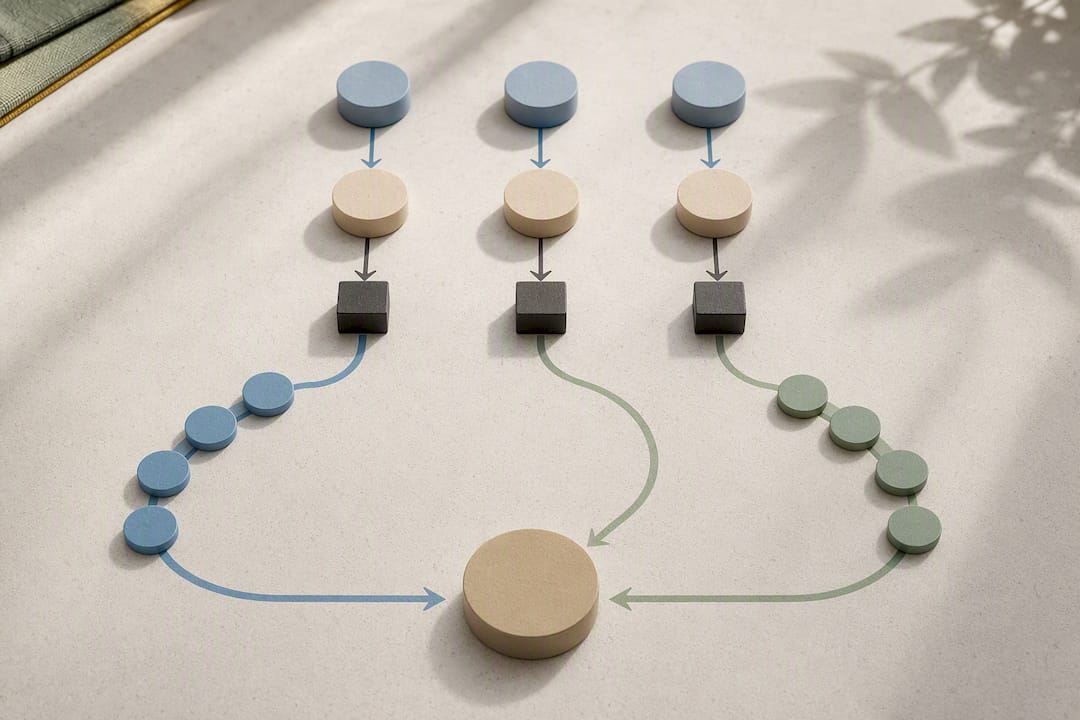
That second piece, called interoception, matters more than most people realize. Interoception is your ability to accurately notice internal sensations: a tight chest, a shallow breath, a stomach that clenches before you consciously register worry. Chronic trauma often blunts this awareness. You might feel generally numb, or so overwhelmed by bodily sensation that you avoid checking in with yourself entirely. Either extreme, numbness or flooding, makes emotional regulation harder because you lose the early-warning signals that let you respond to stress before it spirals.
Qigong rebuilds interoceptive awareness slowly and safely, one small sensation at a time. A hand rising with an inhale. Weight shifting from one foot to the other. The subtle warmth that spreads through the palms during a Five Animal Qigong sequence. These are not abstract mindfulness cues; they are concrete, low-intensity data points that retrain your nervous system to trust bodily information again.
What makes qigong particularly well-suited to trauma work:
- Movements are slow and predictable, reducing the startle and threat response that fast or unpredictable exercise can trigger.
- Breath pacing is built into nearly every posture, so regulation happens automatically rather than requiring extra mental effort.
- Repetition of a small number of forms allows the body to master a sequence without cognitive strain, which matters when concentration is already taxed by hyperarousal.
- Movements stay grounded and close to the body, which tends to feel safer than practices requiring large, exposed, or acrobatic ranges of motion.
- Attention is directed inward and downward (breath, feet, center of gravity), pulling focus away from external threat scanning.
Simpler forms tend to outperform complex ones for this population, and that is worth sitting with. Elaborate qigong sequences that demand memorizing long routines can pull someone back into their thinking brain, the part that got hijacked during the original trauma. A trauma-informed approach favors short, repeatable movements you can do without ever consulting a diagram, because familiarity itself becomes part of the calming effect.
Pro Tip: If a movement feels good on the first try, do not rush to add complexity. The nervous system trusts repetition far more than novelty when it comes to feeling safe.
What the Research Actually Shows About Trauma Healing Qigong
Here is the honest picture: qigong shows real promise for trauma-related symptoms, but the science has not caught up to the enthusiasm yet.
A 2022 systematic review of tai chi and qigong for trauma-exposed populations found these practices feasible and acceptable across six pilot and feasibility trials. Participants reported real benefits, including relaxation, reduced symptoms, better sleep, and improved day-to-day functioning. The catch is that none of the studies reviewed were large, rigorous randomized controlled trials specifically testing qigong against PTSD. Small pilot data is useful for establishing safety and plausibility. It is not the same as proof of clinical efficacy for a diagnosis as complex as PTSD, as rigorous evidence is currently lacking.
Broader evidence on stress and anxiety, drawn from a healthier general population rather than trauma survivors specifically, is somewhat more robust. A 2014 meta-analysis of randomized trials found qigong associated with meaningful reductions in anxiety and perceived stress, with pooled effect sizes in the moderate to large range. Some trials reported standardized mean differences suggesting reductions in anxiety and perceived stress, according to the meta-analysis of qigong trials for stress and anxiety. Those numbers sound encouraging, but the same review flagged small sample sizes and inconsistent study design as significant limits on how far the findings generalize.
The consistent thread across this research is not a miracle cure narrative. It is a pattern: qigong reliably helps people feel calmer and more regulated in the short term, and pilot trials in trauma populations echo that same pattern, but the rigorous, large scale PTSD-specific trials that would let clinicians say "this works as well as X" simply do not exist yet.
Common weaknesses across the qigong and trauma research base:
- Small sample sizes, often fewer than fifty participants per trial.
- Lack of active control groups, making it hard to separate qigong's specific effects from general relaxation or social contact.
- Short follow-up periods that do not tell us whether benefits hold six or twelve months later.
- Wide variation in the type, duration, and dosage of qigong taught across studies, making it difficult to compare results directly.
- Researchers acknowledge that non-specific factors, like social support during group classes and positive expectations about the practice, likely contribute to outcomes alongside the movements themselves.
The practical takeaway for you as a reader: treat qigong as a legitimate, low-risk tool worth trying, backed by a coherent but still-limited body of evidence. It is not yet a substitute for evidence-based trauma treatments like EMDR or trauma-focused CBT. It is, however, a reasonable and generally safe addition to your recovery toolkit, and one that people starting early, before symptoms become entrenched, tend to report responding to particularly well, according to a broader review of qigong and tai chi health benefits.
Trauma-Informed Qigong Routines You Can Try Today
You do not need an hour, a special outfit, or a perfect quiet room. You need five minutes and permission to stop whenever something feels like too much.
The 5 to 10 Minute Micro-Session for Acute Regulation
Use this when you notice your heart racing, your thoughts spiraling, or a wave of shutdown creeping in. It is designed to interrupt escalation before it takes hold.
- Stand or sit with both feet flat on the floor. Notice the contact point between your feet and the ground for three full breaths.
- Inhale through the nose for a slow count of four while raising both hands to chest height, palms facing down.
- Exhale through the mouth for a count of six while lowering the hands slowly, as though pressing gentle weight down through water.
- Repeat this rise and fall eight to ten times, keeping the exhale longer than the inhale throughout.
- Close by placing one hand on your chest and one on your belly, breathing naturally for thirty seconds, simply noticing what shifted.
The 15 to 20 Minute Full Routine
This longer session works well as a daily anchor practice, ideally at the same time each day so your nervous system starts to anticipate and welcome it.
Warm-up (3 to 4 minutes): Gentle neck rolls, shoulder circles, and soft knee bends to release surface tension before deeper work begins.
Core sequence (10 to 12 minutes): Move through a simple repeating form, such as the opening postures from White Tiger Qigong, focusing on the exhale as the active, releasing phase of each movement. Keep movements small and unhurried. If a posture from Five Animal Qigong feels calming, such as the slow, low stance of the Tiger, stay with it longer rather than rushing through the full sequence.
Grounding close (3 to 5 minutes): Stand still, feet hip-width apart, and simply breathe while noticing five things you can feel in your body right now. End seated, hands resting on your knees, for one full minute of stillness.
Chair and Limited-Mobility Modifications
Every movement above translates to a seated version. Replace weight shifts with gentle torso leans, replace standing grounding with feet pressed flat and hands resting on the thighs, and shorten any sequence the moment fatigue or overwhelm appears. There is no version of trauma healing qigong that requires pushing through discomfort. The NHS guide to tai chi specifically recommends these kinds of simplified, modified forms for people managing stress or mobility limits, and the same logic applies here.
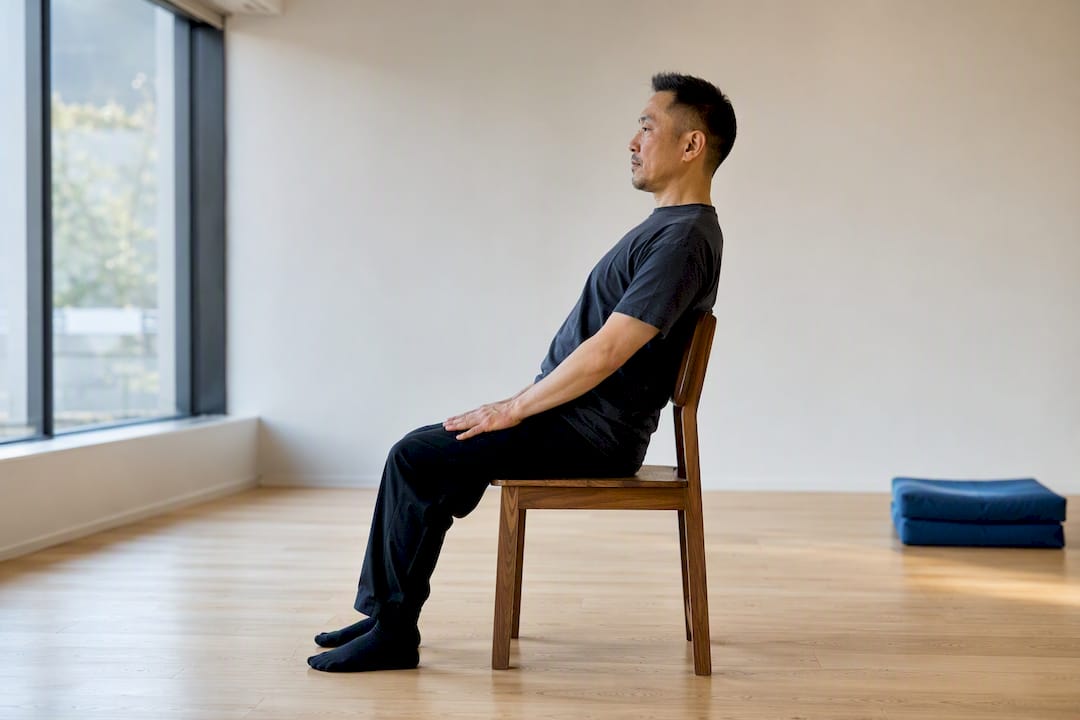
Pro Tip: If you feel more agitated partway through a session rather than calmer, that is useful information, not failure. Stop, place both feet on the ground, and take three slow exhales longer than your inhales before deciding whether to continue.
On dosage: three short sessions a week is a reasonable starting frequency, building toward daily 10-minute practice over several weeks. The goal is a nervous system that learns to trust this practice, and trust builds through consistent and paced practice rather than intensity.
How to Stay Safe if Emotional Flooding Happens
Slow movement and quiet attention can sometimes surface feelings that were previously kept at bay, and that is worth preparing for rather than fearing.
Emotional flooding, a sudden surge of grief, fear, or anger, and dissociation, a sense of foggy detachment or unreality, are both recognized responses that can arise during body-based practices. Neither means qigong is wrong for you. It usually means the pace needs adjusting.
If flooding or dissociation happens during practice:
- Stop the movement sequence immediately and open your eyes if they were closed.
- Press your feet firmly into the floor and name five objects you can see in the room out loud.
- Take a sip of cold water or hold an ice cube; the sharp sensation helps re-anchor attention in the present.
- Shorten the next session significantly, and consider practicing with a trusted person nearby for a while.
- Give yourself dedicated rest and integration time after practice rather than rushing into the next task; several practitioner sources emphasize pacing and recovery as essential, not optional.
Certain situations call for extra caution before you begin at all: significant physical limitations, pregnancy (some postures need modification), and severe or frequent dissociation, which may mean guided, in-person support is safer than solo practice at first. Reputable medical sources describe qigong as generally safe when practiced sensibly, but "generally safe" still means checking in with your own limits every single session.
If you work with a therapist or care team, mention that you are adding qigong to your routine and describe specifically what comes up (calm, restlessness, memories, numbness). This single sentence of communication often prevents confusion later if new sensations or emotions surface during other parts of your treatment.
Bringing Trauma Healing Qigong Into Therapy
Qigong works best when it sits alongside clinical trauma care, not apart from it, and the fit is more natural than it might first appear.
Somatic and trauma-focused therapies already emphasize sensation and grounding over forced narrative recounting, which is precisely what qigong practices. Both approaches share the belief that regulation has to come before, or alongside, processing, rather than after. This overlap makes qigong a natural pairing with somatic-based therapeutic approaches, particularly for clients who become overwhelmed by direct exposure-based work.
Practical ways this integration plays out:
- Session prep: A five-minute grounding sequence before a therapy appointment can help a client arrive more regulated and present, rather than already activated by anticipatory anxiety.
- Between-session stabilization: Short daily micro-sessions give clients a self-directed regulation tool for the days between appointments, reducing reliance on higher-intensity coping in moments of distress.
- Relapse-prevention: For clients further along in recovery, a consistent qigong practice offers an ongoing nervous-system check-in that can flag rising stress before it escalates into a fuller setback.
Therapists can recommend simple exercises like the seated breath-and-hand-press sequence described earlier, without needing qigong expertise themselves; the movements are accessible enough to hand a client as homework.
That said, qigong has clear limits. If someone is experiencing frequent flashbacks, active self-harm risk, complex dissociative symptoms, or an inability to function in daily life, movement practice alone is not sufficient. These are referral indicators for trauma-focused psychotherapy or psychiatric support, and a qigong instructor should say so plainly rather than overstate what the practice can do. When documenting a care plan, noting practice frequency, observed effects (calmer sleep, reduced reactivity, or conversely, increased distress), and any modifications made keeps the whole care team on the same page.
A 4-Week Starter Plan for Trauma Healing Qigong
Structure helps here, especially in early recovery when motivation and energy can fluctuate day to day.
Week 1: Practice the 5 to 10 minute micro-routine daily, focusing purely on grounding. Do not add complexity yet. The goal this week is simply noticing whether your body responds to slow breath and small movement with more ease or more resistance.
Week 2: Keep the daily micro-session and add the fuller 10 to 15 minute core routine three times this week. Start a simple nightly log: one word for sleep quality, one word for overall mood, one word for how keyed up or settled you felt.
Week 3: Extend session length slightly if things are going well, or consider joining a guided live class for structure and feedback. Continue tracking sleep, mood, and arousal, and start comparing week 3 entries against week 1.
Week 4: Assess honestly. Are sessions consistently followed by feeling calmer, or are you noticing increased agitation more often than not? Use this to decide whether to continue solo, move toward guided instruction, or bring findings to a therapist.
Questions worth journaling across all four weeks:
- What sensation did I notice today that I might have missed a month ago?
- Did today's practice make sleep easier or harder?
- Was there a moment of unexpected calm, and what preceded it?
- Did anything come up that felt too big to handle alone?
When to pause and seek guided support:
- If flooding or dissociation happens more than once and self-regulation steps are not helping.
- If sleep, mood, or daily functioning get worse rather than better over the four weeks.
- If you find yourself avoiding practice out of dread rather than simple forgetfulness.
Four weeks will not resolve deep trauma. It is enough time, though, to learn whether trauma healing qigong is a practice your particular nervous system responds well to, which is valuable information either way.
Who's Behind This Guide and What Qigongstar Actually Offers
This guide comes from Qigongstar's teaching perspective, built around certification through the White Tiger Qigong School and registration with Yoga Alliance, standards that require ongoing training in both movement technique and safe, trauma-aware teaching practice.
The course library centers on two lineages: White Tiger Qigong, known for grounding, restorative sequences, and Five Animal Qigong, which draws on the distinct postures and energetic qualities of five animal archetypes to address different physical and emotional states. Within these programs are trauma-sensitive routines specifically paced for nervous systems that need extra caution around intensity and unpredictability, the same principles detailed throughout this guide.
It is worth being direct about scope. These offerings are designed as supportive, complementary practice, not clinical treatment. Individual results vary, and no course claims to resolve PTSD or complex trauma on its own. If you are working with a therapist or psychiatrist, qigong practice belongs alongside that care, communicated openly with your treatment team, not as a replacement for it. The value here is in giving your body a consistent, gentle way to practice feeling safe, one small breath and one small movement at a time.
Why the "Just Breathe Through It" Advice Misses the Point
The wellness world loves a tidy narrative: breathe deeply, feel better, healing complete. The research on trauma healing qigong tells a messier, more honest story, and that is exactly why it deserves your trust more than the tidy version does.
What the evidence actually supports is modest but real: qigong helps regulate an overactivated nervous system, and pilot studies in trauma populations show consistent, if preliminary, benefit. What conventional wellness advice gets wrong is treating this as a fast fix rather than a skill built through repetition. Five minutes of qigong will not undo years of hypervigilance. Five minutes practiced consistently, alongside real clinical support when needed, genuinely can shift how your body holds stress over time.
If you take one thing from this guide, prioritize consistency over intensity. A short, boring, repeated practice will do more for your nervous system than an occasional, ambitious one. Start smaller than feels necessary. Track how your body actually responds rather than how you think it should respond. And keep your therapist in the loop if you have one, because qigong works best as one well-placed piece of a larger recovery picture, not the whole picture itself.
— Stella
Finding the Right Qigong Practice for Your Healing Goals
If parts of this guide resonated with where you are right now, whether that's needing a quick regulation tool during a hard week or wanting a steady daily anchor, the courses are built around different starting points rather than a one-size-fits-all program.
For readers who mainly need short, in-the-moment grounding, the trauma-sensitive sequences woven through White Tiger Qigong focus on the kind of slow, repeatable movement this guide describes. If digestive stress and generalized anxiety show up together for you, a common pattern in nervous-system dysregulation, Five Animal Qigong addresses both through its varied animal-based postures. Formats include on-demand courses you can move through at your own pace, live virtual classes for real-time guidance and community, and private coaching for anyone who wants closer, individualized attention while building a practice.
None of this replaces therapy or psychiatric care for complex PTSD, and it is not meant to. It is meant to give your body a reliable, guided way to practice regulation between and around that care. Browse the full online course catalog to find the format that matches where you are starting from today.
Where This Guide's Claims Come From
The research behind this guide draws primarily on a systematic review of tai chi and qigong for trauma-exposed populations and a meta-analysis of qigong's effects on anxiety and stress. For general safety guidance, the Cleveland Clinic's overview of qigong's health benefits and the NHS guide to tai chi offer practical, medically reviewed context. If you are in acute distress right now, the Suicide & Crisis Lifeline offers immediate, confidential support.
This article is general information, not a substitute for advice from a qualified doctor. Consult a qualified healthcare professional about your own circumstances before acting on anything here.
Sources
- Clinical research on qigong mechanisms (2020)
- What are the health benefits of qigong? (Cleveland Clinic)
- Guide to tai chi (NHS)