

Qigong is generally safe for most healthy adults, but it is not without risk for everyone. If you have an unstable cardiovascular condition, a seizure disorder, severe psychiatric illness, severe osteoporosis, or are in the early weeks of pregnancy, you need medical clearance before you begin. The same applies if you are recovering from recent surgery or managing vertigo from an inner-ear disorder. For most people, though, qigong's slow, breath-centered movements carry far less risk than higher-intensity exercise, and even many of the groups listed above can practice safely with the right modifications.
If you have a serious or unstable health condition, speak with your primary care provider before starting any new movement practice, including qigong. That conversation takes minutes and can shape a safer, more confident start.
Key Takeaways
Qigong is safe for most adults, but specific health conditions require medical clearance, thoughtful modifications, or supervised practice before you begin.
| Point | Details |
|---|---|
| General safety verdict | Fewer than 10% of adults in studies reported side effects, mostly mild muscle soreness, fatigue, or headache. |
| Groups needing clearance | Pregnancy, uncontrolled cardiovascular conditions, seizure disorders, severe psychiatric illness, recent surgery, and vertigo all require medical consultation first. |
| Starter safety actions | Begin with 10–15 minute seated sessions, breathe naturally, and stop immediately if you feel chest pain, dizziness, or shortness of breath. |
| Red-flag symptoms | Chest pain, fainting, sudden vision changes, or seizures require emergency care; persistent palpitations or severe dizziness need same-day clinician contact. |
| Qigongstar's approach | The Five Animal Qigong course and online classes include seated modifications and breath guidance suited to beginners and those with health concerns. |
Table of Contents
- What side effects and adverse events do studies actually report?
- Condition-by-condition guidance: who needs clearance, modifications, or a pause?
- How to practice qigong safely from your very first session
- What to ask a Qigong teacher before you join a class
- What research and health authorities say about qigong safety
- Red flags during or after practice that need medical attention
- Balancing caution with genuine access to practice
- Qigongstar's classes are designed with your safety in mind
- Sources
What side effects and adverse events do studies actually report?
Reported side effects from qigong are generally mild and uncommon. NCCIH confirms that fewer than 10% of adults in exercise-comparison studies experienced any side effect at all, and those who did mostly reported muscle soreness, fatigue, or headache. That incidence is comparable to other low-intensity movement practices.
The most commonly documented physical effects include:
- Muscle soreness or tenderness, especially in the legs and lower back after standing forms
- Fatigue, particularly in the first few sessions as the body adjusts
- Headache, often linked to breath-holding or tension in the neck and shoulders
- Dizziness or vertigo, most common during slow head rotations or transitions between postures
- Tinnitus, noted in some case reports, though rare
- Transient increases in heart rate or blood pressure, typically mild and short-lived
A systematic-review overview published on PMC documents a broader range of reported events, including psychological reactions, and flags that adverse-event reporting across studies is inconsistent. This makes precise incidence estimates difficult beyond the general finding that serious harms are uncommon. A ScienceDirect review adds that case reports have recorded physiological responses such as head pressure, hot flushes, and tachycardia, as well as rare psychological reactions including disorientation.
Pro Tip: Try a single 10-minute seated session before committing to a full standing class. If you feel dizzy, breathless, or unusually fatigued, that is your body asking for a gentler entry point, not a reason to stop entirely.
Condition-by-condition guidance: who needs clearance, modifications, or a pause?
Understanding qigong contraindications by condition helps you make a genuinely informed decision, not just a cautious one.
Pregnancy
Evidence here is limited. A small study of pregnant women found benefits and no adverse effects, but the sample size is too small to draw broad conclusions, and WebMD notes that safety data for pregnancy and breastfeeding remain limited. Consult your OB-GYN before starting or continuing qigong during pregnancy. In the first trimester, avoid deep twisting, strong abdominal compression, or any movement that causes discomfort. Seated and gentle standing forms are usually the safest options.
Cardiovascular disease and uncontrolled hypertension
Get medical clearance first. Once cleared, avoid breath-holding (known in some traditions as "holding the qi") and any straining or isometric tension. Medical News Today notes that qigong's slow, controlled movements carry lower risk than more intense exercise, which is encouraging, but that advantage disappears if you push through breathlessness or chest tightness.
Recent surgery or acute injury
Delay starting until your clinician gives the go-ahead. When you do return, seated or reduced-range forms are the right entry point. The UCSF Osher Center's qigong program FAQs specifically advise people recovering from surgery to consult before joining group sessions.
Severe osteoporosis or spinal instability
High-balance postures, deep forward bends, and any movement that loads the spine asymmetrically carry real risk. Seated forms or wall-supported standing practice reduce that risk considerably. Ask your instructor explicitly whether the class includes spinal loading movements before you join.
Seizure disorders and severe psychiatric illness
Case reports in the literature document psychological reactions, including disorientation and, in rare instances, hallucinations, associated with meditation-like practices. The ScienceDirect review recommends investigation into who may be harmed and under what conditions. If you have a history of psychosis, mania, or active seizure disorder, practice only under medical supervision and inform your instructor before your first session.
Vertigo and inner-ear disorders
Avoid any practice that involves rapid head rotations, quick positional changes, or prolonged eyes-closed balance work. Seated forms with minimal head movement are usually well tolerated, but check with your physician first.
Pro Tip: When you speak with your doctor, be specific: "I want to try a gentle, standing qigong class with slow arm movements and breath focus. Are there movements I should avoid given my condition?" A precise question gets a precise answer.
How to practice qigong safely from your very first session
Safe practice is mostly about pacing and awareness, not about avoiding qigong altogether. These starter rules apply whether you are joining a live class or starting qigong at home.
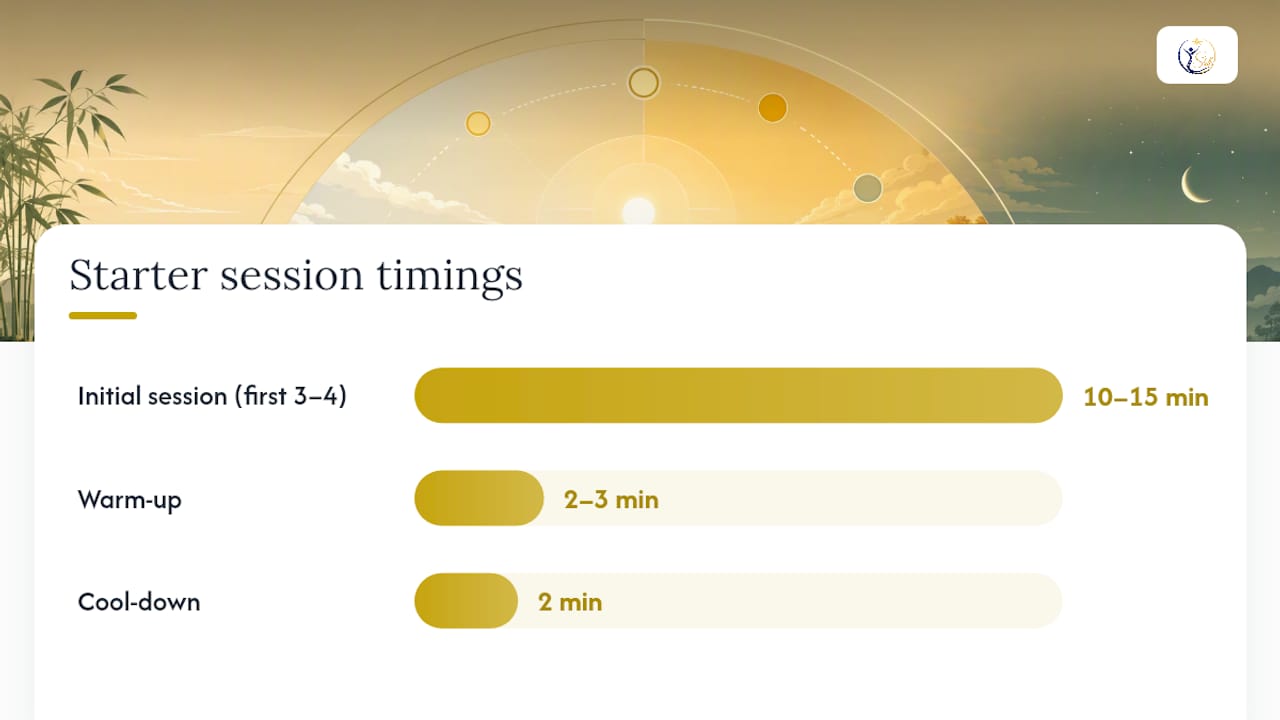
For your first three to four sessions, follow this sequence:
- Start with 10–15 minutes. A short session reveals how your body responds without overloading it.
- Choose a seated or supported standing position. Sit in a firm chair with feet flat on the floor if balance or fatigue is a concern.
- Breathe naturally throughout. Never hold your breath or strain to complete a movement. If a posture requires breath-holding to maintain, modify it.
- Stop if you feel dizzy, chest tightness, or sudden shortness of breath. Sit down immediately and rest. Do not push through these signals.
- Warm up gently. Two to three minutes of slow neck rolls, shoulder circles, and ankle rotations prepare the joints without loading them.
- Cool down with stillness. End each session with two minutes of quiet standing or seated breathing to let your heart rate settle.
- Avoid hyperventilation-style breathing patterns. Some advanced practices use rapid or forceful breath cycles. Skip these until you have a solid foundation and instructor guidance.
Reduce your range of motion rather than skipping a movement entirely. A smaller arm circle or a shallower knee bend still delivers the energetic and circulatory benefit without the strain. For readers with anxiety or panic tendencies, building stress resilience through qigong works best when breath is kept slow and rhythmic rather than deep and forceful.
Pro Tip: If you are unsure whether a movement is safe for your body, do it in your imagination first. Visualizing the movement activates similar neural pathways and gives you a moment to notice any resistance before you commit physically.
What to ask a Qigong teacher before you join a class
The right instructor makes a significant difference to your safety, especially if you are managing a health condition. Before your first session, ask these questions directly.
Questions worth asking:
- Do you offer seated or reduced-range modifications for every movement?
- Have you worked with students managing [your specific condition]?
- What is your certification, and does it include therapeutic or clinical applications?
- What is your emergency procedure if a student feels unwell during class?
- How large is the class, and will you be able to observe my form?
Instructor credibility signals worth looking for include certification from a recognized school (such as the White Tiger Qigong School or Yoga Alliance), experience with therapeutic populations, and a willingness to discuss your health history before class. Small group sizes, clear verbal cues for breath and movement, and an explicit "no strain" policy are all signs of a safety-conscious teaching environment.
When you arrive, tell your instructor about any relevant conditions before the session starts. You do not need to share your full medical history, but flagging "I have a heart condition and need to avoid breath-holding" or "I have vertigo and need to minimize head rotations" gives your teacher the information to keep you safe. If a program asks for a health intake form, fill it out honestly.
Pro Tip: Ask to observe one class before participating. Watching the pace, the modifications offered, and how the instructor responds to students who need adjustments tells you more than any description.
What research and health authorities say about qigong safety
The overall picture from systematic reviews and major health bodies is reassuring, with important caveats about the quality of the evidence.
NCCIH and Medical News Today both report no documented serious risks in studied populations, framing qigong as comparable in safety profile to other low-intensity exercise. WebMD notes the practice is likely safe for up to one year in studied groups. The PMC systematic-review overview is more nuanced: it documents a heterogeneous range of adverse events across studies, including physiological and psychological reactions, and calls for better safety surveillance methodology. Adverse-event reporting across PubMed-indexed trials is inconsistent, which limits precise incidence estimates.
| Source | Main safety claim | Key limitation |
|---|---|---|
| NCCIH | Side effects in fewer than 10% of adults in studies; mostly mild | Most studies focus on musculoskeletal pain populations |
| PMC systematic-review overview | Adverse events documented but heterogeneous; better surveillance needed | Inconsistent reporting across included studies |
| WebMD | Likely safe up to one year in studied groups | Limited pregnancy and breastfeeding data |
| Medical News Today | No documented serious risks; low-impact movements reduce injury likelihood | Narrative summary, not a systematic review |
| ScienceDirect review | Case reports of physiological and psychological adverse reactions exist | Case-report level evidence; cannot establish incidence rates |
The honest conclusion: qigong is well-tolerated by most people, but the research base is not yet strong enough to make absolute safety claims for every population. Higher-quality safety surveillance, particularly for people with psychiatric conditions or cardiovascular disease, would strengthen the evidence considerably.
Red flags during or after practice that need medical attention
Most discomfort in qigong is mild and passes quickly. These symptoms are different. Stop practice immediately and seek care if you experience any of the following.
Seek emergency care (call 911) for:
- Chest pain, pressure, or tightness during or after practice
- Sudden severe shortness of breath that does not resolve with rest
- Fainting or loss of consciousness
- Sudden vision changes, new weakness on one side of the body, or confusion
- A seizure
Contact your clinician the same day for:
- Persistent palpitations or an irregular heartbeat that lasts more than a few minutes after stopping
- Severe or prolonged dizziness that does not resolve within 10–15 minutes of rest
- Unusual headache that is more intense than your normal headaches
- Any psychological symptom that feels out of proportion to the session, such as intense anxiety, dissociation, or disorientation
Sit or lie down the moment you feel faint. Do not try to complete the movement or finish the session. If you are in a class, alert the instructor. These symptoms are uncommon in qigong practice, but knowing them in advance means you will respond calmly and quickly if they arise.
Balancing caution with genuine access to practice
The safety conversation around qigong sometimes tips too far in one direction. Either the practice gets presented as universally risk-free, which is not quite accurate, or the list of contraindications grows so long that people with real health needs feel shut out of something that could genuinely help them.
The evidence supports a middle path. Qigong is broadly accessible, and the groups who need extra care are specific and identifiable. For most of them, the answer is not "avoid qigong" but "modify qigong." A person managing hypertension who avoids breath-holding and straining can practice safely. Someone with mild osteoporosis who chooses seated forms over high-balance postures can still receive the circulatory and nervous-system benefits. The practice heals the body through gentle, cumulative movement, not through intensity.
What concerns me more than the contraindications themselves is the tendency to practice without any instructor feedback at all. A video class has its place, but it cannot see your posture, notice that you are holding your breath, or catch the moment your knees are tracking incorrectly. If you are in any of the groups discussed in this article, a few sessions with a qualified instructor who can observe and adjust your form is worth far more than a longer solo practice.
Qigong complements medical care. It does not replace it. Bring your practice to your health team, not instead of them.
Qigongstar's classes are designed with your safety in mind
If you have read this far, you are exactly the kind of thoughtful, health-conscious person Qigongstar's classes are built for. Every course and live session offered through Qigongstar includes seated modifications, clear breath guidance, and a no-strain approach that makes safe practice possible even for beginners managing health concerns.
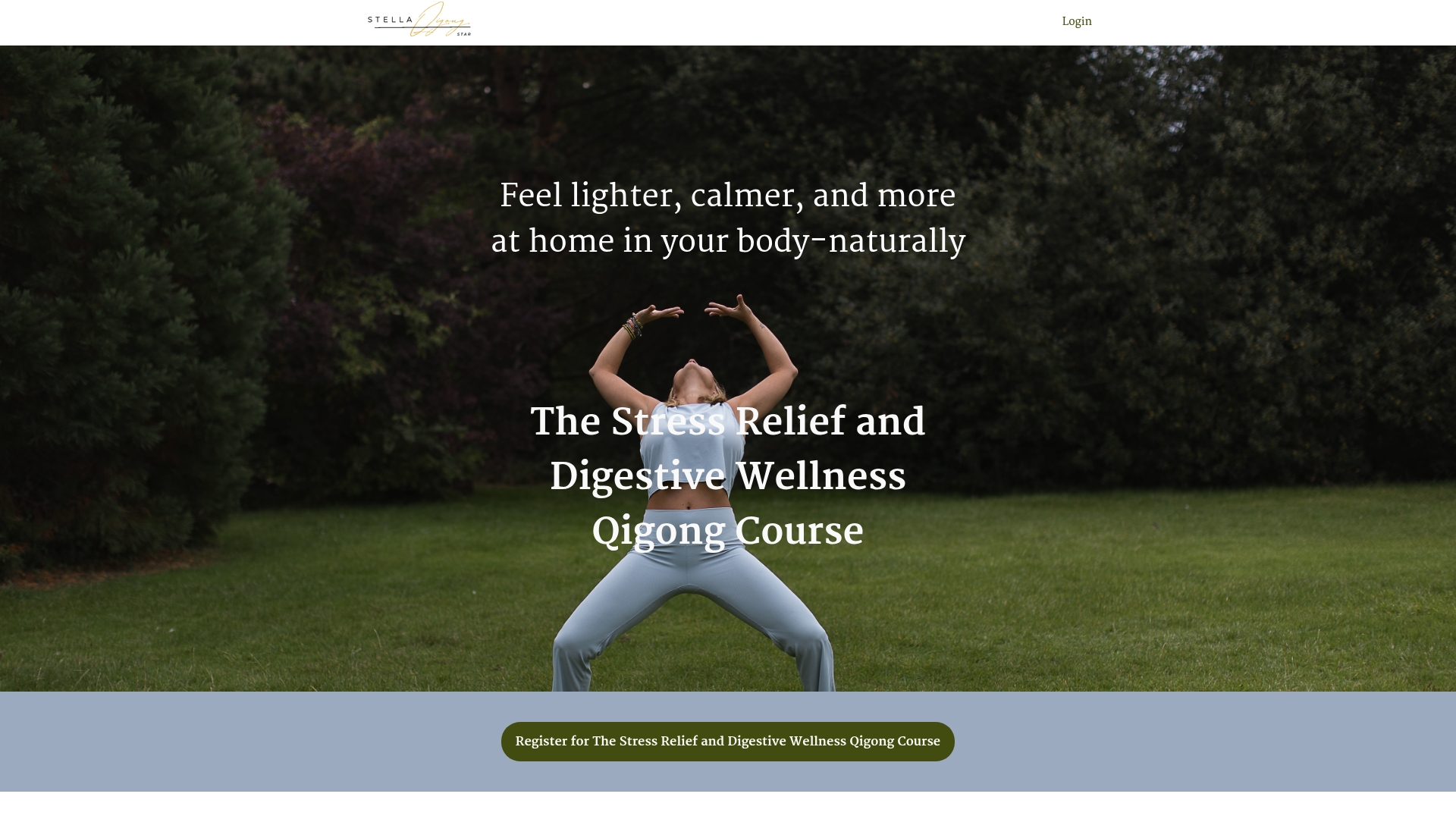
Stella, certified by the White Tiger Qigong School and Yoga Alliance, brings experience working with students across a wide range of health backgrounds, from stress and burnout to digestive disorders and anxiety. The Five Animal Qigong course is a structured, beginner-friendly program with built-in modifications for each movement, so you can work at your own pace without guessing whether a posture is right for your body. Private sessions are also available for anyone who wants individualized guidance before joining a group class. Browse the full range of online qigong classes and find the session that fits where you are right now.
Sources
The sources below are the most directly relevant for anyone researching qigong safety and contraindications.
- Qigong: What You Need To Know | NCCIH
- Safety of Qigong: Protocol for an overview of systematic reviews
- Qigong: Benefits, types, side effects, and more
- Qi Gong - Uses, Side Effects, and More
- Exploring the health advantages and disadvantages of static and dynamic postures of Qigong
For condition-specific guidance, NCCIH or your primary care provider remains the most reliable starting point. This article provides general information and is not a substitute for professional medical advice. Confirm any health decisions with a qualified clinician.