

Sound healing combined with Qigong is a practice that uses intentional vibration and mindful movement together to calm the nervous system, release emotional tension, and harmonize the body's Qi energy. Known in integrative wellness circles as qigong sound therapy, this approach draws from a 1,500-year-old Taoist tradition while gaining growing support from modern research. When you pair the gentle, flowing movements of Qigong with the resonant frequencies of sound, the two work synergistically to clear stagnant energy more effectively than either practice alone. The result is a deeply grounding experience that addresses stress, emotional imbalance, and physical tension at the same time.
What do you need to start practicing sound healing combined with Qigong?
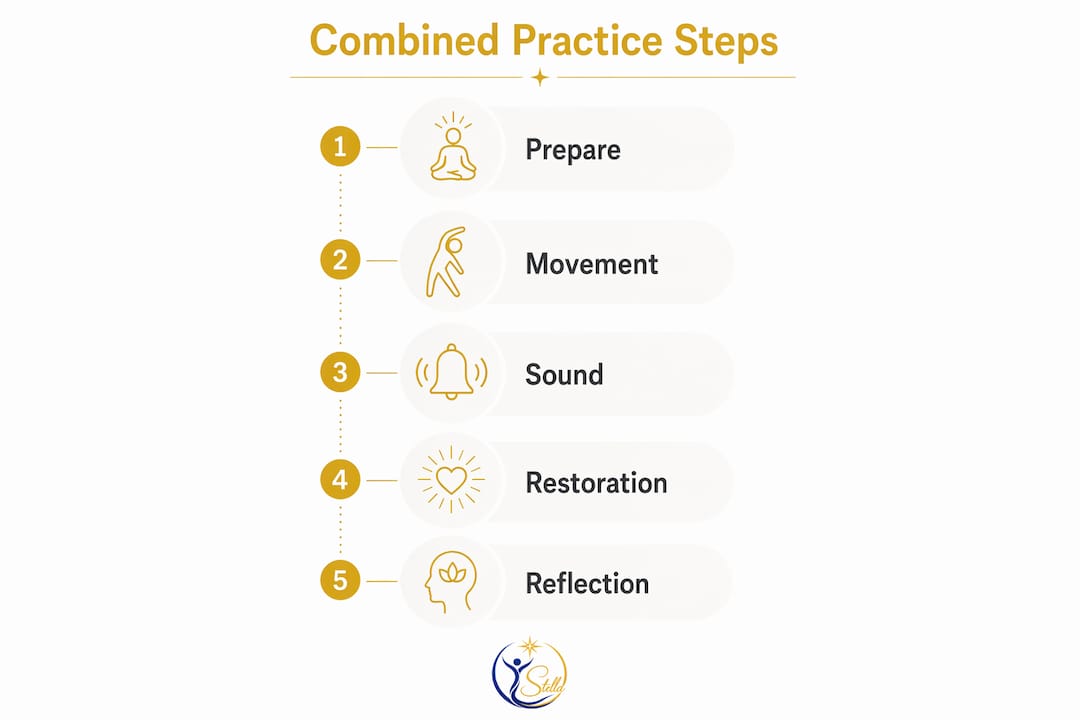
Getting started requires very little equipment and no prior experience. The practice is accessible to all fitness levels, which makes it one of the most welcoming entry points into integrative wellness.
Space and posture requirements:
- A quiet room with enough space to extend your arms fully in all directions
- A yoga mat or soft surface for floor-based sound bath segments
- Loose, comfortable clothing that does not restrict your breathing or movement
- A chair nearby if you need support during standing Qigong sequences
Sound healing tools to consider:
- Tibetan or crystal singing bowls, placed within arm's reach during the sound bath phase
- Tuning forks calibrated to specific frequencies, such as 40 Hz, which research confirms improves heart rate variability and reduces cortisol
- Your own voice, used for the Six Healing Sounds exhales
- A simple audio recording of a sound bath if live instruments are not yet available to you
Before your first session:
- Learn three foundational Qigong postures: Wu Ji (standing meditation), Horse Stance, and basic spinal wave
- Practice slow, diaphragmatic breathing for five minutes daily for one week before combining with sound
- Keep sessions at a comfortable volume. Sound healing works through internal resonance, not loudness
Pro Tip: Start with just 20 minutes if a full 90-minute session feels like too much. Even a short combination of Qigong breath work and a single singing bowl tone produces a measurable calming effect.
How to perform a combined Qigong and sound healing session
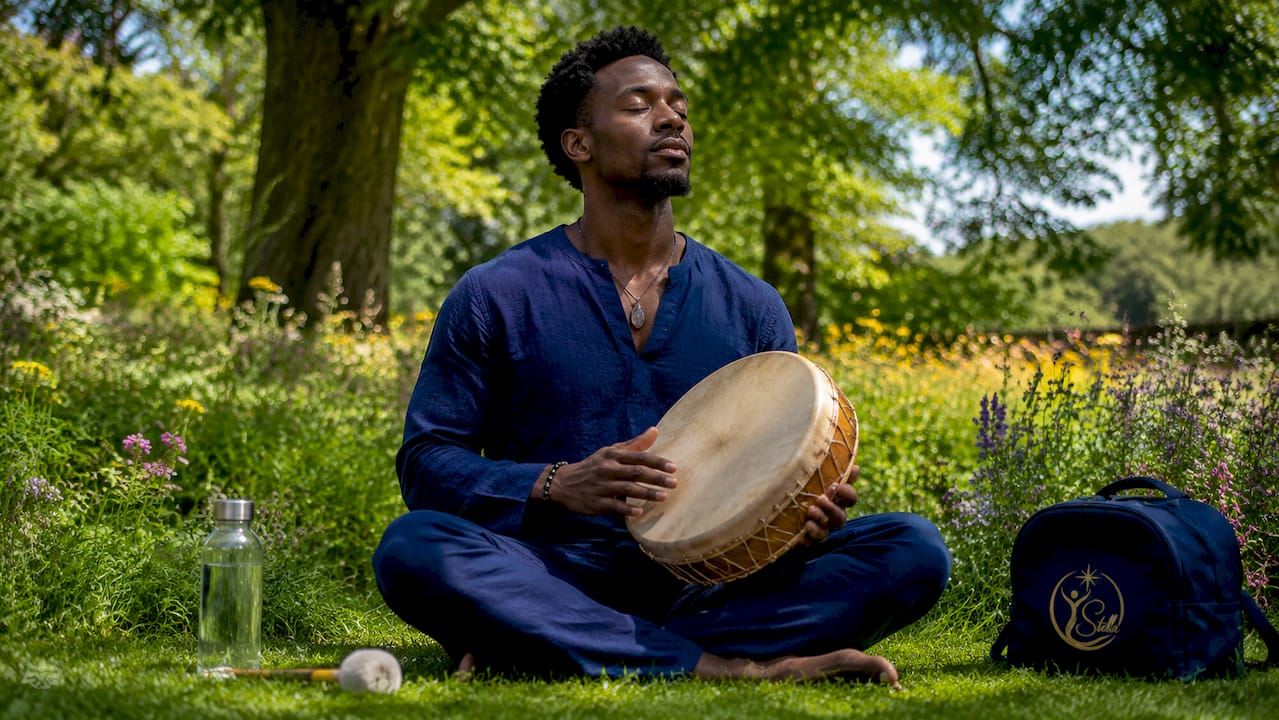
A well-structured session follows a clear arc: movement first to stir and circulate energy, then sound to ground and integrate it. Structured session arcs prevent the scattered, ungrounded feeling that beginners sometimes report after sound work alone.
Step-by-step session sequence:
- Open with Wu Ji standing (5 minutes). Stand with feet shoulder-width apart, knees soft, spine long. Breathe slowly and feel your feet connect with the ground. This settles your mind before movement begins.
- Qigong movement phase (40 minutes). Flow through sequences such as Five Animal Qigong or White Tiger Qigong forms. Focus on slow, wave-like spinal movements coordinated with deep exhales. This phase stirs and circulates Qi through the meridians.
- Transition breath (5 minutes). Sit or lie down. Take five long, slow exhales to signal your nervous system that the active phase is complete.
- Six Healing Sounds practice (15 minutes). Work through the six exhaled tones in sequence. Each tone targets a specific organ and its associated emotion.
- Sound bath phase (20 minutes). Lie in a comfortable position. Use singing bowls, tuning forks, or a sound recording. Allow the vibrations to move through your body without effort or analysis.
- Grounding close (5 minutes). Rub your palms together, place them over your lower abdomen, and breathe gently. This seals the energy you have cultivated and returns your awareness to the present moment.
The Six Healing Sounds and their organ correspondences
The Six Healing Sounds originate from Taoist master Tao Hongjing, documented around 500 AD. Each sound is a long, intentional exhale that resonates with a specific organ and releases its associated emotional pattern.
| Sound | Organ | Emotion released |
|---|---|---|
| Xu (shhh) | Liver | Anger, frustration |
| He (haww) | Heart | Anxiety, agitation |
| Hu (whooo) | Spleen | Worry, overthinking |
| Si (sss) | Lungs | Grief, sadness |
| Chui (chway) | Kidneys | Fear, insecurity |
| Xi (hee) | Triple Warmer | General heat, imbalance |
Pro Tip: Do not try to sing the sounds. The goal is a soft, sustained exhale that you feel vibrating in the corresponding body region. Place one hand lightly on the organ area to deepen your awareness of the resonance.
What scientific research supports combining sound healing and Qigong?
The science behind these practices is growing and points clearly toward nervous system regulation as the primary mechanism. Sound healing activates the parasympathetic nervous system, lowering cortisol and shifting the body out of its stress response. Qigong produces the same shift through slow breath and gentle movement. Together, they create a compounding effect on the body's ability to self-regulate.
Key findings from recent research:
- Low-frequency sound at 40 Hz improves heart rate variability, reduces cortisol, and increases positive emotional states in clinical settings. This means the body's stress markers measurably improve with sound exposure alone.
- Qigong builds stress resilience by training the autonomic nervous system to recover faster from stress triggers. Regular practice lowers baseline cortisol over time.
- Both modalities function as drug-free nervous system tools, shifting the body from sympathetic (fight-or-flight) to parasympathetic (rest-and-digest) activation.
- The Six Healing Sounds carry 1,500 years of documented use in Taoist medicine, with practitioners reporting consistent emotional release and organ-level relief.
"Sound therapy's broad claims lack full scientific consensus, yet studies suggest meaningful benefits for anxiety and sleep in certain populations." — Cedars-Sinai Health
That honest caveat matters. The research is promising and growing, but subjective experience remains a significant part of how these practices work. Your own felt sense of calm and release is valid data, even when a randomized controlled trial has not yet confirmed every mechanism.
What common mistakes happen when combining sound healing with Qigong?
Most beginners make the same handful of errors. Recognizing them early saves you weeks of frustration and keeps your practice feeling nourishing rather than draining.
Common mistakes and how to correct them:
- Rushing the movement phase. Qigong works through slow, deliberate motion. Moving quickly through forms to "get to the sound bath" defeats the purpose. Slow down until each movement feels like it has weight and intention.
- Treating healing sounds as singing. Healing sounds are intentional exhales with internal resonance, not melodic vocalizations. Producing a beautiful tone is not the goal. Feeling the vibration in the target organ is.
- Skipping the grounding close. Ending a session abruptly after the sound bath leaves energy unsettled. Always spend at least five minutes in stillness, with hands on the lower abdomen, before returning to daily activity.
- Using sound volume that is too high. Louder is not more effective. Sound healing operates through gentle, sustained vibration. Excessive volume creates tension rather than release.
- Ignoring seasonal timing. Practitioners recommend aligning practice with seasonal cycles and organ focus. In spring, emphasize the liver sound. In autumn, focus on the lung sound. This alignment deepens the practice's restorative effect.
Pro Tip: Keep a simple journal entry after each session. Note which sound or movement produced the strongest physical sensation. Over time, these patterns reveal which organs and emotions need the most attention.
How can you deepen your practice over time?
A consistent practice evolves naturally when you give it structure and attention. The first month builds familiarity. The second month builds sensitivity. By the third month, most practitioners report noticing subtle energy shifts during daily life, not just during sessions.
Ways to deepen your qigong sound therapy practice:
- Align with seasonal organ cycles. Spring supports liver work with the Xu sound. Summer focuses on the heart with He. Late summer nourishes the spleen with Hu. Autumn clears the lungs with Si. Winter restores the kidneys with Chui. This seasonal rhythm mirrors the body's natural energy cycles.
- Experiment with acoustic environments. Practicing outdoors near water or in a tiled room changes how sound vibrations move through your body. Natural environments add an additional layer of sensory grounding.
- Add mindful vocalization between movements. Humming softly during Qigong transitions keeps the throat and chest open and maintains a vibrational quality throughout the movement phase, not just during the dedicated sound segment.
- Explore different instruments. Crystal singing bowls produce a brighter, higher resonance. Tibetan bowls carry a warmer, more complex tone. Tuning forks allow precise frequency targeting. Each instrument creates a different felt experience.
- Work with an experienced instructor. Structured learning accelerates progress and prevents the subtle misalignments that self-study can miss. On-demand Qigong courses offer flexible access to expert guidance without requiring a fixed schedule.
Key Takeaways
Sound healing combined with Qigong works because movement stirs Qi energy while sound vibration grounds and integrates it, producing nervous system regulation that neither practice achieves as effectively alone.
| Point | Details |
|---|---|
| Session structure matters | A 45-minute movement phase followed by a 45-minute sound bath prevents scattered energy and deepens integration. |
| Six Healing Sounds are exhales | Each of the six tones targets a specific organ and emotion through internal resonance, not melodic singing. |
| Science supports the approach | 40 Hz sound stimulation measurably reduces cortisol and improves heart rate variability in clinical settings. |
| Seasonal alignment deepens results | Matching your organ focus and healing sounds to the current season amplifies the restorative effect. |
| Consistency builds sensitivity | Regular practice over weeks trains your nervous system to shift into parasympathetic rest more quickly and deeply. |
What I have learned from years of working with sound and movement
A perspective from Stella
The most common thing I hear from people new to this practice is that they expected it to feel mystical and were surprised by how physical it actually is. The Six Healing Sounds produce a genuine vibration you can feel in your chest, your belly, your throat. That is not metaphor. That is physiology.
What I find most compelling about combining sound with Qigong is the sequencing logic. Movement wakes the body up energetically. Sound settles it. When you skip the movement phase and go straight to a sound bath, the experience is pleasant but shallow. When you arrive at the sound bath after 40 minutes of Qigong, the vibrations seem to travel further and land more deeply. Practitioners feel this difference immediately.
I also want to be honest about the science. The research is encouraging, and the 40 Hz findings are genuinely exciting. But the most powerful evidence I have encountered is the consistent, session-after-session reports from people who arrive tense and leave calm. That pattern, repeated across hundreds of sessions, carries real weight.
The practice is also more inclusive than people assume. You do not need a perfect body, a quiet mind, or any prior experience. You need a willingness to slow down and pay attention. That is the entire prerequisite.
— Stella
Qigongstar courses for integrative sound and movement practice
Stella at Qigongstar is a certified White Tiger Qigong instructor with training recognized by the White Tiger Qigong School and Yoga Alliance. Her courses weave together the movement precision of traditional Qigong with the organ-focused energy work that makes sound healing most effective.
The 5 Animal Qigong course is particularly well-suited for practitioners who want to combine sound healing with movement, because each animal form corresponds directly to a specific organ and its healing sound. You can also browse the full range of online Qigong classes for stress relief and digestive wellness, all available on demand so you can practice at your own pace. Whether you are brand new or ready to go deeper, there is a structured path waiting for you.
FAQ
What is sound healing combined with Qigong?
Sound healing combined with Qigong is an integrative practice that pairs mindful Qigong movement with intentional sound vibration to regulate the nervous system, release emotional tension, and harmonize Qi energy. The two practices reinforce each other: movement stirs energy and sound grounds it.
How does the Six Healing Sounds practice work?
The Six Healing Sounds are six long, intentional exhales, each targeting a specific organ and its associated emotion through internal resonance. The practice originates from Taoist master Tao Hongjing around 500 AD and focuses on felt vibration rather than musical quality.
Is there scientific evidence for sound healing benefits?
Research published in 2026 confirms that low-frequency sound at 40 Hz reduces cortisol and improves heart rate variability. Sound healing also activates the parasympathetic nervous system, which is the same mechanism Qigong uses through breath and movement.
How long should a combined session last?
A typical session lasts 90 minutes, split into 45 minutes of active Qigong movement and 45 minutes of restorative sound bath. Shorter sessions of 20–30 minutes are effective for beginners and still produce a calming nervous system response.
Do I need instruments to practice sound healing with Qigong?
No instruments are required. Your own voice, used for the Six Healing Sounds exhales, is the most direct and accessible sound healing tool available. Singing bowls and tuning forks deepen the experience but are not necessary to begin.