
Qigong for hormone balance works best as a stress and sleep tool, not a hormone-blood-test fix: gentle movement, breath regulation, and focused attention calm the nervous system and can ease menopausal symptoms within about 12 weeks. It belongs alongside your medical care and your strength or aerobic exercise, not instead of them. Consider this your grounded starting point, guided by a certified qigong instructor.
TL;DR:
- Qigong mainly enhances psychological well-being, such as reducing perceived stress and improving sleep, rather than causing direct hormonal shifts.
- A 12-week daily routine of eight to twelve minutes, based on BaDuanJin, is sufficient to observe improvements in sleep, mood, and menopausal symptoms.
- The strongest evidence supports qigong's benefit for quality-of-life measures, while physiological hormone level changes remain inconsistent across studies.
- Qigong is generally safe with minor side effects like muscle soreness or headaches, especially if movements are gentle and modifications are used when needed.
- Consistent practice and symptom tracking over a 12-week period, combined with a broader exercise routine, optimize benefits without relying solely on hormone tests.
Table of Contents
- What Benefits Does Qigong Offer for Menopause, Mood, and Sleep?
- A Simple Qigong Routine for Hormone-Related Wellbeing
- What Does the Research Actually Show?
- Is Qigong Safe? Minor Side Effects and Red Flags
- How to Build a 12-Week Plan and Track Real Progress
- Who's Behind This Guidance?
- Why the "Just Do More Exercise" Advice Misses the Point
- Ready to Practice With Real Guidance Instead of Guesswork?
- Sources
- FAQ
What Benefits Does Qigong Offer for Menopause, Mood, and Sleep?
Qigong's clearest wins are psychological, not chemical. Across trials in postmenopausal women, the practice shows up most reliably in how people sleep, how calm they feel, and how they rate their overall quality of life, rather than in a specific hormone reading changing on command.
The most consistently reported benefits include:
- Lower perceived stress, especially when compared with doing nothing at all
- Better sleep quality, with measurable drops in insomnia-type symptoms
- Reduced menopausal symptom scores, including hot flashes, irritability, and fatigue
- Improved day-to-day quality of life, from energy levels to emotional steadiness
The mechanism behind this isn't mysterious. Slow, coordinated movement paired with regulated breathing and quiet attention nudges the autonomic nervous system out of fight-or-flight mode, which is closely tied to the HPA axis, the body's central stress-response system. A systematic review of qigong's mind-body effects found this pathway plausible and consistent with the psychological outcomes researchers keep measuring.
Here's the honest caveat: evidence for qigong changing quality-of-life and stress scores is far stronger than evidence for it shifting cortisol or estrogen levels on a blood panel. A 2024 systematic review of nine randomized trials found qigong beat no treatment for perceived stress, but results against active comparison groups were mixed, and overall trial quality was still low. Treat qigong as a genuine support for how you feel day to day, not a substitute for lab-confirmed hormone therapy.
A Simple Qigong Routine for Hormone-Related Wellbeing
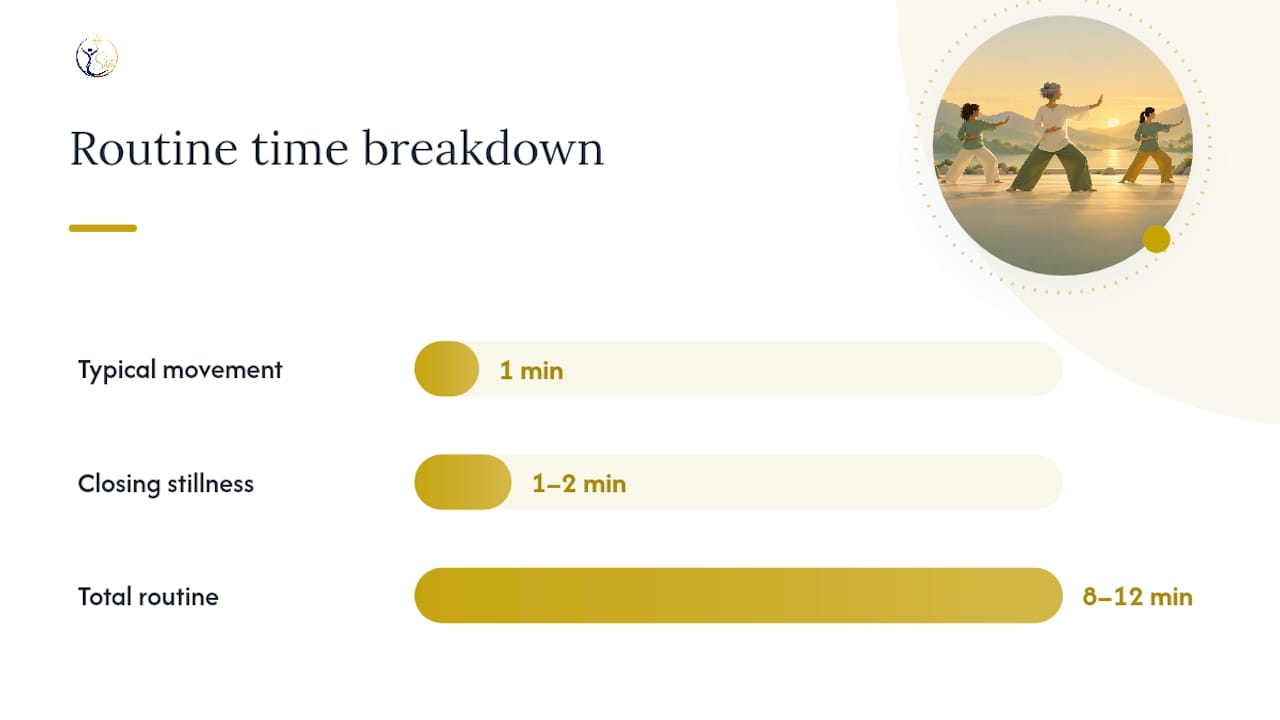
You don't need an hour or a mat covered in props. Eight to twelve minutes, done consistently, beats an ambitious routine you abandon after a week. This sequence borrows from BaDuanJin (the "Eight Pieces of Brocade"), the specific style used in most menopause trials, along with gentle White Tiger and Five Animal adaptations.
- Settle and breathe (1 minute): Stand or sit tall, hands resting on your lower belly. Inhale through the nose for four counts, exhale for six. Let your shoulders drop.
- Holding up the sky (1 minute): Raise both arms slowly overhead on the inhale, lower on the exhale. Repeat six to eight times.
- Separating heaven and earth (1 minute): One palm reaches up, the other presses down, alternating sides with each breath.
- Turning the head to look back (1 minute): Gentle spinal rotation, following the breath, never forcing the neck.
- Rowing the boat (1 minute): Sweeping arm movements that open the chest, paired with slow exhales.
- Wise owl gazes back (1 minute): A soft twist with the gaze following the shoulder, releasing tension along the spine.
- Grasping the feet (1 minute, seated option: gentle forward reach): A calming forward-fold movement for the lower back and hips.
- Closing stillness (1 to 2 minutes): Return to standing or seated stillness, hands over the belly, three slow breaths.
If balance is a concern, or you're managing osteoporosis, do the entire sequence seated in a sturdy chair and skip any deep forward bends. Never hold your breath or strain to complete a movement. A seated qigong routine is a reliable place to start if standing balance work feels unsteady.
Aim for daily practice of 8 to 12 minutes, or three to five shorter sessions across the week if daily feels like too much pressure. Once the sequence feels familiar, extend individual holds by a breath or two rather than adding new movements.
Pro Tip: Practice at the same time each day, ideally right after waking or right before bed. Anchoring qigong to an existing habit, like brushing your teeth, builds consistency faster than willpower alone.
What Does the Research Actually Show?
The best available evidence for menopause specifically comes from a 12-week randomized controlled trial of BaDuanJin in 125 postmenopausal women, which reported improvements in sleep quality, anxiety, depression, and total Menopause Rating Scale scores compared with a control group. A related trial using the same 12-week BaDuanJin format found similar gains in sleep and mood measures, along with improvements across several quality-of-life domains on the SF-36 scale, tracked via PSQI and HADS outcomes.
That's genuinely encouraging. It's also not the full picture.
- Most trials use small samples, often under 150 participants
- Qigong styles vary widely between studies, making direct comparisons difficult
- Biomarker changes (hormones, inflammatory markers) are reported inconsistently across trials
- Study cohorts are rarely diverse enough to generalize confidently to every population
The strongest, most consistent evidence is for psychological and quality-of-life outcomes. Physiological hormone changes remain inconsistent and appear to depend heavily on population and qigong style.
The practical takeaway: track how you feel, sleep, and cope with stress. Don't expect a follow-up blood panel to hand you dramatic proof that qigong "fixed" your hormones. That's not what the current research supports, and promising otherwise would be dishonest.
Is Qigong Safe? Minor Side Effects and Red Flags
Qigong is generally considered safe for most adults, including during menopause. Reported side effects in trials are minor and affect fewer than 1 in 10 participants, mainly muscle soreness and occasional headaches from unfamiliar movement.
Keep practice gentle by following these rules:
- Move within a comfortable range; never force a stretch or hold a breath to "push through"
- Choose seated variations if balance, dizziness, or osteoporosis are concerns
- Stop immediately and rest if you feel chest pain, sharp dizziness, or shortness of breath
- Talk with your doctor or pharmacist before starting if you're on medication or considering herbal supplements alongside your routine
If red flag symptoms appear, don't wait them out. Book a clinician review before continuing practice.
How to Build a 12-Week Plan and Track Real Progress
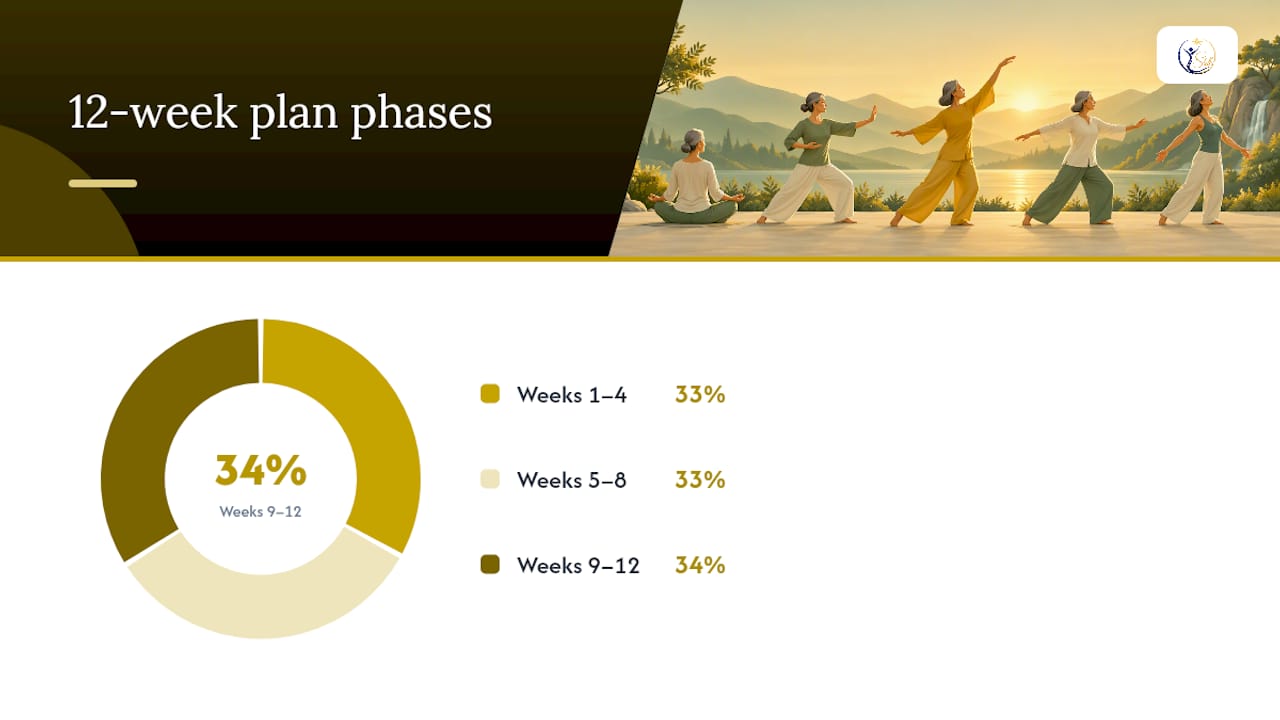
Give yourself a defined runway rather than an open-ended "try it and see." Twelve weeks matches the timeline used in the trials that actually show benefit, which makes it a sensible target for judging whether qigong is working for you.
- Weeks 1 to 4: Practice the 8-move routine daily or five times weekly. Note baseline sleep quality, hot flash frequency, mood, and energy before you start.
- Week 4 check-in: Re-score those same four measures. Small shifts count. Adjust frequency if adherence has been inconsistent.
- Weeks 5 to 8: Add a breath or two to your holds, or extend total practice time to 12 minutes if 8 has become easy.
- Week 8 check-in: Compare against baseline again. This is usually when sleep and mood changes become more noticeable.
- Weeks 9 to 12: Maintain consistency rather than intensity. Reassess fully at week 12 against your original notes.
Qigong is a complement, not a replacement. St George's NHS menopause guidance recommends qigong alongside, not instead of, at least 150 minutes of moderate weekly activity plus strength and weight-bearing work for bone and muscle health. Pair your qigong sessions with a couple of resistance sessions each week.
Pro Tip: Keep your tracking simple: a five-line note in your phone (sleep, hot flashes, mood, energy, did I practice today) takes 30 seconds and gives you real data by week 12, not just a vague impression.
Who's Behind This Guidance?
This guide is written by Stella, a certified White Tiger Qigong School instructor also accredited by Yoga Alliance, combining professional wellness training with years of teaching menopause-aged practitioners. Qigongstar's online qigong classes build on exactly this framework, offering live and on-demand instruction designed around stress relief, gentle movement, and safe progression rather than generic fitness content repackaged as wellness advice.
Why the "Just Do More Exercise" Advice Misses the Point
Most hormone-balance advice tells women to simply "exercise more," as though every movement produces the same result. It doesn't. High-intensity workouts can spike cortisol in someone already running on stress and poor sleep, which is the opposite of what a burned-out, perimenopausal body needs.
What the research actually supports is more specific: qigong's value lies in what it does to the nervous system, not in calorie burn or muscle building. That's a different job than strength training or brisk walking, and it's why the NHS frames it as complementary rather than a stand-alone fitness plan. The mistake I see constantly is women expecting qigong to replace their whole exercise routine, then giving up when their labs don't shift as dramatically as the marketing implied.
Prioritize consistency over intensity, and prioritize tracking your own symptoms over waiting for a hormone panel to validate the practice. Twelve weeks of honest, boring, daily repetition beats twelve weeks of impressive-looking routines you quit in week three.
— Stella
Ready to Practice With Real Guidance Instead of Guesswork?
A free routine gets you started, but a real instructor catches the small alignment and breathing mistakes that quietly limit results, and adjusts your plan as your body responds. Private sessions with a certified instructor provide direct guidance on form rather than just following a video alone.
For focused resets or personalized coaching around sleep, stress, or menopausal symptoms, various private session options are available. Face-to-face coaching may also be an option for personalized attention.
Every session includes movement modifications for balance or joint concerns, breathing coaching, and a plan you can actually track against your own 12-week timeline. Book your session on the Qigongstar online classes page and start with guidance built specifically for this stage of life.
Sources
- Impact of Qigong exercises on the severity of the menopausal symptoms and health-related quality of life: A randomised controlled trial
- Qigong Therapy for Stress Management: A Systematic Review of Randomized Controlled Trials
- Mind–Body Health Benefits of Traditional Chinese Qigong on Women: A Systematic Review of Randomized Controlled Trials
- Qigong: What you need to know — NCCIH
FAQ
Which Exercise Is Best for Hormonal Imbalance?
No single exercise is best for every hormone-related concern. For stress, sleep, and menopausal symptom relief, qigong has the strongest supporting evidence among gentle movement practices, but it should be paired with at least 150 minutes weekly moderate activity plus strengthening and weight-bearing work for bone and muscle health, per St George's NHS menopause exercise guidance.
What Do Chinese Practitioners Use for Menopause Symptoms?
Traditional Chinese approaches often combine gentle movement practices like qigong and BaDuanJin with herbal remedies such as ginseng or specific formulas. Herbal options carry inconsistent evidence and possible interactions with medications, so check with a pharmacist or doctor before combining them with existing treatment.
How Can I Naturally Support Female Hormone Balance?
The most consistent approach combines gentle daily movement like qigong, adequate sleep, stress reduction, and a mix of aerobic and strength exercise. Qigong specifically supports the stress and sleep piece of that equation over roughly 12 weeks of regular practice, though it works best as one part of a broader routine rather than a stand-alone fix.
Are Chinese Herbs Effective for Hormone Balance?
Herbs like black cohosh, red clover, and evening primrose are commonly marketed for menopausal symptoms, but the evidence supporting them is inconsistent, and some interact with medications. Talk to a pharmacist or your doctor before starting any herbal supplement for menopause, since safety varies by individual health history.
How Long Before Qigong Shows Results for Menopause Symptoms?
Most trial data points to a 12-week timeline for noticeable improvement in sleep, mood, and menopausal symptom scores. Track your own symptoms at 4, 8, and 12 weeks rather than expecting rapid change, since qigong's benefits build gradually with consistent practice.