
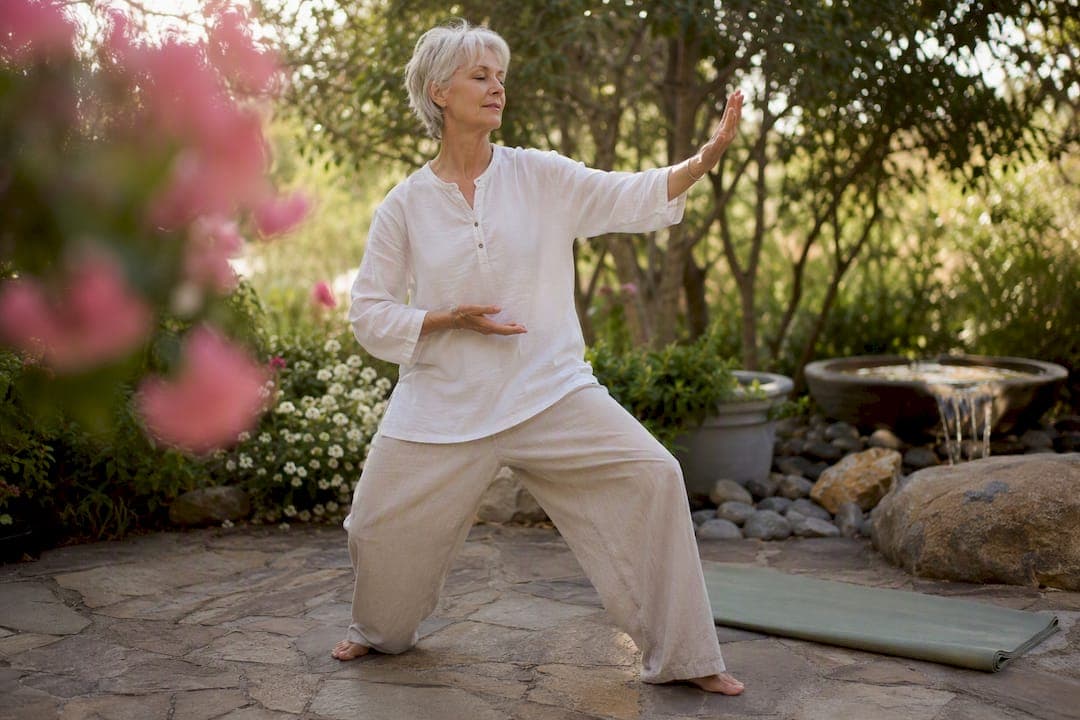
A short morning qigong routine, done for five to ten minutes right after waking, raises alertness, improves circulation, and settles a busy mind before your day takes over. You don't need a studio, special clothing, or an hour to spare. You need a patch of floor and a willingness to breathe on purpose.
Here are two ready sequences you can start tomorrow morning:
- 5-minute micro routine: Gentle full-body shaking (2 minutes), toe tapping (1 minute), rolling the ball or cloud hands (2 minutes).
- 10-minute full routine: Wuji standing (1 minute), cleansing breath (1 minute), shaking and toe tapping (1 minute), rolling the ball (2 minutes), rib expansion breathing (1 minute), Zhan Zhuang standing meditation (2 minutes), gathering qi (1 minute), closing (1 minute).
Stand with feet hip-width apart, knees soft, and let your breath drop low into your belly rather than staying high in your chest. If any movement causes sharp pain, stop and modify. Discomfort from stretching gently is normal; pain is not.
Pro Tip: Keep a folded blanket or yoga mat by your bed the night before. Removing that one decision point in the morning is often the difference between practicing and skipping.
Table of Contents
- Why a Morning Qigong Routine Actually Works
- Your Step-by-Step 10-Minute Morning Qigong Flow
- Modifications, Chair Options, and Safety Guidance
- Turning a Morning Qigong Routine Into a Real Habit
- Learning Morning Qigong Safely With Certified Instruction
- What Beginners Get Wrong About Morning Qigong
- Ready to Go Deeper Than a Solo Morning Routine?
- Sources
Why a Morning Qigong Routine Actually Works
A 2024 systematic review found that qigong produced statistically significant reductions in perceived stress compared with no-treatment groups, and some studies in that review also showed better sleep quality and lower fatigue. That's not a small claim for a practice built almost entirely on slow movement and breath.
The mechanism is simpler than it sounds. Gentle, rhythmic movement encourages blood flow to the extremities and supports lymphatic circulation, which has no independent pump of its own and relies on muscle contraction to move fluid through the body. Combine that with diaphragmatic breathing, and you get a nervous system nudge away from the fight-or-flight state most people wake up in after a night of shallow sleep or an early alarm.
A 2024 MDPI systematic review of randomized controlled trials reached a similar conclusion but added an honest caveat: study quality and intervention design still vary a lot across the qigong research base, so results should be read as promising rather than settled science.
Even with that caveat, the practical benefits show up consistently across reviews and teaching guides:
- More alertness within minutes, without caffeine's crash later.
- Looser shoulders, neck, and hips after sitting or sleeping in one position for hours.
- A calmer starting point for whatever the day throws at you.
Your Step-by-Step 10-Minute Morning Qigong Flow
This is the guided version of the sequence above, with cues you can actually follow without a teacher standing next to you. Move slower than feels necessary. Qigong for beginners is less about hitting a shape and more about noticing your breath while you move.
- Wuji standing (1 minute). Stand with feet parallel, knees slightly bent, arms relaxed at your sides. Breathe naturally through your nose. This is your reset point, the stillness before movement. Modification: seated, feet flat on the floor, hands resting on your thighs.
- Cleansing breath (1 minute). Inhale through the nose for a count of four, exhale through slightly parted lips for a count of six. The longer exhale is what signals your body to downshift out of morning grogginess.
- Shaking and toe tapping (1 minute). Bounce gently at the knees so your whole body shakes loosely, then switch to tapping your toes against the floor, alternating feet. Breathe naturally, without holding your breath. Modification: seated, tap heels or toes on the floor instead.
- Rolling the ball or cloud hands (2 minutes). Imagine holding a large ball between your palms, rotating it slowly as you shift your weight side to side. Inhale as your hands rise, exhale as they sink. Modification: keep the movement small and seated if standing balance is a concern.
- Rib expansion breathing (1 minute). Place your hands on your ribcage and inhale so your ribs expand sideways, not just your belly. Exhale slowly, feeling the ribs contract. This targets a part of the breath most people never use.
- Zhan Zhuang standing meditation (2 minutes). Return to the Wuji stance, arms lifted slightly as though holding a beach ball at chest height. Hold, breathe, and let your mind rest on the sensation of standing rather than on your to-do list. Modification: seated with hands resting lightly on the lap.
- Gathering qi and closing (1 minute). Bring your hands to rest below the navel (left hand over right for men, right over left for women), and take three slow breaths, imagining you're gathering warmth into that spot before you release your hands and open your eyes fully.
Need it shorter? Do steps 1, 3, and 6 only, roughly five minutes total. Have more time? Repeat step 4 for an extra two rounds and add a slow walking meditation for five minutes, stretching the whole sequence to fifteen. This kind of short, repeatable structure is exactly what teaching guides recommend for beginners: the nervous system responds to repetition, not intensity.
Pro Tip: If your mind wanders during standing meditation, that's not failure. Count ten breaths silently. When you lose count, which you will, simply start over at one.
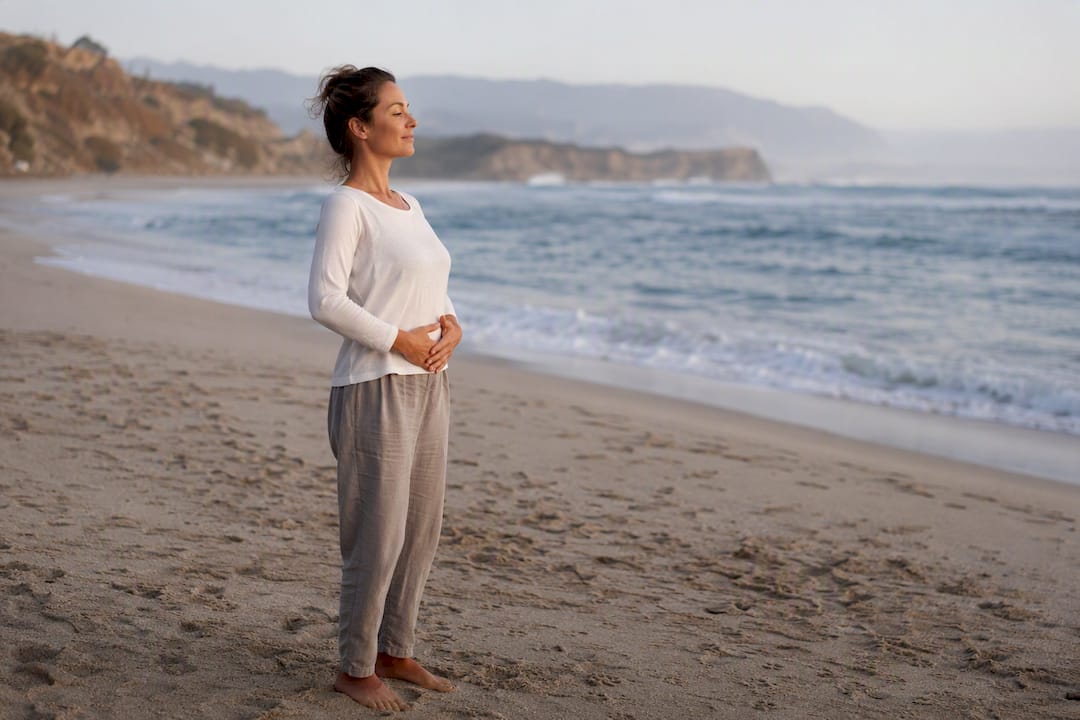
Beginners sometimes hunt for perfect form. Instructors consistently emphasize breath and internal awareness over precision, so a movement that looks a little rough but feels connected to your breath is doing its job.
Modifications, Chair Options, and Safety Guidance
Qigong adapts easily to almost any body and any morning energy level. If standing balance is unsteady, or you're easing back into movement after an injury, a chair works for nearly every step in the sequence above.
- Sit toward the front edge of a sturdy chair with feet flat, and do the shaking motion through your shoulders and upper back instead of your knees.
- Roll the ball seated, keeping the movement smaller and closer to your torso.
- For standing meditation, sit tall with hands resting on your thighs and simply focus on the breath. The Cleveland Clinic notes that qigong is safe for most people and adapts well to seated practice, with consistency mattering more than intensity or duration.
Mild muscle soreness after a session or two is normal and was reported in some clinical trials as a minor, short-lived effect. Sharp pain, dizziness, or shortness of breath is not normal, and that's your cue to stop and check with a healthcare provider before continuing. If balance is a real concern, resources on safe balance training offer useful complementary exercises.
Pro Tip: Add one extra minute to your routine each week rather than jumping straight to a longer session. Small increases stick; big leaps usually don't.
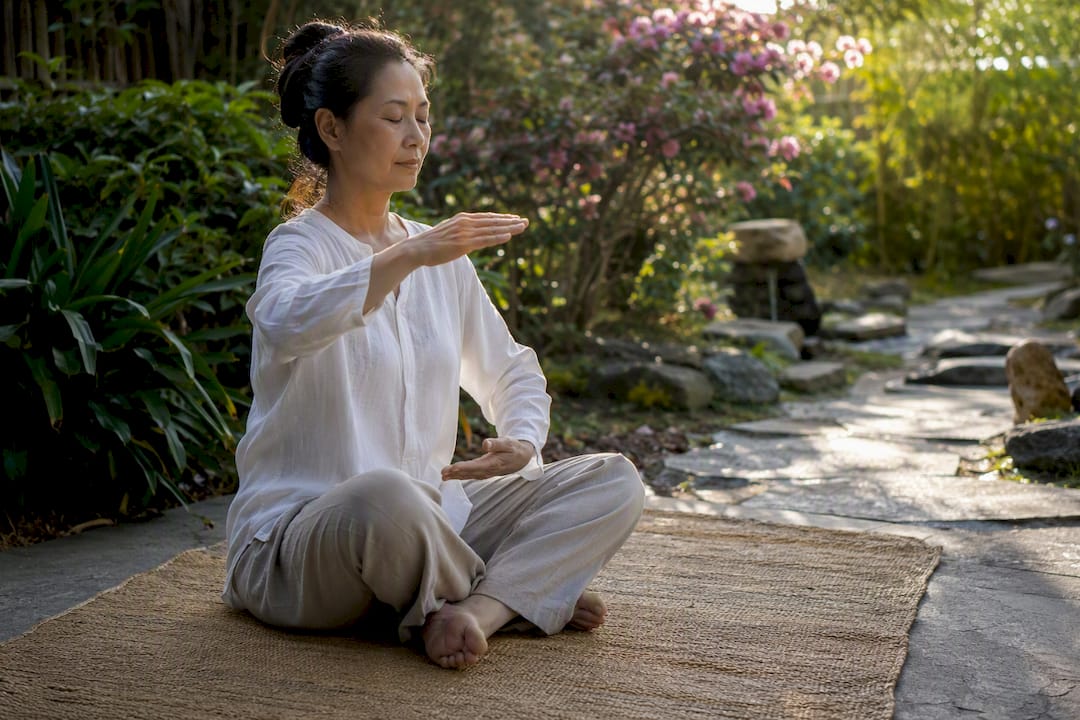
Turning a Morning Qigong Routine Into a Real Habit
The routine only helps if it survives your actual mornings, including the rushed ones. Anchor it to something you already do without thinking, like right after brushing your teeth or while the kettle boils.
- Set a phone timer for five minutes on your busiest days and don't extend it, even if you feel like continuing.
- Track it with a simple checkmark on a calendar. Seeing three checkmarks in a row does more for motivation than any app notification.
- On genuinely hard mornings, do one minute of standing breath work instead of skipping entirely. One minute keeps the habit alive; zero minutes lets it die.
A few supports make consistency easier:
- Join a live online class so a set time on the calendar does the reminding for you.
- Practice with a friend or partner, even over video, for light accountability.
- Keep a simple daily routine guide bookmarked for mornings when you forget the sequence.
Learning Morning Qigong Safely With Certified Instruction
Stella brings certification through the White Tiger Qigong School and Yoga Alliance to every course on Qigongstar, which matters more than it might seem for a practice this gentle. Correct breath sequencing and posture cues, taught by someone credentialed rather than pieced together from scattered videos, reduce the trial-and-error that discourages a lot of beginners early on.
Qigongstar's White Tiger Qigong and Five Animal Qigong courses build on the exact movements in this routine, taught in more depth across live and on-demand class formats you can fit around your own schedule.
| Point | Details |
|---|---|
| Start small | A 5-minute micro routine of shaking, toe tapping, and rolling the ball is enough to raise alertness. |
| Evidence supports it | A 2024 systematic review found significant reductions in perceived stress from qigong practice. |
| Chair adaptations work | Every core movement, including standing meditation, adapts to a seated position without losing its effect. |
| Consistency beats duration | Five minutes daily builds the habit faster than an occasional longer session. |
| Certified guidance helps | Qigongstar's courses, led by White Tiger Qigong School and Yoga Alliance certified instruction, offer a structured next step beyond a solo routine. |
What Beginners Get Wrong About Morning Qigong
Most advice on morning qigong routines focuses on the wrong variable. It obsesses over hand positions and step counts when the research actually points somewhere else: the reductions in perceived stress found in trials came from consistent practice, not flawless form. A shaky, imperfect five minutes done daily outperforms a beautifully executed session done once a week.
The other place conventional advice falls short is safety framing. A lot of routines online treat "modify if needed" as an afterthought buried at the bottom of the page, when it should shape the whole practice from the first movement. Chair adaptations aren't a lesser version of qigong. They're qigong, done by someone who knows their own body.
If you take one thing from this article, prioritize the habit over the perfect sequence. Do the three-move version on rushed mornings. Save the full ten-minute flow, and eventually guided instruction, for when you're ready to go deeper.
— Stella
Ready to Go Deeper Than a Solo Morning Routine?
A self-taught routine gets you moving, but it can only take you so far without feedback on your breath timing, posture, and pacing. Qigongstar closes that gap with instructor-led courses built specifically for beginners who want more than a YouTube loop.
The Five Animal Qigong course expands the morning sequence in this article into a structured, progressive program, taught with certification through the White Tiger Qigong School and Yoga Alliance. If you're drawn to a more traditional, technique-focused path, the White Tiger Qigong course walks you through form and breath in more depth than any solo routine can. Both are available as live online classes or self-paced, on-demand lessons, so you can start with whichever format fits your actual mornings, not an idealized version of them. Visit the Qigongstar course page to see the current class schedule and pick a starting point that matches where you are right now.
Sources
- Systematic review on Qigong and stress (PubMed entry)
- Qigong therapy for stress management: A systematic review of RCTs (MDPI, 2024)
- What are the health benefits of qigong? (Cleveland Clinic)