
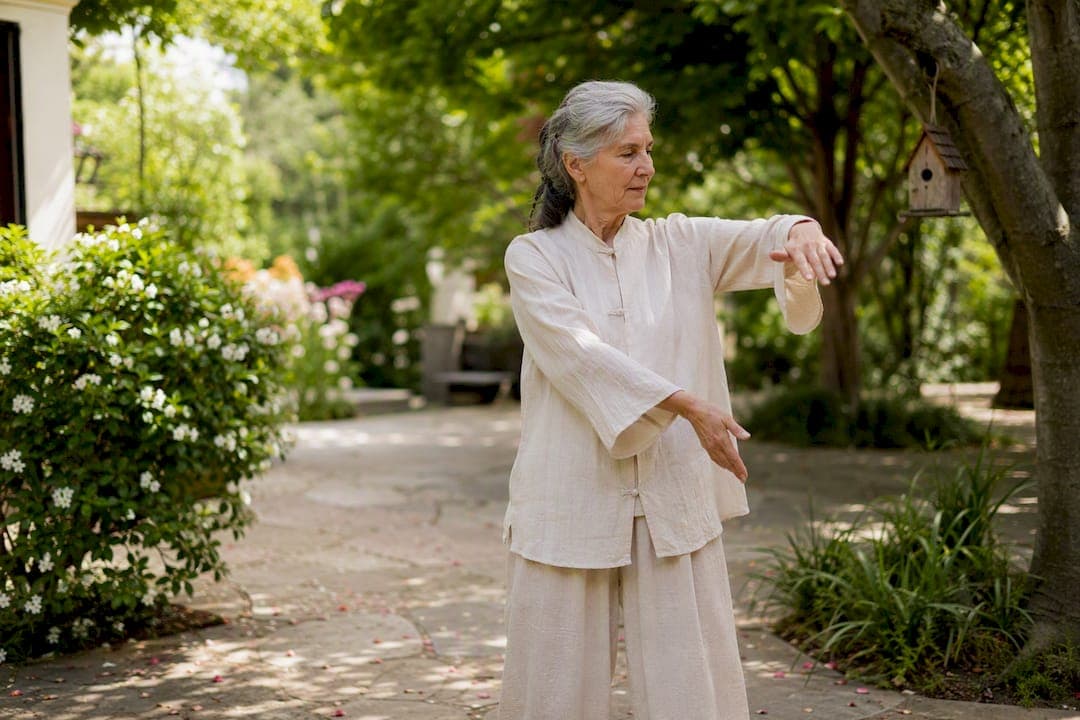
Qigong can meaningfully ease arthritis pain and stiffness for many people, backed by a small but growing body of clinical research, and it carries a low risk of harm when movements are adapted to your joints. The practice works best as a steady companion to your existing care, not a replacement for it. If you have unstable joints, active swelling, or a recent flare, check with your doctor or physical therapist before starting, and lean on seated or reduced-range versions of every move below.
TL;DR:
- Short daily routines of 7 to 10 minutes of gentle, breath-coordinated movement can improve pain, stiffness, and balance in people with arthritis.
- The most supported exercises involve circular joint work, weight shifting, and light knee flexion or extension within pain-free ranges.
- Qigong styles like Wu Qin Xi and Baduanjin are more suitable for arthritis because they emphasize flowing movements over static holds or deep lunges.
- Safety modifications include seated practice, reducing movement range during flare-ups, and consulting a clinician if experiencing joint swelling or sharp pain.
- Consistent practice over several weeks, paired with tracking pain and mobility, yields the most noticeable benefits, but long-term effects are still being studied.
Table of Contents
- Can Qigong Help Arthritis? A 9-Minute Routine You Can Try Now
- How Qigong Helps Arthritis: What the Research Actually Shows
- Styles and Exercises That Suit Arthritis
- Safety, Contraindications, and Practical Modifications
- Three Sample Routines for Every Mobility Level
- Building a Practice: Frequency, Progression, and Tracking Results
- Evidence Deep Dive: What Trials and Reviews Actually Report
- A Teacher's View on Starting Slow and Staying With It
- If You Want Guided Classes: How Stella Qigong Courses Help
- Sources
Can Qigong Help Arthritis? A 9-Minute Routine You Can Try Now
Qigong helps arthritis by combining slow, circular joint movement with coordinated breathing, and the research backs this up: a 2020 review of seven studies found it eased pain, stiffness, and physical function more than waiting-list controls or standard health education. You don't need a studio, a mat, or special clothing. You need nine minutes and a chair nearby, just in case.
This sequence moves from gentle warming into functional joint work, then closes with a settling breath. Do it once through to start; you can repeat the middle sections as you build comfort.
-
Settle and breathe (1 minute). Stand with feet hip-width apart, knees soft, or sit tall in a chair. Breathe in through your nose for a count of four, out for a count of six. This slows your nervous system and signals your joints that movement is coming, not a threat.
-
Shoulder and wrist circles (1 minute). Roll your shoulders back slowly, ten times, then reverse. Follow with gentle wrist circles, ten each direction. If your fingers are inflamed, keep the circles small. This wakes up the smaller joints first, which tend to stiffen fastest in the morning.
-
Neck and gentle spine release (1 minute). Tip your ear toward one shoulder, hold two breaths, switch sides. Add a slow, small figure-eight with your hips if standing, or a gentle seated twist if not. Never force range here. The goal is circulation, not stretch.
-
Weight shifting, side to side (1.5 minutes). Standing practitioners shift weight from the right foot to the left in slow waves, knees tracking softly over toes, arms floating at your sides like you're wading through water. Seated practitioners can rock weight gently from hip to hip. This move builds the neuromuscular control that supports balance, one of the outcomes researchers watch closely in older adults.
-
Knee-friendly flexion and extension (1.5 minutes). Standing near a chair for support, bend one knee slightly and straighten it, staying well within a pain-free range. Ten reps per side. If your knees are sensitive, do this seated: extend one leg slowly, hold for two seconds, lower. Qigong favors these moving stretches over held static positions, which tends to reduce compensatory muscle tension around an arthritic joint.
-
Breath-coordinated arm raises (2 minutes). Inhale as you raise both arms overhead in a wide arc, exhale as you lower them, palms facing down like you're smoothing water. Eight to ten slow reps. This is where qigong's rhythm does its quiet work, syncing breath to movement so your shoulders and upper back stay loose rather than guarded.
-
Closing stillness (1 minute). Hands rest at your lower belly, eyes soft or closed, three slow breaths. Notice what feels different, then let that be enough.
Pro Tip: Keep a small pillow or folded towel on your chair seat for the seated versions. A slightly higher seat protects hip and knee angles, especially first thing in the morning when joints are stiffest.
How Qigong Helps Arthritis: What the Research Actually Shows
The clearest evidence comes from a 2020 NCCIH-reviewed analysis of seven trials covering 424 participants, which found qigong improved pain, stiffness, and physical function compared with waiting-list controls or standard health education. That's a genuine signal, not a guess dressed up as science. But the same review flags a real limitation: the underlying studies were small and often inconsistently designed, so the size of the benefit shouldn't be overstated.
What the evidence actually supports:
- Pain reduction that shows up consistently across trials, even if modest in some
- Improved physical function and reduced morning stiffness in several studies
- Better balance and grip strength, particularly in frail or pre-frail older adults
- A strong safety profile, with mild muscle soreness being the most common side effect
A 2025 systematic review and meta-analysis of traditional fitness qigong across 18 randomized controlled trials found significant gains in frailty status, physical performance, grip strength, balance, cognitive function, and quality of life among frail and pre-frail older adults. That's a meaningfully broader outcome set than pain alone, and it matters for anyone managing arthritis alongside the general fragility that often comes with aging joints.
By the numbers: A 2025 meta-analysis of 16 trials and 1,175 participants with chronic low back pain found qigong reduced pain by a mean difference of −1.34 and disability by −5.88, with short-term programs showing stronger effects than longer ones. That last detail is worth sitting with: consistency in the early weeks may matter more than marathon commitment.
The mechanisms behind these numbers aren't mysterious. Qigong moves joints through low-impact ranges that maintain synovial fluid circulation, trains the small stabilizing muscles around a joint (which improves neuromuscular control), and lowers stress hormones that can otherwise amplify pain perception. None of that replaces medication or physical therapy. It supplements them.
The Cleveland Clinic's summary puts it plainly: the evidence is promising but not conclusive, qigong is safe for most people, and it's a reasonable supportive therapy that needs no equipment. That's the honest, unvarnished version of what qigong for arthritis can offer.
Styles and Exercises That Suit Arthritis
Not every qigong style suits every joint. Some involve deeper lunges or sustained holds that can aggravate an inflamed knee or hip. Others are built almost entirely from gentle, circular, breath-paced movement, which makes them a better starting point for arthritic joints.
- Wu Qin Xi (Five Animal Qigong): Modeled on the movements of the tiger, deer, bear, monkey, and crane, this style favors flowing weight shifts over deep static poses. Research on knee osteoarthritis has found meaningful WOMAC score improvements in pain and function among practitioners of Wu Qin Xi and related traditional fitness qigong forms, which is part of why Qigongstar's Five Animal Qigong program builds its knee-friendly sequences around these exact movement patterns.
- Baduanjin (Eight Brocades): A slower, more meditative set with wide, sweeping arm movements and gentle spinal extension. It's forgiving on shoulders and upper back, though a few poses involve a mild squat that can be shortened for sensitive knees.
- Yijinjing: More physically demanding, with longer holds and deeper stretches. This one generally needs modification or avoidance for acute arthritis flares, and it's not where beginners with joint pain should start.
- Chair-based and seated qigong: Adapted protocols used in several clinical trials specifically because they widen accessibility for people with limited mobility, without sacrificing the breath-movement coordination that makes qigong effective.
- Walking qigong: Combines mindful, slow-paced walking with breath awareness, which builds gait confidence and balance, both common concerns for arthritic hips and knees.
The features to look for are simple: continuous, rhythmic motion instead of long static holds, a full range of motion that stays within your comfort zone rather than pushing past it, and breath that paces the movement rather than being held. What to avoid is just as clear: deep uncontrolled knee bends, rapid or jerky transitions, and any pose that asks you to lock a joint at its end range for more than a breath or two.
Safety, Contraindications, and Practical Modifications
Qigong's low-impact nature makes it one of the gentler options available to people with arthritis, and the data backs that up: adverse events are rare, and mild muscle soreness or fatigue is the most common complaint reported among beginners, according to NCCIH's clinical summary. That doesn't mean every move is right for every joint on every day.
Stop and check with a clinician if you notice:
- Sudden joint swelling, warmth, or redness that appears during or after practice
- Fever alongside joint pain, which can signal infection or an inflammatory flare
- A joint that feels unstable or gives way, rather than simply feeling tight
- Sharp, localized pain that's distinct from the dull ache of muscle fatigue
Your modification toolkit:
- Practice seated whenever standing balance feels uncertain, especially in the morning
- Reduce range of motion on any move that pulls at a swollen or recently flared joint
- Use a chair back, wall, or countertop for support during weight-shifting movements
- Follow a simple pain rule: if a movement increases pain beyond a mild, brief ache, stop that specific motion and substitute a smaller range
For anyone managing a diagnosed inflammatory condition, Qigongstar's guide on qigong contraindications and modifications walks through more detailed medical red flags worth reviewing before you begin.
Pro Tip: Mild soreness the day after a new routine is normal and usually fades within 48 hours. Pain that's sharp, that worsens rather than settles, or that shows up in a joint that wasn't already the target of your movement, is your body asking you to slow down or skip that motion entirely.
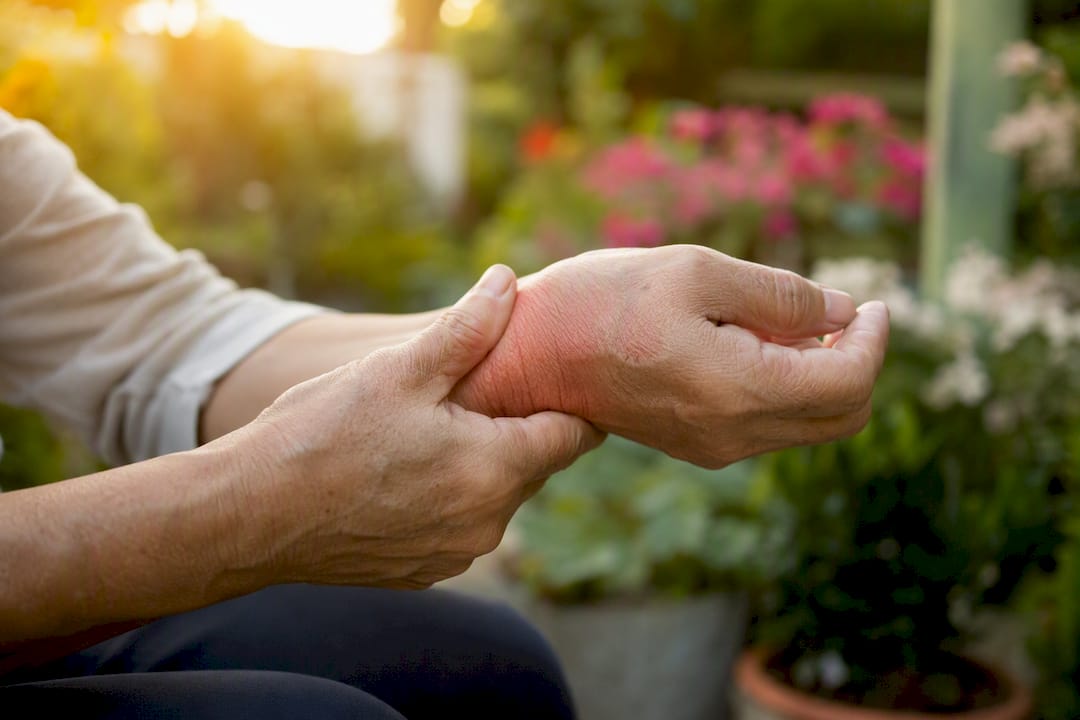
Three Sample Routines for Every Mobility Level
Different days call for different amounts of movement capacity. These three routines cover the range from "I have ten minutes and stiff knees" to "I want a real progression over several weeks."
-
The 7 to 10 minute daily starter. Begin with two minutes of breath-paced shoulder and wrist circles, move into three minutes of gentle weight shifting side to side, add two minutes of knee-friendly flexion and extension (standing near support or seated), and close with two minutes of slow, breath-coordinated arm raises. This is the routine to repeat most mornings, since short daily practice tends to produce measurable gains in balance and gait faster than infrequent longer sessions.
-
The seated 5 to 12 minute option. For flare days or limited mobility, stay in a supportive chair throughout. Work through shoulder rolls, seated spinal twists, ankle circles, and single-leg extensions with a two-second hold, then finish with slow overhead arm sweeps timed to your breath. Qigongstar's seated qigong routine offers a ready-made version of this exact structure if you'd rather follow along than build your own.
-
The 20 to 30 minute progression. Once the shorter routines feel easy, extend the weight-shifting and knee work, then add a walking qigong segment, ten slow, mindful steps forward and back, focusing on heel-to-toe transfer and breath. Walking qigong builds the gait confidence and balance control that shorter seated routines can't fully address. Add gentle strengthening, like slow sit-to-stands from a chair, once your baseline pain and stiffness have settled over two to three weeks.
Building a Practice: Frequency, Progression, and Tracking Results
Consistency beats intensity here, and the research supports that framing directly; see how to design your healthy aging workflow for peak performance to support sustainable practice and long-term benefit. Daily short sessions, seven to twelve minutes, paired with one or two longer guided sessions each week, tends to balance benefit with adherence better than sporadic long workouts, particularly for older adults managing arthritis.
A simple progression framework:
- Weeks 1 to 2: daily 7 to 10 minute routine, focusing purely on comfort and consistency
- Weeks 3 to 4: extend to 12 to 15 minutes, adding one seated balance move
- Weeks 5 to 8: introduce walking qigong or a longer guided session once or twice weekly
Quick stat: In frail and pre-frail adults, an 18-trial meta-analysis found measurable improvements in grip strength and balance, outcomes that typically take weeks, not days, to shift.
Track your progress with something concrete rather than a vague sense of "feeling better." A pain scale from zero to ten before and after each week, a simple 30-second chair-stand count, and a morning stiffness log (how many minutes until you feel loosened up) give you real data. Reassess every two weeks. If nothing has shifted after eight weeks of consistent practice, that's useful information, not failure, and a good moment to bring your log to a physical therapist or your qigong instructor for adjustment.
Evidence Deep Dive: What Trials and Reviews Actually Report
The NCCIH review remains the most cited overview for arthritis specifically: seven studies, 424 participants, consistent improvement in pain, stiffness, and function against waiting-list or education controls. NCCIH also notes that an Ottawa Panel clinical guideline recommends a tai chi qigong program for improving quality of life in knee osteoarthritis, typically structured as 60-minute classes twice weekly over eight weeks, though the panel is careful to flag that the supporting studies remain small.
The 2025 Frontiers review widens the lens considerably. Across 18 randomized controlled trials in frail and pre-frail older adults, it found significant gains in frailty status, physical performance, grip strength, balance, cognitive function, and quality of life. That's a broader outcome basket than most single arthritis trials capture, and it strengthens the case that qigong's benefits extend beyond joint-specific pain relief into overall functional resilience.
Where the evidence gets thinner:
- Individual trials remain small, often fewer than 100 participants each
- Qigong styles vary widely across studies, making direct comparisons difficult
- Follow-up periods are typically short, so long-term durability of benefit is less certain
- Placebo and blinding are inherently hard to achieve in movement-based interventions
That framing, drawn from the Cleveland Clinic's patient guidance, is the fair reading of where the science stands. Qigong is well-supported as a safe, low-risk adjunct to conventional arthritis care, alongside physical therapy, appropriate medication, and your physician's guidance, not a standalone substitute for any of them. The honest takeaway is that qigong earns its place in a treatment plan through consistency and low risk, not through dramatic, guaranteed results.
A Teacher's View on Starting Slow and Staying With It
The biggest mistake beginners make isn't picking the wrong style. It's expecting a single session to feel transformative, then quietly giving up when week one delivers only mild soreness and no miracle. Qigong rewards patience in a way most modern exercise culture doesn't prepare people for. As a certified instructor trained through the White Tiger Qigong School, I've watched students with knee and hip arthritis get more from ten honest minutes a day than from an ambitious hour attempted twice a month.
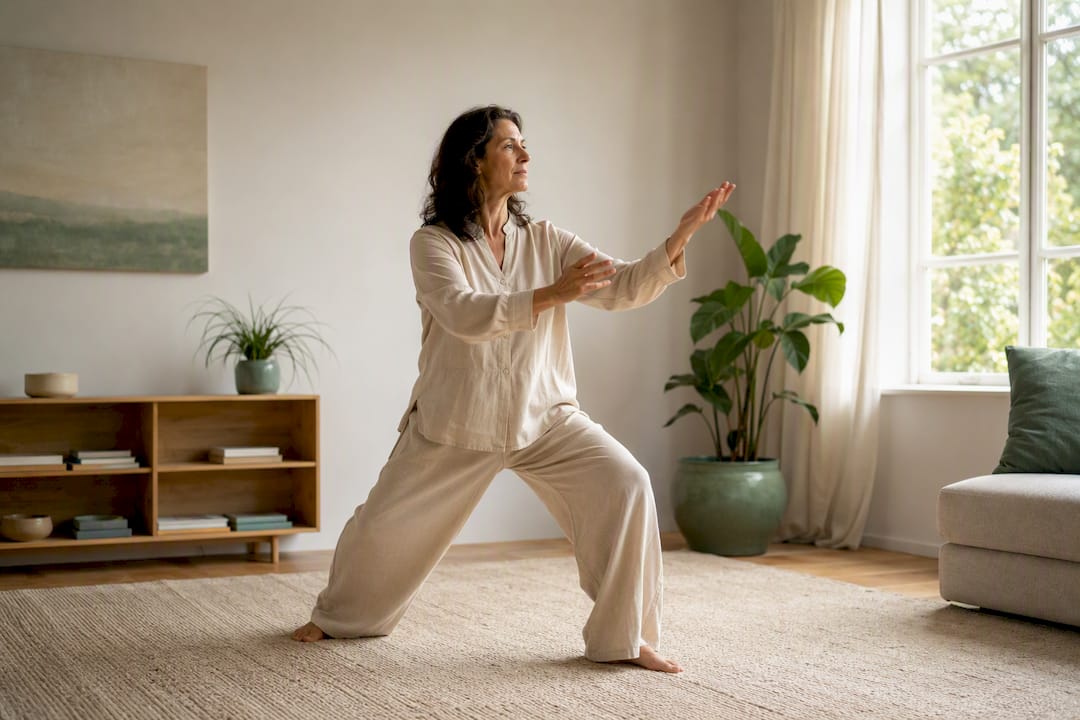
The second common pitfall is pushing range of motion too soon, chasing the "full" version of a movement before the joint is ready. Slower is genuinely better here. A knee flexion done through half its range, controlled and breath-paced, does more for joint stability than a deep bend rushed through with tension in the hips.
Realistically, expect the first two to four weeks to feel like establishing a habit more than chasing results. Morning stiffness often eases first, usually within three to six weeks of daily practice. Pain reduction and balance improvements tend to follow around the six to eight week mark, in line with what the trial data shows. Give it that runway before judging whether it's working for you.
— Stella
If You Want Guided Classes: How Stella Qigong Courses Help
Practicing alone from an article gets you started, but a guided program catches the small form errors that no amount of reading fixes, and that matters most when a joint is already sensitive. Qigongstar builds every course around exactly the movement principles covered above: gentle, breath-coordinated sequences with seated and reduced-range options built in from day one, not bolted on as an afterthought.
The Five Animal Qigong program walks through the same Wu Qin Xi movements referenced in the knee osteoarthritis research, with modules that progress at your pace rather than a fixed calendar. If digestive stress or general tension often accompanies your arthritis flares, the broader online qigong classes and courses bundle live and on-demand sessions with accessible, seated variations for exactly the mobility-limited days this article covers. Instructor feedback, even asynchronous, tends to catch the compensations you can't see in your own body, whether that's a shoulder creeping up during arm raises or a knee tracking slightly off during weight shifts. Start with the on-demand course library and try one guided session this week to see how a paced, feedback-supported routine feels different from practicing solo.
Sources
The clinical claims in this guide draw from a specific, checkable set of sources worth reading directly if you want the full context behind the numbers.
- Qigong: What You Need To Know | NCCIH
- Effects of traditional fitness qigong exercise on frailty status and overall well-being in frail or pre-frail patients: a systematic review and meta-analysis
- Effect of qigong on pain and disability in patients with chronic non-specific low back pain: a systematic review and meta-analysis
- What are the health benefits of qigong? | Cleveland Clinic
This article is general information, not a substitute for advice from a qualified doctor. Consult a qualified healthcare professional about your own circumstances before acting on anything here.