

Qigong-style movement therapy heals by calming the sympathetic nervous system, improving breath–vagal coupling, and using gentle mechanical stimuli to release tissue tension and support lymphatic flow. This is not a vague wellness promise. Randomized controlled trials (RCTs) and systematic reviews document measurable reductions in perceived stress and anxiety, and a 9-week mind–body intervention produced sustained improvement in IBS symptom severity and trait anxiety. Many people practicing White Tiger Qigong or Five Animal Qigong report noticeable relaxation after their first session, with clinically meaningful stress and gut-symptom changes emerging over 6–12 weeks of consistent, supervised practice.
- Who it helps most: Adults with chronic stress, anxiety, or functional gut symptoms like IBS
- What to expect: Immediate calming after sessions; measurable symptom shifts in 6–12 weeks
- Where to start: A structured program like those at Qigongstar, guided by a certified instructor
Pro Tip: Start with just 10 minutes daily rather than longer sessions. Consistency matters far more than duration in the early weeks of practice.
Table of Contents
- What does the research say about qigong for stress, anxiety, and IBS?
- What does a qigong session and program actually look like?
- Who is likely to benefit, and what timeline should you expect?
- How do you choose a safe teacher or online program?
- When is qigong safe, and when should you check with a clinician first?
- Key Takeaways
- Why I teach qigong for stress and gut health
- Ready to begin a guided qigong practice with Qigongstar?
- Selected sources and further reading
What does the research say about qigong for stress, anxiety, and IBS?
The evidence base is growing and genuinely encouraging, though it comes with honest caveats.
A 2024 systematic review found statistically significant reductions in perceived stress compared to no-treatment controls across multiple trials. The authors noted that heterogeneity in protocols and small sample sizes limit strong conclusions, and they called for standardized interventions and larger RCTs. Results versus active controls are more mixed.
For IBS specifically, the picture is promising. A 9-week mind–body movement intervention significantly decreased trait anxiety and improved disease-specific symptom severity and quality of life, with improvements maintained at follow-up. For anyone managing IBS holistically, that durability matters.
A broader meta-analysis found multisystem effects across inflammatory markers, mood, and sleep, while also flagging evidence gaps and the need for better trial design.
"The multimodal nature of Tai Chi and Qigong — integrating movement, breath, cognitive focus, and social interaction — likely explains the broad, cross-system health effects observed in trials." — Yeh et al., BIDMC
| Condition | Evidence Type | Key Finding |
|---|---|---|
| Perceived stress | Systematic review (2024) | Significant reductions vs. no-treatment controls |
| Trait anxiety | RCT (9-week intervention) | Reduced scores; maintained at follow-up |
| IBS symptom severity | RCT (9-week intervention) | Improved disease-specific scores and quality of life |
| Inflammation/mood/sleep | Meta-analysis | Multisystem improvements; heterogeneity noted |
What does a qigong session and program actually look like?
A typical session flows through five components: a breath warm-up, simplified repetitive forms, postural alignment cues, imagery or intentional focus, and a brief cool-down integration. Sessions can run 20–60 minutes depending on your level and schedule.
Qigong's simplified, repetitive meditative-movement design is what makes it sustainable as a daily practice. You are not memorizing complex choreography. You are settling into a rhythm.
White Tiger Qigong focuses on dynamic energy cultivation through flowing, animal-inspired movements that mobilize the spine and joints. Its therapeutic emphasis is on releasing stagnation, building vitality, and calming the mind through coordinated breath and motion. The White Tiger Qigong program at Qigongstar offers structured progressions from beginner to advanced.
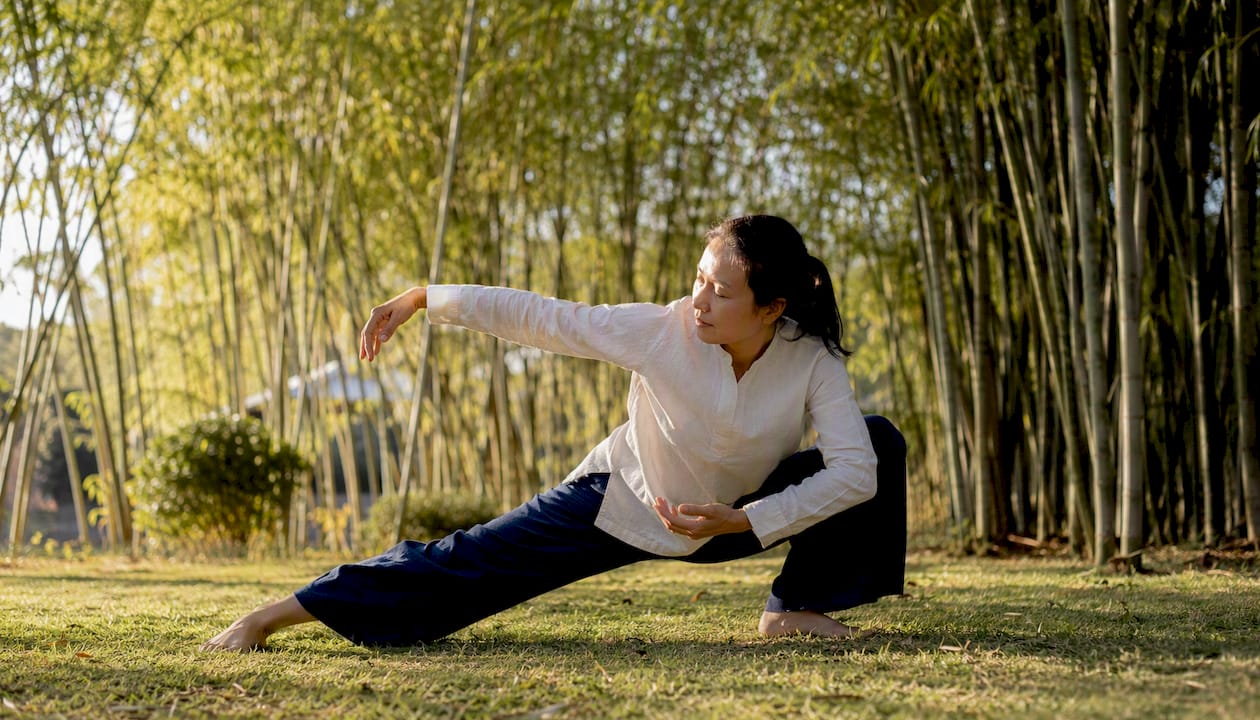
Five Animal Qigong draws on five archetypal animal movements (Tiger, Deer, Bear, Monkey, and Crane) to target different organ systems and energy pathways. The Bear and Crane sequences, in particular, include gentle abdominal compression and diaphragmatic breathing that directly support digestive function. Explore the Five Animal Qigong program for a curriculum built around these forms.
For measurable benefit, a structured program typically suggests:
- Practice 3–5 times per week
- Start with 20-minute sessions; build toward 40–60 minutes over 4–6 weeks
- Follow a supervised course format before moving to fully self-directed practice
- Use on-demand recordings between live sessions to maintain consistency
The VA Whole Health program notes that Qigong is accessible across mobility levels, and chair-based adaptations make it genuinely available to beginners with limited range of motion.
Who is likely to benefit, and what timeline should you expect?
The best-fit profiles for Qigong-style movement therapy are:
- Adults carrying chronic stress or anxiety who want a non-pharmaceutical approach
- People with IBS or functional gut symptoms seeking natural stress relief
- Anyone who finds high-intensity exercise aggravating rather than calming
- Beginners to mind–body practice who need a gentle, structured entry point
Expect a gentle arc of improvement. Most people feel noticeably calmer after their first session. Sleep and energy often shift within 2–4 weeks of consistent practice. Clinically measurable symptom improvement in stress, anxiety, and IBS tends to appear within several weeks of consistent practice, aligning with available trial durations. Deeper resilience and flexibility gains build over months.
Qigong works best as an adjunctive practice alongside medical care, not as a replacement for it. It is not a cure. It is a reliable, gentle tool for nervous-system regulation that compounds with time.
How do you choose a safe teacher or online program?
Ask these questions before enrolling:
- What is your training lineage, and are you certified by the White Tiger Qigong School or registered with Yoga Alliance?
- Do you have experience working with students managing anxiety, IBS, or chronic stress?
- How do you handle adverse events or students who need modifications?
- What is the ratio of live supervision to recorded content?
Trust signals to look for: White Tiger Qigong School certification, Yoga Alliance registration, a clear syllabus with progressive difficulty, and transparent communication about safety adaptations.
Red flags: instructors who promise cures, lack documented training lineage, or avoid discussing contraindications and modifications.
Pro Tip: Favor programs that offer a short trial class or drop-in session before full enrollment. One live class tells you more about a teacher's pacing and attentiveness than any sales page.
When is qigong safe, and when should you check with a clinician first?
Qigong is among the gentlest movement practices available. Mild transient soreness or light-headedness can occur in the first few sessions, usually from unfamiliar breath patterns or standing longer than usual. Both resolve quickly with gradual progression and proper hydration.
Seek medical clearance before starting if you have:
- Uncontrolled cardiac conditions or recent cardiac surgery
- Recent abdominal or orthopedic surgery
- Severe or acute psychiatric instability
Stop and consult a clinician if you experience:
- New or worsening chest pain or palpitations during practice
- Fainting or near-fainting
- Persistent worsening of gut symptoms over two or more weeks of practice
A well-structured program will include documented adverse-event guidance, graduated progressions, and clear instructor instructions for modifications. If a program lacks these, that is a red flag worth heeding.
This article is general wellness information, not medical advice. Confirm any new movement practice with your healthcare provider, especially if you have an existing medical condition.
Key Takeaways
Qigong heals through nervous-system regulation, HPA axis calming, and gentle mechanical stimuli that support lymphatic flow and tissue release, with clinical evidence strongest for stress, anxiety, and IBS symptom improvement.
| Point | Details |
|---|---|
| Core healing mechanism | Qigong calms the HPA axis, boosts vagal tone, and creates mechanical stimuli that ease tissue tension. |
| Clinical evidence | RCTs and systematic reviews show stress and anxiety reductions; a 9-week trial improved IBS symptom severity with lasting effects. |
| Realistic timeline | Expect immediate relaxation after sessions and measurable symptom shifts within 6–12 weeks of consistent practice. |
| Choosing a program | Look for White Tiger Qigong School certification or Yoga Alliance registration; favor programs with live supervision and clear progressions. |
| Qigongstar courses | Qigongstar offers structured White Tiger and Five Animal Qigong programs online, with live and on-demand options for beginners. |
Why I teach qigong for stress and gut health
Teaching White Tiger and Five Animal Qigong to adults managing stress and IBS has shown me something the research confirms but cannot fully capture: the shift happens faster than most students expect, and it tends to start in the breath before it shows up anywhere else. Students who arrive tense and skeptical often leave their first session visibly softer, shoulders dropped, breathing slower. That is not placebo. That is vagal activation doing its work.
What I structure carefully in my courses is the progression from breath awareness to form, and from form to self-directed practice. Rushing that sequence is where most self-taught attempts stall. When students move through White Tiger sequences with proper breath timing, the abdominal engagement naturally supports digestion. When they practice Bear sway from the Five Animal forms, the gentle lateral movement creates exactly the kind of rhythmic compression the gut responds to. These are not accidental benefits. They are built into the forms.
My teaching is grounded in White Tiger Qigong School certification and Yoga Alliance registration, and I design every course with safety progressions and modification options so that no student is left behind regardless of mobility or fitness level. The outcomes I observe most consistently are improved sleep within the first few weeks, reduced anxiety scores over 6–8 weeks, and meaningful gut-symptom relief for students who stay consistent through a full program.
Ready to begin a guided qigong practice with Qigongstar?
Self-directed practice gets you started. Supervised learning gets you results faster, with fewer plateaus and a clearer sense of whether you are practicing correctly.
Qigongstar's online courses and live classes give you structured access to White Tiger Qigong and Five Animal Qigong programs designed specifically for stress relief, anxiety, and digestive wellness. You can join a live drop-in class to experience Stella's teaching style before committing to a full course, or enroll directly in a beginner program and work through it at your own pace with on-demand recordings. Both formats include progressive form instruction, breath guidance, and modification options for every level. Visit the online classes page to see current schedules and course options.
Selected sources and further reading
The claims in this article draw on peer-reviewed trials, systematic reviews, and mechanobiology research. The table below maps the key sources to their primary use in the article.
| Source | What it supports |
|---|---|
| PLOS ONE — 9-week IBS mind–body trial | IBS symptom improvement and trait anxiety reduction with lasting effects |
| MDPI 2024 systematic review | Stress reductions vs. no-treatment controls; trial quality limitations |
| Yeh et al. — whole-person TCQ science | Multimodal framing; cross-system health effects |
| Medical Hypotheses — MLB mechanobiology | Lymphatic and connective-tissue mechanism hypothesis |
| Wiley 2021 — meditative movement accessibility | Qigong's simplified design and daily-practice sustainability |
| Wiley — psychophysiological mechanisms | HPA axis and sympathetic nervous system regulation |
| VA Whole Health — Tai Chi and Qigong | Accessibility, broad health benefits, program design |
| PMC meta-analysis | Multisystem effects; inflammation, mood, sleep; evidence gaps |
Consult your clinician before starting any new movement program if you have a serious medical condition.