
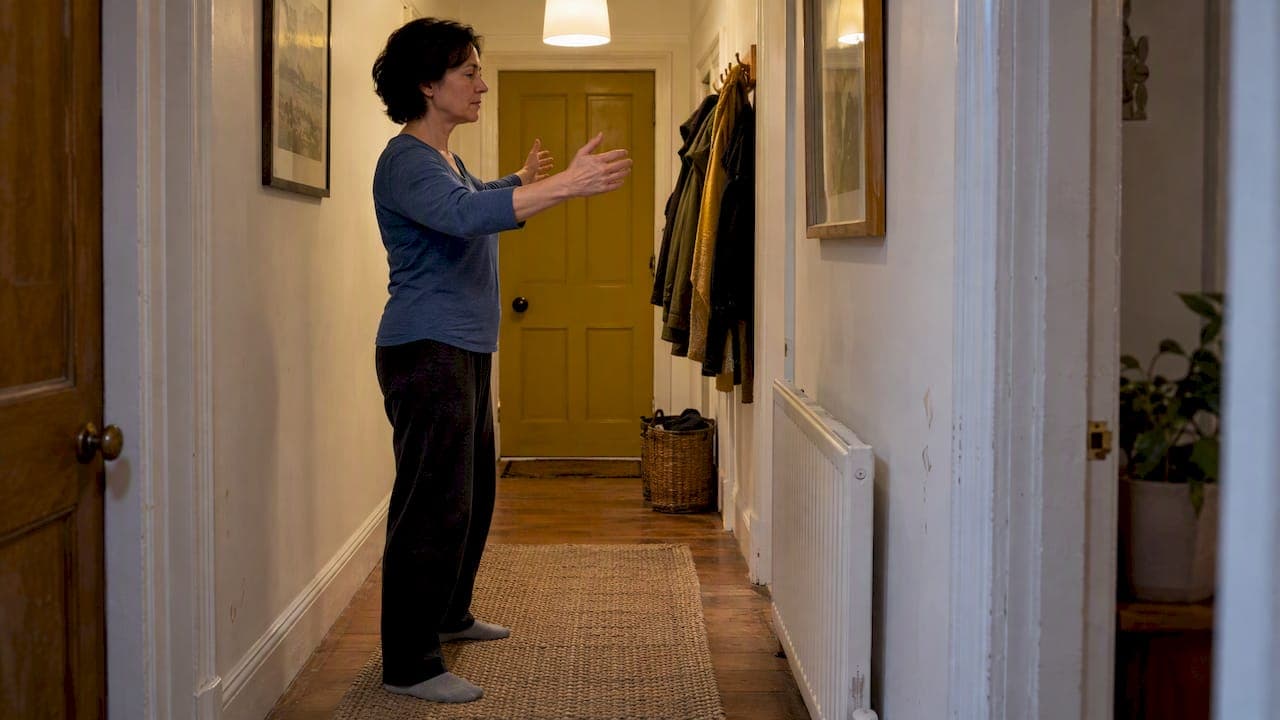
A gentle, 10 to 20 minute evening qigong routine built around slow movement and longer exhalations can help you unwind and drift into sleep more easily. Tonight, you can start with three simple moves: a standing warm-up (Wuji stance), slow arm swings with opening palms, and a few quiet minutes of standing meditation. Research on qigong backs up what this practice feels like in the body: calmer, lighter, and ready for rest.
TL;DR:
- A 10 minute sequence pairs slow movement with breath: begin in Wuji, practice cloud hands and shoulder rolls, sway gently, then finish with meditation.
- Let your abdomen rise as you breathe in, then use a gentle four to six count inhale and six to eight count exhale without forcing deep breaths.
- A review of 13 trials involving 1,147 participants found better sleep quality; researchers describe gradual gains after regular practice over eight to 16 weeks.
- Finish 15 to 30 minutes before bed; if practice leaves you alert, shorten standing moves and favor seated meditation and slow breathing.
- People with balance problems, pregnancy, recent surgery, or injury should use small seated movements and consult a clinician; stop for dizziness or sharp pain.
Table of Contents
- Essential evening qigong moves to release the day's tension
- How to sequence your practice for the best results
- Breathing techniques that prepare your body for sleep
- When to practice and how often for better sleep
- What research says about qigong for sleep and stress
- Common mistakes beginners make and how to adapt safely
- Your ready-to-use 10-minute evening qigong sequence
- Who's guiding this practice: Stella and White Tiger Qigong
- What actually matters in an evening qigong practice
- How we can support your evening practice
- FAQ
- Sources
Essential evening qigong moves to release the day's tension
Each of these moves is simple enough to learn tonight, yet rich enough to practice for years. We teach them as a gentle sequence that moves from waking the body to quieting the mind.
- Wuji stance (standing warm-up): Stand with feet hip-width apart, knees soft, arms relaxed. Breathe naturally for 30 to 60 seconds and feel your weight settle into your heels.
- Cloud hands: Shift your weight side to side while your palms trace slow arcs in front of your torso, inhaling as one hand rises and exhaling as it falls.
- Shoulder rolls with breath: Roll your shoulders back slowly on the inhale and let them drop on the exhale, releasing tension carried from a day at a desk.
- Spinal wave (gentle torso sway): Let your spine soften into a slow forward and back sway, decompressing each vertebra as you exhale.
- Standing meditation (Zhan Zhuang): Hold a relaxed standing posture, arms loosely rounded as if hugging a large ball, breathing softly for one to three minutes.
If standing isn't comfortable, every move above has a seated version: cloud hands can be done from a chair with your feet flat on the floor, and standing meditation becomes simply sitting tall with your hands resting in your lap. The goal is the same sensation wherever you practice it: a loosening through the shoulders, a softer low back, and a mind that stops racing.
How to sequence your practice for the best results
Qigong works best when movement and breath move together, not when you rush from one pose to the next. Follow this order and let each step settle before moving to the next.
- Start in Wuji stance for one minute. Let your breathing slow down on its own before you add any movement.
- Move into cloud hands for two to three minutes. Match one full breath to each arm swing, never forcing the pace.
- Add shoulder rolls for one minute. Keep your shoulders loose, not lifted, and let gravity help them drop.
- Sway through the spinal wave for one to two minutes. Move only as far as feels easy, since this is about release, not stretching to a limit.
- Finish in standing or seated meditation for two to five minutes. Let your exhale grow slightly longer than your inhale and simply notice how your body feels.
A full cycle takes roughly 10 minutes, though you can extend any step if it feels good to linger. The combination of physical training, focused attention, conscious breathing, and relaxation is what shifts your body toward a calmer, parasympathetic state, according to a narrative review on qigong and stress prevention.
Watch for a few warning signs as you move. If you feel dizzy, lightheaded, or notice sharp pain anywhere, stop and sit down immediately. Qigong should never hurt or leave you breathless: if a standing posture feels unstable, switch to the seated version without any loss of benefit. Pregnant readers, or anyone recovering from surgery or a recent injury, should keep movements smaller and check with a clinician before starting a new routine.

Breathing techniques that prepare your body for sleep
The breath is doing most of the work in an evening qigong routine, and mastering self-soothing techniques that calm your body fast can deepen this calming effect Self-Soothing Techniques That Calm Your Body Fast. Slow, diaphragmatic breathing, paired with a slightly longer exhale, signals your nervous system that it's safe to downshift.
- Breathe into your belly, not your chest. Let your abdomen rise on the inhale and fall on the exhale, rather than lifting your shoulders.
- Try a soft 4-to-6 count inhale and a 6-to-8 count exhale. The longer exhale is the part that invites calm, so don't rush it.
- Never force a deep breath. NHS guidance on breathing exercises for stress recommends gentle belly expansion over large, forced breaths, which can create tension instead of releasing it.
- Close with three slow breaths lying down. Place a hand on your belly, feel it rise and fall, and let your exhale be the longest part of each cycle.
Pro Tip: If counting feels distracting, simply whisper "soften" on the exhale instead of tracking numbers.
When to practice and how often for better sleep
A short, regular practice most evenings is enough to notice a difference, and consistency matters far more than how intensely you move. Aim to finish your routine about 15 to 30 minutes before you plan to sleep, giving your body a little time to settle before you climb into bed.
If a session leaves you feeling more alert than relaxed, shorten the standing portions and spend more time in seated meditation and slow breathing. A few short sessions each week tend to produce steadier results than one long session saved for the weekend, and practicing on most evenings, even briefly, builds the kind of habit that actually changes how quickly you fall asleep over time.
What research says about qigong for sleep and stress
Qigong's reputation for easing stress and improving sleep isn't just tradition. A systematic review and meta-analysis of randomized controlled trials pooling 13 trials and 1,147 participants found that health qigong significantly improved sleep quality, with sensitivity analyses reporting an effect size (Hedges' g) of about −0.42, a result the reviewers describe as statistically significant.

That effect size translates to a real, if modest, improvement: enough that researchers consider qigong a legitimate tool for sleep, not a placebo effect.
Separately, research on brief qigong sessions has found that even short practices focused on gentle movement and standing meditation can produce an immediate drop in state anxiety in healthy adults. That matters for an evening routine: you don't need an hour to feel calmer, just a few focused minutes.
Set realistic expectations. A single session might ease the tension of a hard day, but sleep-quality changes typically build over weeks of regular practice, often in the range of two to three sessions weekly for eight to 16 weeks, based on patterns described in the stress-prevention review above.
Common mistakes beginners make and how to adapt safely
Most beginner mistakes come from trying too hard, which runs against what this practice is meant to do.
- Forcing your range of motion: Reaching further than feels natural creates tension instead of releasing it.
- Holding your breath during movement: Pausing your breath, especially at the top of a stretch, undercuts the calming effect entirely.
- Rushing through the sequence: Treating qigong like a workout to finish quickly defeats its purpose.
If you have a chronic pain condition, balance issues, or are pregnant, practice seated and keep every movement small. For a fully seated option, our seated qigong exercises guide offers a complete low-impact routine. Stop and consult a doctor if you experience chest pain, persistent dizziness, or any sharp or worsening pain during practice.
Your ready-to-use 10-minute evening qigong sequence
Here's a minute-by-minute routine you can follow tonight without any extra preparation.
- Minute 1: Wuji stance. Stand quietly, feet hip-width apart, and let your breathing slow.
- Minutes 2 to 4: Cloud hands. Shift your weight side to side, matching one breath to each arm swing.
- Minute 5: Shoulder rolls. Roll shoulders back on the inhale, drop them on the exhale.
- Minutes 6 to 7: Spinal wave. Sway gently forward and back, releasing through your low back.
- Minutes 8 to 10: Standing or seated meditation. Breathe slowly, lengthening your exhale, and let your mind settle.
For a shorter night, compress the routine into five minutes by keeping only cloud hands and the closing meditation. For a longer practice, extend each step by a minute and add a few extra breaths lying down before sleep. If standing isn't an option, our seated qigong exercises routine mirrors this same sequence from a chair.
Keeping a short sleep journal, even just a note on how quickly you fell asleep, can help you notice patterns over a week or two of consistent practice.
Who's guiding this practice: Stella and White Tiger Qigong
This routine is taught by Stella, who focuses on qigong for stress relief and digestive wellness. Our teaching draws on White Tiger Qigong and Five Animal Qigong, two traditional movement systems taught through live and on-demand classes designed for beginners. Instruction follows White Tiger Qigong School training alongside Yoga Alliance accreditation, giving structure to the breath and movement principles described throughout this routine.
What actually matters in an evening qigong practice
Most advice on evening relaxation focuses on what to add: more breathing apps, more soundscapes, more gadgets tracking your sleep. What the research on qigong actually supports is simpler, and almost the opposite: fewer moving parts, done consistently, beat elaborate routines done sporadically.
The conventional wisdom oversells intensity and undersells breath timing. A vigorous flow sequence before bed can leave you more alert, not less, while a slow sequence with a deliberately longer exhale does the quieter work of shifting your nervous system toward rest. If we had to prioritize one thing for a reader short on time, it wouldn't be learning more moves. It would be mastering the exhale: that single habit carries more of the relaxation benefit than any amount of additional choreography.
Give the basics weeks, not days, before judging whether this works for you. Sleep changes build gradually, and the readers who stick with a short, repeatable routine tend to notice more than those chasing the perfect sequence.
— Stella
How we can support your evening practice
If you'd like more structure than a blog post can offer, we built our courses for exactly this. Our Qigong for Stress Relief and Digestive Wellness course walks you through a complete practice at your own pace, with the same breath-to-movement principles covered here applied across a fuller program.
For readers who want a quicker check-in or feedback on form, a 30-Min Clarity Session gives you focused time with an instructor, while a 60-Min Deep Dive Online Session suits anyone wanting a complete review of posture, breath, and sequencing. If you'd rather learn in person, a 60-Min Face-to-Face Qigong session is also available. For those who enjoy practicing alongside others, our Group Qigong Classes offer a shared, guided setting at a price available on request.
- Choose a self-paced course if you prefer practicing on your own schedule.
- Choose a private session if you want direct feedback on your posture and breath.
- Choose a group class if practicing alongside others helps you stay consistent.
Explore our full range of online qigong classes to find the format that fits your evening.
This article is general information, not a substitute for advice from a qualified doctor. Consult a qualified healthcare professional about your own circumstances before acting on anything here.
FAQ
Can you do qigong in the evening?
Yes, evening is actually one of the best times to practice. A slow, grounding qigong sequence with longer exhales helps shift your body out of an alert daytime state and into the kind of calm that supports falling asleep.
What is the best time of day to do qigong?
There's no single best time, since qigong offers different benefits depending on when you practice. Morning sessions tend to energize, while evening sessions focused on slow movement and extended exhales are better suited to winding down before bed.
What is a good qigong routine to start my day?
A morning routine can use similar moves, like cloud hands and gentle spinal waves, but with a more even breath rather than the extended exhale used in the evening. The emphasis shifts from calming the nervous system to gently waking the body.
What is the perfect evening routine for better sleep?
A calming routine combines about 10 to 20 minutes of gentle movement, like the qigong sequence outlined above, with sleep-friendly habits such as dimming lights, limiting screens, and keeping a consistent bedtime. NHS guidance on sleep and meditation notes that relaxation practices work best when paired with these broader sleep-hygiene habits.
How long should an evening qigong session be?
Ten to 20 minutes is enough for most people to feel the calming effects, and practicing several evenings a week tends to produce steadier sleep benefits than one longer, occasional session.
Sources
- Effects of health qigong on sleep quality: A systematic review and meta-analysis of randomized controlled trials
- Individual stress prevention through qigong (narrative review)
- Breathing exercises for stress - NHS