
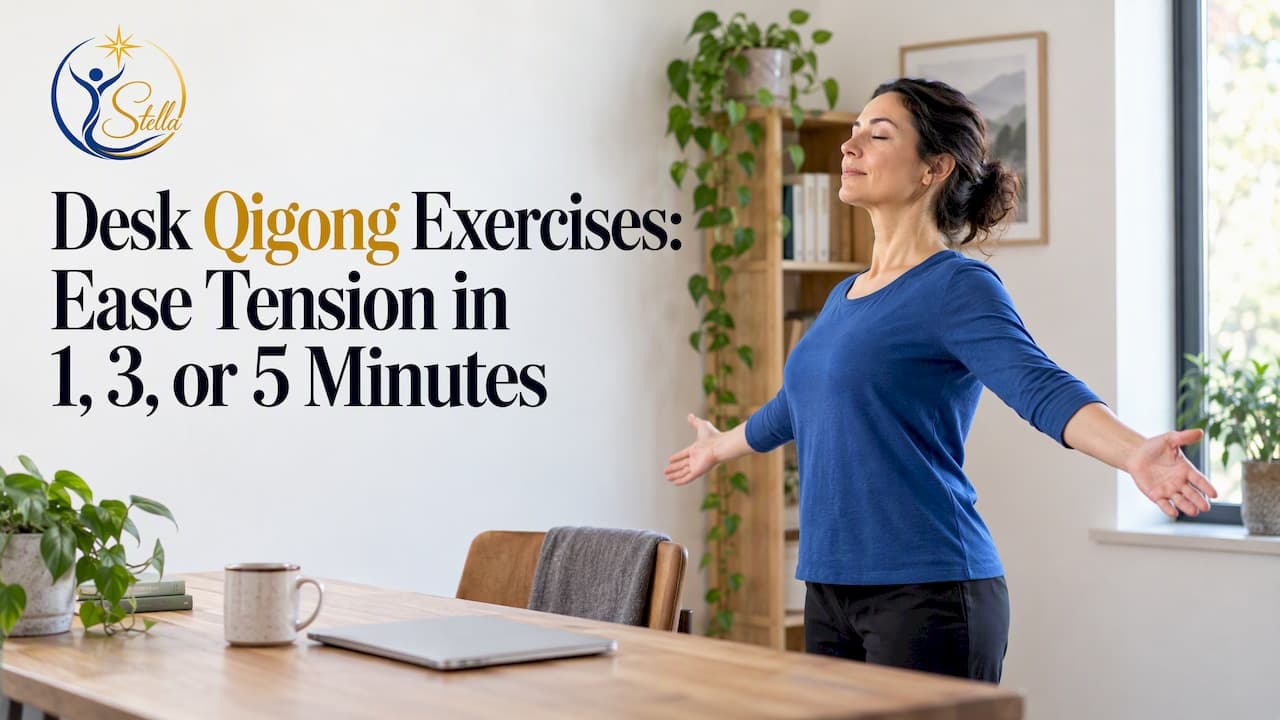
Brief, desk-friendly qigong moves done for one to five minutes can ease sitting-related tension, reset your posture, and help you refocus, no special equipment needed. These micro-practices pair slow breathing with small, safe movements you can do in work clothes, at your chair. Guidance from UK Chief Medical Officers supports breaking up long sitting spells, and a few mindful minutes is often all it takes.
TL;DR:
- Break up sitting every 30 to 60 minutes, as NHS guidance recommends, and use a one, three, or five minute routine during each pause.
- After calls, pair shoulder openings with neck rolls; after long meetings, add wrist movements, while the five minute routine includes spinal mobility and calf raises.
- If standing is difficult, stay seated and pump your feet; reduce the range of motion or stop whenever a movement causes pain.
- Let breathing lead each movement: expand your abdomen on the inhale, soften it on the exhale, and breathe slowly through your nose.
- A workplace trial found that guided Qigong videos practiced twice daily increased activity and reduced prolonged sitting among office workers over twelve weeks.
Table of Contents
- Five desk qigong exercises you can do right now
- How to coordinate your breath with movement
- Micro-routines for different moments in your workday
- Why qigong suits office bodies and minds
- Making desk qigong a realistic habit at work
- How QigongStar supports busy professionals
- FAQ
- Sources
Five desk qigong exercises you can do right now
These five moves target the places where sitting settles in hardest: your neck, shoulders, spine, wrists, and lower legs. Move slowly, breathe through your nose, and let each motion feel soft rather than forced.
- Seated neck release. Sitting tall, drop your chin gently toward your chest, then roll your head in a slow half-circle from shoulder to shoulder, exhaling as you move and inhaling as you return to center. Do 6 to 8 slow rolls, keeping the motion small and never pushing into discomfort.
- Shoulder open and roll. Inhale as you lift both shoulders toward your ears, then exhale as you roll them back and down, opening your chest. Repeat for 8 to 10 rounds, letting your shoulder blades soften with each exhale.
- Seated spinal mobilization. Place your hands on your thighs and gently sway your upper body forward and back a few inches, then add a seated twist, turning toward one side on an exhale and returning on an inhale. Do 6 to 8 reps in each direction to loosen a stiff low back.
- Wrist and forearm flossing. Extend your arms in front of you, then flex and release your wrists in slow pulses, syncing each movement with your breath. Thirty to sixty seconds eases the strain that builds from typing and mousing all day.
- Standing calf and ankle reset. Stand behind your chair and rise onto your toes, then lower with control, or stay seated and pump your feet from heel to toe if standing isn't possible. Thirty to sixty seconds re-engages circulation that stalls after long stretches of sitting.
Pro Tip: Stop any movement the moment you feel pain rather than mild stretch, and shrink the range of motion before you skip the exercise altogether.
How to coordinate your breath with movement

Qigong works best when breath leads the movement rather than following it. Before each exercise, take a moment to breathe into your belly rather than your chest: let your abdomen expand on the inhale and soften on the exhale. This diaphragmatic pattern, paired with a slow exhale through the nose, helps calm the nervous system, a mechanism a narrative review of Qigong research links to stress recovery through conscious breathing and focused attention.
A few posture checks make these breathing cues more effective:
- Sit with your hips slightly higher than your knees and both feet flat on the floor.
- Use a small cushion or rolled towel for light lumbar support if your chair lacks it.
- Let your shoulders drop away from your ears and keep your chin level, not jutting forward.
- If you catch yourself slumping, lengthen through the crown of your head and exhale to reset before continuing your task.
Many adults in the UK sit for several hours a day, and national activity guidance recommends breaking up that sitting with short, frequent activity breaks each hour. A one-minute breathing reset counts toward that goal and costs you almost nothing in work time.
Micro-routines for different moments in your workday
Rather than deciding what to do each time, pick a routine based on how much time you have and what your body is asking for.
- The 1-minute reset (between calls): one round of shoulder opens paired with slow belly breathing, followed by a few seated neck rolls. Use it the moment you hang up before diving into the next task.
- The 3-minute tension release (after a long meeting): neck release, shoulder rolls, and wrist flossing, done back to back at the paces described above. This combination targets the three spots that stiffen most from screen time and note-taking.
- The 5-minute focus reset (mid-afternoon slump): the full sequence, spinal mobilization and a standing calf reset included, finished with thirty seconds of quiet breathing before returning to your screen.
Aim to break up sitting every 30 to 60 minutes, matching the rhythm NHS guidance on reducing sitting time recommends, and treat these routines as the thing you do during that break rather than an extra task competing for your attention.
Why qigong suits office bodies and minds
The case for desk qigong rests on more than a pleasant feeling. National guidance already recommends breaking up long sitting with short activity, and a cluster-randomized workplace trial found that short guided Qigong videos delivered twice daily increased physical activity and reduced prolonged sitting among office workers over twelve weeks.
Qigong's physical training, active relaxation, focused attention, and conscious breathing help the body recover from work-related overactivation, with randomized trials showing benefits for blood pressure, sleep, and mental wellbeing.
That summary reflects findings from a peer-reviewed review of Qigong and stress, and it lines up with what we teach at QigongStar:
- Courses in White Tiger Qigong and Five Animal Qigong build on these same principles of gentle movement and breath regulation.
- Instruction comes from a White Tiger Qigong Level 3 certified teacher, also accredited by Yoga Alliance.
- Both live virtual classes and on-demand courses let you learn at your own pace, whether you have five minutes or a full session to spare.
Making desk qigong a realistic habit at work
Pair a one-minute reset with something you already do daily, like your first coffee or the five minutes before a recurring meeting, rather than relying on willpower alone. Build upward only once that single habit feels automatic. A calendar reminder or a shared team prompt to stretch together works as well as any streak app, and a few consistent minutes beat an ambitious routine you abandon by Wednesday.
— Stella
How QigongStar supports busy professionals
We built our course formats to offer short, guided practice sessions accessible whenever your schedule allows. Our online courses are designed so you never have to figure out the next move alone.
- New to qigong: our Qigong for Stress Relief and Digestive Wellness course (£116 one-off) walks you through the foundations at your own pace.
- Want focused guidance fast: a 30-Min Clarity Session (£85 one-off) gives you one-to-one attention on exactly where you're stuck.
- Ready to go deeper: a 60-Min Deep Dive Online Session (£145 one-off) or a 60-Min Face-to-Face Qigong session (£165 one-off) builds a fuller practice beyond the desk.
Whichever path fits your week, you can book directly through our online classes page and start with a session that matches the time you actually have.
FAQ
How long should a desk qigong session last?
A single session can last anywhere from one to five minutes and still offer real benefit. Even a one-minute breathing and shoulder reset, done between tasks, supports the short activity breaks that national physical activity guidance recommends.
How often should I practice qigong at my desk?
Aim to break up sitting roughly every 30 to 60 minutes, using a short routine each time rather than saving movement for one long break. This matches NHS advice to get up and move regularly throughout the day.
Can I do desk qigong if I have limited mobility or space?
Yes, every move described here can be adapted to a seated position with a smaller range of motion, and you can skip any standing step and substitute seated foot pumps instead. Stop at the first sign of pain and shrink the movement rather than pushing through it.
Does qigong actually reduce stress at work?
Research reviewed in a peer-reviewed narrative study links Qigong's breathing and focused movement to measurable stress recovery, including improvements in blood pressure and sleep found in randomized trials. A workplace trial using short video sessions also found increased activity and reduced sitting over a twelve-week period.
What if I want more structured instruction than desk exercises alone?
Our online Qigong courses offer guided, self-paced learning in White Tiger Qigong and Five Animal Qigong, taught by a Level 3 certified instructor also accredited by Yoga Alliance. These formats build on the same desk-friendly principles with deeper, structured practice.
Sources
- UK Chief Medical Officers' physical activity guidelines
- Individual stress prevention through Qigong - PMC
- Move-It: A cluster-randomised digital worksite exercise intervention - MDPI