
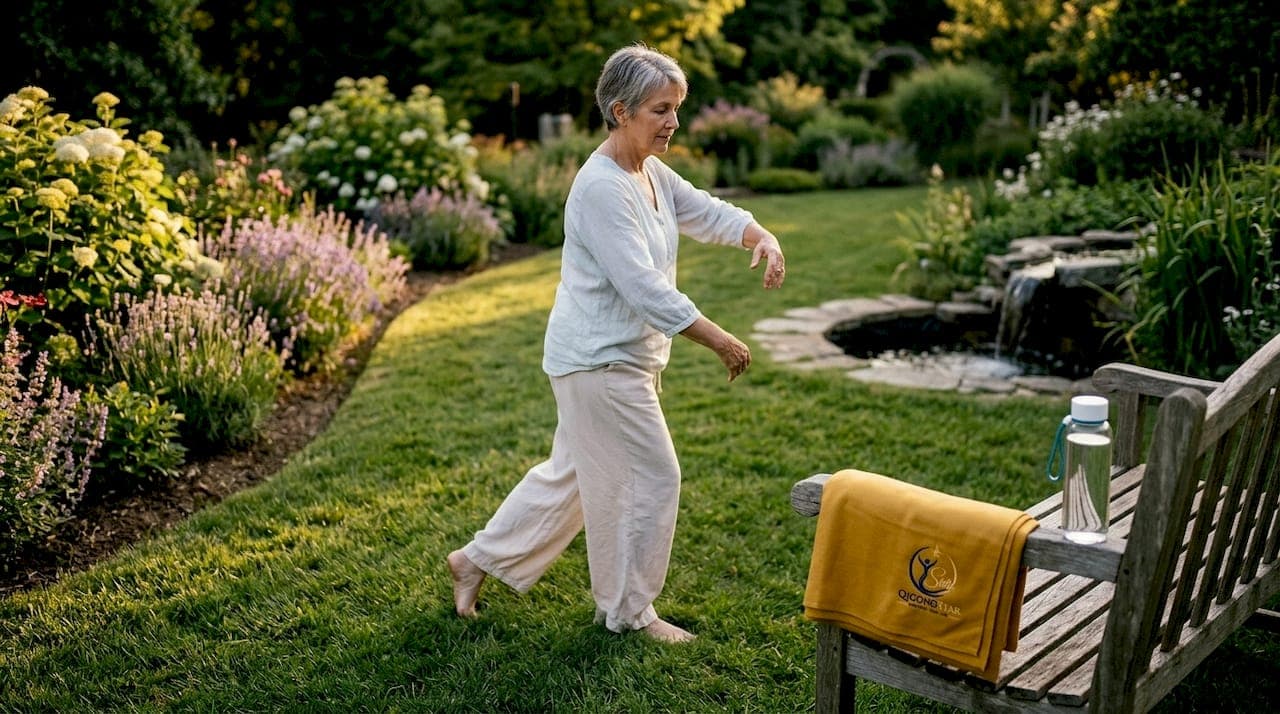
Stress is quietly aging you. Poor sleep disrupts your hormones, chronic tension inflames your gut, and the cycle feeds itself until your body starts showing the cost. Longevity practices ancient Chinese medicine has refined over thousands of years offer something modern wellness culture rarely does: a way to address all three at once, through the same root. This guide walks you through the core principles, practical tools, and specific techniques, from qigong and acupuncture to seasonal lifestyle habits, so you can begin building a practice that genuinely supports your long-term health.
Table of Contents
- Understanding longevity practices in ancient Chinese medicine
- Essential tools and prerequisites for starting longevity practices
- Step-by-step guide to key longevity practices: qigong, acupuncture, and lifestyle routines
- Monitoring progress and optimizing your longevity routine
- A fresh perspective on ancient Chinese longevity practices
- Explore guided courses and expert support for your longevity journey
- Frequently asked questions
Key Takeaways
| Point | Details |
|---|---|
| Longevity practices nourish qi | Ancient Chinese medicine uses mind-body techniques like qigong to cultivate and balance vital energy for wellness. |
| Consistent gentle practice | Regular, moderate qigong sessions support stress relief, sleep improvement, and lasting vitality better than intense, infrequent efforts. |
| Evidence supports health benefits | Research links frequent TCM use with modestly longer life expectancy and improved sleep quality, especially in older adults. |
| Acupuncture aids stress management | Acupuncture shows promise in reducing anxiety and PTSD symptoms by regulating stress physiology mechanisms. |
| Personalize and pace yourself | Optimal longevity results come from integrating practices gradually and mindfully, not chasing guaranteed lifespan increases. |
Understanding longevity practices in ancient Chinese medicine
To build an effective longevity routine, it helps to understand what ancient Chinese medicine is actually asking of you. This is not a collection of remedies you pick up when something goes wrong. It is a way of living that trains your body to stay in balance before problems take hold.
At the center of this approach is qi (pronounced "chee"), the vital energy that flows through your body along pathways called meridians. In Traditional Chinese Medicine (TCM), illness and aging are understood as disruptions to this flow. Longevity practices eastern traditions have passed down are largely designed to keep qi moving freely, nourishing your organs, calming your nervous system, and supporting your body's natural repair processes.
The formal name for this approach is yangsheng, which translates to "nourishing life." It covers everything from breath and movement to sleep timing, diet, and emotional regulation. Think of it as a daily maintenance practice for your entire system, not a treatment for a single symptom.
Qigong integrates breathing, body, and mind to balance qi for long-term well-being. It is the most accessible entry point into yangsheng for most people. The White Tiger Qigong overview offers a clear look at how structured qigong forms apply these principles in practice.
Key ideas to carry into your practice:
- Qi flows and can be cultivated. Gentle movement, conscious breathing, and focused attention all influence how qi circulates.
- Balance over intensity. TCM longevity is built on steady, repeated practice, not bursts of effort.
- Mind and body are one system. Emotional states directly affect physical health, and vice versa.
- Recovery is part of the practice. Rest, digestion, and sleep are not passive. They are active phases of renewal.
Essential tools and prerequisites for starting longevity practices
With these foundations clear, you can prepare your environment and mindset to begin your longevity journey. The good news is that the barrier to entry is genuinely low.
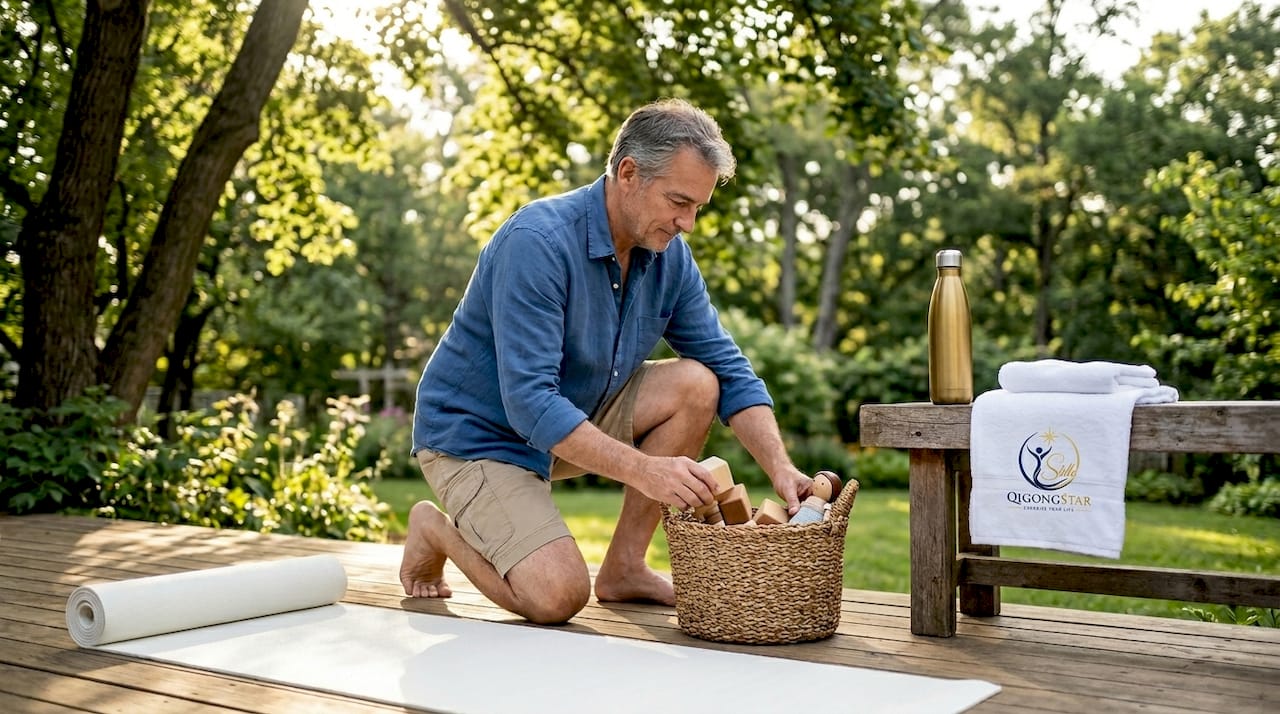
Most mind-body medicine practices require nothing more than comfortable, loose-fitting clothing and a quiet space large enough to extend your arms. You do not need special equipment, a gym membership, or prior fitness experience.
| Requirement | What you need | Why it matters |
|---|---|---|
| Space | 6x6 feet of clear floor | Allows full arm and leg movement |
| Clothing | Loose, breathable fabric | Supports unrestricted breath and flow |
| Time | 15 to 30 minutes daily | Consistency builds cumulative benefit |
| Health check | Consult your doctor if managing chronic illness | Ensures safe adaptation of movements |
| Mindset | Patience and curiosity | Outcomes build over weeks, not days |
Before you start, consider your current physical condition honestly. Qigong is gentle by design, but if you are managing a heart condition, recent surgery, or severe joint pain, a brief conversation with your healthcare provider will help you adapt movements safely.
What matters most is not how long you practice each session. It is how often. Short, consistent sessions outperform occasional long ones every time.
Benefits of beginning with a structured approach:
- Reduces the risk of overexertion or incorrect form
- Builds a sustainable rhythm your nervous system can rely on
- Creates a clear baseline so you can notice real improvements over time
- Supports gradual deepening of breath awareness and body connection
Pro Tip: Set your practice space up the night before. Laying out your mat or clearing the floor removes the small friction that often stops a morning session from happening.
Step-by-step guide to key longevity practices: qigong, acupuncture, and lifestyle routines
Now that you're set up, let's look at how to perform these ancient longevity practices effectively. Each one addresses a different layer of your health, and together they create something genuinely powerful.
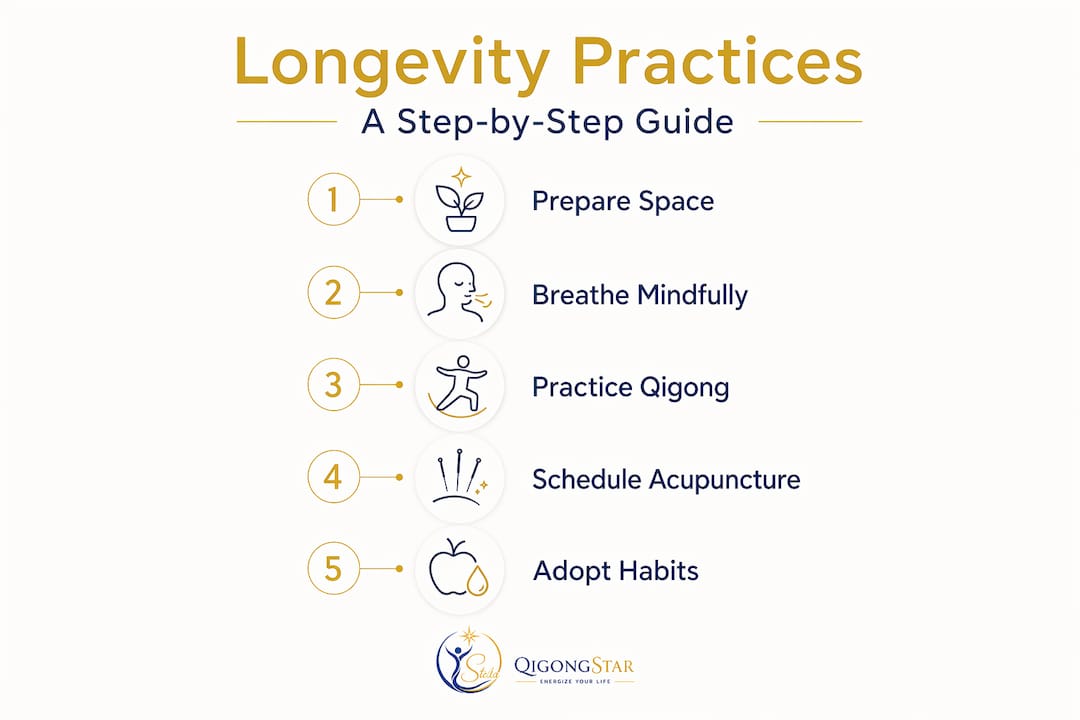
Qigong: Eight Pieces of Brocade and Baduanjin
The Eight Pieces of Brocade (also called Baduanjin) is one of the oldest and most studied qigong forms in existence. It consists of eight gentle standing movements, each targeting specific organ systems and energy pathways. Here is how to approach it as a beginner:
- Stand with feet shoulder-width apart. Soften your knees slightly. Let your arms hang naturally. Take three slow, deep breaths before you begin.
- Movement one: Two hands hold up the heavens. Interlace your fingers, inhale, and lift your hands overhead with palms facing up. Exhale and lower. Repeat eight times. This movement gently stretches the triple warmer meridian and supports digestive qi.
- Movement two: Drawing the bow. Step wide, sink into a horse stance, and mimic drawing a bow to each side. This opens the chest and lungs, supporting breath capacity and emotional release.
- Continue through all eight movements at a pace that feels meditative, not rushed. Each movement should feel like you are breathing the motion, not forcing it.
- Close with stillness. Stand quietly for one to two minutes. Notice where you feel warmth, tingling, or ease. This is your qi settling.
The Baduanjin form of qigong significantly improves sleep quality in older adults, making it one of the most research-supported ancient health rituals available today.
Acupuncture: professional support for stress and longevity
Acupuncture is not a DIY practice, but understanding its role helps you use it wisely. Fine needles are placed at specific meridian points to regulate qi flow, calm the nervous system, and reduce inflammation. Acupuncture shows high-certainty evidence for reducing PTSD symptoms and anxiety related to stress, which makes it a meaningful complement to your movement practice.
For longevity purposes, regular sessions every two to four weeks, focused on points that support adrenal recovery, digestion, and sleep, can meaningfully shift how your body handles daily stress.
Lifestyle habits rooted in TCM
The Five Animal Qigong practice draws on nature's rhythms, and so does TCM's approach to daily life. These habits are simple but easy to overlook:
- Eat warm, cooked foods in the morning to support digestive fire (what TCM calls spleen qi)
- Wind down by 10 p.m. to align with the gallbladder and liver meridian hours, when the body repairs most actively
- Practice mindful breathing for five minutes after meals to calm the vagus nerve and support digestion
- Adjust your foods and activity levels with the seasons, eating lighter and more cooling foods in summer, warming and nourishing foods in winter
Pro Tip: If you only add one habit this week, make it five minutes of slow abdominal breathing after dinner. It directly calms the stress response and supports gut motility, two of the most common complaints among adults managing chronic stress.
| Qigong form | Primary benefit | Best suited for |
|---|---|---|
| Baduanjin (Eight Pieces of Brocade) | Sleep, organ health, stress relief | Beginners, older adults |
| Five Animal Qigong | Vitality, emotional balance, flexibility | All levels |
| White Tiger Qigong | Deep fascia release, spinal health | Intermediate practitioners |
| Tai Chi | Balance, coordination, cardiovascular health | Older adults, injury recovery |
Monitoring progress and optimizing your longevity routine
Regular assessment and mindful adjustments will help you sustain and enhance your longevity journey. Tracking does not need to be complicated. In fact, the simpler your system, the more likely you are to use it.
What to track each week:
- Stress levels: Rate your average daily tension on a scale of one to ten. Notice whether the peaks are lower or the recovery is faster.
- Sleep quality: Track how quickly you fall asleep, whether you wake during the night, and how rested you feel in the morning.
- Digestive comfort: Note bloating, regularity, and any gut discomfort after meals.
- Energy and mood: A brief morning check-in, even just a single word in a journal, builds a clear picture over time.
Frequent Traditional Chinese Medicine use is associated with longer life expectancy and reduced mortality risk, but the real-world benefits most practitioners notice first are improved sleep, less reactive stress responses, and calmer digestion. These are the markers worth watching.
Common mistakes to avoid:
- Practicing too intensely in the first weeks, which can leave you sore or discouraged
- Skipping practice when you feel well and only returning when symptoms flare
- Comparing your progress to others rather than your own baseline
- Ignoring seasonal shifts in energy and pushing the same intensity year-round
For deeper support on building holistic wellness routines that address stress and digestion together, structured guidance makes a real difference.
Pro Tip: Review your tracking notes every four weeks, not every day. Daily fluctuations create noise. Monthly patterns reveal the actual trend.
"Longevity is not a destination you arrive at. It is a quality of attention you bring to each day. The practices are the path, and the path is the point."
A fresh perspective on ancient Chinese longevity practices
Here is something most longevity content will not tell you: the goal was never to live forever. Ancient Chinese health philosophy was never about adding decades to a number. It was about maintaining the quality of your energy, your clarity, and your capacity for joy as you age. That reframe changes everything about how you approach these practices.
Modern research confirms this more honestly than most wellness marketing does. Longevity benefits are best framed as risk-profile improvements rather than guaranteed lifespan extension. What that means practically: you are not promised extra years. You are building a body and nervous system that handles stress better, recovers faster, and ages with more grace.
The mechanism behind why longevity practices work is increasingly understood through stress physiology. Practices like qigong and breathwork regulate the HPA axis, which is the hormonal pathway your body uses to manage stress. When that axis is chronically overactivated, it accelerates cellular aging, disrupts digestion, and impairs sleep. Qigong techniques calm this system through slow movement and breath, training your body to return to a recovery state more readily.
What the TCM five elements framework adds to this understanding is a seasonal and emotional map. Grief weakens the lungs. Chronic worry depletes the spleen. Unresolved anger strains the liver. These are not metaphors. They are clinical observations refined over centuries that modern psychoneuroimmunology is now beginning to validate.
The uncomfortable truth is that most people want a longevity practice that takes ten minutes and delivers results in two weeks. Ancient Chinese medicine asks something different of you. It asks for consistency, patience, and the willingness to treat your daily habits as medicine. That is harder than a supplement routine. It is also far more effective.
Explore guided courses and expert support for your longevity journey
To fully embrace these longevity practices, consider expert-led guidance through specialized courses that support your personal health goals.
At QigongStar, our online qigong courses are designed to meet you exactly where you are, whether you are brand new to movement practices or ready to deepen an existing routine. Every course is rooted in authentic Chinese medicine principles and taught by certified instructors who bring both clinical knowledge and genuine warmth to their teaching.
What you gain when you join:
- Step-by-step video instruction you can follow at your own pace, from anywhere
- Expert guidance on breath, alignment, and form to keep your practice safe and effective
- Focused courses targeting stress relief, digestive wellness, and sleep support
- A supportive community of practitioners on the same path
The Five Animal Qigong course is a particularly powerful starting point, drawing on ancient health rituals to awaken your energy and restore balance across all five organ systems. Your longevity journey begins with a single, intentional step.
Frequently asked questions
What are the main benefits of qigong for longevity?
Qigong can significantly reduce stress and improve sleep quality by training the breath, movement, and mind to work together, which supports the body's natural repair and recovery processes over time.
How does acupuncture contribute to longevity practices?
Acupuncture regulates the nervous system and reduces stress hormones through targeted meridian stimulation. High-certainty evidence shows it meaningfully reduces anxiety and PTSD symptoms, both of which accelerate aging when left unmanaged.
Is there scientific evidence that traditional Chinese medicine extends life expectancy?
Frequent TCM use is linked to a 1.37-year longer life expectancy and reduced mortality risk, though researchers note this reflects improved health behaviors overall rather than a direct causal effect of any single treatment.
Can I practice longevity exercises if I have limited mobility?
Yes. Seated qigong forms like Baduanjin combined with gentle resistance training have been shown to improve sleep and psychological well-being in older adults with limited mobility, making these practices genuinely accessible at nearly every fitness level.