
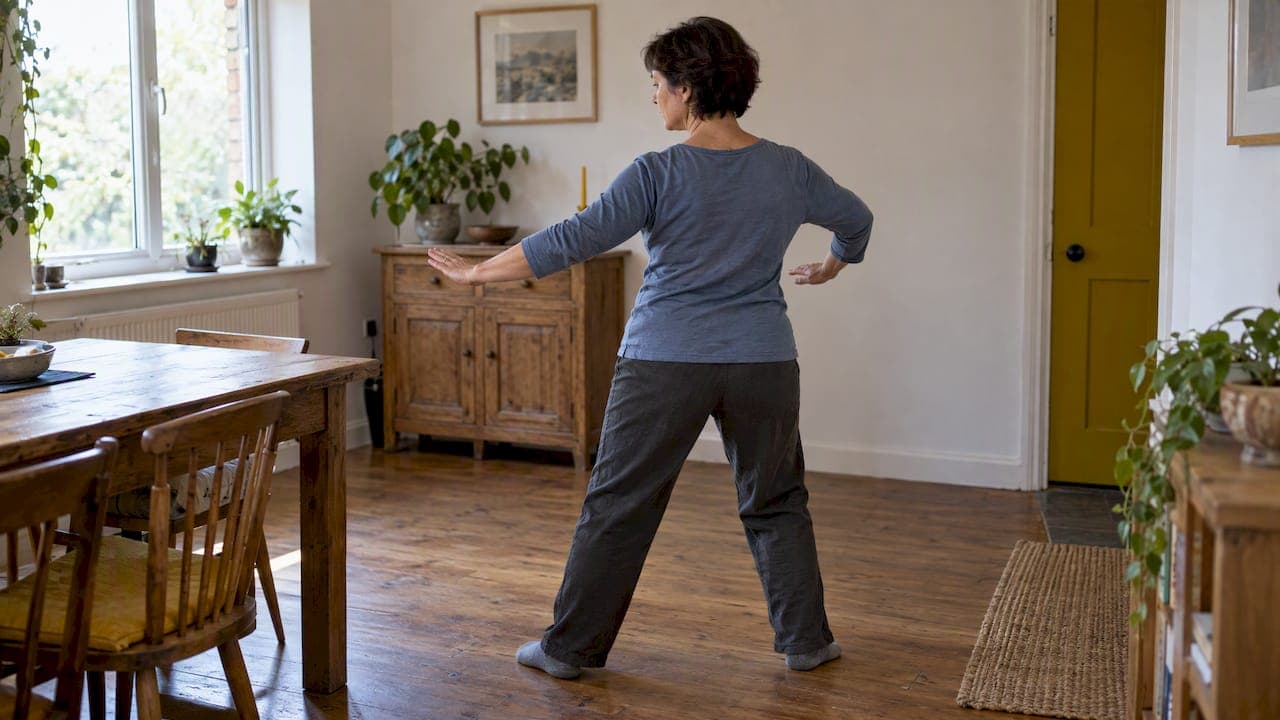
In this guide, "qigong for sciatica" refers to gentle qigong practice aimed at easing stress, calming digestion, and supporting overall wellness, not nerve or rehabilitation exercise. We believe qigong is a reasonable complementary practice for many adults when learned from certified instruction, and we teach guided, gut and stress focused qigong through paid courses.
TL;DR:
- Consistent practice over several weeks is necessary to see meaningful reductions in stress and anxiety levels, with effect sizes around -0.75 to -0.88.
- Short routines of 10 to 15 minutes, performed three to four times weekly, are effective for improving digestion, sleep, and mood over time.
- Qigong is safe for most adults but should be reviewed by a healthcare professional if experiencing severe or worsening symptoms or specific health conditions.
- Choosing a certified instructor and a course that includes breathing, relaxation, and gut-focused movements enhances safety and potential benefits.
- Qigong complements medical treatment by calming the nervous system, but it does not replace medication or therapy for ongoing health conditions.
Table of Contents
- What Qigong Helps: Stress, Gut-Brain Regulation, and Sleep
- What the Trials and Reviews Actually Show
- Who Should Check With a Clinician Before Starting
- How to Choose a Paid Qigong Course That Fits Your Goals
- A Six-Week Starter Plan for Stress and Digestive Wellness
- How Gentle Movement Calms an Overactive Nervous System
- Gentle Movements We Teach for Stress and Gut Health
- Where Qigong Fits Alongside Other Care
- How Often to Practice for Lasting Results
- Common Sticking Points and How to Work Around Them
- What Students Tell Us and What We Expect
- How Our Courses Meet These Goals
- FAQ
- Sources
What Qigong Helps: Stress, Gut-Brain Regulation, and Sleep
Qigong is a slow, breath-led movement practice, and what it helps most consistently is the body's stress response through relaxation techniques. When you calm that response, digestion and sleep often follow, because the gut and the nervous system are in constant conversation.
A systematic review of randomized trials found moderate reductions in anxiety and perceived stress among healthy adults who practiced qigong regularly over one to three months. That same body of evidence suggests benefits tend to emerge after several weeks of steady practice, not after a single session.
Here is what tends to shift as the nervous system settles:
- Stress and anxiety: pooled results from controlled trials point to a moderate calming effect over one to three months of practice.
- Digestive comfort: NHS guidance on IBS and mental health explains that the gut-brain axis links stress directly to symptom flares, and breathing or relaxation practice is part of self-management.
- Sleep and mood: calmer evenings and steadier mood are commonly reported alongside stress reduction, though individual results vary.
Qigong can meaningfully ease perceived stress, but pooled trial data shows the effect builds over weeks of consistent practice, not overnight. The honest takeaway is that qigong rewards patience and regularity more than intensity.
What the Trials and Reviews Actually Show
The research on qigong is encouraging but not uniform, and it is worth knowing both sides before you commit to a paid course.
The strongest signal comes from a systematic review and meta-analysis of randomized trials in healthy adults, which reported pooled effect sizes of roughly -0.75 for anxiety and -0.88 for stress, moderate to large reductions by conventional standards. A more recent 2024 systematic review reached a similar conclusion: qigong reduces perceived stress compared with no treatment, though the authors flagged that study quality and intervention styles varied enough to limit firm clinical recommendations.
On the digestive side, a randomized trial of functional relaxation for irritable bowel syndrome tested body-oriented relaxation, a close cousin of qigong's breath and movement approach, in 80 patients. It found improvements in bloating and overall impairment by the end of therapy, with some benefits maintained at follow-up.
A few limitations show up repeatedly across this evidence:
- Heterogeneous styles: "qigong" covers many distinct traditions and sequences, so results do not automatically transfer between schools.
- Small samples: many trials include only dozens of participants, which widens the margin of error.
- Short follow-up: most studies track outcomes for weeks to a few months, rarely longer.
| Study type | Population | Reported effect |
|---|---|---|
| Qigong meta-analysis | Healthy adults | Moderate to large reduction in stress and anxiety |
| 2024 qigong review | Mixed adult samples | Significant stress reduction vs. no treatment |
| Functional relaxation IBS trial | 80 IBS patients | Improved bloating and global impairment at end of therapy |
Who Should Check With a Clinician Before Starting
Qigong is generally gentle and low impact, which is part of why it suits beginners and people managing chronic stress or digestive discomfort. Occasional mild muscle soreness has been reported in trial participants, which is one more reason to learn form from a certified teacher rather than guessing from a video.
A few situations deserve medical review before you begin:
- New or worsening gut symptoms, such as rectal bleeding, unexplained weight loss, or persistent severe pain.
- Recent surgery, a diagnosed balance disorder, or a cardiovascular condition your doctor is actively managing.
- Pregnancy, where certain postures and breath-holds need adjustment.
Our contraindications guide walks through who should modify or pause practice, and certified instructors routinely offer seated sequences, shorter sessions, and real-time feedback for anyone easing in carefully.
Pro Tip: If a movement ever pulls at pain rather than releasing tension, stop and ask your instructor for a seated or slower variation instead of pushing through.
How to Choose a Paid Qigong Course That Fits Your Goals
Not every paid qigong course is built for stress relief and gut health, so it helps to know what to look for before you spend money on one.
- Confirm instructor certification. Look for named training lineages, such as White Tiger Qigong or Five Animal Qigong, rather than vague "certified" claims with no school attached.
- Decide between live and on-demand. Live small-group or one-to-one sessions give you correction and accountability, while on-demand suits a flexible schedule but asks more self-discipline.
- Check the curriculum content. A program built for stress and digestion should include breathing training, relaxation practice, and movement sequences aimed at the gut, not just generic stretching.
- Look for practice tracking and support. Courses that include a way to log sessions or ask questions tend to see better follow-through.
- Review business basics. A sample class, a clear refund policy, reasonable class sizes, and visible accreditation are all signs of a serious program.
Before paying, ask the provider directly: who trained you, what does a typical week of practice look like, and what happens if the pace feels wrong for your body.
A Six-Week Starter Plan for Stress and Digestive Wellness
You do not need a studio or special equipment to find out whether qigong suits you. A short, steady routine over six weeks is enough to notice whether your stress and digestion are shifting.
- Weeks 1 to 2: build the habit. Practice three to four times a week for 10 to 15 minutes, focusing on slow breath regulation and a standing relaxation posture.
- Weeks 3 to 4: add gut-focused movement. Keep the same frequency, now folding in one gentle twisting or abdominal movement drawn from a style such as Five Animal Qigong.
- Weeks 5 to 6: extend and reflect. Stretch sessions to the full 15 minutes, add one longer guided class each week, and start tracking how you feel.
A simple daily sequence looks like this: two minutes of slow nasal breathing, three minutes of standing relaxation, five minutes of one gut-focused movement, then a few minutes of closing stillness. Our beginner qigong sequence offers a ready-to-follow version of this structure, and our breathing guide covers the technique cues that make the early weeks feel less awkward.
Track two things as you go: a rough stress rating out of ten each evening, and a one-line note on digestion or sleep quality. A short food and mood diary, the kind NHS patient materials often recommend for IBS self-management, pairs naturally with this and helps you spot patterns over the six weeks.
Pro Tip: If you notice tension releasing but your mind still races, add thirty extra seconds of breath work before the movement sequence rather than skipping straight to it.
Scale up only once the current week feels easy, and bring questions to an instructor whenever a posture feels unclear rather than adjusting it on guesswork.

How Gentle Movement Calms an Overactive Nervous System
The physiological story behind qigong's calming effect centers on the autonomic nervous system, the part of the body that swings between alert and rest states. Slow, rhythmic breathing paired with deliberate movement nudges that balance toward the parasympathetic, or "rest and digest," side.
This matters directly for stress and gut symptoms, because the same nervous system pathways that tighten under pressure also regulate gut motility and sensitivity. The NHS explains the gut-brain axis in exactly these terms: when stress hormones rise, digestive symptoms often follow, and practices that calm the nervous system can ease that link.

Qigong's slow pace also encourages diaphragmatic breathing, which gently massages the abdominal organs with each inhale and exhale. That mechanical effect, combined with the nervous system shift, is one reason relaxation-based practices show up repeatedly in digestive health guidance rather than only in stress literature.
None of this amounts to a cure, and the evidence base describes calming and regulating effects, not elimination of symptoms. What the research supports is a practice that can shift the body toward a steadier baseline when done consistently, which is a modest but genuinely useful claim.
Gentle Movements We Teach for Stress and Gut Health
Two qigong traditions anchor the programs we teach, and each brings a slightly different flavor to stress and digestive support.
White Tiger Qigong emphasizes slow, grounded stances paired with long exhalations, a combination designed to settle a racing mind before it ever reaches the gut. Sessions typically open with standing posture work, move into spinal waves that gently mobilize the torso, and close with stillness practice.
Five Animal Qigong draws on five archetypal movement patterns, each associated with a different internal quality. The sequences most relevant to digestion involve gentle twisting and abdominal opening, movements that encourage the kind of diaphragmatic breathing described earlier.
A typical gut-focused sequence might include a slow waist rotation synchronized with the breath, a gentle forward fold that compresses and releases the abdomen, and a closing posture held in stillness for several breaths. The pace is unhurried throughout, and instructors commonly cue breath length before range of motion, since rushing the breath undercuts the calming effect these movements are meant to produce.
Where Qigong Fits Alongside Other Care
Qigong works best as a complement to care you are already receiving, not a replacement for it. If you are managing a diagnosed digestive condition or ongoing anxiety with a doctor or therapist, qigong sits comfortably alongside that plan rather than competing with it.
For stress and gut symptoms specifically, NHS and Trust guidance on IBS describes relaxation and movement as part of self-management alongside diet and, where needed, medication. The practice is additive: breathing and movement calm the nervous system response, while dietary adjustments or prescribed treatment address the underlying condition directly.
If you take medication for anxiety, sleep, or a gut condition, keep your care team informed that you are adding a movement practice, particularly if you notice meaningful changes in symptoms. Qigong's gentle pace rarely interferes with medical treatment, but any new practice is worth mentioning at your next appointment simply so your full picture stays accurate.
The practical approach we recommend is to treat qigong as one layer of a broader self-care routine: keep existing appointments and prescriptions in place, add a short daily practice, and let your clinician know how it fits alongside what they have already recommended.
How Often to Practice for Lasting Results
Consistency matters more than duration when it comes to qigong's effects on stress and digestion. The trial evidence behind qigong's calming effects generally involved sessions several times a week sustained over one to three months, not occasional long sessions.
A practical target for most adults is three to four short sessions a week, each 10 to 20 minutes, plus one longer guided class if your schedule allows it. This mirrors the structure of the six-week starter plan above and reflects how most research protocols were designed.
Shorter, frequent sessions tend to outperform occasional long ones, largely because the nervous system benefits from repeated, gentle cues rather than infrequent intense ones. If you can only manage two sessions some weeks, that is still worthwhile. The goal is steady contact with the practice, not perfection.
Common Sticking Points and How to Work Around Them
The biggest obstacle for most beginners is not the movements themselves but staying consistent long enough to notice a difference. A few practical fixes address most of what gets in the way.
- Inconsistent practice: short daily micro-sessions, even five minutes, build the habit faster than occasional long ones and are easier to sustain.
- Unclear form: learning from certified instruction rather than piecing together clips reduces confusion and the mild soreness that sometimes comes from poor alignment.
- Slow-feeling progress: since most trial evidence shows effects building over several weeks, tracking a simple stress or sleep score helps you notice gradual change you might otherwise miss.
- Limited time or mobility: seated or shortened sequences, covered in our modifications guidance, keep the practice accessible without losing its core benefit.
What Students Tell Us and What We Expect
Our teaching grows out of White Tiger Qigong training and a focus on programs built specifically for stress and digestive wellness, which shapes how we structure every class we lead. Students most often report calmer stress levels and steadier digestion within the first several weeks, though the pace of change varies from person to person, and that variability is normal rather than a sign something is wrong.
In learners working through our back pain focused program, we have tracked internal outcomes showing a 5.9 point reduction on the Oswestry Disability Index over 8 to 12 weeks. We share that as one internal data point from our own programs, not as a universal promise, since individual results depend on consistency and starting point.
— Stella
How Our Courses Meet These Goals
If you want structured, certified guidance rather than piecing together free videos, our online qigong classes are built around exactly the stress and digestive wellness focus covered in this guide.
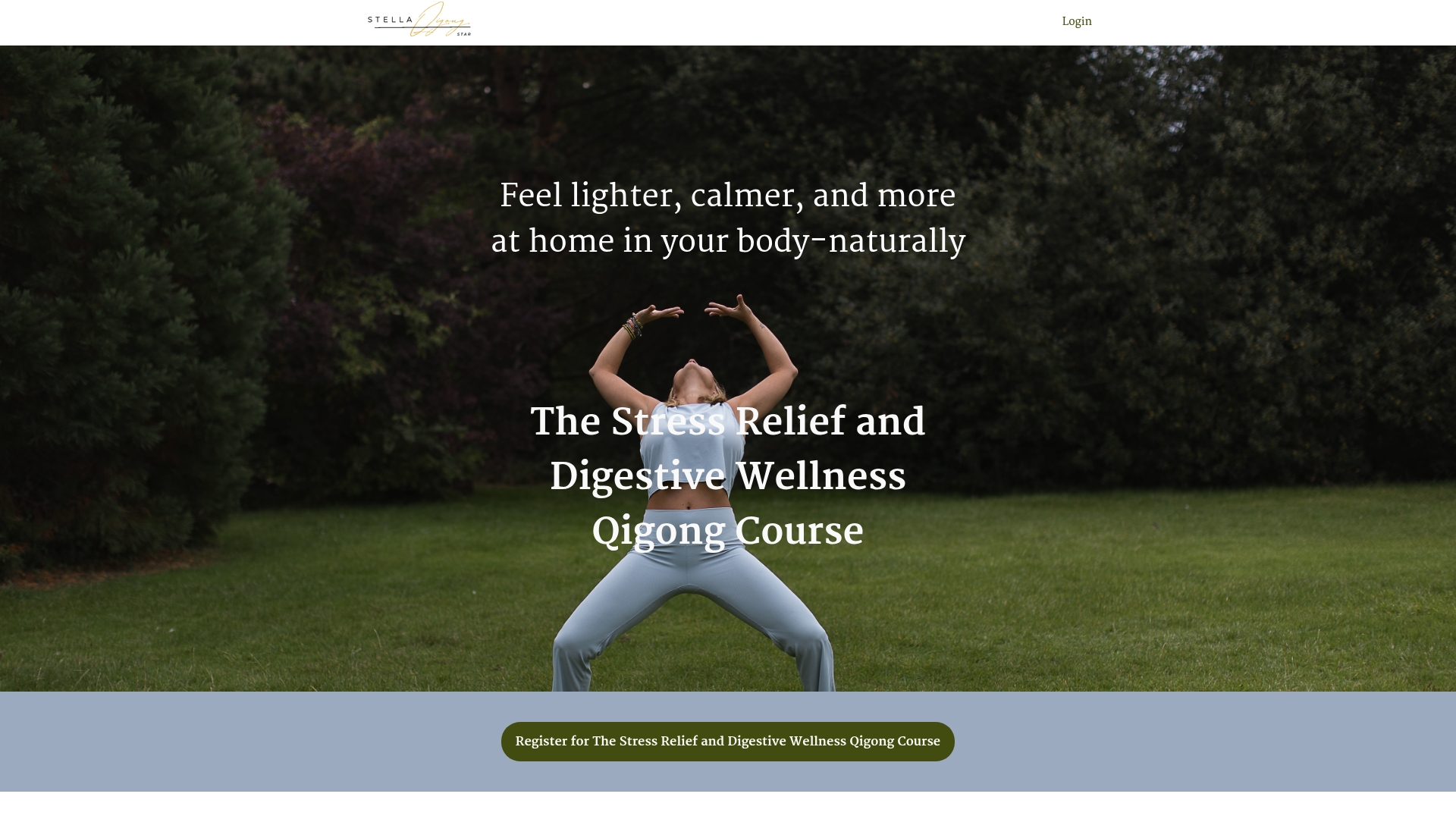
Our course called Qigong for Stress Relief and Digestive Wellness is a self-paced curriculum grounded in White Tiger and Five Animal Qigong. If you would rather talk through your goals first, a 30-Min Clarity Session provides a way to get personalized direction, while longer online or face-to-face sessions suit anyone wanting closer, live correction.
- Certified instruction matters most when you are learning breath-led movement for the first time, since small form errors are easy to miss on your own.
- On-demand courses suit a flexible schedule, while live sessions give real-time feedback on your pace and posture.
- Group classes are also available, with pricing on request through the same course page.
| Offer | Format | Price |
|---|---|---|
| Qigong for Stress Relief and Digestive Wellness | On-demand course | £116 one-off |
| 30-Min Clarity Session | Live, 1:1 | £85 one-off |
| Deep Dive Online Session | Live, 1:1 | £145 one-off |
| Face-to-Face Qigong | Live, in-person | £165 one-off |
Start with the online classes page to compare formats, or book a Clarity Session if you want guidance before committing to a full course.
This article is general information, not a substitute for advice from a qualified doctor. Consult a qualified healthcare professional about your own circumstances before acting on anything here.
FAQ
Can qigong help with stress and digestion at the same time?
Yes, qigong's slow breathing and gentle movement calm the nervous system, and because the gut and nervous system are closely linked, stress reduction often eases digestive symptoms too. Benefits tend to build gradually over several weeks of regular practice rather than appearing immediately.
How long before I notice results from qigong practice?
Most trial evidence on qigong and stress reduction covers programs lasting one to three months of consistent practice. A six-week starter routine is usually enough to tell whether the practice suits you, though lasting change tends to deepen with ongoing practice.
Is qigong safe if I have IBS or another digestive condition?
Qigong is generally gentle and considered safe for most adults, and NHS guidance lists relaxation and movement as reasonable parts of IBS self-management. New or worsening symptoms such as unexplained weight loss or severe pain should always be checked by a clinician first.
What should I look for in a paid qigong course?
Look for named instructor certification, a curriculum that includes breathing and relaxation training alongside movement, and a clear format choice between live and on-demand sessions. Our Qigong for Stress Relief and Digestive Wellness course is built around exactly these elements for £116 one-off.
Does qigong replace medication or therapy for anxiety or IBS?
No, qigong works best as a complement to existing medical care rather than a replacement for it. Keep any prescribed treatment or therapy in place and mention your qigong practice to your care team so your full picture stays accurate.
Sources
- Irritable bowel syndrome (IBS) and your mental health — NHS Inform
- Qigong exercise for reducing stress and anxiety: systematic review and meta-analysis — PMC
- Functional Relaxation as Complementary Therapy in Irritable Bowel Syndrome — Lahmann et al. 2010
- Qigong Therapy for Stress Management: A Systematic Review of Randomized Controlled Trials — MDPI (2024)