
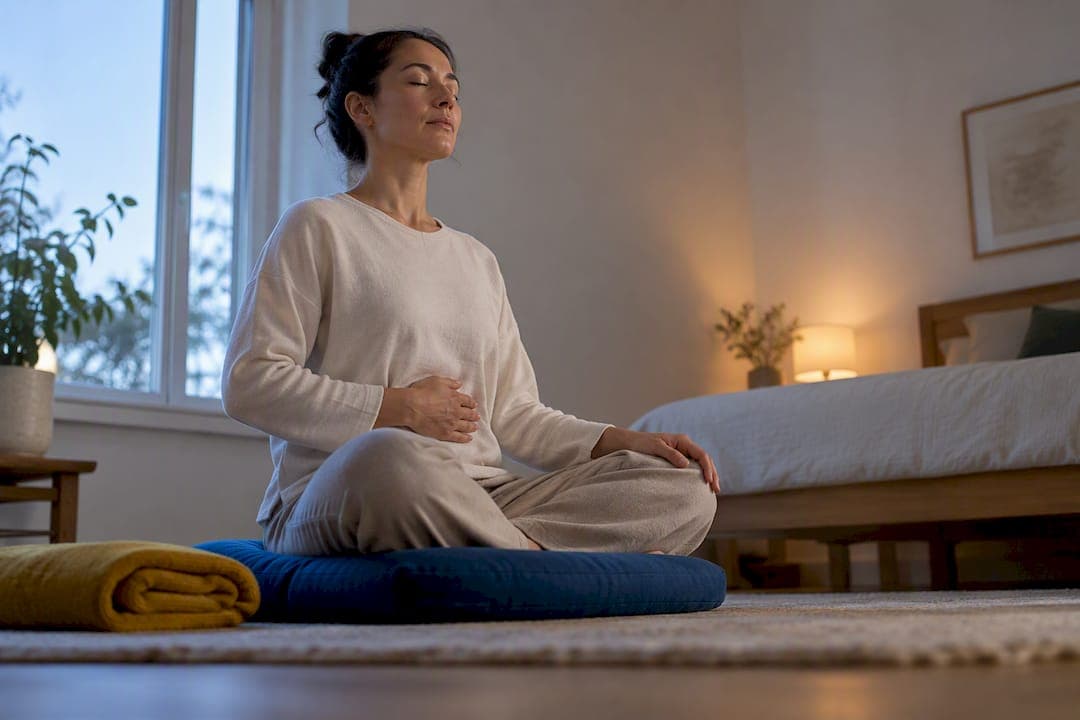
Slow diaphragmatic breathing, paired with gentle Neiguan (P6) acupressure and a short grounding movement, calms most nausea within a few minutes. Pause your practice, sit if you need to, and work through the routines below. If nausea is severe, persistent, or you're pregnant, skip ahead to the safety guidance before continuing. This plan reflects a common approach to moving through these moments safely taught by certified Qigong instructors.
TL;DR:
- Slow diaphragmatic breathing, combined with P6 acupressure and gentle movement, typically calms nausea within a few minutes, especially if time allows for the recovery routines.
- Applying firm circular pressure to the P6 point for one to two minutes on each wrist can provide rapid relief, and ginger water or keeping hydrated may enhance the effect.
- Severe, persistent nausea, or symptoms like chest pain, numbness, or vomiting require immediate medical attention instead of home remedies or Qigong practices.
- To prevent nausea, practice on an empty stomach or after a light snack, hydrate beforehand, and gradually increase session intensity for sensitive individuals.
- Guided instruction and pacing adjustments by certified Qigong instructors can help manage nausea triggers more effectively than DIY practice alone.
Table of Contents
- Qigong Exercises for Nausea Relief You Can Do Right Now
- How to Use Acupressure for Nausea During Qigong
- Why Does Qigong Sometimes Cause Nausea?
- When Should You Stop Practicing and Seek Help?
- How to Prevent Nausea Before Your Next Qigong Session
- A Practice Plan for Nausea-Prone Students
- An Instructor's View on the "Purging" Feeling
- Ease Into Qigong Practice With Guided Support
- Sources
- FAQ
Qigong Exercises for Nausea Relief You Can Do Right Now
You don't need to end your session when queasiness hits. These three routines move from fastest to most restorative, so pick based on how you feel and how much time you have.
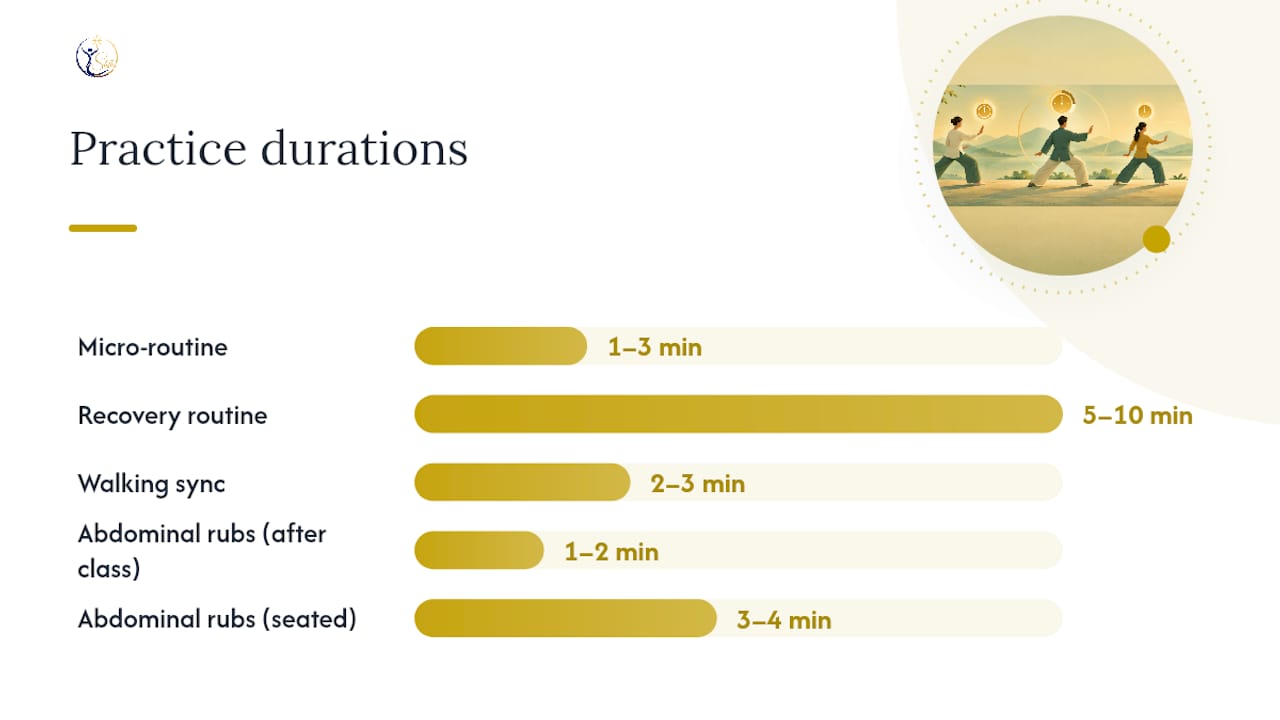
1. The 1 to 3 minute micro-routine (mid-session)
- Sit or stand with knees soft. Inhale through the nose for a count of four.
- Exhale slowly through pursed lips for a count of six, imagining a gentle wave rolling back out to sea. Repeat for three full cycles.
- Roll your seated spine forward and back in a slow, small arc, six times, keeping your chin soft.
- Place both palms flat on your lower abdomen and trace small clockwise circles for 30 seconds, letting your shoulders drop with each exhale.
2. The 5 to 10 minute recovery routine (after class)
- Lie down or sit reclined. Rub your palms together until warm, then place them on your belly and massage in slow clockwise circles for one to two minutes, a technique drawn from Prolong Life With Nine Turn (PLWNT) Qigong practice, which pairs abdominal massage with breathing methods meant to regulate gastrointestinal function.
- Stand and walk slowly around the room, syncing one step to each inhale and one step to each exhale, for two to three minutes.
- Finish with a gentle shoulder roll and neck release, four rotations each direction, to release any tension that built up during the wave of nausea.
3. Seated or bedside variation
If standing makes you dizzy, do the whole sequence from a chair or propped up in bed. Skip the walking step entirely and extend the abdominal rubs to three or four minutes instead. Stop any step that increases lightheadedness rather than easing it.
Pro Tip: Keep a small folded towel or cushion nearby during class. If nausea rises mid-posture, drop into a seated position immediately rather than finishing the movement. There's no benefit to pushing through a wave once it's already started.
How to Use Acupressure for Nausea During Qigong
Two points do most of the work here, and you can find both without any special training.
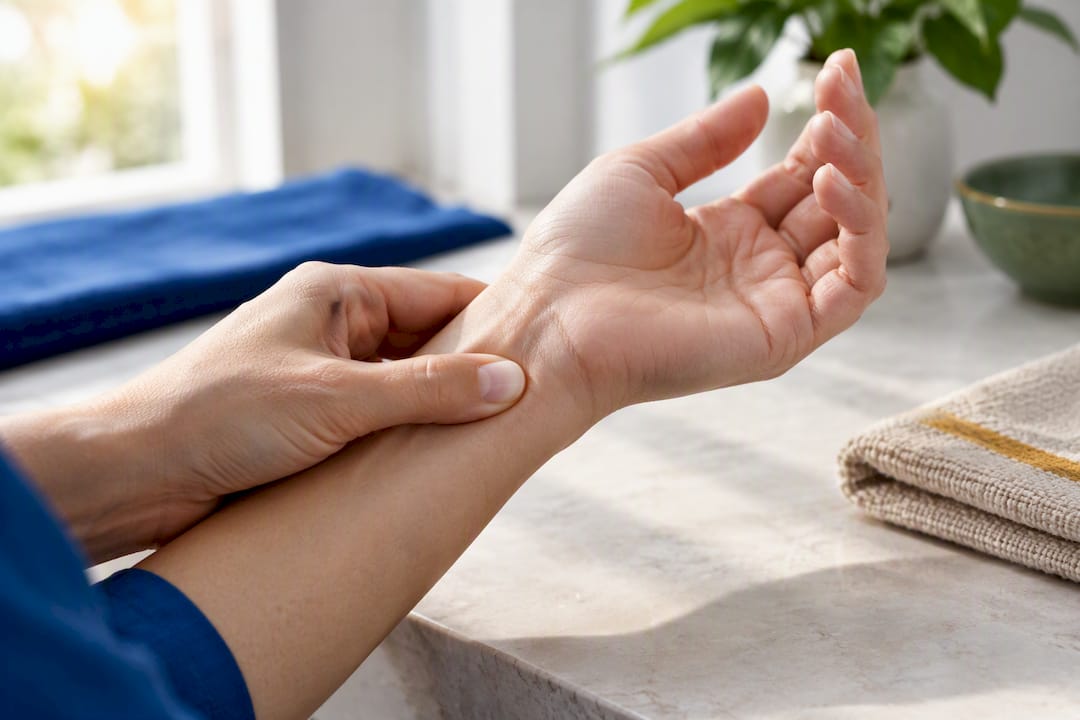
Neiguan (P6) sits about three finger-widths above the inner wrist crease, between the two visible tendons. Press firmly with your thumb in small circular motions for one to two minutes, switching wrists partway through. This is the same point most anti-nausea wristbands target with constant pressure, and it's worth trying before reaching for anything else.
The ankle "queasy" point, located a few finger-widths above the inner ankle bone along the shinbone, works well when your hands are occupied holding a posture or when wrist pressure feels uncomfortable. Press and hold for 60 to 90 seconds while breathing slowly.
A few additional measures round out your immediate toolkit:
- Wristbands that apply steady P6 pressure can be worn preemptively if you know certain movements tend to trigger queasiness.
- Warm ginger water, sipped slowly rather than gulped, often settles the stomach within minutes.
- Hydration matters more than most students realize. Mild dehydration alone can produce nausea that mimics a qigong-triggered reaction, and ginger in small doses is a commonly recommended complementary aid alongside acupressure.
Acupressure and ginger are reasonable adjuncts for occasional, mild queasiness. They are not a substitute for medical evaluation if nausea is severe, recurring across multiple sessions, or accompanied by vomiting, chest pain, or dizziness that doesn't resolve with rest.
Why Does Qigong Sometimes Cause Nausea?
Traditional Chinese Medicine describes nausea during practice as a sign of "rebellious stomach qi," energy that should move downward but temporarily reverses course as the body's internal balance shifts. Practitioners sometimes call this a "purge," a short-lived release as stagnant energy clears. It's an old framework, but it gives students a useful way to interpret a strange sensation without panic.
The physiological explanation runs alongside it rather than against it. A few mechanisms tend to overlap in practice:
- Deep diaphragmatic breathing increases vagal tone quickly, and a sudden shift in parasympathetic activity can produce a queasy, unsettled stomach feeling before it produces calm.
- Standing, bending, or turning postures can cause a mild drop in blood pressure, especially in beginners, leading to lightheaded nausea.
- Overstimulation from unfamiliar breath patterns can overwhelm a nervous system that isn't used to slowing down that fast.
Whichever explanation resonates with you, the practical response is the same: slow your pace, change posture, and give your body a moment to catch up.
When Should You Stop Practicing and Seek Help?
Most nausea during qigong is mild and passes within minutes. Certain signs mean you should stop immediately and treat the episode as more than routine discomfort.
- Stop right away if you feel faint, experience chest pain, notice numbness or slurred speech, or vomit more than once. These call for urgent medical attention, not a breathing exercise.
- Contact your doctor if nausea persists beyond 15 to 20 minutes of rest, recurs across multiple sessions, or you are pregnant and experiencing new or worsening symptoms, since pregnancy changes how your body tolerates certain postures and pressure points.
- Follow basic safe-practice rules every session: avoid forceful acupressure, stay hydrated beforehand, practice seated if you feel dizzy at all, and keep a short symptom log noting which postures or breath patterns tend to precede nausea.
How to Prevent Nausea Before Your Next Qigong Session
A little preparation goes a long way toward preventing the wave altogether.
- Drink water 30 to 60 minutes before practice, not immediately beforehand.
- Eat a small, bland snack if it's been more than three or four hours since your last meal. Practicing on a completely empty or very full stomach both raise your risk.
- Warm your abdomen with your palms for a minute before you begin, the same clockwise motion used in the recovery routine.
- Center your breath with three slow cycles before your first movement, rather than launching straight into the sequence.
- If you know certain postures affect you, pace your increases gradually across weeks rather than pushing intensity in one session.
Pro Tip: Avoid starting a new or more vigorous qigong routine during an active stomach bug, migraine, or right after starting a new medication. Your body is already managing enough; give it a week before adding a new practice on top.
For a more complete daily structure, Qigongstar's 5 to 10 minute digestion routine builds this preventive pacing into a repeatable habit.
A Practice Plan for Nausea-Prone Students
Students who deal with recurring nausea tend to do best with a short, consistent structure rather than sporadic long sessions. A simple weekly rhythm looks like this: five minutes of abdominal warming and centering breath, three to four times a week, building toward a full 10 minute PLWNT-style sequence once your body adapts.
Certified instructors from traditional Qigong schools often emphasize a slower pace than feels necessary at first when teaching this pacing. Related reading that expands on this approach includes the gentle bloating relief routines, the inflammation-focused practices, and a targeted gut micro-practice for students managing broader digestive sensitivity.
- Guided sessions catch posture and pacing errors that DIY practice often misses.
- A live instructor can adjust breath timing in real time if nausea starts to build.
- Booking a session gives you a personalized baseline instead of guessing from general routines.
An Instructor's View on the "Purging" Feeling
Mild, brief queasiness is normal as your body recalibrates. Forcing through it is not. Log what you feel, then progress gradually with guidance.
— Stella
Ease Into Qigong Practice With Guided Support
If you've been managing nausea through trial and error, guided instruction removes most of the guesswork around pacing, posture, and breath timing. Qigongstar's Qigong for Stress Relief and Digestive Wellness course was built around exactly this kind of gut sensitivity, with breath and movement sequences designed to work with your nervous system rather than push past it.
For a focused check-in, short and longer Qigong sessions with certified instructors offer opportunities to explore specific triggers and posture adjustments. Group Qigong classes may also be available. Guided instruction catches the small posture or breathing missteps that often go unnoticed in solo practice, which matters most for students prone to queasiness. Visit the online classes page to see current availability and book a session that fits your schedule.
FAQ
What Pressure Point Relieves Nausea?
Neiguan (P6), located three finger-widths above the inner wrist crease between the two tendons, is the most widely used point. Firm circular pressure for one to two minutes on each wrist is the same location targeted by anti-nausea wristbands.
Can Qigong Help With Stomach Problems?
Yes. PLWNT-style Qigong combines abdominal massage with diaphragmatic breathing methods studied for regulating gastrointestinal function, and Qigongstar's Qigong for Stress Relief and Digestive Wellness course applies this framework to everyday digestive complaints, including nausea.
What Relieves Nausea Immediately?
Slow exhale-led breathing for three to six cycles, followed by one to two minutes of clockwise abdominal rubbing and P6 acupressure, tends to bring quick relief. Sit down first if you feel unsteady, and stop any step that makes dizziness worse.
What Are Some Chinese Remedies for Nausea?
Traditional Chinese Medicine uses acupressure at Neiguan (P6) and an ankle point to redirect what's described as "rebellious stomach qi." Warm ginger tea and abdominal massage are also common complementary measures used alongside these pressure points.