

A 3-move qigong mini-routine can ease mild bloating in 3–5 minutes: abdominal belly breathing, a gentle clockwise abdominal massage stroke, and a soft standing rock-and-twist. You can do all three right now, in whatever clothes you're wearing, without any equipment.
Here's how:
-
Abdominal belly breathing (90 seconds). Stand or sit comfortably with your spine long. Place both hands on your lower belly. Inhale slowly through your nose for 4 counts, letting your belly expand outward. Exhale through your mouth for 6 counts, gently contracting the lower abdomen. Repeat several times. As belly breathing instruction from Qigong Meditation notes, contracting the lower abdomen on the exhale encourages a fuller breath and calms the nervous system.
-
Clockwise abdominal massage stroke (60–90 seconds). Keep both hands on your belly. Using light, circular pressure, trace slow clockwise circles starting at your lower right abdomen, moving up toward the ribs, across, and down the left side. This follows the natural direction of the large intestine. Do 6–8 slow circles, breathing steadily throughout.
-
Standing rock-and-gentle twist (60–90 seconds). Stand with feet hip-width apart, knees soft. Inhale and gently rock your weight forward onto the balls of your feet. Exhale and rock back onto your heels while letting your arms swing softly across your torso in a gentle twist. Repeat multiple times, keeping the movement fluid and unhurried.
Safety note: This routine is appropriate for mild, everyday bloating. Stop immediately and seek medical care if you experience severe abdominal pain, fever, repeated vomiting, or blood in your stool. The NIDDK's digestive disease guidance is a reliable starting point for understanding when digestive symptoms need professional evaluation.
Key Takeaways
Consistent, gentle qigong practice combining abdominal breathing, meridian-stretching movement, and soft abdominal massage can meaningfully support digestive comfort and reduce bloating over time.
| Point | Details |
|---|---|
| Start with the 3-move mini-routine | Belly breathing, clockwise abdominal massage, and a standing rock-and-twist can ease mild bloating in 3–5 minutes. |
| Follow the 15-minute full routine | Time-blocked sequences from White Tiger and Five Animal Qigong give your digestive system a thorough, gentle reset. |
| Practice daily for best results | Short daily sessions outperform occasional long ones; expect noticeable comfort changes within 1–4 weeks. |
| Know the red flags | Stop and seek medical care for severe pain, fever, vomiting, or blood in stool before continuing any practice. |
| Qigongstar offers guided structure | Stella Qigongstar's online courses include video instruction, IBS modifications, and live class options for supported learning. |
Table of Contents
- What does a full qigong routine for bloating look like?
- Quick on-the-go sequences for immediate bloating relief
- How does qigong actually help with digestion?
- When should you practice, and how long before you feel better?
- How to adapt qigong if you have IBS, cramps, or abdominal sensitivity
- When should you stop and see a doctor?
- What does the research say, and who is teaching this?
- A note from Stella on practicing qigong for digestion
- Guided qigong courses for digestive wellness
- Sources
What does a full qigong routine for bloating look like?
When you have 15 minutes, this complete sequence from Stella Qigongstar's White Tiger Qigong and Five Animal Qigong lineage gives your digestive system a thorough, gentle reset. Follow the time blocks below, and read each cue before you begin so the practice flows without interruption.
0:00–2:30 — Warm-Up: Settle and Breathe
- Stand with feet shoulder-width apart, arms relaxed at your sides. Close your eyes and take three natural breaths to arrive.
- Begin abdominal breathing: inhale for 4 counts (belly expands), exhale for 6 counts (belly softly contracts). Do 6 rounds.
- Gently roll your shoulders back three times, then forward three times. Let your jaw unclench.
Modification: If standing is uncomfortable, sit in a chair with your feet flat on the floor throughout this warm-up.
2:30–5:00 — Spleen and Stomach Meridian Awakening
- Raise both arms overhead on a slow inhale, palms facing up, as if lifting a gentle weight. Feel the stretch along the sides of your torso.
- Exhale and lower your arms in a wide arc, palms pressing gently downward. Imagine releasing stagnant energy downward and out.
- Repeat several times, coordinating each arm rise with the inhale and each descent with the exhale.
Cue: Keep your shoulders soft. The movement is slow and intentional, not a stretch contest.
5:00–8:00 — Bear Walk from Five Animal Qigong
The Bear is the Five Animal Qigong form most associated with digestive health. Its slow, grounded sway gently massages the abdominal organs with each step.
- Shift your weight onto your right foot and let your right shoulder drop slightly, as a bear lumbers. Step forward with your left foot, shifting weight, and let the left shoulder drop.
- Walk slowly in place or across the room for a few minutes. Let your arms hang heavy and swing naturally with each weight shift.
- Breathe naturally, but aim for a slightly longer exhale than inhale.
Modification: If balance is a concern, hold a chair back lightly with one hand and sway in place rather than walking.
8:00–11:00 — Abdominal Massage Circles with Breath
- Stand or sit. Place your right palm over your navel, left hand on top.
- Inhale for 4 counts. On the exhale, trace a slow clockwise circle with your palms, applying gentle pressure. Complete one full circle per breath cycle.
- After 6 circles, reverse direction (counterclockwise) for 4 circles to balance the movement.
Cue: Pressure should feel like a warm, reassuring touch, never forceful. If any area feels tender, lighten your touch or skip that quadrant.
11:00–13:00 — White Tiger Spinal Wave
White Tiger Qigong uses spinal undulation to release tension held in the torso and stimulate the organs along the spine's meridian pathways.
- Stand with feet hip-width apart, knees slightly bent. Place hands on thighs.
- Inhale and gently arch your lower back, letting your chest open forward.
- Exhale and round your spine, tucking your tailbone and drawing your navel inward.
- Flow between these two positions several times, like a slow, gentle wave moving through your spine.
13:00–15:00 — Closing: Ground and Rest
- Return to still standing. Place both hands over your lower belly (your body's energy center, called the lower dantian in TCM).
- Take 5 slow, deep belly breaths. With each exhale, feel your body settle and soften.
- Gently rub your palms together to create warmth, then place them over your eyes for one breath. Lower your hands and open your eyes slowly.
General practice notes:
- Wear loose, comfortable clothing and practice on a non-slip surface.
- A quiet room with good ventilation supports the calming effect of the practice.
- Follow a guided video when first learning these movements. Stella Qigongstar's online qigong classes include step-by-step video instruction with verbal cues for each move.
Quick on-the-go sequences for immediate bloating relief
You don't need a yoga mat or a quiet room to get relief. These short sequences take 3–5 minutes each and work at your desk, after lunch, or during a travel layover.
-
Seated belly breathing with internal massage (3 minutes). Sit upright in your chair, feet flat on the floor. Do 4 counts in, 6 counts out for 5 breath cycles. Then place one palm on your belly and trace slow clockwise circles for 2 minutes. This combination of diaphragmatic breathing and gentle visceral massage is one of the most accessible ways to ease trapped gas without changing your environment.
-
Standing pebble-in-pond taps (3–4 minutes). Stand with feet hip-width apart. Make soft fists and gently tap around your abdomen in expanding circles, starting at the navel and moving outward, like ripples from a pebble dropped in still water. Tap lightly, breathe naturally, and keep your knees soft. 2–3 minutes of this wakes up circulation in the abdominal wall.
-
Shift-and-breathe walk (4–5 minutes). Walk slowly, exaggerating the natural side-to-side weight shift with each step. On each step, exhale fully. This mimics the Bear Walk from Five Animal Qigong and gently mobilizes the digestive tract through movement and breath coordination. A hallway or even a short loop around your office works perfectly.
-
Chair spinal wave (3 minutes). Sit at the edge of your chair. On an inhale, arch your lower back and open your chest. On an exhale, round your spine and draw your navel in. Repeat several times. This is the seated version of the White Tiger spinal wave and takes less than 3 minutes.
-
Wrist-shake and arm swing (3 minutes). Stand and shake your wrists loosely, letting the movement travel up your arms. Then swing both arms gently across your torso in a soft twist, letting them wrap around your waist. Breathe naturally. This releases tension in the upper body and encourages the diaphragm to relax, which can reduce the tight, pressured feeling that often accompanies bloating.
Pro Tip: To adapt any of these discreetly at a desk, keep the movements small and internal. The belly breathing and seated spinal wave are nearly invisible to anyone nearby. Even 3 minutes of slow, conscious abdominal breathing during a meeting break can shift your nervous system toward the calm state your digestion needs.
How does qigong actually help with digestion?
Qigong can plausibly ease bloating by improving diaphragmatic breathing, stimulating visceral circulation, and reducing the body's sympathetic stress response. That's the short answer. Here's what's behind it.
The physiological side. When you're stressed or anxious, your body prioritizes the sympathetic nervous system, which slows digestion. Slow, rhythmic abdominal breathing activates the parasympathetic nervous system, sometimes called the "rest and digest" state, which restores normal gut motility. The diaphragm's movement during deep belly breathing also acts as a gentle pump on the abdominal organs, encouraging blood flow and lymphatic circulation. Harvard Health's review of tai chi and related mind-body practices notes that gentle movement of this kind reduces stress and supports balance and physical function, effects that carry over to digestive health.
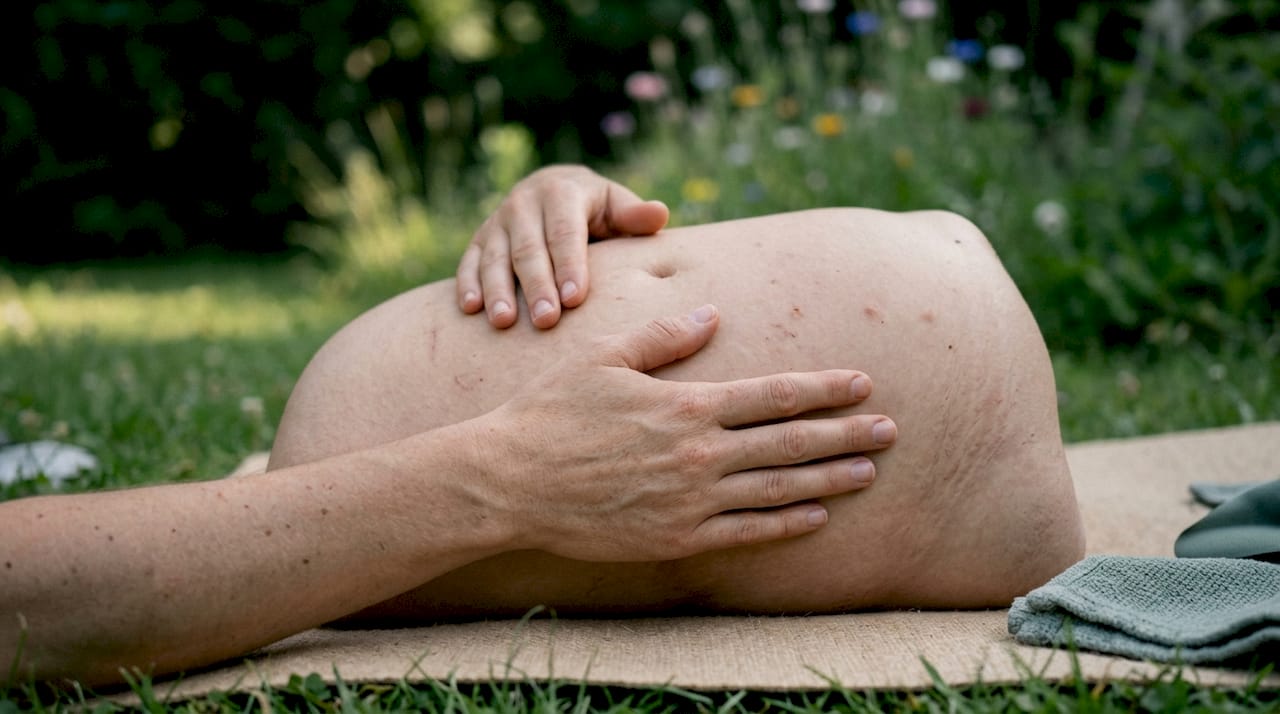
The gentle abdominal massage movements in qigong routines add another layer. Circular pressure on the abdomen can help move trapped gas along the digestive tract and encourage peristalsis, the wave-like muscle contractions that push food through the gut.
The TCM framing. Traditional Chinese Medicine views bloating as stagnant Qi in the stomach and spleen meridians. These two meridians run through the abdomen and are considered central to digestive transformation and transport. Qigong movements that stretch the sides of the torso, gently compress and release the belly, and coordinate breath with movement are specifically designed to move Qi through these pathways and restore smooth flow. The TCM approach to digestive healing frames this as clearing the root cause of sluggish digestion, not just managing symptoms.
Both frameworks point toward the same practical truth: slow, mindful movement paired with conscious breathing creates conditions in which your digestive system can work more freely.
- Diaphragmatic breathing increases intra-abdominal pressure rhythmically, massaging the gut from the inside.
- Gentle twisting and spinal movement stimulates the vagus nerve, which regulates gut-brain communication.
- Reduced cortisol from relaxation practice supports healthier gut microbiome conditions over time.
- Meridian-stretching movements in Five Animal Qigong and White Tiger Qigong target the stomach and spleen pathways directly.
The evidence is promising but still developing. A 2010 review in the Natural Medicine Journal found supportive but limited clinical research on qigong and called for more high-quality trials. Treat qigong as a well-reasoned complement to medical care, not a replacement for it.
When should you practice, and how long before you feel better?
Timing relative to meals. Practice the full 15-minute routine at least 20–30 minutes after a light meal, or before eating if your stomach is empty. Vigorous abdominal movement immediately after a large meal can cause discomfort. The short on-the-go sequences (belly breathing, seated spinal wave) are gentle enough to use right after eating without issue.
Recommended frequency. Daily practice produces the most consistent results. If daily feels like too much at first, two or three sessions per week still builds the habit and gives your nervous system regular exposure to the parasympathetic state. Short sessions done consistently outperform long sessions done occasionally.
A realistic timeline:
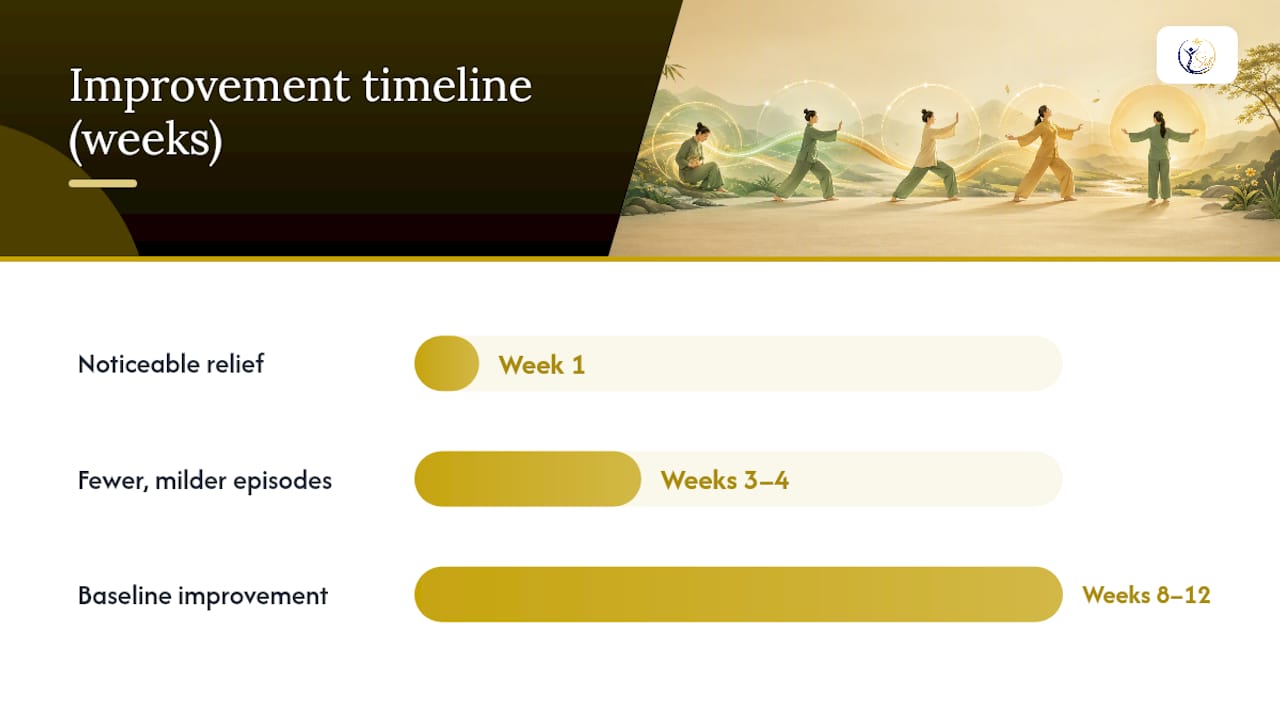
- Week 1. Most people notice a reduction in post-meal tightness and a calmer belly within the first few sessions. The breathing alone shifts your nervous system state quickly.
- Weeks 3–4. With daily practice, bloating episodes tend to become less frequent and less intense. Sleep quality often improves as a side effect of the relaxation practice.
- Weeks 8–12. Consistent practitioners often report a meaningful change in their baseline digestive comfort. The gut health and movement guide from Qigongstar's blog explores this longer arc in detail.
Practical tracking. Keep a simple symptom log: note your bloating level (1–10) before and after each session, what you ate, and how long you practiced. After two weeks, patterns become visible. If a particular movement consistently triggers discomfort, reduce its range or swap it for the gentler alternative in the IBS modifications section below.
- Practice in a quiet, well-ventilated space when possible.
- Wear loose clothing that doesn't compress your abdomen.
- Morning practice before breakfast is ideal for setting a calm digestive tone for the day.
- Evening practice before bed can ease overnight bloating and support restful sleep.
How to adapt qigong if you have IBS, cramps, or abdominal sensitivity
Yes, qigong can be adapted for IBS and heightened abdominal sensitivity. The key is a gentler range of motion, slower breath, and a consistent priority on relaxation over intensity. For readers dealing with IBS, the qigong for IBS guide on Qigongstar's blog goes deeper into movement selection.
| Standard Move | Gentler Alternative | Key Cue |
|---|---|---|
| Full clockwise abdominal massage | Feather-light fingertip circles, no pressure | Stop if any quadrant feels tender |
| Bear Walk (full weight shift) | Gentle side-to-side sway in place, one hand on chair | Keep movement small and slow |
| White Tiger spinal wave (full arch) | Micro-wave: only 10–15% of full range | Focus on breath, not movement size |
| Standing rock-and-twist | Seated gentle torso rotation, arms resting in lap | Exhale fully on each rotation |
| Abdominal tapping | Slow, flat-palm patting only | Avoid tapping directly over tender spots |
Breath choice matters especially for IBS. Longer exhales (6–8 counts) compared to shorter inhales (3–4 counts) activate the parasympathetic nervous system more strongly, which tends to calm gut spasms. Avoid breath-holding or forceful exhales, which can increase intra-abdominal pressure and trigger cramping.
Signs to reduce intensity: If you feel a sharp cramp, increased bloating, or nausea during practice, stop the movement and return to simple belly breathing for 2–3 minutes. Often the breath alone resolves the discomfort. If symptoms persist or worsen, stop the session entirely and rest.
Pro Tip: During a cramping episode, lie on your back with knees bent and feet flat. Place both hands on your lower belly and breathe slowly: 4 counts in, 6 counts out. This position reduces abdominal tension and lets the breath do the work without any movement pressure on the gut. Most mild cramps ease within 5–8 breath cycles.
When should you stop and see a doctor?
Qigong is a gentle practice, but some digestive symptoms need medical evaluation before you begin or continue any movement routine. Stop practice and seek care promptly if you experience any of the following:
- Severe or worsening abdominal pain that doesn't ease with rest
- Fever alongside digestive symptoms
- Repeated vomiting or inability to keep fluids down
- Blood in your stool or black, tarry stools
- Unexplained significant weight loss
- Symptoms that are new, sudden, or feel different from your usual pattern
The NIDDK's digestive disease information is a reliable and authoritative resource for understanding when digestive symptoms warrant professional evaluation. Digestive diseases are among the most common health concerns in the United States, and many conditions that cause bloating, such as celiac disease, inflammatory bowel disease, or structural issues, require diagnosis and treatment that qigong alone cannot provide.
Contraindications to discuss with your doctor first:
- Recent abdominal surgery (wait for medical clearance before any abdominal movement practice)
- Pregnancy with complications (gentle breathing is generally safe, but get clearance for any abdominal pressure or twisting)
- Unstable cardiac conditions (the breath-holding variations in advanced qigong are not appropriate; stick to natural, relaxed breathing only)
- Active hernia (avoid any movement that increases intra-abdominal pressure)
Qigong is a complement to medical care, not a substitute. Use it alongside your healthcare provider's guidance, not instead of it.
What does the research say, and who is teaching this?
The honest framing: qigong for digestion is supported by plausible mechanisms, a coherent theoretical framework, and a growing body of practice-based evidence. It is not yet supported by large-scale randomized controlled trials specifically targeting bloating. That gap doesn't make it ineffective. It means you should approach it as a well-reasoned, low-risk complement to medical care, not a proven cure.
Key sources used in this article:
- NIDDK Digestive Disease Statistics: authoritative U.S. data on digestive disease prevalence and red-flag guidance.
- Harvard Health on tai chi and mind-body movement: evidence summary for stress reduction and functional health benefits.
- Qigong Meditation belly breathing instruction: practical breathing cues used throughout the routines.
- Alternative Health Care Concepts on qigong for digestion: clinic-oriented rationale for qigong's digestive support mechanisms.
About Stella Qigongstar. The routines in this article draw from Stella Qigongstar's teaching lineage, which includes White Tiger Qigong and Five Animal Qigong, both rooted in Chinese medicine principles. Stella's instruction is certified through the White Tiger Qigong School and Yoga Alliance, reflecting a commitment to both traditional authenticity and professional teaching standards.
A note from Stella on practicing qigong for digestion
The most common mistake I see is trying to do too much too soon. Your digestive system responds to gentleness. When you approach these movements with patience and a soft touch, you give your body permission to release the tension it's been holding. Start with the 3-move mini-routine every day for one week before adding the full 15-minute practice. That small commitment builds the foundation everything else rests on.
If you want more structure and step-by-step guidance, Qigongstar's courses offer exactly that: video-led routines, modifications for sensitive digestive systems, and the kind of consistent, supported practice that makes a real difference over time. You can find the full course offerings at Qigongstar's blog and class hub.
Guided qigong courses for digestive wellness
If you've tried the routines above and want a structured program to follow, Qigongstar's online courses and classes offer digestion-focused qigong with the depth and support that a written article can't fully provide.
Qigongstar's digestive wellness courses give you a complete, progressive path rather than isolated exercises. Here's what's included:
- Step-by-step video instruction with clear verbal cues for every movement, so you never have to guess whether your form is right.
- IBS and sensitivity modifications built into every routine, not added as an afterthought.
- Live and on-demand options so you can practice on your schedule, whether that's a morning session before work or a quiet evening wind-down.
The courses draw from White Tiger Qigong and Five Animal Qigong lineages, taught by Stella Qigongstar, certified through the White Tiger Qigong School and Yoga Alliance. Whether you're new to qigong or returning after a break, the self-paced format lets you move at a pace that feels right for your body. Browse the digestive wellness class options and choose the program that fits where you are right now.
Sources
- NIDDK - Digestive Disease Statistics for Health Professionals
- Harvard Health - The health benefits of tai chi
- Belly Breathing – Qigong Meditation
- Gentle Qigong for Daily Digestive Support - Alternative Health Care Concepts