
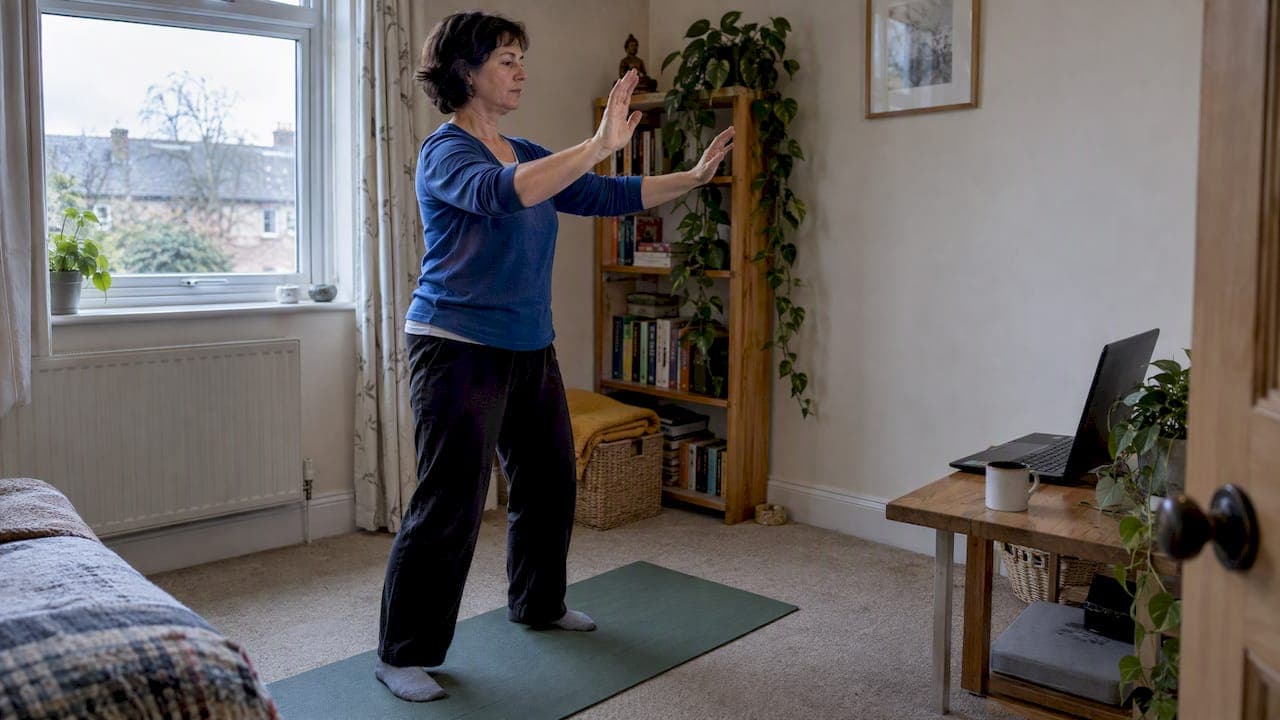
Live online qigong classes can gently ease stress and anxiety, support better sleep, and improve balance, mobility, and breathing when you practice regularly. Because the class is live, your teacher can still see you, correct your form, and hold you accountable in ways that recordings cannot. Evidence is growing but not yet definitive, so qigong works best alongside, not instead of, medical care.
TL;DR:
- Practicing qigong two to three times weekly for 30 to 60 minutes, combining live classes with brief replay sessions, yields the best sustained health benefits.
- Instructors observing practice in real time can correct form and pacing, which enhances safety and optimizes the calming and physical effects of the practice.
- Benefits such as improved sleep, balance, and mood are more likely to develop with consistent practice over several weeks than from isolated sessions.
- Qigong is generally safe but requires medical clearance if recent surgery or significant health issues are present, and practitioners should stop if experiencing pain or dizziness.
- Selecting a certified instructor with clear safety protocols and a manageable schedule increases the chances of building a sustainable and effective practice routine.
Table of Contents
- 1. Key benefits of live online qigong practice
- 2. How live classes deliver these benefits
- 3. What the research says about qigong's effectiveness
- 4. What a live online qigong class actually looks like
- 5. Safety, contraindications, and when to check with a doctor
- 6. How to choose a live online qigong class or teacher
- 7. Why live sessions work so well for stress and digestive wellness
- 8. Try a live qigong class built for stress and gut health
- FAQ
- Sources
1. Key benefits of live online qigong practice
Qigong blends slow movement, breath regulation, and focused attention, and each piece contributes something different to your wellbeing. When you join a live class, you get the full combination in real time, which is part of why the effects tend to build over weeks rather than appearing after one session.
Stress and anxiety relief is the benefit most people notice first. Slow, rhythmic breathing calms the nervous system and encourages a shift toward rest-and-digest mode rather than fight-or-flight, a mechanism explored in more depth in our guide to how qigong calms the nervous system. Paying close attention to breath and movement also trains your attention away from racing thoughts, which is often what makes a class feel like a reset rather than just exercise.
Sleep tends to improve alongside that calming effect. The Cleveland Clinic notes that small studies suggest qigong can lower stress and support sleep quality, immune function, and balance, with even short daily practice offering benefit. The NCCIH reports similar findings for people with fibromyalgia, where qigong practice was linked to improvements in pain, sleep, and physical and mental function, though the research base is still considered limited.
Physical gains show up too, especially with consistent practice:
- Balance and fall risk often improve as posture, gait, and proprioception strengthen over time.
- Pain and functional limitations, particularly in fibromyalgia and chronic pain, can ease with regular sessions.
- Respiratory function and exercise tolerance can benefit people with COPD when qigong supports standard pulmonary care, according to a PubMed review of qigong and pulmonary rehabilitation.
- Mood and overall quality of life tend to rise across many of the populations studied, from older adults to people managing chronic illness.
The dose matters. The NCCIH found that daily or near-daily 30 to 40 minute sessions produced more sustained improvements in fibromyalgia trials than occasional practice, a pattern echoed across several other dose-response studies.
None of this means qigong is a cure. It means that a body moved gently and a mind given a few quiet minutes each day tends to respond, and the evidence so far points consistently in that direction.
2. How live classes deliver these benefits
A recording can teach you the shapes of a qigong form. A live class teaches you to feel them correctly, and that distinction shapes the benefits you actually get.
When an instructor can see you in real time, they can soften your stance if your knees are locked, slow your breath pacing if you are rushing, or suggest a seated variation if standing movements aren't comfortable that day. These small, timely corrections protect you from strain and help the practice land the way it is meant to. A pilot study of a home-based virtual group exercise program found that this kind of real-time interaction, along with the social presence of a group, supported both engagement and retention among participants practicing from home.

Group cohesion does more than motivate you to show up. Being seen by others, even through a screen, creates a mild sense of accountability that studio classes have always relied on, and virtual cohort research suggests the same effect holds online when the group feels genuinely connected rather than just a grid of muted faces.
Replays extend what live classes start. Watching a session again, or working through a short clip between live classes, helps you reach the practice frequency that reviews associate with better outcomes. Our piece on on-demand qigong for holistic wellness goes deeper into how to use recordings without losing the structure a live class provides.
A workable rhythm for most adults looks like this:
- One or two live classes a week for feedback, correction, and community.
- Short 10 to 20 minute replay sessions on other days to keep the practice active.
- A total weekly time aiming for a moderate amount of practice multiple times per week, which reviews suggest is linked to better results.
Pro Tip: Keep your camera on during live classes when you can. It lets your instructor spot small form issues before they become habits.
A quiet room, a mat or a cleared patch of floor, and a stable internet connection are usually enough. Position your device so your instructor can see your full body, not just your face, since that view is what makes live correction possible in the first place.
3. What the research says about qigong's effectiveness
The evidence for qigong has grown steadily, and it points in a consistent direction even though it isn't airtight.
A comprehensive review published on PMC found consistent, significant results across balance, cardiopulmonary fitness, quality of life, and some psychological outcomes when qigong or tai chi were tested in randomized trials. More recent reviews and trials echo this, showing positive findings for quality of life, fall prevention, and cardiopulmonary fitness when qigong is added to standard care rather than replacing it.
Study designs vary quite a bit, which matters when you're weighing how much confidence to place in any single result:
- Trial durations in the literature supporting benefit typically range from 2 to 24 weeks.
- Several reviews note a dose effect, where longer or more frequent practice corresponds to larger improvements.
- Virtual delivery pilots have reported feasible attendance and good acceptability, with participants describing real value in the instructor interaction and group support, according to the PMC cohort study on home-based virtual group exercise.
Qigong's evidence base is described by the NCCIH as "promising but limited," a framing that shows up across nearly every major review of the practice.
The limitations are worth naming honestly. Many trials use small samples, qigong styles differ widely from one study to the next, follow-up periods are often short, and control groups vary in how active or passive they are. None of that erases the pattern of benefit researchers keep finding, but it does mean qigong is best understood as a supportive practice with real promise, not a settled, one-size-fits-all treatment.
4. What a live online qigong class actually looks like
Knowing the shape of a typical session makes it much easier to commit to one, and to judge whether a class is run well.
Most live classes follow a similar arc:
- A gentle warm-up that loosens joints and settles your attention.
- Standing or seated movement sequences, often repeated slowly so your instructor can cue and correct in real time.
- Breathwork that deepens and regulates your breathing pattern.
- A short guided meditation or cool-down that closes the session and helps the calming effects settle in.
Sessions commonly run 20 to 60 minutes, with many programs recommending a few sessions a week for noticeable benefit over time. Instructors typically demonstrate each movement, then watch participants on screen to offer live modifications, something that is genuinely harder to get from a pre-recorded course, as outlined on the online qigong classes overview.
You don't need much equipment: comfortable clothing, a bit of floor space, and a device propped so your instructor can see you move. Pairing live sessions with short replay practices on other days is one of the simplest ways to build a sustainable routine without adding much to your schedule.
5. Safety, contraindications, and when to check with a doctor
Qigong is gentle by design, but gentle doesn't mean appropriate for every body on every day.
- Recent surgery, unstable cardiac conditions, or significant balance impairment usually call for medical clearance before starting.
- A good instructor will ask about health conditions in advance and offer clear modifications, such as seated versions of standing movements.
- Dizziness, sharp pain, or unusual shortness of breath during practice are signals to stop and check in with a clinician rather than push through.
- The Cleveland Clinic is clear that qigong is generally safe for most people but is not a substitute for medical treatment, especially where a health condition is changing or unstable.
For a fuller breakdown of who should modify or pause practice, our guide to qigong contraindications covers this in more detail.
6. How to choose a live online qigong class or teacher
A good class should feel safe, clear, and easy to stick with, not intimidating or vague about what you're getting.
- Check the instructor's credentials and whether they specialize in areas like stress relief, digestive health, or chronic pain.
- Confirm the class level, typical class size, whether you can ask questions live, and whether replays are included.
- Look for a stated safety protocol, a trial or refund option, and honest feedback from past students.
- Pick a schedule and price you can actually sustain, since consistency matters more than intensity for most of the benefits discussed above.
7. Why live sessions work so well for stress and digestive wellness
Stress and digestion are more connected than most people realize, and that connection is where a lot of my teaching focuses. I build live sessions around slow breath work and gentle movement that calm the nervous system first, because a calmer body tends to digest better too. In live classes, I can see when someone is holding tension in their shoulders or shortening their breath, and adjust the pace right then. Students most often tell me they feel calmer, sleep a little easier, and start noticing their own digestive patterns for the first time.
— Stella
8. Try a live qigong class built for stress and gut health
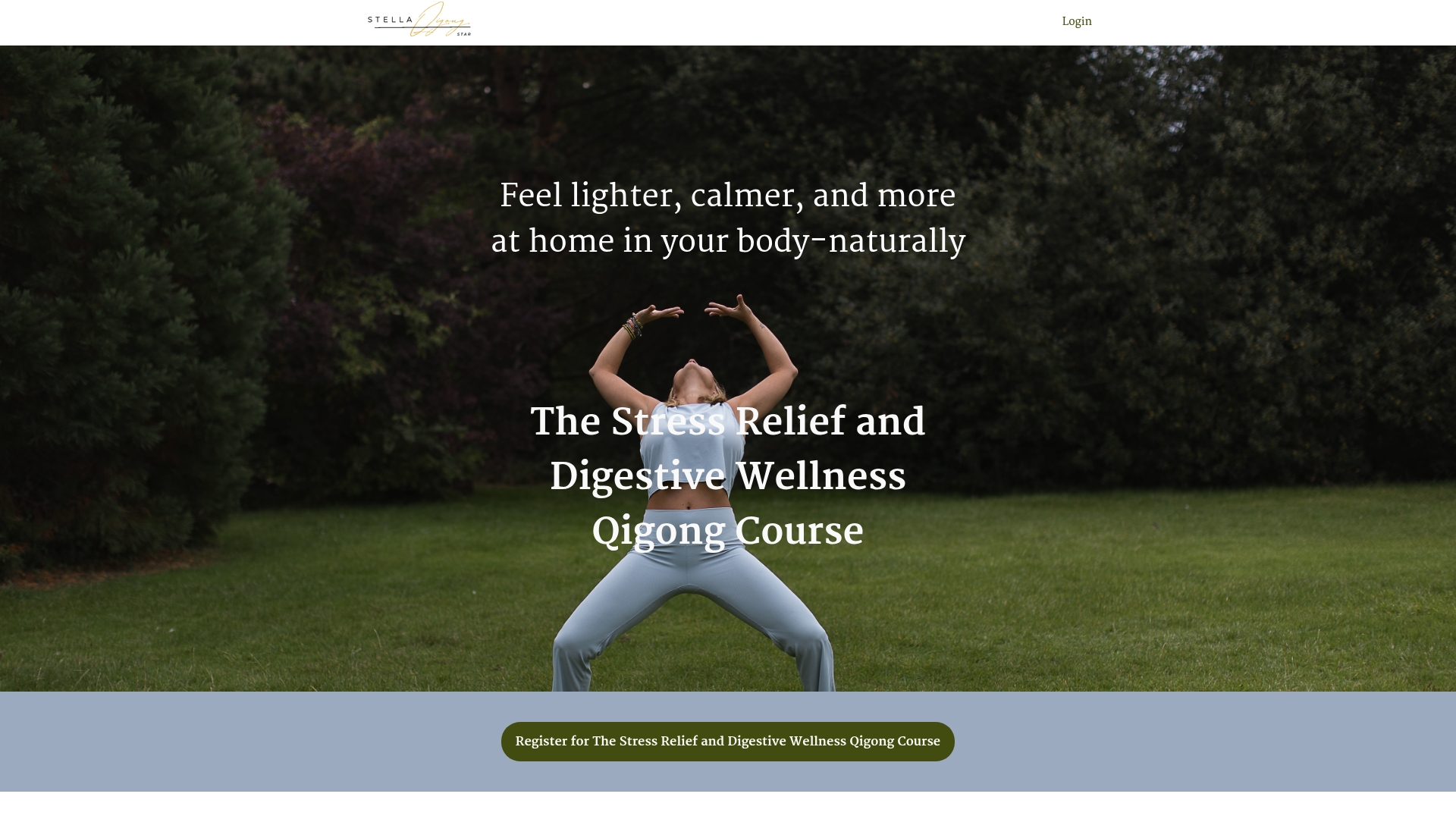
If what you've read here resonates, a live class is the most direct way to feel the difference rather than just read about it. Our online qigong classes for stress relief and digestive wellness are taught live, so you get real-time feedback from the first session, plus replay access to build your own rhythm between classes.
| Option | Format | Price |
|---|---|---|
| Qigong for Stress Relief and Digestive Wellness | Live online course | £116 one-off |
| 30-Min Clarity Session | Live online, one-to-one | £85 one-off |
| 60-Min Deep Dive Online Session | Live online, one-to-one | £145 one-off |
Joining is simple: pick the format that fits your schedule, book your spot, and come to your first session ready to move gently and breathe. No experience is needed, and your instructor will meet you where you are.
FAQ
What does qigong do to your body?
Qigong combines slow movement, breath regulation, and focused attention, which together tend to calm the nervous system and support better sleep, balance, and mobility. Small studies summarized by the NCCIH link regular practice to improvements in pain, physical function, and mental wellbeing, particularly in conditions like fibromyalgia.
How many times a week should I do qigong?
Many of the programs linked to meaningful benefit in reviews use sessions of 30 to 60 minutes, several times a week, though even short daily practice can help according to the Cleveland Clinic. A practical approach is one or two live classes weekly paired with shorter replay sessions on other days.
What is the best online qigong course?
The right course depends on your goals, whether that's general stress relief, digestive wellness, or chronic pain support, and on finding a certified instructor who teaches live with real-time feedback. Live classes are built specifically around stress relief and digestive wellness, taught by an experienced and certified instructor.
What are the three golden rules of qigong?
Definitions vary across traditions, but most teachings emphasize relaxed posture, steady and natural breathing, and calm, focused attention as the core principles that guide a safe and effective practice. These three elements run through nearly every qigong style, including the sequences taught in live online classes.
Sources
- Qigong: What You Need To Know | NCCIH
- Your guide to qigong | Cleveland Clinic Health Essentials
- Feasibility and acceptability of a home-based virtual group exercise program in global Asian adult population | PMC