

For Qigong and holistic-wellness learners, the best Udemy alternatives are niche practitioner-led platforms and community-first course environments, with Qigongstar standing out as the most aligned option for live coaching, structured certification, and lineage-based instruction. Broad marketplaces work well for casual browsing, but they rarely deliver the live correction, instructor transparency, or community warmth that somatic practices genuinely need. Community-driven platforms can increase course completion rates by roughly 3–4x compared with isolated on-demand courses, which matters a great deal when you are learning something as embodied as Qigong.
| Platform Type | Best For | Community & Live | Certification | Pricing Shape |
|---|---|---|---|---|
| Qigongstar | Certification, live coaching | Yes, live virtual classes | White Tiger Qigong, Yoga Alliance | One-off / session |
| Niche wellness platform (e.g., Gaia, Glo) | Casual practice, inspiration | Limited | Rare | Subscription |
| Academic marketplace (e.g., Coursera) | Structured credentials | Moderate | Yes, university-backed | Subscription / one-off |
| Self-hosted creator platform | Teacher-owned pathways | Varies | Instructor-defined | Tiered / one-off |
| Community tool (Circle, Discord, Patreon) | Peer support, cohort learning | High | None standalone | Subscription / free tier |
| Insight Timer | Meditation, gentle intro | Minimal | No | Free / premium |
Table of Contents
- What are the best Udemy alternatives for Qigong and wellness?
- Why Udemy often falls short for serious Qigong certification
- How do you choose the right platform for your Qigong goals?
- Which platform type fits your specific Qigong learning goal?
- Why Qigongstar is a strong alternative to Udemy for Qigong learners
- What does a typical Qigong program cost, and how long does it take?
- How does course quality and instructor expertise vary across alternatives?
- How do payment options and refund policies compare?
- How do you actually sign up for a Qigong course on these platforms?
- Does community really improve your Qigong practice outcomes?
- Key Takeaways
- Why specialist platforms beat marketplaces for serious Qigong learners
- Qigongstar offers a gentle, structured path to start today
- Sources and further reading
What are the best Udemy alternatives for Qigong and wellness?
Here is a calm, clear shortlist to help you find your fit quickly.
- Qigongstar — Certification and live coaching. Practitioner-led White Tiger Qigong and Five Animal Qigong courses with live virtual classes, on-demand modules, and Yoga Alliance–recognized instructor credentials. One-off purchase or session booking.
- Gaia — Casual inspiration. Subscription-based streaming for yoga, meditation, and consciousness content. Wide library, but light on structured Qigong paths or live correction.
- Glo (formerly YogaGlo) — Beginner to intermediate movement practice. Subscription access to yoga and meditation classes; some mindful movement content. No Qigong certification track.
- Coursera — Academic credentials. University-backed certificates from institutions like Google and IBM. Strong for career skills; very limited wellness or Qigong content.
- Skillshare — Creative and casual exploration. Subscription model with short project-based classes. Good for dipping a toe in; not built for somatic certification.
- Teachable / Thinkific — Self-hosted creator courses. Instructors build and sell their own programs with quizzes, certificates, and coaching integrations. Quality depends entirely on the individual instructor.
- Circle / Patreon / Discord — Community and cohort support. These tools layer peer connection and accountability onto any course. Pair them with a structured program for best results.
- Insight Timer — Meditation and gentle entry point. Free and premium guided meditations; a nurturing starting point, but not a certification pathway.
Why Udemy often falls short for serious Qigong certification
Marketplaces favor high-volume generic courses while niche and self-hosted platforms deliver structured, outcome-oriented paths with live coaching and community support. For Qigong, that gap is felt in the body, not just on a checklist.
Here is where the friction shows up most clearly:
- Weak live-coaching infrastructure. Udemy courses are almost entirely pre-recorded. Live correction, which is how a teacher helps you release tension in the right place, is simply not part of the model.
- Limited certification infrastructure. Certificates of completion exist, but they carry no lineage or professional body recognition. Yoga Alliance and White Tiger Qigong School affiliations require a different kind of program structure entirely.
- Thin community tools. Discussion boards exist, but they rarely create the sense of shared practice that keeps wellness learners engaged over weeks and months.
- Revenue-sharing limits instructor investment. Marketplace revenue cuts can run 37–63%, which pushes instructors toward high-volume, low-touch content rather than the deep, mentored pathways serious learners need.
Completion rates on community-driven platforms are considerably higher than on isolated on-demand courses. For an embodied practice like Qigong, that difference shows up in whether you actually build a daily routine or simply watch a few videos and drift away.
Niche-focused platforms that provide clear paths and up-to-date content consistently outperform broad marketplaces for outcome-driven learning, and wellness is no exception.

How do you choose the right platform for your Qigong goals?
Start here: pick the platform type that matches your primary goal, whether that is casual daily practice, a structured certification, or teacher training.
- Define your goal first. Stress relief and gentle movement? A subscription niche platform may be enough. Certification or teacher training? You need live coaching, assessments, and recognized credentials.
- Check community and live interaction. Does the platform offer live classes, group sessions, or cohort-based learning? For somatic practices, passive video alone rarely produces lasting change.
- Verify instructor credentials. Look for affiliations with recognized bodies such as the White Tiger Qigong School or Yoga Alliance. A credential page should be easy to find.
- Review the curriculum structure. Is there a clear syllabus with learning outcomes? Are there assignments or assessments, not just video modules?
- Confirm mobile access and progress tracking. You want to practice anywhere, and you want to see your progress reflected back to you.
- Understand the refund and trial policy. A reputable platform offers at least a trial class or a clear refund window before you commit to a full program.
Three red flags for Qigong learners:
- No instructor bio or lineage information visible before purchase
- No live classes or live Q&A in a certification program
- Certificates with no professional body recognition
Six questions to ask before you pay:
- Who certified this instructor, and can I verify it?
- Is there a live class component, or is everything pre-recorded?
- What does the certification syllabus cover, and how long does it take?
- What is the refund or satisfaction policy?
- Is there a community space where students connect between sessions?
- Can I try one class before committing to the full program?
Pro Tip: Before enrolling in any certification program, attend at least one live class and ask the instructor directly about their lineage. White Tiger Qigong School and Yoga Alliance affiliations are publicly verifiable, and a confident instructor will welcome the question.
Which platform type fits your specific Qigong learning goal?
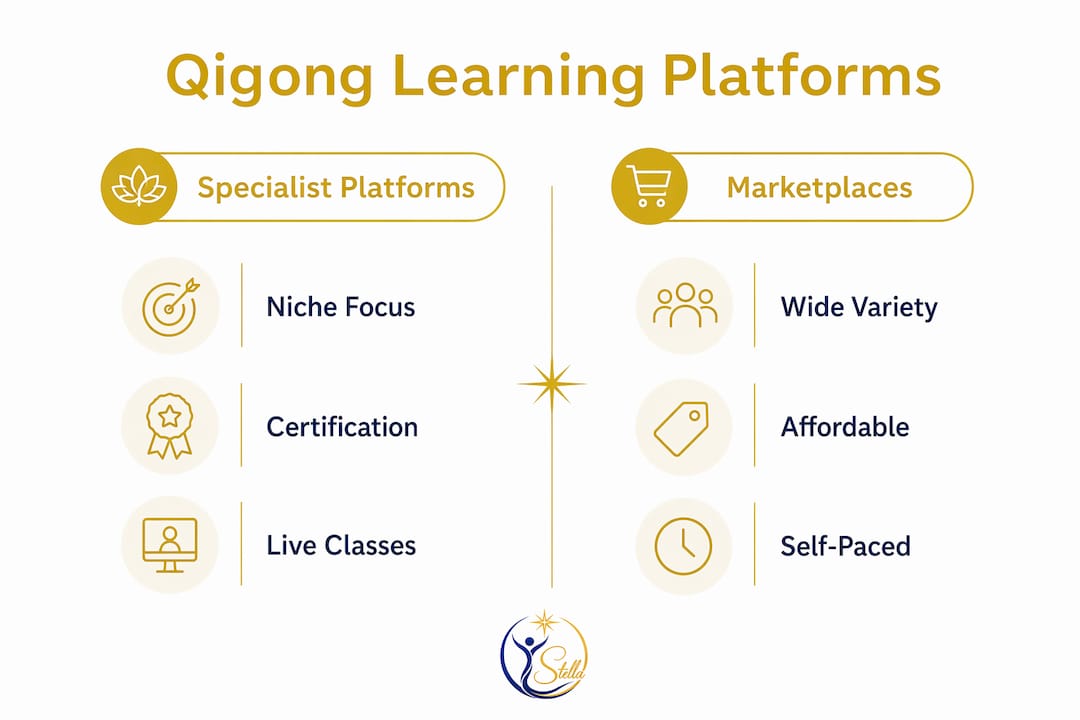
Three main archetypes cover most of what you will find when searching for top e-learning sites in the wellness space.
-
Marketplaces (Udemy-style): Best for low-cost discovery and casual exploration. You can sample a wide range of topics cheaply, but marketplaces lack sophisticated engagement tools that high-touch coaching and certification paths require. Use them to explore, not to certify.
-
Niche wellness platforms (Gaia, Glo, Insight Timer): Best for ongoing gentle practice and inspiration. Subscription access to curated content keeps costs low and variety high. The trade-off is that structured certification tracks and live instructor contact are rare.
-
Self-hosted creator platforms with community tools: Best for teacher-owned, high-touch pathways. When an instructor builds their program on a platform like Teachable and layers in a Circle or Discord community, learners get a structured curriculum, live sessions, peer accountability, and direct instructor access. This is the model Qigongstar uses, and it is the one that most closely mirrors how traditional Qigong lineages have always transmitted knowledge: through relationship, repetition, and real-time feedback.
Community tools like Circle, Discord, and Patreon do not deliver courses on their own, but they raise completion and depth of practice when paired with a structured program. For a longevity-focused wellness practice, that social layer is often the difference between a two-week experiment and a lasting daily habit.
Why Qigongstar is a strong alternative to Udemy for Qigong learners
Qigongstar combines live classes, structured certification, and lineage-based instructor credentials, the three things that matter most for authentic Qigong training and that generic marketplaces consistently fail to provide.
Here is what that looks like in practice:
- Live virtual lessons with real-time feedback, so your form and breath are actually guided, not just observed on a screen
- On-demand modules you can revisit between live sessions to deepen your understanding at your own pace
- White Tiger Qigong certification track, grounded in a recognized lineage and aligned with Yoga Alliance professional standards
- Transparent instructor credentials — instructor background and certifications are publicly listed and verifiable
- Specialized routines for stress relief, anxiety, burnout, and digestive wellness, including IBS support through Five Animal Qigong
- Flexible payment options with one-off course purchases and session bookings, so there is no long-term subscription lock
"The combination of live correction and a clear certification syllabus is what separates a transformative Qigong path from a collection of videos. Qigongstar is built around that distinction." —
What does a typical Qigong program cost, and how long does it take?
Expect a range from low-cost single classes to several hundred dollars for a full certification cohort, with timelines running from a few weeks to several months depending on depth.
| Program Type | Typical Price Range | Timeline | Expected Outcome |
|---|---|---|---|
| Single live class or drop-in | — | — | Immediate practice experience |
| Multi-week beginner course | — | 4–8 weeks | Foundational routine, basic certification |
| Certification cohort | — | 8–12 weeks | Recognized certificate, coaching hours |
| Teacher training program | — | 3–6 months | Instructor-level credential |
A typical certification path at Qigongstar runs 8–12 weeks, with weekly live classes, on-demand practice modules between sessions, and assignments that build toward a final assessment. That rhythm, live plus self-paced, is what allows the practice to settle into the body rather than staying purely intellectual.
A few practical notes on payment and access:
- One-off course purchases mean you own the material without a recurring subscription
- Refund and trial policies vary by program; check the course page before enrolling
- Some programs offer sliding-scale or scholarship options; contact the instructor directly if cost is a barrier
- A free or low-cost introductory class is often the best first step before committing to a full cohort
How does course quality and instructor expertise vary across alternatives?
The gap between a well-credentialed Qigong instructor and an anonymous marketplace course creator is wide, and it shows up immediately in how a class feels. For an online holistic health course, the instructor's lineage, teaching experience, and professional affiliations are the clearest quality signals available before you enroll.
Gaia and Glo feature vetted instructors, but their focus leans toward yoga and meditation rather than classical Qigong lineages. Coursera's strength is university-backed credentials in technical fields; wellness content is sparse and rarely practitioner-led. Skillshare instructors are self-selected, so quality varies enormously. Self-hosted platforms like Teachable give instructors full control, which means the best programs are excellent and the weakest have no quality floor at all.
Qigongstar's instructors hold White Tiger Qigong School certification and Yoga Alliance recognition, both of which are publicly verifiable. That transparency is a meaningful signal in a space where credentials are easy to claim and hard to check.
How do payment options and refund policies compare?
Payment structures across paid course platforms fall into three broad shapes: subscription, one-off purchase, and tuition-style cohort payment.
Subscription platforms like Gaia and Glo charge monthly or annually for unlimited access. That works well for casual practice but means you pay indefinitely even when your engagement drops. Coursera offers both a subscription model through Coursera Plus and individual course purchases. Skillshare runs on a subscription only.
Self-hosted and practitioner-led platforms, including Qigongstar, typically use one-off purchases or per-session booking. You pay for what you use, and you keep access to the material you have bought. Refund windows on these platforms are usually 7–30 days; always confirm before purchasing.
Community tools like Circle and Patreon use subscription tiers, often with a free entry level and paid tiers for live access or premium content. Insight Timer offers a generous free tier with a premium upgrade for offline access and advanced courses.
A practical note: if a platform does not publish its refund policy clearly on the course page, that is worth treating as a caution signal before you pay.
How do you actually sign up for a Qigong course on these platforms?
The process is straightforward on most platforms, and it rarely takes more than five minutes once you have chosen your course.
For Qigongstar's live Qigong classes:
- Visit the course or class page and review the syllabus, schedule, and instructor credentials.
- Select your preferred format: live class, on-demand course, or private session.
- Complete checkout with a one-off payment; no subscription required.
- Receive your access link or login details by email, usually within minutes.
- Join your first live class or begin the on-demand modules at your own pace.
For subscription platforms like Gaia or Glo, the flow is: create an account, start a free trial, add payment details, and browse the library. You can cancel before the trial ends if the content does not feel right.
For self-hosted courses on Teachable or similar platforms, you typically land on the instructor's course page, purchase directly, and access the course through a student dashboard. The signup process for wellness courses is designed to be gentle and welcoming, even for first-time online learners.
Does community really improve your Qigong practice outcomes?
Yes, and the evidence is clear. Community-driven delivery can increase course completion rates by roughly 3–4x compared with isolated on-demand courses. For a somatic practice like Qigong, that number reflects something deeper than just finishing videos: it reflects whether the practice actually takes root in your daily life.
When you practice alongside others, even virtually, something shifts. Accountability becomes natural rather than forced. Questions get answered in real time. The subtle cues that are hard to absorb from a video alone, breath timing, weight distribution, the quality of stillness between movements, become clearer when a teacher can see you and respond. Peer learning in a community space also surfaces insights that no single instructor can anticipate, because every learner's body and history is different.
Platforms that integrate live sessions, group cohorts, and community spaces, whether through Circle, Discord, or built-in course communities, consistently produce learners who practice longer, go deeper, and report more meaningful change. For wellness practices aimed at stress relief or digestive health, that depth of engagement is not a bonus feature. It is the whole point.
Key Takeaways
For Qigong and holistic-wellness learners, the right platform is the one that matches your goal: niche or practitioner-led platforms with live coaching and community support consistently outperform broad marketplaces for certification and lasting practice.
| Point | Details |
|---|---|
| Community multiplies outcomes | Community-driven platforms show roughly 3–4x higher completion rates than isolated on-demand courses. |
| Match platform type to your goal | Marketplaces suit casual exploration; niche and self-hosted platforms suit certification and live coaching. |
| Credentials are verifiable | Look for White Tiger Qigong School or Yoga Alliance affiliations before enrolling in any certification program. |
| Trial before committing | Attend one live class and review the certification syllabus before paying for a full program. |
| Qigongstar is the practitioner-led option | Qigongstar offers live virtual classes, White Tiger Qigong certification, and one-off pricing with no subscription required. |
Why specialist platforms beat marketplaces for serious Qigong learners
The conventional wisdom says more choice is better. Browse a big marketplace, find something cheap, and start learning. For Qigong, that logic breaks down almost immediately.
Qigong is not a skill you acquire by watching videos. It is a practice you develop through repetition, feedback, and, over time, a relationship with a teacher who can see what you cannot feel yet. A marketplace can sell you a recording of someone doing Qigong. It cannot replicate the moment a teacher notices your shoulders are braced and quietly guides you to soften them. That correction, offered at the right moment, is worth more than ten hours of solo video practice.
What I find most overlooked in platform comparisons is the question of lineage. Not every Qigong course is drawing from the same well. White Tiger Qigong and Five Animal Qigong are specific traditions with specific pedagogical structures. When an instructor is certified by the White Tiger Qigong School and recognized by Yoga Alliance, that is not just a badge. It means the curriculum has been reviewed, the instructor has been assessed, and the practice you are learning connects to something real and tested. That matters enormously when you are using movement and breath to address something as personal as stress, anxiety, or digestive distress.
My suggestion: give yourself 7–14 days to test any platform seriously. Attend one live class, read the full certification syllabus, and send the instructor a question. How they respond tells you almost everything you need to know about whether this is a place where you will genuinely grow.
Qigongstar offers a gentle, structured path to start today
If you are ready to move beyond browsing and into a practice that actually holds you, Qigongstar offers something the big platforms simply do not: a practitioner-led, lineage-grounded program with live classes, clear certification, and an instructor who is genuinely present with you.
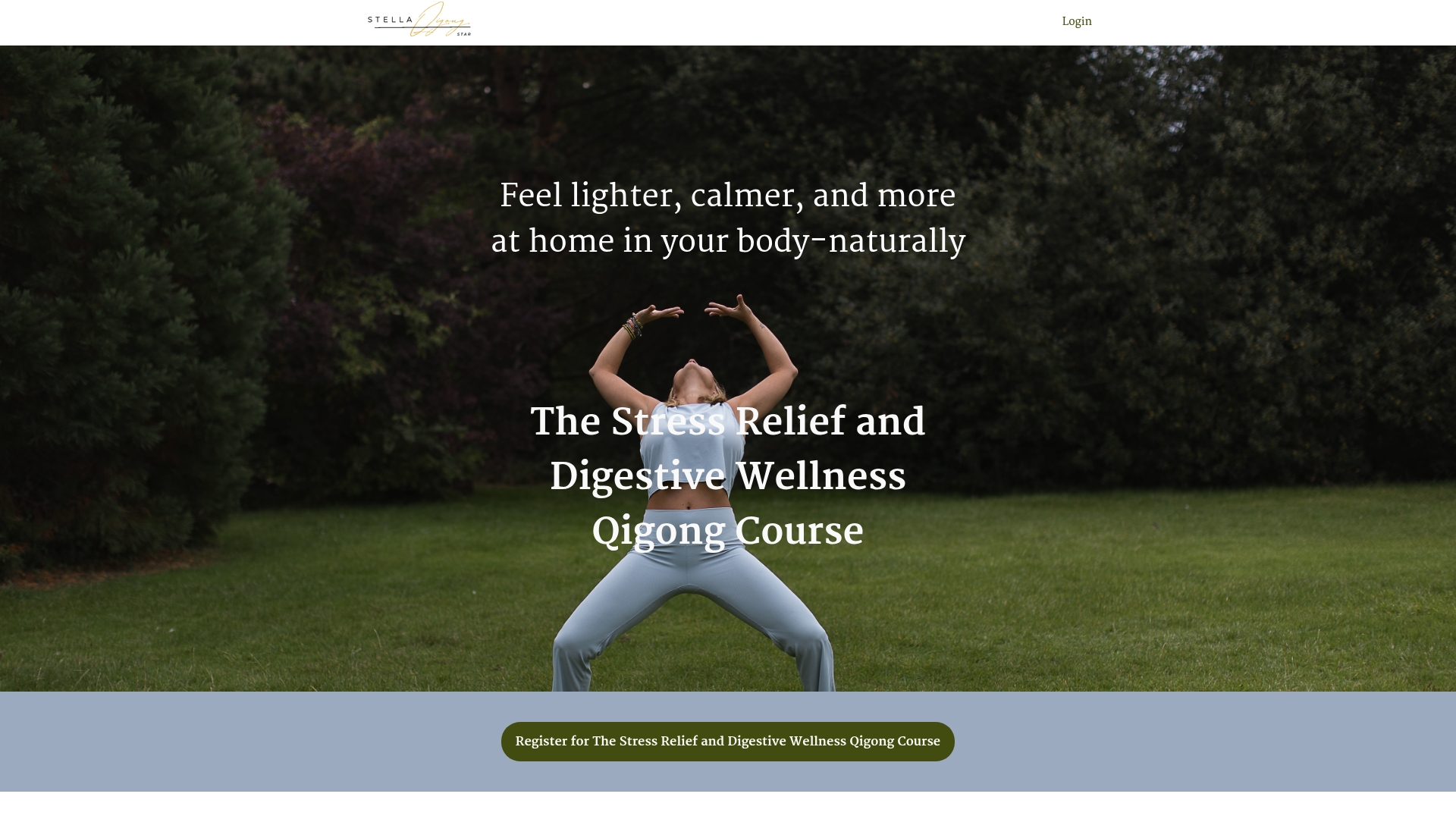
The path forward is straightforward. Start with a live class to feel the practice in your body. Then review the White Tiger Qigong certification syllabus to see whether the depth matches your goals. When you are ready for a structured beginner-to-intermediate program, the Five Animal Qigong course is a calm, welcoming entry point with on-demand modules and live support. No subscription, no long-term commitment. Just a clear, nurturing path toward the vitality and ease you are looking for. Visit the online classes page to check current schedules and enroll.
Sources and further reading
The claims and comparisons in this article draw on the following sources. Each one is worth reading if you want to go deeper on a specific point.
- 11 Best Online Course Platforms in 2026 — Circle Blog: Primary source for the community completion-rate finding (3–4x) and the platform-type best-use breakdown. Also covers revenue-sharing ranges for marketplace instructors.
- 10 Best Udemy Alternatives in 2026 — CloudAssess: Useful roundup covering the discoverability vs. instructional depth trade-off across marketplace and niche platforms.
- Top 5 Udemy Alternatives — Zero To Mastery: Supports the recommendation to prioritize clear learning paths and outcome-focused features over large generic catalogs.
- Udemy Competitors Analysis — SafetyCulture: Covers engagement tool limitations of mass marketplaces and the case for niche alternatives.
- Teachable: Feature reference for self-hosted course tooling, including quizzes, certificates, and coaching integrations.
- Coursera: Reference for university-backed credential programs and the Coursera Plus subscription model.
Related reading on Qigongstar:
- How online wellness courses work: a beginner's guide
- Online holistic health courses checklist for adults
- Top 5 Amazon alternatives for online Qigong courses
- Beginner tips for online wellness courses that actually work