

You support gut health naturally by doing four things together: eating a wide variety of plant foods, drinking enough fluid, moving your body gently every day, and calming a nervous system that is under pressure. Food gets most of the attention, yet your gut and your brain talk to each other constantly, so stress belongs in the conversation too. At Qigongstar we teach a gentle, breath-led practice designed for exactly that link between stress and digestion, and this guide shows where it fits alongside everyday food habits.
Key Takeaways
- Variety matters more than any single "superfood": aim for many different plants each week, and build fibre up gradually.
- Water helps fibre do its job, so drink regularly through the day and with meals.
- Your gut and brain communicate in both directions, which is why stress reduction is part of gut care, not an optional extra.
- Gentle, regular movement and breath work are kind to a sensitive digestive system.
- Blood in the stool, changes in bowel habits, severe pain or unexplained weight loss need a doctor, not self-care.
What "gut health" actually means
There is no single agreed definition of a healthy gut. The University of Minnesota describes a minimally healthy gut as one that provides adequate nutrition without symptoms getting in the way of daily life. In plain terms: you digest your food comfortably, absorb what you need and pass waste regularly, without pain, bloating or urgency ruling your day.
The American Medical Association describes gut health as the digestive system's ability to break down food, absorb nutrients and eliminate waste. Living in your large intestine is the gut microbiome, a community of microbes. Australia's Better Health Channel notes it includes more than 1,000 species of bacteria, viruses and fungi, that these microbes help break down food, and that diversity is an important sign of a healthy microbiome.
That word, diversity, is the thread running through everything below. A varied diet feeds a varied microbiome. A varied, gentle routine of movement, rest and breath keeps a varied set of body systems in balance. If you would like to understand how the microbiome affects the rest of the body, including nutrient absorption, this piece on the gut microbiome and bone density shows how far the effects of gut microbes reach.
Start with the plate: variety, fibre and fluid
Every major health body that writes about the gut begins with food, and they agree on the basics.
Eat a wide range of plants
The British Nutrition Foundation suggests building meals around vegetables, fruit, beans, lentils, chickpeas, nuts, seeds and wholegrains, and trying new grains and different fruit and vegetables rather than eating the same few each week. The University of Minnesota explains why: many helpful gut microbes feed on dietary fibre and produce substances that benefit you, so it recommends many kinds of plants to provide chemically diverse fibres.

A practical way to make that real is to count plants rather than calories. Try to add one new plant food to your shopping each week: a different bean, a seed you have not tried, a leafy green you usually walk past.
Know your fibre target
The NHS gives the UK recommended intake as 30 g of fibre a day and suggests a mix of sources such as wholemeal bread, brown rice, fruit, vegetables, beans and oats. The Canadian Digestive Health Foundation lists prebiotic-rich foods, meaning fibres that feed friendly microbes, including onions, garlic, leeks, asparagus, oats, barley, nuts, seeds, beans, lentils and chickpeas. When those fibres ferment in the gut they produce short-chain fatty acids, which help support the intestinal lining.
A simple day that moves towards 30 g might look like this:
- Porridge oats with seeds and berries for breakfast.
- A lentil and vegetable soup with wholemeal bread for lunch.
- Brown rice with chickpeas, onion, garlic and greens for dinner.
- A piece of fruit or a handful of nuts as a snack.
Drink enough water
Fibre needs fluid. The NHS says water helps move waste through the digestive system and softens stool, and that too little fluid can make fibre ineffective and contribute to constipation. It suggests a glass of water with meals. Sipping through the day is gentler than gulping a litre at once.
Fermented foods: a pleasant extra
Yoghurt, kefir, kimchi, sauerkraut, tempeh and miso may contain live microorganisms. The British Nutrition Foundation points out they are not automatically probiotics and that evidence varies. Enjoy them as part of a varied diet, and introduce them in small portions if your digestion is sensitive.
If your gut is sensitive: go slowly
Many people who search for natural gut support already live with bloating, cramps or irregular bowels, sometimes diagnosed as irritable bowel syndrome (IBS). For you, the pace of change matters as much as the choice of food.
The British Dietetic Association advises increasing fibre gradually to reduce bloating and gas, choosing it from varied sources, drinking enough fluid, and adapting advice to your medical history and tolerance. The NICE and British Dietetic Association IBS leaflet warns that more fibre may worsen gas, pain, bloating, flatulence or diarrhoea in some people. For constipation it suggests adding no more than one extra portion of wholegrains, fruit or vegetables over two days, and notes that oats, golden linseeds and enough non-caffeinated fluid may help.
Here is a worked example. Say you currently eat one portion of vegetables at dinner and want more. This week, add a small portion of cooked carrots at lunch and see how you feel. Next week, swap white bread for wholemeal. Two weeks in, add a spoonful of oats at breakfast. Small steps give your gut time to adjust, and your diary tells you what works.

That last point is worth acting on. The NHS advises keeping a food diary to spot symptom triggers, because triggers are personal and there is no single diet that suits everyone. Write down what you ate, how you slept, how stressed you felt and how your digestion behaved. Patterns often appear across the whole picture, not just the food.
If you are worried about raising your fibre, or your symptoms are persistent, a GP or registered dietitian is the right person to guide you.
The part most gut guides skip: stress and the gut–brain connection
If you have ever felt butterflies before a presentation or a knotted stomach after bad news, you already know your gut responds to your mind. The science supports the experience. A peer-reviewed review in the Journal of Gastroenterology and Hepatology reports that the brain and gut communicate in both directions, and that severe or prolonged stress can affect gut motility, how quickly the stomach empties, the permeability of the intestinal wall, absorption and susceptibility to inflammation.
A 2023 review of the brain–gut–microbiota axis adds that stress can cause or worsen gastrointestinal symptoms, through nerve, immune and hormonal pathways, and that this is relevant to conditions such as IBS and inflammatory bowel disease. Public health guidance in Australia also lists managing stress among the habits that support gut health.
For busy professionals, carers and anyone running on empty, this is the missing piece. You can eat beautifully and still feel your digestion tighten every time your shoulders rise towards your ears. Calming the nervous system is not a luxury add-on. It is part of the care your gut asks for.
Signs your stress may be reaching your gut
- Your digestion worsens in busy or anxious weeks.
- You eat quickly, standing up or at your desk, with shallow breathing.
- Cramps, urgency or bloating arrive before meetings, travel or difficult conversations.
- You sleep poorly, and your appetite and bowels follow.
If this sounds familiar, adding a gentle daily practice that slows your breath and relaxes the abdomen is a sensible, low-effort place to begin.
Move gently, every day
Australia's Better Health Channel notes that regular activity such as walking and cycling can stimulate the gut muscles to move digestive contents along and may positively affect the microbiome. It also lists good sleep and stress reduction alongside physical activity.
A short walk after meals is a lovely habit. For many people with a sensitive gut, burnout or sore joints, though, vigorous exercise can feel like another demand on a tired body. This is where qigong, a gentle Chinese mind-body practice combining slow movement, posture and breath, suits so well. There is no impact, no equipment and no need for flexibility or fitness. You move slowly, breathe deeply and let your attention settle.
Our two core practices are White Tiger Qigong and Five Animal Qigong, both rooted in Chinese medicine and designed to support stress relief, digestive wellbeing and overall vitality through gentle movement, breath regulation and mindful attention. If you would like to understand the thinking behind this approach, our articles on why Chinese medicine looks at the gut and on gut health improvement through movement go deeper. For IBS in particular, you may find qigong for IBS a reassuring read, and if you live with inflammatory bowel disease, our piece on starting gently with qigong for IBD explains how to approach practice alongside your medical care.
A five-minute routine to try today
This is a simple way to feel the connection between breath and belly. Treat it as a gentle introduction, and stop if anything feels uncomfortable.
- Settle. Stand or sit with your feet hip-width apart. Let your shoulders drop and your jaw soften.
- Rest your hands. Place them lightly on your lower abdomen.
- Breathe slowly. Inhale through the nose for a count of four, feeling the belly rise under your hands. Exhale for a count of six, as if melting tension out through the soles of your feet.
- Sway. Shift your weight softly from one foot to the other, letting your arms float like branches in a light breeze.
- Finish. Rest for three slow breaths and notice how your belly feels.
Practised daily, a short sequence like this becomes an anchor in a hectic day. A guided course adds the structure, correct posture and progression that are hard to pick up alone from a page.
Sleep, rhythm and mindful eating
A calm gut likes a predictable day. Aim to eat at regular times, give yourself twenty minutes for a meal, and put down your phone while you eat. Chew well, breathe between mouthfuls and notice when you are comfortably full. These habits cost nothing and lower the strain on a digestive system that is already working hard.
Sleep belongs here too. Better Health Channel lists good sleep among the lifestyle habits that may support gut health. A slow evening breathing practice, with the lights low and screens away, is a kind way to prepare for rest.
Probiotics and supplements: what to know
Probiotics are live bacteria sold as supplements or added to foods. The NHS says the evidence that they may help is limited to some situations, including some IBS symptoms, and that they are classed as foods rather than medicines, so contents and survival to the gut cannot always be assured. If you take them, New Zealand's health service suggests checking the organism, dose, storage and expiry, and benefits differ by microorganism.
Safety first: the NHS advises anyone with an existing health condition or a weakened immune system to speak to a doctor before taking probiotic supplements. The same applies if you are pregnant or considering them for an infant.
When to see a doctor
Natural support is for everyday wellbeing. It is not a substitute for diagnosis. See a doctor if you notice blood in your stool, a change in your bowel habits, severe abdominal pain, unintentional weight loss, or heartburn that does not improve with antacids. If you have a diagnosed condition such as IBS or inflammatory bowel disease, keep your medical team informed about any new practice you add.
A week of natural gut support
Here is how the pieces fit into an ordinary week, so you can start without overhauling your life.
| Habit | How to begin | How often |
|---|---|---|
| Plant variety | Add one new plant food to your shopping | Weekly |
| Fibre | Increase by one small portion at a time | Gradually over weeks |
| Fluid | A glass of water with each meal | Daily |
| Gentle movement | A short walk after a meal, or a qigong routine | Daily |
| Breath and calm | Five slow minutes of belly breathing | Daily |
| Food and mood diary | Note meals, sleep, stress and symptoms | Daily for a few weeks |
Choose two rows to begin with. Add another when those feel natural. Consistency is far kinder to a sensitive gut than an ambitious reset.
Our perspective
When someone comes to me with digestive trouble, the story is rarely only about food. It is usually about a tight chest, a racing mind, a long working day and a body that has forgotten how to settle. That is why I teach qigong for stress relief and digestive wellness: slow movement and steady breath invite your system out of alarm and back towards balance.
Every class is led by me as a White Tiger Qigong Level 3 certified instructor, also accredited by Yoga Alliance. I bring together professional wellness experience and a modern working life of my own, so I understand the pressure many of you are under. You do not need to be flexible, fit or experienced. You need a little time and a willingness to be gentle with yourself.
Good food, water and sleep are the foundations. Qigong is the daily practice that helps you feel them working.
Stella
Begin with guided practice
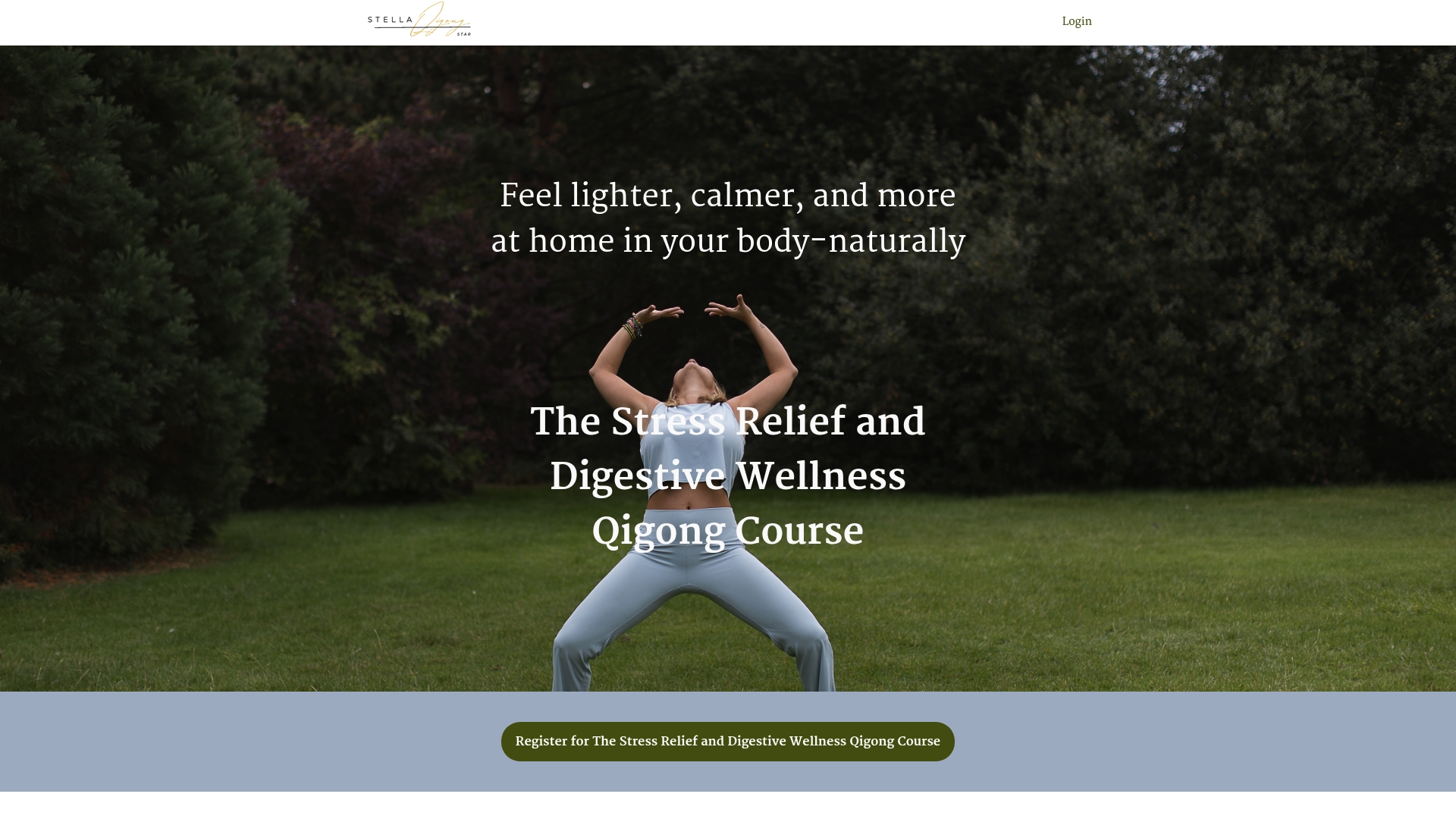
If you would like a structured, supportive way to start, our course Qigong for Stress Relief and Digestive Wellness is a one-off purchase at £116 and is designed to ease stress and support digestive comfort through gentle movement and breath. You can learn at your own pace, with the reassurance of a certified instructor behind every lesson.
Prefer personal attention? We offer a 30-Min Clarity Session at £85, a 60-Min Deep Dive Online Session at £145 and a 60-Min Face-to-Face Qigong session at £165, plus group classes. You can see everything on our online qigong classes page, or explore White Tiger Qigong and Five Animal Qigong to see which practice speaks to you.
FAQ
What can I eat to support gut health?
Build meals around a wide variety of plant foods: vegetables, fruit, beans, lentils, chickpeas, nuts, seeds and wholegrains. The NHS recommends 30 g of fibre a day for adults in the UK. Increase fibre slowly and drink plenty of water so it works comfortably.
What are the signs of a poorly functioning gut?
Common signs include ongoing bloating, pain, constipation, diarrhoea or heartburn. Blood in the stool, a change in bowel habits, severe pain or unintentional weight loss need medical attention promptly. Keeping a diary of food, stress and symptoms helps your doctor see the pattern.
Does stress really affect digestion?
Yes. Research reviews describe two-way communication between the brain and gut through nerve, immune and hormonal pathways, and stress can cause or worsen symptoms. That is why calming practices such as slow breathing and gentle qigong are a natural part of looking after your gut.
Is qigong suitable for beginners with a sensitive stomach?
Qigong is slow, low-impact and works at your own level, so beginners are welcome. Our approach is built around gentle movement and breath regulation. If you have a diagnosed digestive condition, mention your practice to your doctor and move within your comfort.
How long does it take to notice a difference?
It varies from person to person, so there is no fixed timetable. Making one or two small changes and keeping them up for a few weeks, while noting your symptoms in a diary, is a calm and realistic way to see what helps you.
Sources
- Gut health | Better Health Channel
- What doctors want patients to know about improving gut health | American Medical Association
- How your gut affects your health | British Nutrition Foundation
- Talking gut health with University of Minnesota
- Good foods to help your digestion | NHS
- How to Improve Gut Health: 10 Ways to Support Your Microbiome | Canadian Digestive Health Foundation
- Fibre | British Dietetic Association
- NICE and BDA irritable bowel syndrome dietary information
- Stress and the gastrointestinal tract | Journal of Gastroenterology and Hepatology
- Brain–Gut–Microbiota Axis
- Gut health | healthdirect
- Probiotics | NHS
- Probiotics | Health New Zealand
- Enfermedades del sistema digestivo | MedlinePlus