
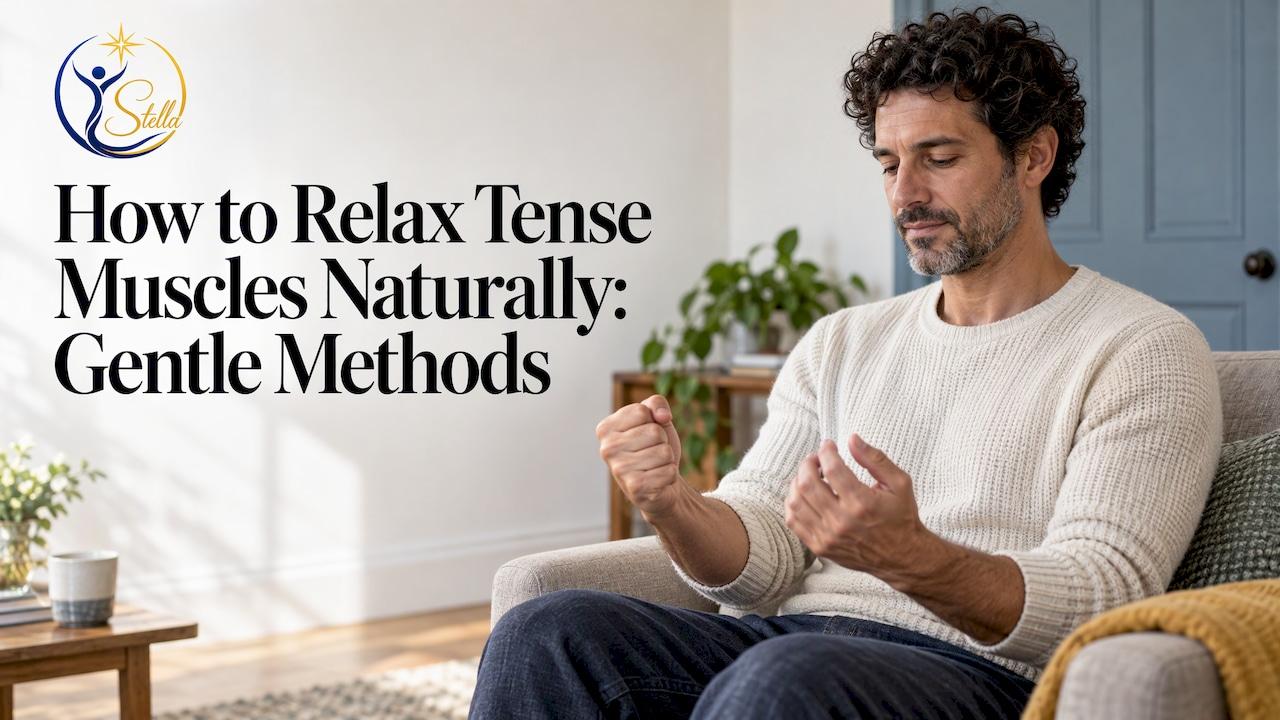
Tense muscles usually soften when you combine three gentle things: slow breathing, a deliberate tense-and-release exercise, and unhurried movement. You can start today, lying on a bed or sitting in a chair, with no equipment. Below you will find a step-by-step relaxation exercise, the evidence behind breathing and qigong, a short daily routine, and the situations where it is wise to speak to a professional first.
Key Takeaways
- Progressive muscle relaxation, tensing one area then letting go, is the best-known way to teach your body what release feels like. A full session usually takes 10 to 20 minutes.
- Slow breathing and gentle movement, including qigong and tai chi, can evoke the body's relaxation response: slower breathing, a lower heart rate and lower blood pressure.
- Never push into pain. Tense firmly but comfortably, stretch to mild tension only, and skip any area that hurts.
- A little every day works better than a long session now and then. Even a few minutes counts.
- If relaxation exercises stir up distress, or nothing eases the tension, stop and talk to a healthcare professional.
Why your muscles hold on to tension
Muscles tighten when you are cold, braced, hunched over a screen or under pressure, and often you do not notice until your shoulders are near your ears. The jaw, neck, shoulders and lower back are the usual places. Tension then feeds on itself: tight muscles hurt, the hurt makes you tense, and the cycle continues.
This is why relaxation methods begin with awareness. NHS inform notes that progressive muscle relaxation can reduce bodily tension and help you recognise tension as an early sign of anger or panic. Once you can feel the first signs, you can release them before they build into an ache.
If you want to understand the link between a busy mind and a tight body in more depth, our guide on what your body is telling you when stress causes physical symptoms is a good companion to this page.
Progressive muscle relaxation: the classic way to loosen tight muscles
Progressive muscle relaxation (PMR) means tensing one muscle group at a time, then releasing it fully. The contrast is the lesson. Kaiser Permanente's guidance on doing progressive muscle relaxation suggests noticing the difference between tension and relaxation as you go, which is what retrains your sense of "soft".
A simple step-by-step routine
- Settle. Find a quiet place and lie comfortably on your back, or sit with your feet on the floor. Loosen tight clothing.
- Breathe in and tense. Take a breath and tighten one area, such as your right foot, for about five seconds. Mayo Clinic describes about five seconds of tension followed by 30 seconds of relaxation, while Cleveland Clinic suggests relaxing for five to 10 seconds. Either rhythm is fine, so choose the one that feels natural.
- Breathe out and release. Let the muscles go completely on the exhale. Notice warmth, heaviness or tingling.
- Rest. Kaiser Permanente advises resting 10 to 20 seconds between groups.
- Move through the body. A common order runs from the toes through the legs, belly, hands, arms, shoulders, neck, jaw and forehead.
- Finish slowly. Health New Zealand suggests slowing your breathing for several minutes before you become fully alert again.
A full session generally takes 10 to 20 minutes, and Cleveland Clinic notes you can do a second round on areas of extreme tension. If you would like another walkthrough, you can practise progressive muscle relaxation with a second set of written instructions.
Keep it comfortable
Tense firmly, but never to the point of pain or cramping. If an area is injured or sore, skip it and work around it. The aim is to melt away holding, not to add strain.
Slow breathing: the quiet partner of every relaxation exercise
Breathing is the one part of your nervous system you can steer on purpose. The US National Centre for Complementary and Integrative Health defines relaxation techniques as practices that evoke slower breathing, a lower heart rate and lower blood pressure, and it lists slow diaphragmatic breathing alongside progressive relaxation.
There is also early research on breathing for aches. A 2025 review found that short-term breathing exercises reduced pain and disability in persistent neck pain, although the certainty of the evidence was rated low. A 2025 systematic review of 17 randomised trials found that breathing exercises reduced pain and improved function in chronic non-specific low-back pain, again with low to very low certainty and high variation between studies. In plain terms: the signs are encouraging, and breathing is a safe thing to add to your day.
A simple way to begin:
- Rest one hand on your lower belly.
- Breathe in through the nose so the belly gently rises.
- Breathe out a little more slowly than you breathed in, letting your shoulders drop.
- Continue for a few minutes, letting each exhale carry a little tension away.
Mindful stretching to ease stiff muscles
Gentle stretching complements both of the above. UC Berkeley's Mindful Stretching Guide says stretches may be held for 15 to 30 seconds, with a general programme covering the major muscle groups two to three days a week.
The same guide gives sensible ground rules:
- Breathe slowly and steadily throughout.
- Stretch only to mild tension, never to pain.
- Do not bounce.
- If you have significant joint or back pain, seek medical guidance before starting.
Stretching tends to work best after your body is warm, for example after a shower or a short walk, and after a few minutes of breathing to settle your mind.
Qigong for muscle tension: movement that softens from the inside
Qigong is a family of gentle Chinese mind-body practices that combine slow movement, breath and attention. Because it blends all three of the elements above, it is a natural fit for tight muscles. Practices such as qigong and tai chi may also bring about the relaxation response, according to NCCIH.
What the research says
- A 2026 meta-analysis of traditional Chinese exercise, which includes qigong and tai chi, in people with non-specific low-back pain found reduced pain and dysfunction and improved quality of life. The authors noted substantial variation between studies, so the results should be read with care.
- A 2020 systematic review reported that qigong studies indicated improvements in breathing, circulation and relaxation, and discussed it as an integrative and complementary practice.
Qigong is not a replacement for medical care. It is a gentle, low-impact practice that many people find soothing alongside it.
A beginner's approach
We teach qigong as slow, comfortable movement, and these principles are the ones we would give any newcomer:
- Stand or sit with soft joints. Keep your knees slightly bent and your weight even.
- Let the breath lead. Move on the exhale, and pause if your breath becomes held or shallow.
- Move within a comfortable range. Nothing should hurt. If it does, make the movement smaller.
- Soften as you go. Check your jaw, shoulders and hands, and let them loosen.
- Finish by standing still for a minute or two, noticing how your body feels.
If your tension sits in a particular area, these guides may help: qigong for neck pain, a 10 minute qigong routine for lower back pain and relaxation techniques without therapy.
Our perspective on releasing tension
Many people come to us saying they have tried to "just relax" and it never works. Relaxation is a skill, and like any skill it grows with gentle, regular practice rather than force.
In our classes, we bring together the three things that matter most: slow movement, a calm breath and mindful attention. Tension is often held in the body long before the mind notices it. Qigong gives you a way to notice it early, and to release it kindly, without strain.
All our teaching is led by a White Tiger Qigong Level 3 certified instructor who is also accredited by Yoga Alliance. We pair that training with a background in professional wellness and digital communications, so we understand how a demanding working life can leave your shoulders, neck and gut feeling tight. Our programmes are designed to be beginner-friendly, and you can follow them at your own pace.
You do not need to be flexible, fit or experienced. You only need a few quiet minutes and a willingness to listen to your body.
Stella
Building a daily habit that lasts
The University of Michigan's PainGuide recommends practising relaxation once a day for 10 to 30 minutes, while noting that even a few minutes each day can help. It also suggests learning the skill at times when your symptoms are not at their worst, so you are ready to use it when they flare.
Here is a gentle pattern that fits most days:
| Time of day | Practice | Time needed |
|---|---|---|
| Morning | Slow belly breathing and a few soft qigong movements | 5 minutes |
| Midday | Shoulder, neck and jaw check-in, with a mindful stretch held 15 to 30 seconds | 3 to 5 minutes |
| Evening | Progressive muscle relaxation, lying down | 10 to 20 minutes |
To keep going, link the practice to something you already do, such as the kettle boiling or closing your laptop. If you want more ideas for building a consistent relaxation practice, a structured approach helps many people stay on track. Our own daily qigong routine for stress reduction and daily stress reduction practices give you ready-made structures.
Does it help with sleep?
Many people practise PMR in bed. A 2026 meta-analysis of 14 studies with 957 adults found that PMR improved subjective sleep quality overall, though the results varied widely and the effect in adults aged 55 and over was uncertain. Earlier American Academy of Sleep Medicine practice parameters from 1999 also classed PMR as effective therapy for chronic insomnia.

Practising safely, and when to see a professional
Relaxation techniques are generally safe for healthy people. NCCIH notes that occasional negative experiences can include increased anxiety, intrusive thoughts or a fear of losing control, and that worsening has rarely been reported in people with epilepsy, certain psychiatric conditions or a history of trauma.
Please take these steps:
- If an exercise stirs up emotional discomfort, stop and talk with a healthcare or mental-health professional, as Mayo Clinic advises. This applies particularly if you live with a serious mental-health condition or have experienced trauma.
- If nothing seems to lessen your stress, speak with your GP or another healthcare professional about other options.
- If you have significant joint or back pain, get medical guidance before you begin stretching, in line with the Berkeley guide.
- If a particular area is painful, leave it out of tense-and-release exercises.
Learn qigong with guidance
Reading about a gentle practice is a good start, but being guided makes it easier to feel what "soft" really is. We offer online options so you can learn from home, at a pace that suits you.
Our course, Qigong for Stress Relief and Digestive Wellness, is £116 as a one-off purchase. If you would like personal attention, you can book a 30-minute Clarity Session for £85, a 60-minute Deep Dive online session for £145, or a 60-minute face-to-face qigong session for £165. We also run group classes.
You can see everything on our online qigong classes page, or explore the White Tiger Qigong and Five Animal Qigong pages to find the style that feels right for you.
FAQ
What is the quickest way to relax tense muscles?
Slow your breathing first, with a longer exhale than inhale, and drop your shoulders. Then tense the tight area gently for about five seconds and release it on an exhale. Repeating this a few times often brings noticeable softening, but it is a skill that improves with regular practice.
Can qigong help with muscle tension?
Qigong combines slow movement, breath and attention, and research on traditional Chinese exercise has reported reduced pain and better function in people with non-specific low-back pain. The studies varied considerably, so the results are encouraging rather than conclusive. Many beginners find it a calming way to release holding in the neck, shoulders and back.
How long should I practise each day?
The University of Michigan PainGuide suggests 10 to 30 minutes once a day, and notes that even a few minutes daily can help. A full progressive muscle relaxation session usually takes 10 to 20 minutes. Start with what is realistic and build up.
Is it safe to tense muscles on purpose?
For most healthy people, yes, provided you tense firmly but never to pain or cramping, and you skip any injured area. If you have significant joint or back pain, or relaxation exercises make you feel distressed, stop and speak with a healthcare professional before continuing.
Sources
- Progressive muscle relaxation, NHS inform
- Stress Management: Doing Progressive Muscle Relaxation, Kaiser Permanente
- Relaxation techniques: Try these steps to lower stress, Mayo Clinic
- Progressive muscle relaxation, Cleveland Clinic
- Relaxation techniques, Health New Zealand
- Relaxation Techniques: What You Need To Know, NCCIH
- Effects of Breathing Exercises on Neck Pain Management
- Can breathing exercises effectively treat people with chronic low-back pain?
- Mindful Stretching Guide, UC Berkeley
- Moving for relief: a meta-analysis, Frontiers in Pain Research
- Benefits of Qigong as an integrative and complementary practice
- Relaxation, University of Michigan PainGuide
- The effects of progressive muscle relaxation on sleep, Frontiers in Public Health
- Practice Parameters for the Nonpharmacologic Treatment of Chronic Insomnia