
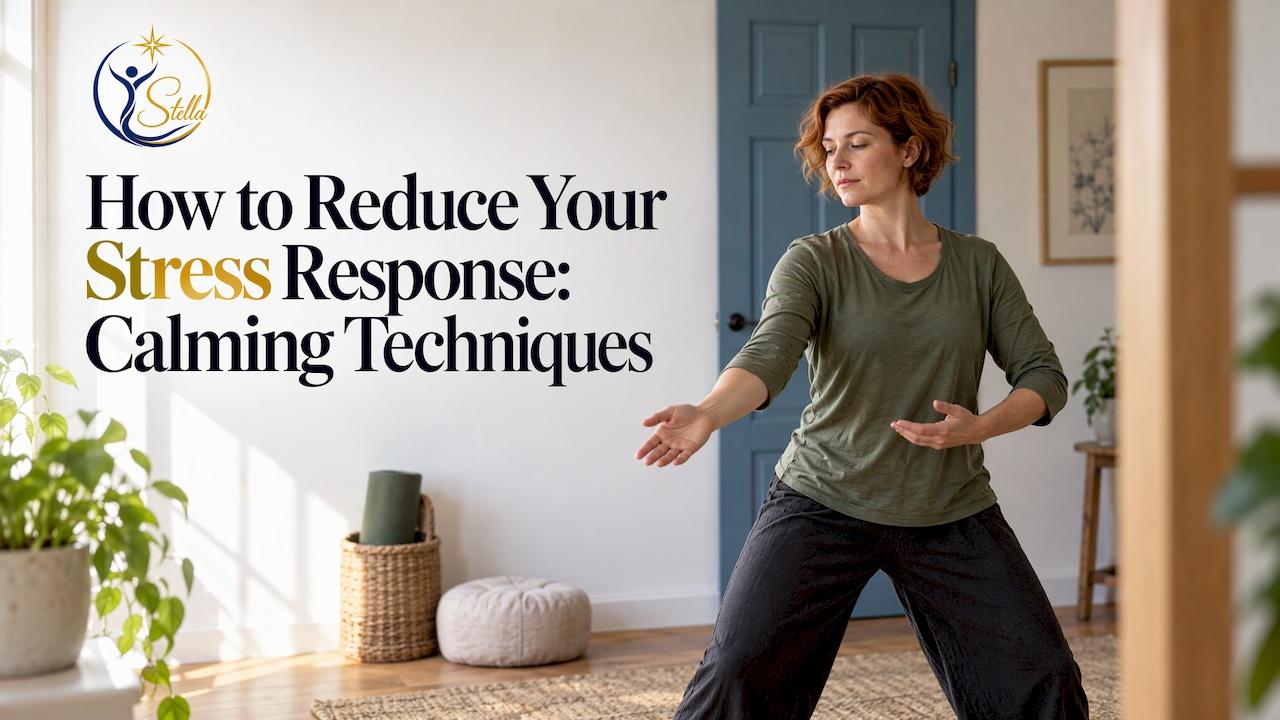
You reduce your stress response by switching on its natural opposite, the relaxation response: slower breathing, softer muscles and a quieter mind. Slow breathing, progressive muscle relaxation, meditation and gentle movement such as qigong all do this. Practised little and often, they teach your body to settle faster after pressure.
This guide explains what is happening in your body, then walks you through each technique step by step. It ends with a simple ten-minute routine, the daily habits that support it, and the signs that mean it is time to talk to a professional.
Key Takeaways
- The relaxation response is the opposite of the stress response: slower breathing, lower blood pressure and a calmer heart rate.
- Slow breathing, muscle relaxation, meditation and gentle movement are all well-established ways to switch it on. Start with five minutes a day.
- Relaxation is a skill. It improves with practice, so be patient and do not let the effort become another stressor.
- Sleep, movement and steady daily habits keep your baseline calmer. Severe or long-lasting stress deserves a conversation with your GP or another health professional.
What your stress response actually is
When your brain senses a threat, whether a deadline or a difficult conversation, your central nervous system releases adrenaline and cortisol. Your heart speeds up, your muscles tighten and your breathing turns shallow. This is helpful in short bursts. The difficulty comes when the alarm keeps ringing through a busy week.
The APA explains that these hormones also affect your digestive tract. Acute stress can switch off appetite, while ongoing stress can bring cravings for fat and sugar. If your gut is the first place you feel pressure, you are not imagining it.
The good news is that your body has a built-in brake. The Harvard Stress & Development Lab describes relaxation exercises as ways of activating the parasympathetic branch of the nervous system. This is the "rest-and-digest" side, which helps your body recover after fight-or-flight and supports long-term repair.
You cannot argue yourself out of a racing heart, but you can guide your body there through the breath, the muscles and gentle movement. Each of those is a doorway.
Slow breathing: the quickest doorway
Breath is the one part of the stress response you can steer on purpose. It is also free, silent and works anywhere, from a train carriage to a meeting room.
The 5-2-5 breath
Mayo Clinic Health System recommends breathing in for a count of five, holding for two and releasing for five. The aim is to activate the parasympathetic nervous system and reduce overall stress and anxiety.
- Sit or stand with your shoulders soft.
- Breathe in gently for a count of five.
- Hold lightly for a count of two.
- Release for a count of five, letting your jaw and belly soften.
- Repeat for two to five minutes.
If holding the breath feels uncomfortable, skip the pause and simply make the out-breath unhurried.
Gentle nasal breathing
Health New Zealand suggests a simple alternative: breathe in gently through the nose, out gently through the nose, and allow a short pause before the next breath. Practise at least once a day, at a time free from distraction, so it feels familiar when you need it.
Pairing breath with a stretch
A 2024 Japanese study found that combining static stretching with conscious slower breathing, a 2-second in-breath and a 4-second out-breath for 20 minutes, increased parasympathetic activity and lowered cortisol in adult women. It was a small study, but it fits what many people notice for themselves: slow breath and soft movement work well together.
Progressive muscle relaxation: let the tension go
Stress often hides in your shoulders, jaw and hands before you notice it in your mind. Progressive muscle relaxation (PMR) teaches you to feel the difference between tight and soft.
Mayo Clinic advises tensing each muscle group for about five seconds, then relaxing for 30 seconds, and repeating the cycle in a quiet place without interruptions.
- Lie down or sit comfortably.
- Start with your feet. Curl your toes, hold for five seconds, then release for 30.
- Move up through calves, thighs, belly, hands, arms, shoulders and face.
- Notice how each area feels once it softens.
NHS inform adds two useful points. If an area of your body is painful, you can miss it out. And the exercise makes you more aware of when your muscles are tensing, which can be an early warning sign of anger or panic. That awareness is half the benefit: you catch stress earlier.
Meditation and body scans: calm the mind through the body
The APA states that a strong body of research shows mindful meditation can reduce psychological stress and anxiety. Its starting suggestion is modest: five minutes in a quiet place, sitting and breathing, focusing on the present moment. When stray thoughts arrive, acknowledge them without judgement and gently return to the breath.
Sitting meditation
Health New Zealand describes it as sitting comfortably with your back straight, feet flat and hands in your lap, breathing through the nose and focusing on the breath. Nothing more is required.
Body scan
Lie on your back with your legs extended and arms at your sides. Move your attention slowly and deliberately from toes to head, or head to toes, resting on each part of the body in turn. It is a lovely way to end the day and can ease you towards sleep.

If you would like to explore the still side of qigong, our guide to qigong meditation covers both moving and seated practice.
Gentle movement and qigong
Movement discharges the energy stress stirs up. Harvard Health describes rhythmic, repetitive activities such as walking, jogging, swimming or cycling as calming, and suggests a mindful walk where you notice your breathing, body sensations and the sights, smells and sounds around you.
The same article describes qigong as an ancient Chinese art that blends breathing, meditation, gentle exercise and flowing movements. It says that when practised regularly it can lower blood pressure, pulse and demand for oxygen, as other techniques that elicit the relaxation response do.

A 2025 BMJ Medicine review of 182 studies looked at people with hypertension. At short-term follow-up, meditative movement, which includes tai chi and yoga, was associated with a 9.58 mm Hg drop in systolic blood pressure compared with a passive comparator. Breathing control showed 6.65 mm Hg and meditation 7.71 mm Hg. The authors rate the certainty of the evidence as very low, so it is best read as an encouraging signal rather than a promise. It does show that slow, mindful movement and breathing sit among the approaches researchers are taking seriously.
What makes qigong especially friendly is that it asks very little of you. There is no equipment, no fitness requirement and no pressure to perform. You move slowly, breathe fully and let your attention rest in the body. For a deeper look, see our qigong guide to relaxation techniques without therapy.
Our perspective: why we teach the body first
When people come to us, they are usually tired of being told to "just relax". Stress does not respond to instructions. It responds to safety, and the body learns safety through slow breath, soft movement and repetition.
That is why we teach qigong the way we do. Each practice is built around gentle movement, breath regulation and mindful attention, rooted in Chinese Medicine. Our aim is to help you release deep-held tension and awaken your energy without strain. You do not need to be flexible, fit or experienced.
We also see how often stress lands in the gut. Many of the people we support notice their digestion tighten when life speeds up, which is why our programmes focus on both stress relief and digestive wellness. All instruction is delivered by a White Tiger Qigong Level 3 certified instructor who is also accredited by Yoga Alliance, and who brings lived experience of modern professional pressure.
Start small. Five minutes of unhurried practice you actually enjoy will do more for you than an hour you dread.
Stella
Daily habits that keep your baseline calmer
Relaxation techniques work best on top of a steady foundation. The CDC recommends seven or more hours of sleep a night, building up gradually to two and a half hours of physical activity a week, eating fruit, vegetables, lean protein and whole grains, and limiting alcohol. It also advises avoiding smoking and illegal drugs.
The evidence for lifestyle change is solid. A 2024 meta-analysis of 96 randomised trials found that lifestyle interventions covering physical activity, diet and sleep hygiene significantly reduced stress. The effects were most pronounced in people with depression or heart disease, and in women.
The APA reports that in one study working adults who took part in moderate physical activity had half the perceived stress of those who did not. It suggests that a brisk 30-minute walk or a dance in the living room can help.
A few ways to make this realistic:
- Anchor practice to something you already do. Two minutes of slow breathing while the kettle boils is enough.
- Protect your wind-down. Dim the lights and put screens away before bed.
- Move in short bursts. Twenty to thirty minutes a day is easier to keep than one long weekly session.
- Notice early signals. A clenched jaw or shallow breath is your cue to pause.
Persistent stress can also show up in unexpected places. If you have noticed changes to your hair, this overview of stress-related hair loss remedies explains how stress and hair health connect. For a longer-term view, our guide to building stress resilience with qigong shows how to build a sustainable rhythm.
A ten-minute routine to try today
You can combine everything above into one gentle sequence. Find a quiet spot and allow ten minutes.
- Arrive (1 minute). Stand with feet hip-width apart and knees soft. Let your arms hang. Take three slow breaths.
- Breathe (3 minutes). Use the 5-2-5 breath, or simply lengthen your out-breath.
- Release (3 minutes). Roll your shoulders, shake out your hands and gently sway side to side. Then do a quick PMR pass through shoulders, hands and face: tense for about five seconds, then let go.
- Settle (3 minutes). Sit or lie down and rest your attention on the breath, returning to it each time your mind wanders.
Do this once a day for a couple of weeks. Mayo Clinic notes that relaxation techniques are skills that improve with practice, so be kind to yourself on the days it feels clumsy. If you would like a ready-made sequence, our daily qigong routine for stress reduction lays one out.
Practising safely and knowing when to get help
Relaxation techniques are generally safe for healthy people, according to the US National Center for Complementary and Integrative Health. Some people report increased anxiety, intrusive thoughts or a fear of losing control. There are rare reports of worsened symptoms in people with epilepsy, certain psychiatric conditions, or a history of abuse or trauma. If any of that applies to you, talk to your GP or therapist before starting, and go gently. Stop if a practice makes you feel worse.
Signs stress is becoming a problem
The World Health Organization lists physical, social and psychological signs of stress. Physical signs include headaches, muscle tension, stomach problems, a faster heartbeat and sweating. Social signs include irritability, avoiding family or friends and trouble focusing at work. Psychological signs include anxiety, insomnia, memory problems and difficulty making decisions.
Long-term stress matters. MedlinePlus notes it can play a part in conditions such as depression, anxiety, heart disease, high blood pressure and diabetes.
When to see a professional
MedlinePlus advises getting help from a health care provider if you have severe stress symptoms for two weeks or more. These include trouble sleeping, difficulty getting out of bed, trouble focusing, losing interest in things you enjoy, or being unable to manage daily tasks. Get help straight away if stress brings thoughts of suicide, a feeling that you cannot cope, or increased drug or alcohol use. In the UK, speak to your GP, and in an emergency call 999.
CAMH adds that it is worth seeking professional support if symptoms have lasted a long time or are affecting your work, home or social life. Mayo Clinic suggests that if none of your efforts seem to work, you should talk to your healthcare professional about other options. Qigong and relaxation practice can sit alongside that care, and it is sensible to mention them to your provider.
Learn qigong with a certified guide
If you would like support rather than working it out alone, we teach gentle, beginner-friendly qigong online and in person, designed around stress relief and digestive wellness. All instruction comes from a White Tiger Qigong Level 3 certified instructor who is also accredited by Yoga Alliance.
You can choose what suits you on our online qigong classes page:
- Qigong for Stress Relief and Digestive Wellness: £116, one-off.
- 30-Min Clarity Session: £85, one-off.
- 60-Min Deep Dive Online Session: £145, one-off.
- 60-Min Face-to-Face Qigong: £165, one-off.
- Group Qigong Classes: see the page for details.
If you are drawn to a traditional, animal-inspired flow, take a look at our Five Animal Qigong course.
FAQ
How can I lower my stress response quickly?
Slow your breathing. Try breathing in for five, holding for two and out for five, repeating for a few minutes. This activates the parasympathetic nervous system, your body's calming side. Mayo Clinic suggests trying a relaxation technique as soon as stress symptoms begin, rather than waiting until they build.
How long does it take for relaxation techniques to work?
Slow breathing can feel calming within minutes. The deeper benefit, a body that settles more easily, comes from regular practice over weeks. Relaxation is a skill, so a little each day beats an occasional long session.
Is qigong good for stress?
Qigong blends breathing, meditation and gentle flowing movement, and Harvard Health notes that regular practice can lower blood pressure and pulse, as other relaxation-response techniques do. It is gentle enough for beginners, which makes it easy to keep up. If you have a medical condition, tell your health professional first.
Can stress affect my digestion?
Yes. The APA explains that stress hormones act on the digestive tract. Acute stress can reduce appetite, and chronic stress can bring cravings. If digestive symptoms are persistent or worrying, see your GP, and use calming practices alongside their advice.
When should I see a doctor about stress?
See a health professional if severe symptoms last two weeks or more, if sleep or daily functioning is affected, or if you have symptoms with no clear cause. Seek help immediately if you have thoughts of suicide or feel unable to cope.
Sources
- Relaxation Techniques: What You Need To Know | NCCIH
- Relaxation techniques: Try these steps to lower stress | Mayo Clinic
- Healthy ways to handle life's stressors | APA
- Overview | Stress & Development Lab, Harvard
- Five tips to manage your stress | Mayo Clinic Health System
- Relaxation techniques | Health New Zealand
- Static Stretching Combined with Conscious Slower Breathing
- Progressive muscle relaxation | NHS inform
- How to reduce stress and anxiety through movement and mindfulness | Harvard Health
- Effectiveness of stress management and relaxation | BMJ Medicine
- Managing Stress | CDC
- The Effect of Lifestyle Interventions on Anxiety, Stress and Depression | PMC
- Stress | World Health Organization
- Stress | MedlinePlus
- Stress | CAMH
- Effective Stress Hair Loss Treatment