
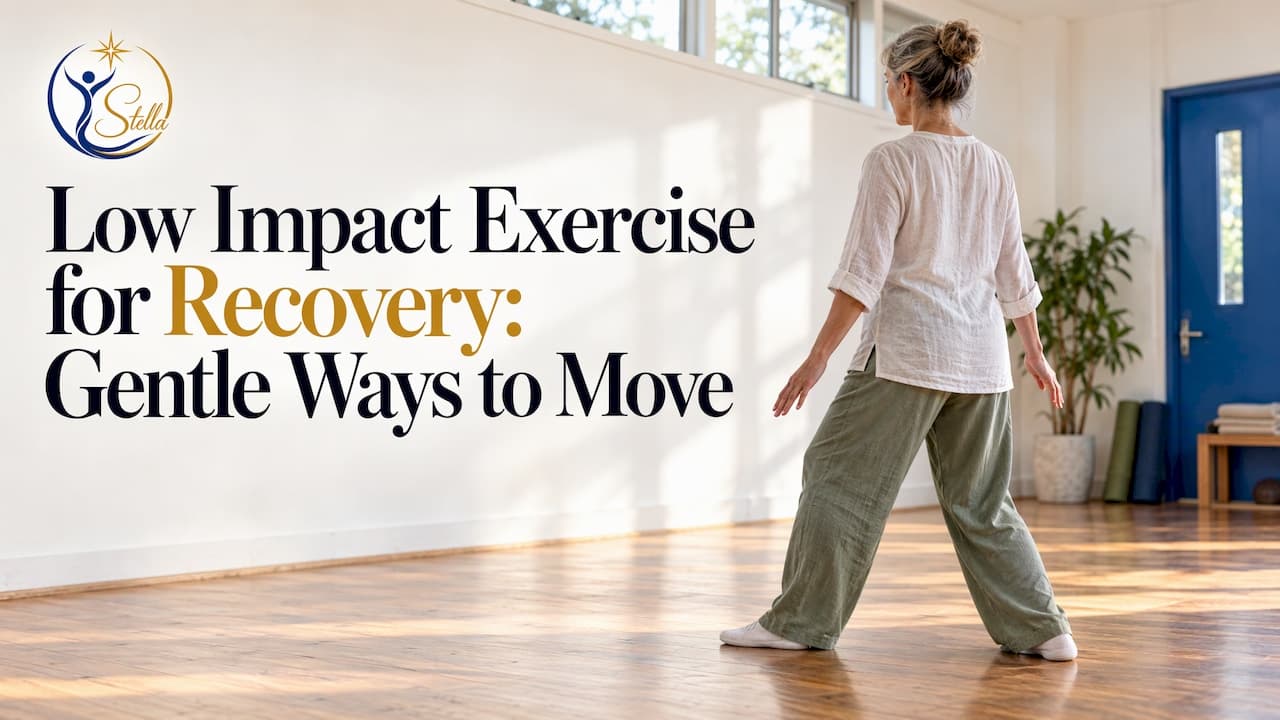
Low impact exercise for recovery means movement that keeps your joints lightly loaded and your effort easy, so your body can repair while it stays active. Walking, swimming, easy cycling, yoga, tai chi and qigong all fit. The best choice depends on what you are recovering from: a tough training block, a joint niggle, a stressful season or a sensitive gut. Below you will find how the options differ, what the research says, and how to begin without overdoing it.
Key Takeaways
- Low impact describes how much load your joints take. Low intensity describes how hard your heart and muscles work. Recovery usually calls for both to be low.
- Walking, swimming, easy cycling, yoga, tai chi and qigong are all well-established gentle options. Pick the one that matches your symptoms and how you feel today.
- Start small, such as 10 minutes a day or a short walk, and build gradually. Sharp, worsening or persistent pain is a signal to speak to a healthcare professional.
- For stress, anxiety and digestive sensitivity, slow mind-body movement such as qigong combines gentle motion with steady breathing.
What low impact really means (and why it is not the same as easy)
The two words get mixed up constantly. Low impact is about your joints. Cleveland Clinic's team explains that low-impact describes joint loading rather than cardiovascular effort, so cycling, rowing, the elliptical and climbing machines can still send your heart rate high if you push hard. Memorial Sloan Kettering puts the relationship simply: low-intensity exercise is always low-impact, but low-impact exercise can be high-intensity.
That distinction matters when you are recovering. A hard session on a bike spares your knees but can still leave you tired. For recovery you want movement that is both kind to your joints and gentle in effort.
A useful way to think about it:
- Low impact, low intensity: an easy walk, a slow qigong flow, restorative yoga. Ideal for recovery days.
- Low impact, high intensity: a hard swim or a fast rowing machine session. Joint-friendly, but it is training, not recovery.
- High impact: running, jumping, plyometrics. Not what most people want while healing.
What active recovery should feel like
Runner's World describes active recovery as easy movement focused on circulation rather than an aerobic workout. Its examples include walking, yoga, easy cycling, swimming, aqua jogging and stretching. The running coach quoted there suggests the aim is to increase blood flow without creating real muscular or cardiovascular stress, and that keeping an eye on perceived exertion or heart rate helps you avoid carrying fatigue into your next session.
A simple self-check: you should be able to hold a conversation comfortably, finish feeling a little looser than when you started, and wake up the next day no more sore than before. If a session leaves you drained, it was too much for a recovery day.
Gentle options compared
Memorial Sloan Kettering lists walking, swimming, biking, rowing, dance, resistance training, elliptical exercise, low-impact aerobics, tai chi and yoga as suitable choices. Qigong sits naturally alongside tai chi and yoga in that family of slow, mindful movement. Here is how they compare for recovery.
| Activity | Joint load | Best for | Things to keep in mind |
|---|---|---|---|
| Walking | Light, but still loads ankles, knees and hips | Daily gentle movement, mood, a first step back | Softer surfaces such as trails reduce strain further; inclines raise the effort |
| Swimming | Very low, thanks to buoyancy | Sore joints, full-body movement | Needs pool access; effort can be adjusted easily |
| Easy cycling | Unloads the feet and takes weight off the joints | Leg recovery, steady circulation | Keep resistance light so it stays a recovery session |
| Rowing machine | Seated, low joint stress | Upper-body and leg movement together | Easy to turn into a hard workout, so keep the pace gentle |
| Elliptical | Avoids the jarring of running | Cardio without foot impact | Same caution on effort |
| Yoga | Low | Flexibility, stress, digestive comfort | Qualified guidance helps prevent strains |
| Tai chi and qigong | Very low | Stress, balance, breath, calm | Slow pace suits beginners and anyone rebuilding confidence |
The joint-loading details for swimming, cycling, rowing, elliptical and walking come from Cleveland Clinic's guide to low-impact cardio, which notes these options can suit joint pain or injury recovery when they are medically appropriate for you.
Recovering from stress, anxiety and burnout
Recovery is not only about muscles. If you are worn down by work, worry or poor sleep, your nervous system needs a gentler kind of movement, not another demanding workout.
The evidence is encouraging for slow, low-intensity practice. A 2022 systematic review of 12 randomised controlled trials in older adults found the strongest stress-reduction evidence for low-intensity qigong, alongside combined aerobic and anaerobic programmes. Qigong was the most consistent and most common exercise in the review, programmes lasted from three months to a year, and light-to-moderate activity was recommended.
The US National Center for Complementary and Integrative Health notes that tai chi and qigong may help depression as adjunctive therapies, although effects are inconsistent, and that evidence for yoga as an adjunct for anxiety is more supportive, particularly for panic disorder. These practices work alongside, not instead of, care from your GP or therapist.
If you want a ready-made starting point, our guides on a daily qigong routine for stress reduction and building stress resilience with qigong walk you through short sessions. Busy professionals may also like qigong for calm, focus and vitality.
Gentle movement for a sensitive gut
If you live with IBS or unpredictable digestion, vigorous exercise can feel like a gamble. Gentle movement is a kinder way in.
A 2025 systematic review of 231 studies found that regular moderate-intensity walking, cycling and yoga were associated with improved gastrointestinal function in conditions including reflux disease, IBS, inflammatory bowel disease and constipation. The authors link possible benefits to better intestinal motility, lower systemic inflammation and regulation of the gut-brain axis. They also note that high-intensity or prolonged exercise can bring on nausea, diarrhoea and abdominal pain, which is a good reason to keep recovery sessions soft.
A professional review of meditative movement for IBS adds that yoga and tai chi may help symptoms. Its practical advice is to consider functional limitations, pace yourself because vigorous exercise may cause flares, and use adaptable modifications so tolerance and confidence build gradually. It also cites a 2016 review of six randomised trials with 273 people with IBS, in which yoga improved gastrointestinal symptoms, severity and anxiety compared with conventional treatment. The few adverse events reported were musculoskeletal.
Our own pages on qigong for IBS and holistic approaches to IBS relief explain how slow movement and breath can fit into a gut-friendly routine.

Joint pain, injury and older bodies
When joints are the issue, the question is how much load they can comfortably take. Swimming reduces loading through buoyancy, cycling unloads the feet, rowing is done seated and the elliptical avoids the jolt of running, according to Cleveland Clinic. Walking is lower impact than running but still works the ankles, knees and hips, so a softer path can help.

Balance and confidence matter too, especially as we age. MSK notes that tai chi, qigong and yoga may reduce falls and improve sleep in cancer survivors, and low-intensity exercise in general can improve mood, mobility and cardiorespiratory fitness while reducing fatigue, pain and injury risk. For a closer look at slow balance practice, read about tai chi and falls, and for qigong specifically, our gentle guide to qigong for seniors shows how to begin safely.
On the yoga side, NCCIH says it is generally safe for healthy people when practised properly with qualified guidance. Sprains and strains can occur, serious injuries are rare, and older adults need particular care. The same principle applies to any movement practice: good instruction keeps it gentle.
How to start and progress safely
The most reliable approach is also the simplest: begin smaller than you think you need to.
- Choose an achievable goal. The Gibraltar Health Authority suggests starting with something like a short walk and building gradually.
- Begin with about 10 minutes. The University of Michigan PainGuide says people can start with as little as 10 minutes per day, increase slowly and check with a healthcare provider before raising activity, to reduce the risk of flare-ups.
- Adapt to you. The same health authority advises adjusting activity to your symptoms, medication, condition, fitness and confidence rather than routinely avoiding movement.
- Keep the effort easy. Use the conversation test from earlier. If you are gasping, ease off.
- Add time before intensity. Go from 10 to 15 minutes, then 20, before you try anything faster.
- Repeat before you progress. If a level feels comfortable for a week or so, you are ready for the next step.
For wider ideas on structuring gentle weeks, recovery workouts after 40 offers a useful look at balancing training and rest days.
When to get advice or stop
The Gibraltar Health Authority's guidance is clear on this. Seek advice before significantly increasing activity if your symptoms are unstable, or if you have had a recent hospital admission, surgery or cardiac event, or have unexplained chest pain, severe breathlessness, fainting, uncontrolled blood pressure or several complex conditions. If a clinician has prescribed rest after a procedure, injury or acute illness, that advice comes first.
Stop and get urgent help for chest pain, severe breathlessness, fainting, sudden weakness, loss of consciousness, stroke symptoms or sudden severe pain. Sharp, worsening or persistent pain is worth discussing with your GP or a physiotherapist.
Why qigong suits recovery days
Qigong asks very little of your joints and a great deal of your attention, which is exactly what a recovering body and a busy mind need. The movements are slow and flowing, the breath leads, and you can do them standing, seated or even while walking. If you want to try this at your own pace, our beginner's guide to walking qigong turns an ordinary stroll into a calm, mindful practice. Anyone dealing with nerve or back discomfort can also read about qigong for sciatica.
A sample 15-minute recovery session might look like this:
- Minutes 1 to 3: stand with soft knees and breathe slowly, letting the shoulders drop.
- Minutes 4 to 8: gentle arm sweeps and waist turns, moving only within a comfortable range.
- Minutes 9 to 12: slow weight shifts from foot to foot, as if walking through water.
- Minutes 13 to 15: stillness, hands resting low on the belly, breathing steadily.
If any movement pinches or hurts, make it smaller or skip it. Gentle should stay gentle.
Our perspective
When someone comes to us exhausted, anxious or dealing with a gut that will not settle, the first thing we hear is often, "I know I should exercise, but I cannot face it." That is exactly why we teach qigong the way we do.
Qigong rooted in Chinese medicine moves your body softly, joins movement to breath and invites you to feel rather than force. In our classes, you are never asked to push through. You are guided to notice, to soften and to leave each session a little more settled than you arrived. That is what recovery should feel like.
Our White Tiger Qigong and Five Animal Qigong practices are built around stress relief, digestive wellbeing and steady vitality. All instruction comes from a White Tiger Qigong Level 3 certified teacher who is also accredited by Yoga Alliance, and who understands burnout and digestive struggles from lived experience. We would always rather you build a calm, repeatable habit than chase a big, exhausting one.
Walking, swimming and cycling are lovely partners to qigong. Together they give you variety, and qigong gives you the quiet, mindful centre.
Stella
Learn qigong with guidance
If you would like support rather than guesswork, we offer qigong lessons designed for stress relief and digestive wellness, for beginners and experienced practitioners alike. Options include the self-paced course Qigong for Stress Relief and Digestive Wellness at £116 one-off, a 30-Min Clarity Session at £85, a 60-Min Deep Dive Online Session at £145 and a 60-Min Face-to-Face Qigong session at £165. We also run group classes. See our online qigong classes and courses to choose the format that suits your recovery.
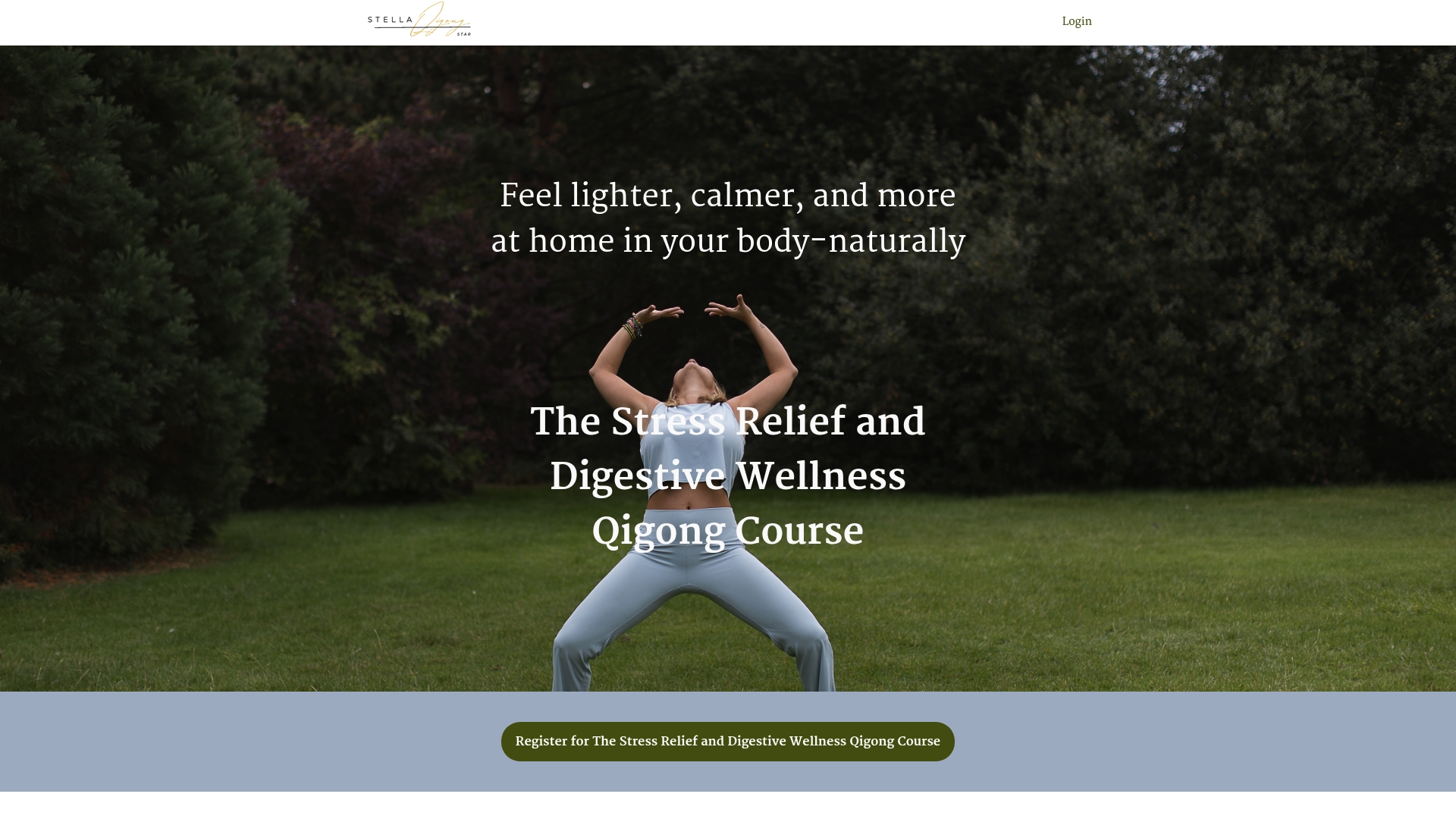
You can also explore the White Tiger Qigong and Five Animal Qigong courses to see which style speaks to you.
FAQ
What is the best low impact exercise for recovery?
There is no single best option. Walking, swimming, easy cycling, yoga, tai chi and qigong are all widely recommended gentle choices. Pick the one that matches your symptoms, access and enjoyment, and keep the effort easy.
Is low impact exercise always low intensity?
No. Low impact refers to joint loading, while intensity describes how hard your body works. Cycling, rowing and the elliptical are low impact, but they can become very demanding if you push the pace. For recovery, keep both low.
How long should a recovery session last?
Start with as little as 10 minutes a day and build up gradually. Short, regular sessions usually suit recovery better than one long effort. If you have unstable symptoms or a recent procedure, check with your healthcare provider before increasing.
Can gentle movement help with IBS?
Research suggests moderate walking, cycling and yoga are associated with improved gut function, and yoga and tai chi may help IBS symptoms. Vigorous or prolonged exercise can trigger discomfort, so keep sessions calm, pace yourself and adapt movements as needed.
Sources
- Low-intensity exercise, Memorial Sloan Kettering Cancer Center
- 7 Low-Impact Cardio Exercises To Try, Cleveland Clinic
- Active vs. Passive Recovery: Differences and How to Choose, Runner's World
- Exercise interventions for stress reduction in older adults, systematic review
- Mind and Body Approaches for Stress and Anxiety, NCCIH
- Exploring the gut-exercise link: a systematic review
- Meditative Movement Approaches for Irritable Bowel Syndrome
- Physical Activity and Medical Conditions, Gibraltar Health Authority
- Exercise, University of Michigan PainGuide
- Tai Chi for Osteoporosis: Fall Benefits Are Clearer Than Bone Gains
- Recovery Workouts After 40